A small French town you’ve probably never heard of!
Heading in to the final few days of our road trip through Normandy & Brittany, I wanted a place to stop over on our way from Mont Saint-Michel to Saint-Just, where the wedding was located. A few blogs suggested this “Disney-esque” town (pronounced: dee-naan) in the Brittany region and it looked adorable so I was sold.
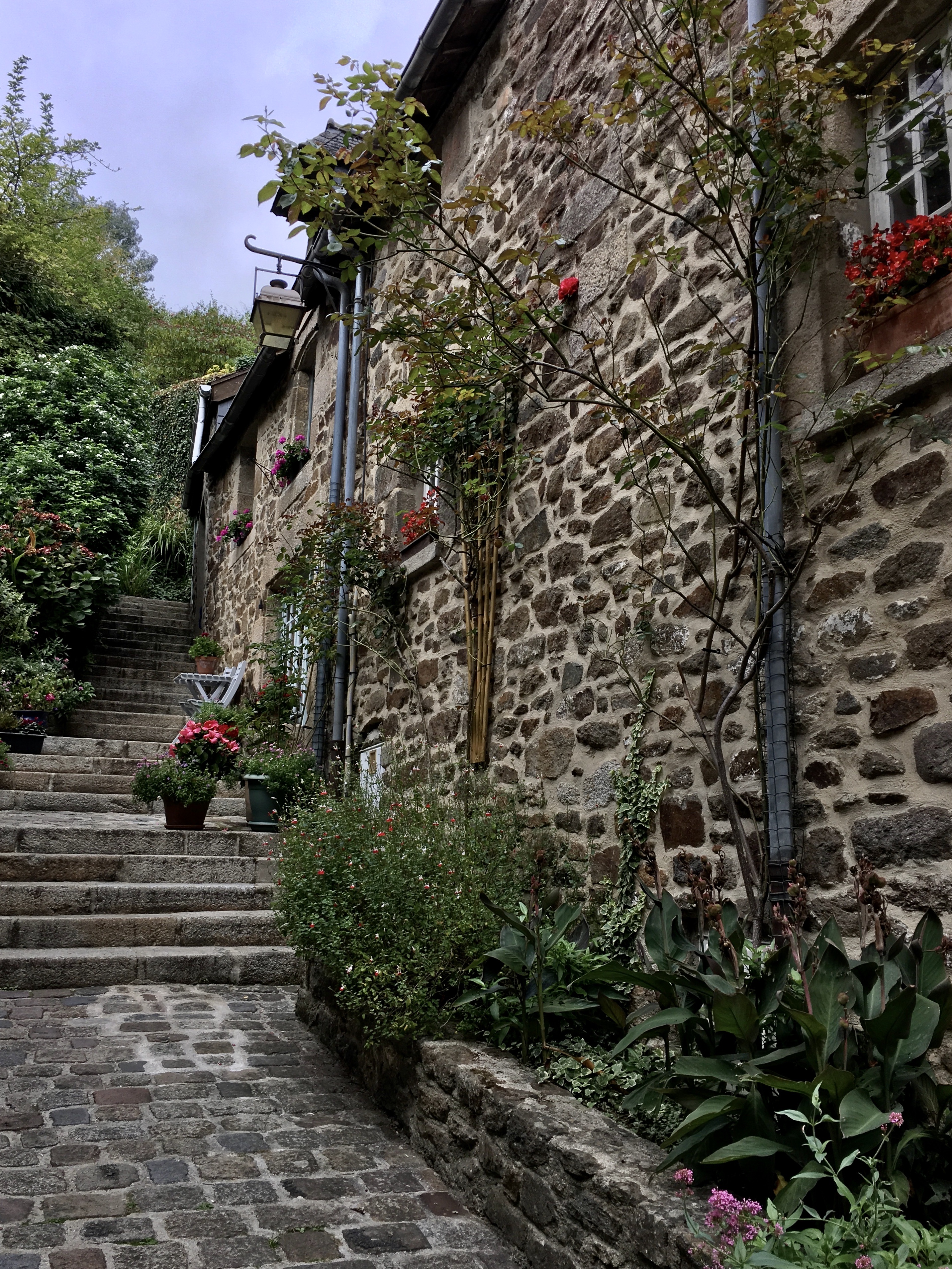
I will be honest: it was really pretty and really old (founded in 1040!), but it’s a small town and there’s not too much going on.
So, what can you do?
Eat Crêpes…
…and other delicious baked goods!
For a small town there was no shortage of boulangeries (breads), viennoiseries (breakfast pastries, and pâtisseries (dessert pastries).
We had crêpes at the crêperie in the picture above, and lucky for me there was a boulaungerie / viennoiserie only a 2 minute walk away from our Airbnb.
Do you know what was incredibly frustrating during this entire trip? Eating times. We could never seem to figure out when restaurants were open. On the last day we finally realized they open in the morning through lunch, ~2pm. Then everything shuts down until about 7pm. So, good luck with a late lunch or an early dinner. And don’t even THINK about ordering a crêpe after 2pm. “The kitchen can’t make them anymore.” 😑
Walk the Ramparts
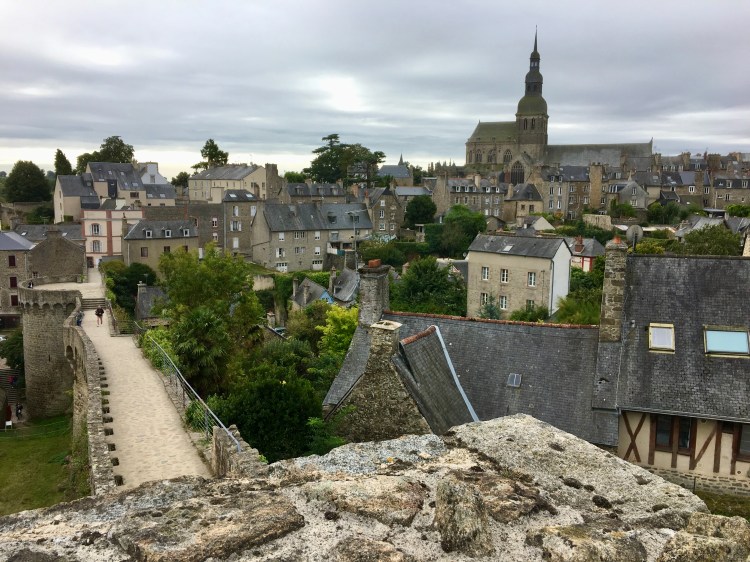
Characteristic of medieval towns, the city is surrounded by walls that date back to the 13th century. I love a good wall walk (here’s lookin’ at you, Dubrovnik), and with 3km (1.8mi) of preserved ramparts, you can do a lot of it!
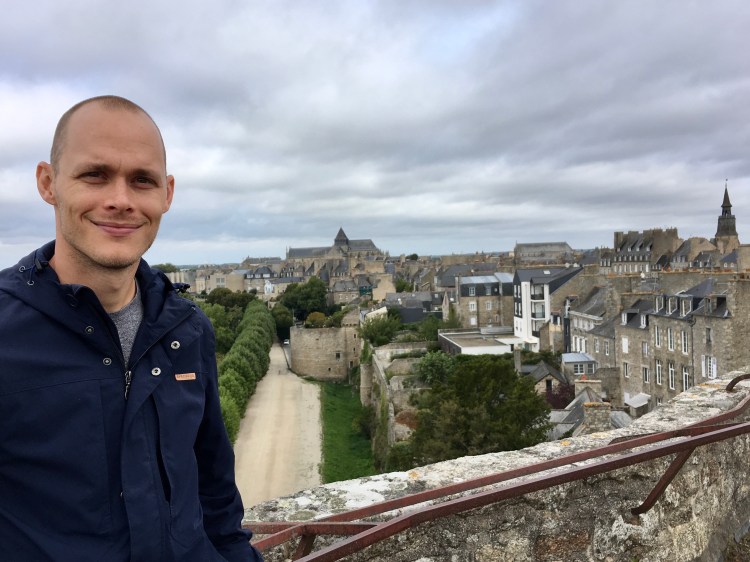
Views from the top.
Climb the Clock Tower
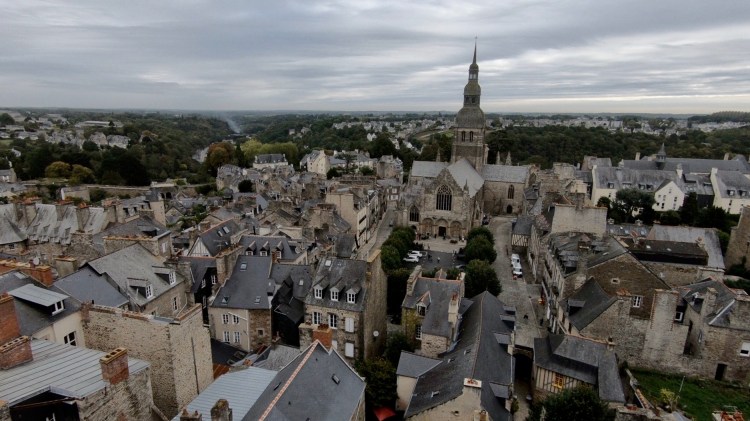
It’s over 600 years old, 43m (~142ft) tall, and still functions! And, despite not being the original bell (it’s recast using the original), it still regulates the city today. How do I know this? We happened to be up top when it started ringing. I recommend timing your visit accordingly.
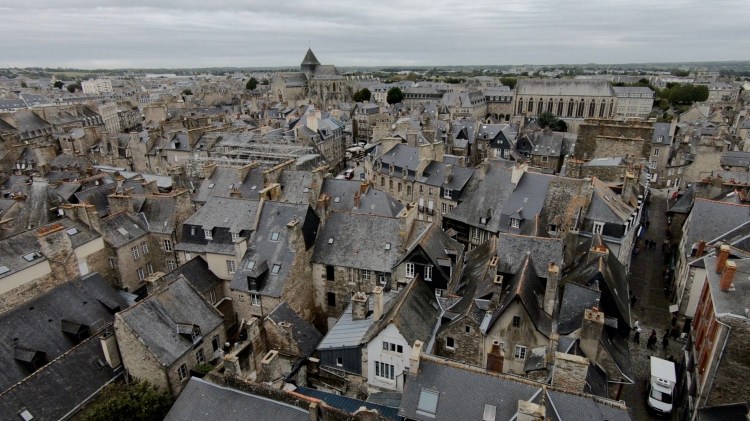
Take the 158 steps to the top for some great views over the historical city!
Maybe one day I’ll stop making Shane exercise on vacation…
Ehh – probably not.
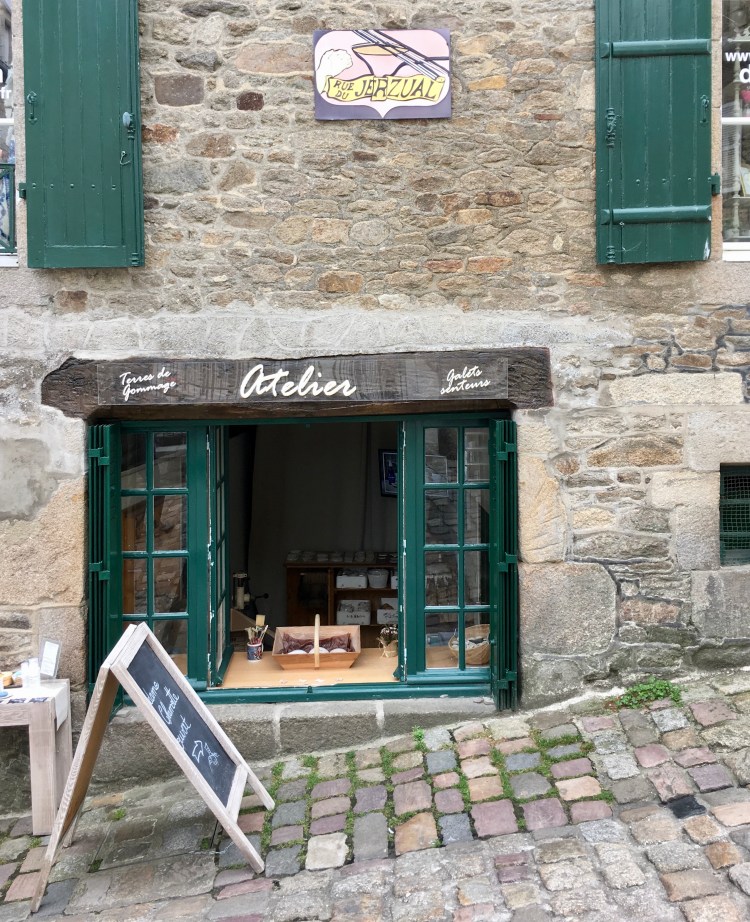
Walk Rue du Jerzual to the Historical Port
This. street. is. STEEP!
But, if half-timbered houses are your thing then this is the street for you! It’s a lovely walk down to the Port of Dinan, but fuel-up when you get there because you’ll need an energy boost to make it back up! 😆
The River Rance at the bottom of Rue du Jerzual.The viaduct – built in 1846.
Visit Château de Dinan
It’s a castle, it has a nice museum, blah blah that’s boring. (Ok it wasn’t really – you should go – but for the point of my story…)
Do you want to know what the coolest thing about this castle was?
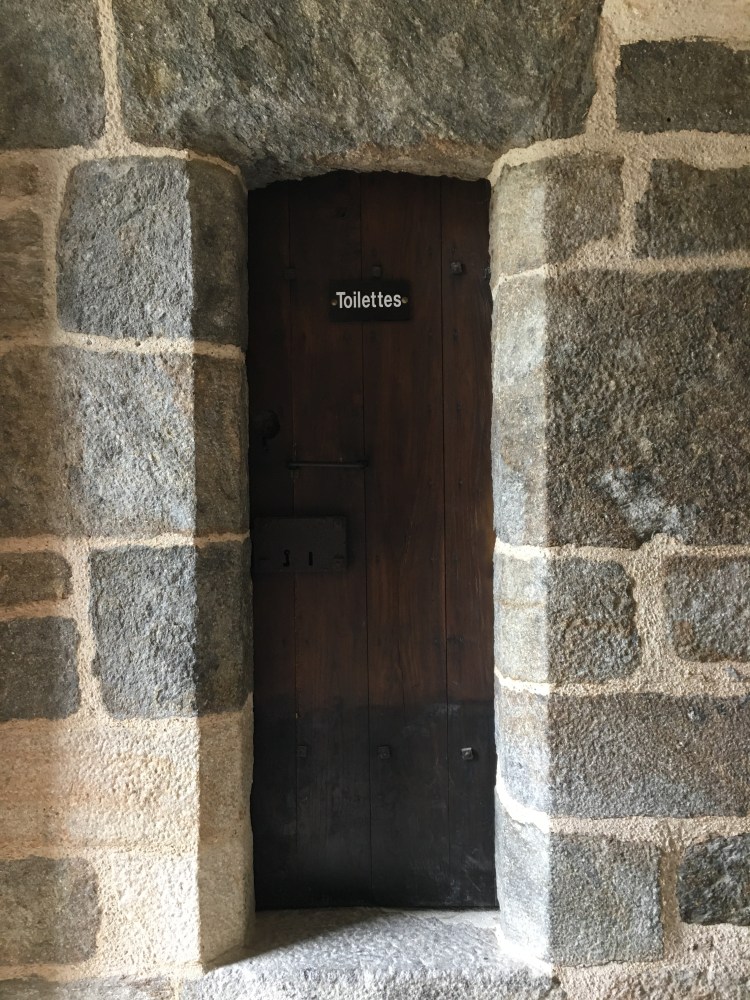
The toilet.
A modern toilet built in the spot of the ACTUAL castle toilet! Game of thrones-style door included!
Now if that’s not ingenuity then I don’t know what is.
There were also some nice views from the top, for those not as impressed with toilets.
St. Malo Church
Last but not least, you should take a few minutes to pop into St. Malo church in the city center. The architecture of these old churches is never disappointing.
So how much time do you actually need in Dinan?
One full day is enough.
We stayed two nights – arriving around dinner on night one – and this was more than enough time to leisurely explore the city. Perhaps contrary to popular opinion: it’s certainly worth visiting if it’s on-route, but I’m not sure I would go out of my way.
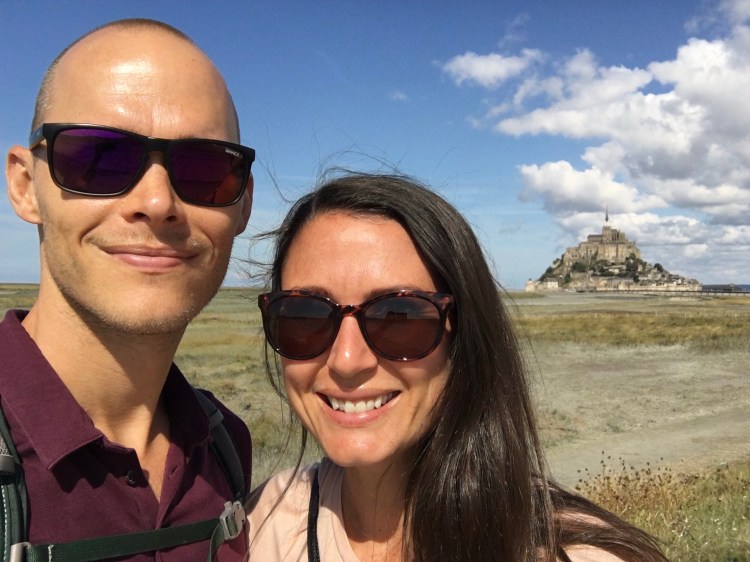
2.5 million – that’s how many come to Mont Saint-Michel per year, and we were one of them. Well, two of them I suppose.
I honestly had never heard of Mont Saint-Michel until we started planning this trip, but I’m a sucker for a good castle and a great view. And, it’s a top Normandy tourist attraction, remember? In case you hadn’t noticed, it’s a castle on an island. During low-tide, you can walk the surrounding mud-flats for access. During high-tide the castle is completely surrounded by water and unaccessible (except by road, in modern times)!
Tip: It’s pronounced ‘Me-chelle’.
For all you English speakers out there who tend to butcher beautiful French words (obviously, myself included). I wanted to call it Michael, which I guess technically it is in English, but we’re in France so…
A quick history:
In ~708, a sanctuary was built on Mont (mount)-Tombe (now Mont-Saint Michel) by the Bishop of Avranches in honor of the Archangel, Michel. Over time, it became a pilgrimage site, and starting in the 10th century a village began to form after Benedictines (Catholic monks) settled in the abbey. Eventually, it grew into what we see today.
The mont became a symbol of France during the Hundred Years War (1337 – 1453, England v. France for control of France) when it’s fortifications proved too much for the English, and it was never taken.
And, like a lot of other rocky, fortified islands, the religious guys were kicked out and it became a prison. Finally, in 1874 it was classified as a historic monument. Somewhere in there is a story about a commune and an Irish hermit, but that’s for another time…
So, how do you get to the castle on the island?
You can’t drive there, that’s for sure. There are plenty of parking lots (€14 – tourist trap, remember?) which surround the visitor center. From the visitor center, you can either take the shuttle bus (runs constantly), or you can walk ~2.5km (1.5 mi) across the bridge to the village. Their signs say ~30 minutes, but I would plan for 45 minutes if you want to leisurely stroll with pictures along the way.
Tip: If you have kids – don’t bring a stroller!
The walk to the mont is flat, that’s not the issue. Once you’re inside it’s cobblestone, steep streets, and stairs. And, with a stroller you’re guaranteeing to not walk the ramparts – too narrow for stroller + masses of people.
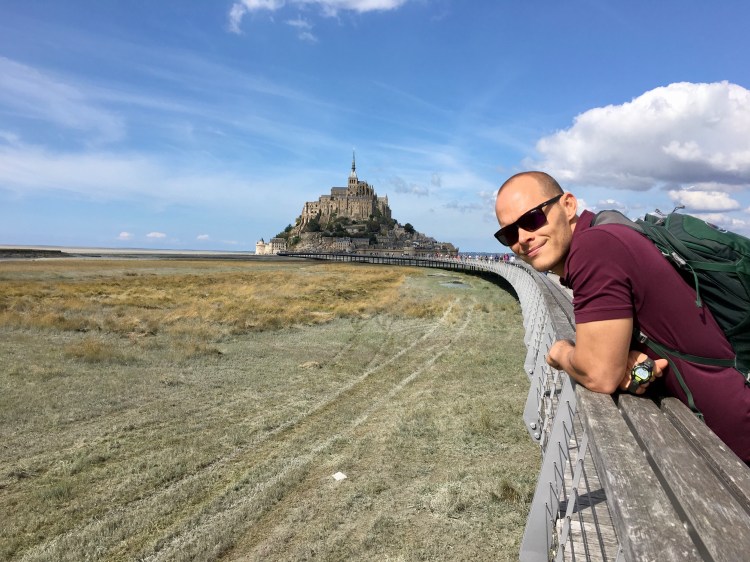
It looks so peaceful from far away…And as you get closer – notice the people now?
Tip: Pack a lunch!
While the restaurants have nice views, the food inside the village is tourist-expensive. Even better though, you can walk all over / around the village essentially unrestricted. We saw lots of people who managed to find a quiet spot to themselves for lunch: down by the beach, or in a corner with a nice view.
We packed a lunch, but on account of being losers who had leftover cold spaghetti, we ate it in the car.
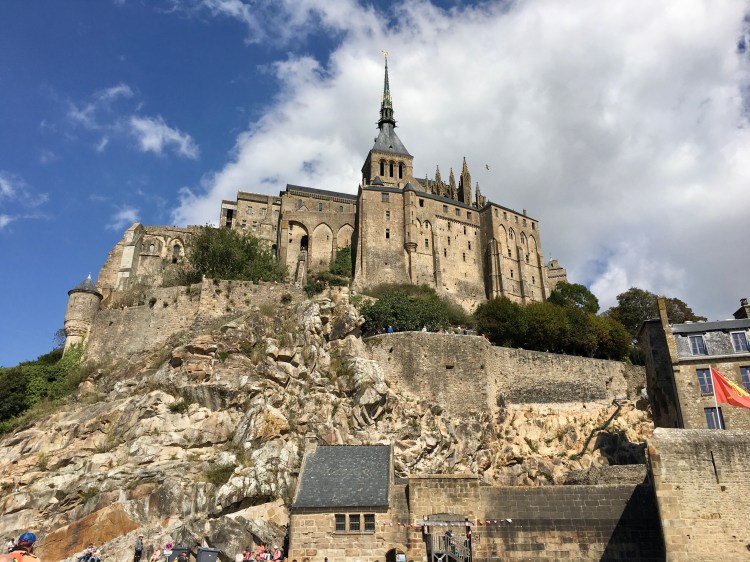
At the base of the mont!
It’s free to enter the village, but €10 (+ €3 for an audioguide) to enter the abbey. Well worth the money. It’s a legitimate castle perched on top of this mountain with way more space inside than you would imagine possible. Plus, the views are spectacular.
Tip: Walk the ramparts to the abbey.
You’ll want to walk the ramparts anyway, but they are significantly less crowded than the main street leading up to the abbey. When you first enter the village you’ll notice a staircase to your right – take it.
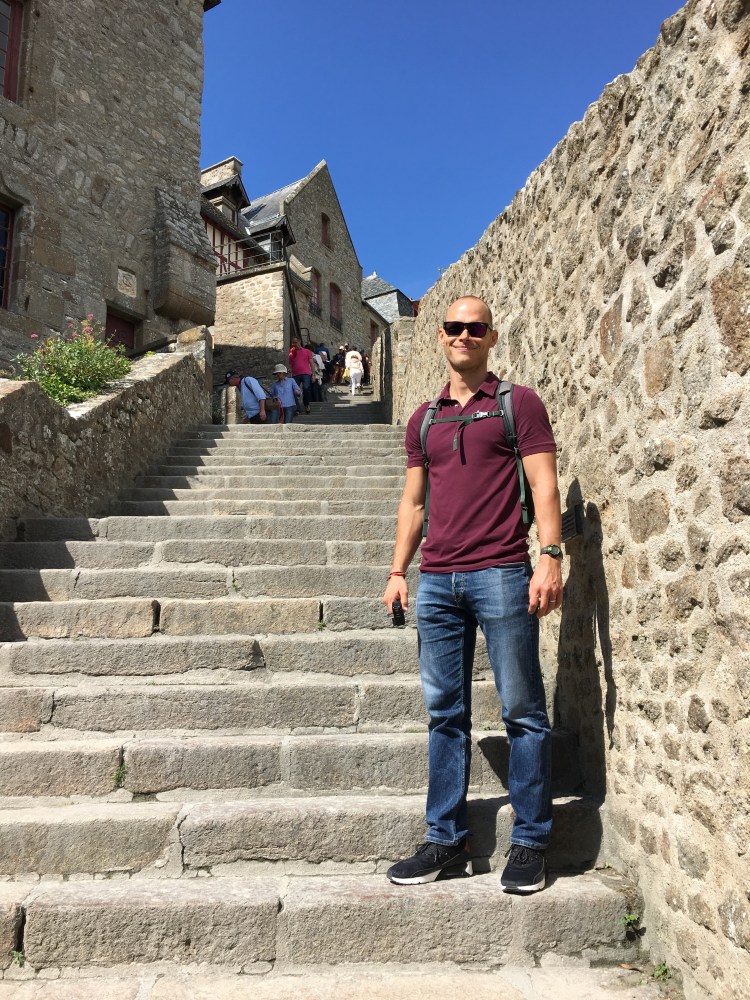
Up we go!
People walking the mud flats. And yes, it was legitimately mud not sand.
Looking out on our way up with guided groups walking the mud flats.
View from the top at low-tide – across the bridge to get to the mont.
Entrance to the abbey.
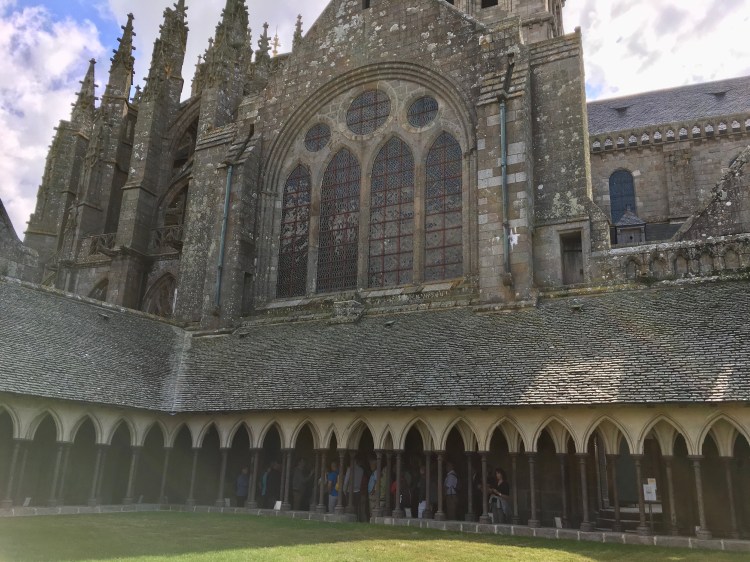
There’s even a courtyard up there!View from the top, as far as the eye can see.
Tip: Plan to spend at least 3 – 4 hours (parking + walking + exploring).
So, was it worth it?
ABSOLUTELY!
I couldn’t stop looking at it. I was craning my neck so much on the walk back to the car that Shane stopped me, turned me around, and we just stood there staring until the count of 10 so I could soak it all in.
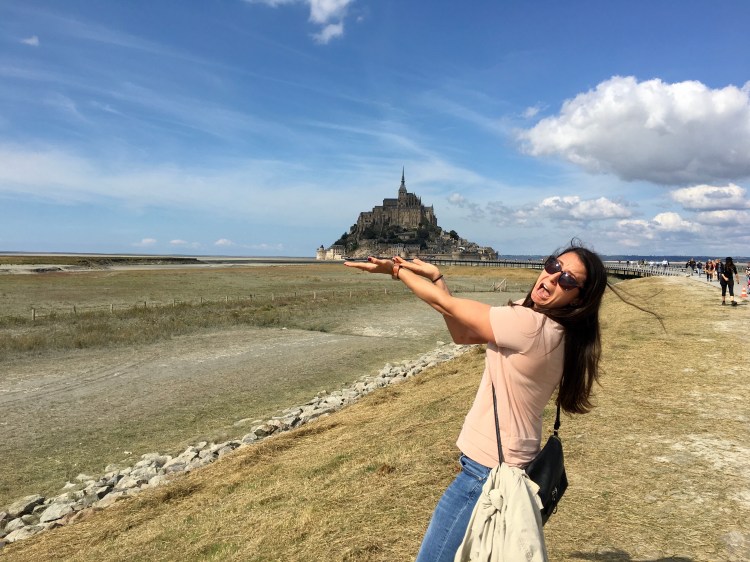
Oh, and then this happened.
What? It was heavy.
And, considering it was only a 2 hour drive from the D-Day landing beaches in the direction of our next stop, Dinan, it was basically destiny.
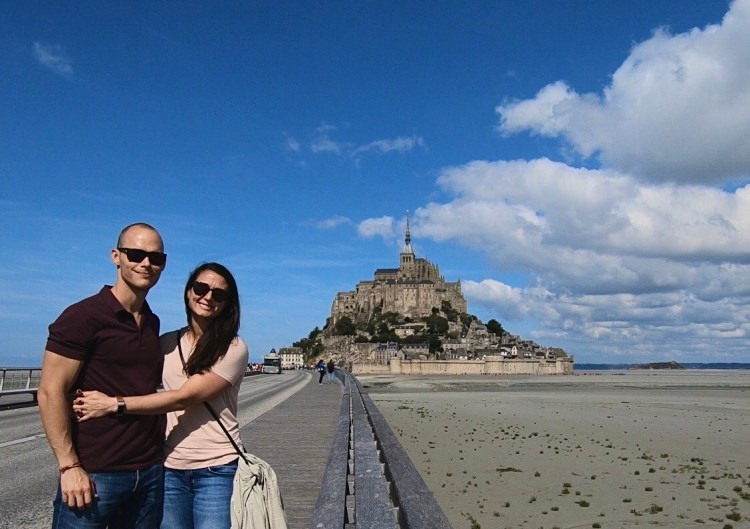
First, I’d like to start out by wishing us a Happy Anniversary!
It was a coincidence that this trip coincided with our third wedding anniversary, andddd… this is the only picture we took together all day.
Aren’t we cute?
Why?
Well, apparently spending holidays learning about wars is our thing now: Christmas at the Vietnam War Remnants museum, anniversary in Normandy for World War II. 🤷♀️
Anyway, back to the beaches.
I think the theme of this whole trip (which is very unlike me) was ”unprepared”. I did most of the planning in terms of driving route, not necessarily what to see. We learned quickly that our day and a half in this area was nowhere near enough. So, I’ve decided to put together a little guide in case we have a chance to go back. Who knows, maybe someone else might find this helpful.
Let’s start with some basic history…
The Battle of Normandy, code-named “Operation Overlord”, was a coordinated attack on German forces by the British, the Canadians, and the Americans and marked the beginning of the end of Nazi control over Europe. On June 6, 1944 Operation Neptune, commonly known as D-Day, started the battle across five code-named beaches: Sword & Gold (British troops), Juno (Canadian troops), Utah and Omaha (American troops).
Tip: If time allows, plan for one day per beach.
As I mentioned before, we were short on time, so we prioritized from an American’s perspective.
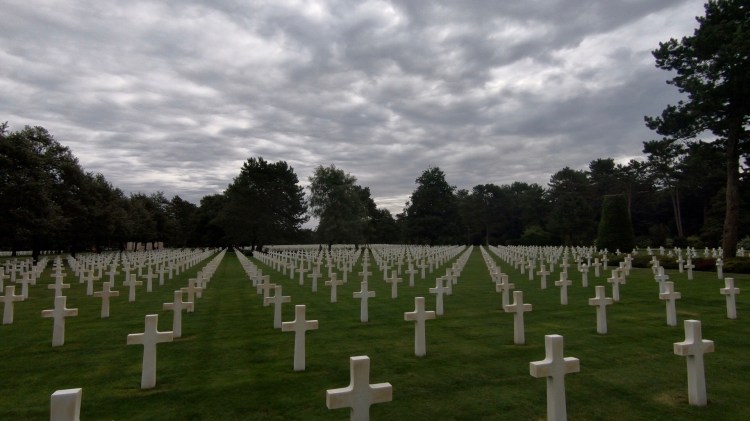
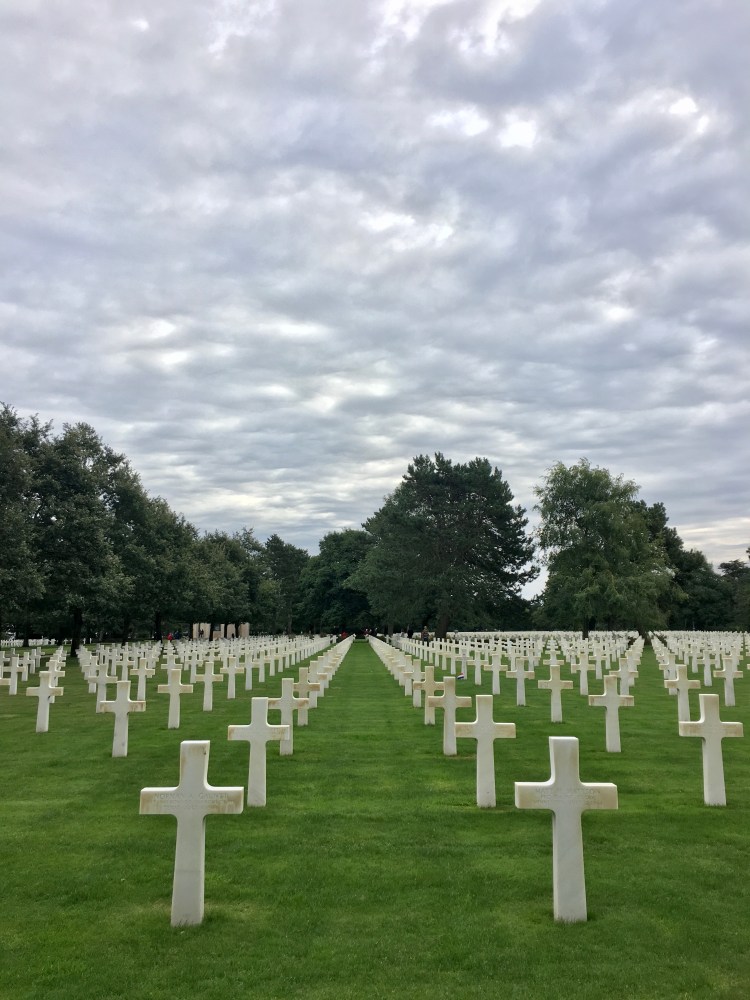
The American Cemetery was our first stop. The overcast morning seemed fitting for the occasion.
Tip: Do not miss the (free) museum in the Visitor Center.
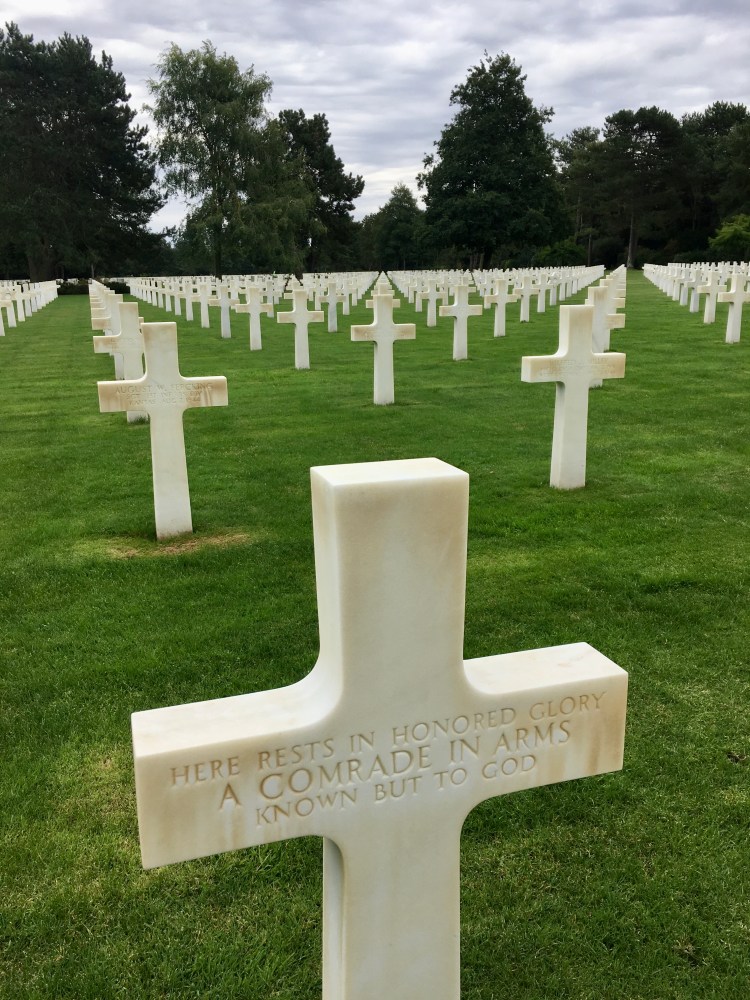
It’s the final resting place for over 9,000 men who lost their lives during Operation Overlord. Each Cross (or Star of David) listed the name, division, home state, and death date of the individual. An Unknown Soldier Cross was places for individuals who could not be identified.
The Visitor Center has a great exhibit on the American involvement in D-Day. Two facts stood out to me:
In December of 1940, America’s troops numbered ~800,000; by December 1941, 2.2 million.
Inflatable tanks (literally – like bouncy house inflatable) and stuffed paratroopers (called paradummies) were used as decoys to throw off German intelligence… and it worked!
I think the most powerful part of the Visitor Center was the constant roll-call. Names of those lost were said over the speakers as you left the building and walked to the cemetery itself.
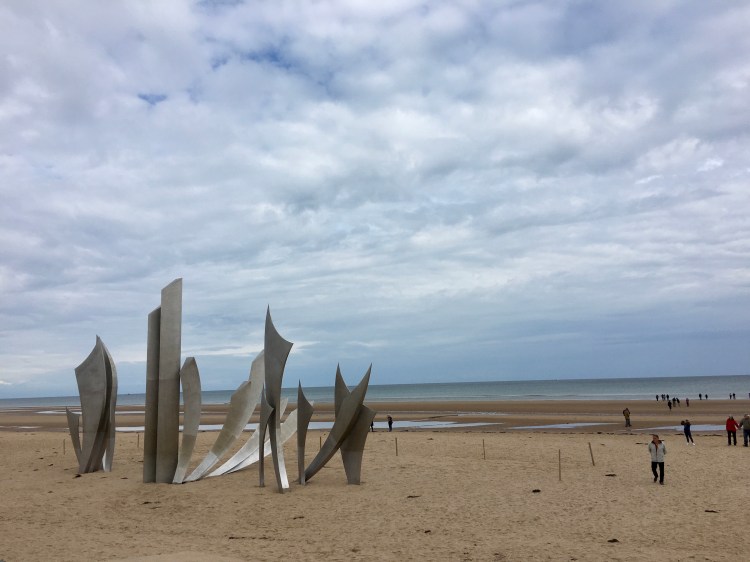
The memorial with the British, French, American, and Canadian flags behind.
For Americans, I would say Omaha beach is the most ‘famous’ of the landing beaches. The memorial itself is located in the center beach which, to our surprise, is 8km (5mi) long.
Tip: Parking at the beach is free, and the D-Day House restaurant directly adjacent offers a nice (& affordable) lunch.
I’ll be honest, we weren’t wow-ed by Omaha Beach. It’s hard to feel the history here – you really have to use your imagination because, at the end of the day, it’s just a beach. One thing that helped came from a documentary we watched before the trip. A veteran suggested:
Should you ever visit Omaha beach, walk out as far as you can at low tide and turn around. Notice just how much beach there is; how much unprotected beach.
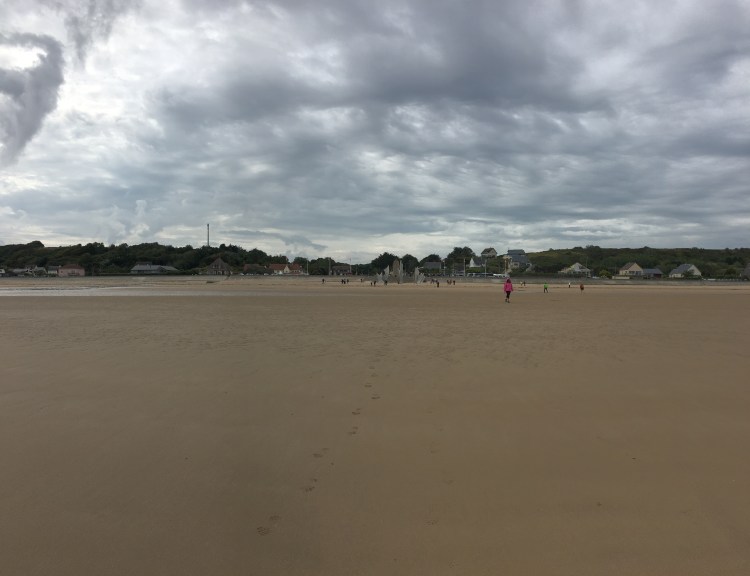
Not to mention, things went sideways on D-Day. These young guys were unloaded in water over their heads carrying 35kg (75lbs) of gear and told to take the beach. We walked out at low tide as far as we could go, and thanks to that documentary, you could imagine it.
Looking back at the town & memorial at low tide.
The Omaha Memorial looking out.
Musée Mémorial d’Omaha beach
Location: Saint-Laurent-sur-Mer (~200m from the beach)
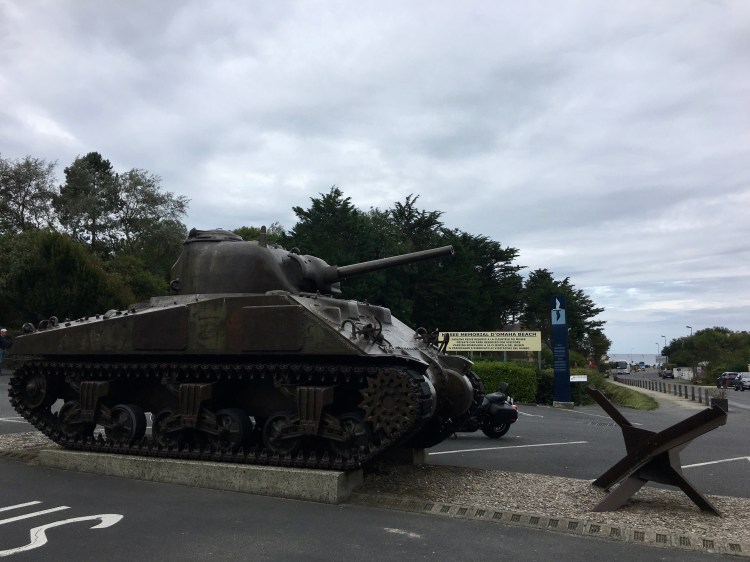
A tank and a Czech hedgehog.
A quick walk up the road will take you to the Omaha Beach Museum. Now, you should visit this place with an open mind, because I walked in and instantly thought ‘nope!’. It’s one of those museums that has really bad mannequins… like, a lot of them. I spent the first 15 minutes annoying the shit out of Shane because all I could focus on was how f*cking creepy these things were. But, if you get over the fake people and actually look at the things on display, then you will be impressed. They have tons of artifacts from the war: uniforms, guns, obstacles from the beach (like the Czech hedgehog – meant to take out tanks), and trinkets from soldiers. And, they have a great film describing the events of D-Day as related to Omaha beach. All you need is about an hour, and it’s worth the visit.
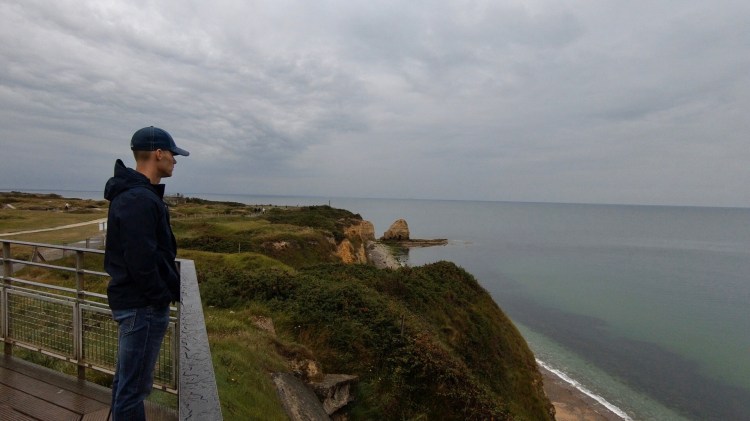
Pointe du Hoc is a cliff which overlooks Omaha Beach and was a battery for the Germans. Here, there were six 155mm cannons – which means nothing to me except for ‘that’s a big gun’. It meant a lot to the Allies, since these were intended to target approaching ships.
Looking at the English Channel from Pointe du Hoc.
On June 6, 1944, American Rangers were tasked to take Pointe du Hoc. After a series of bombings targeting the battery, the rangers scaled the 100m (~330ft) cliffs and attacked the German positions, but they found that the guns had already been dismantled.
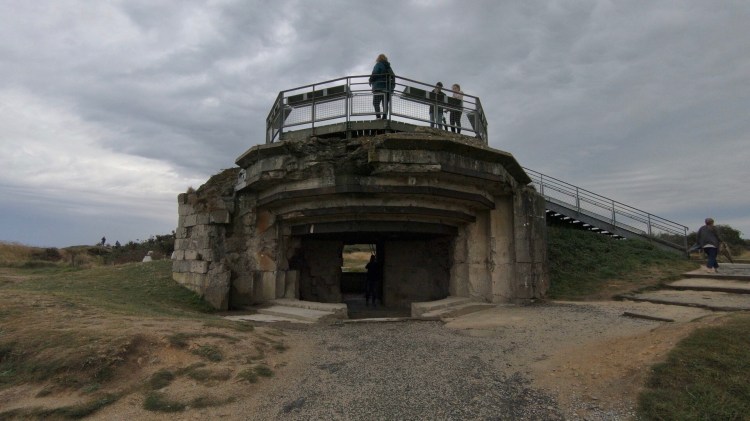
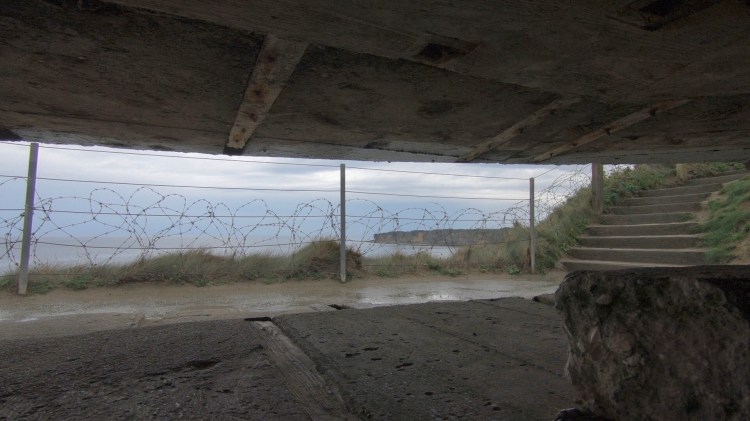
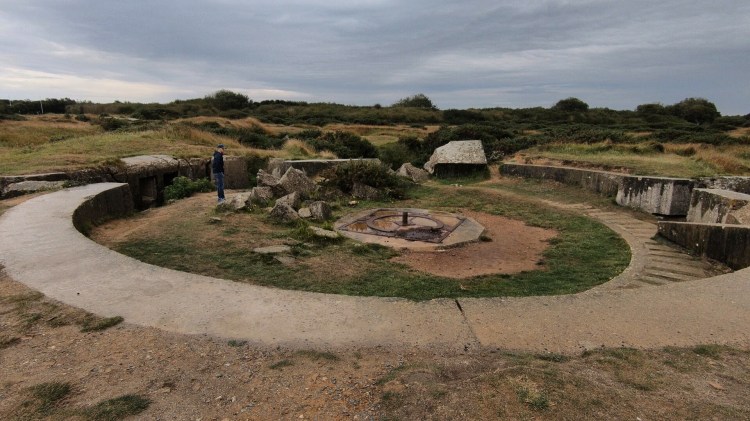
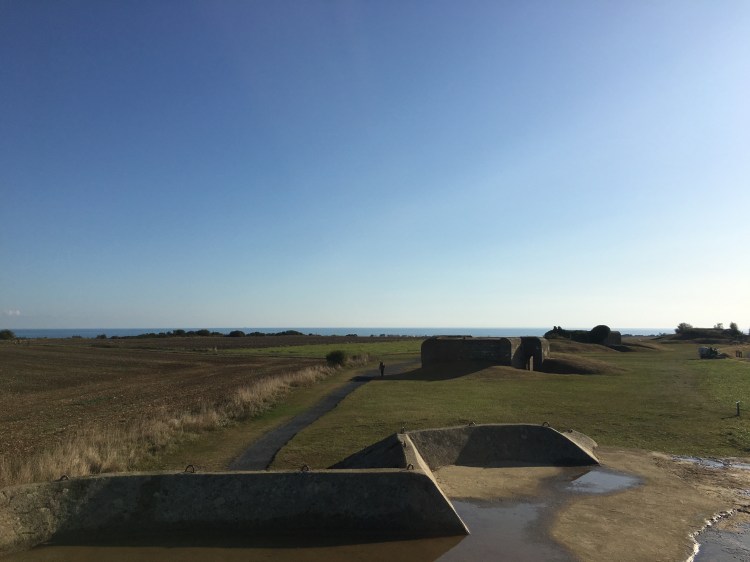
Unlike Omaha Beach, you can see, feel, and explore the leftovers of war. The pits from bombs are everywhere and you can walk through all the bunkers and gun pits.
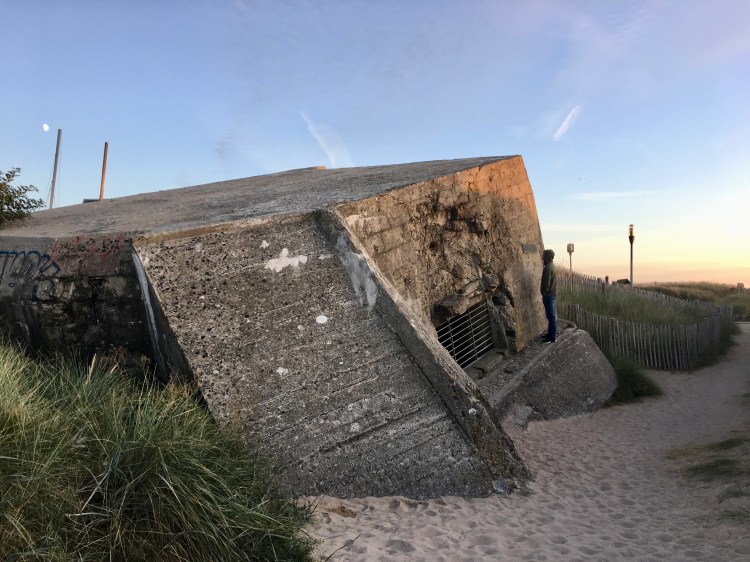
One of the concrete gun bunkers.
Inside a bunker looking out.
Looking out at the English Channel & remaining bombing pits.
Shane, standing in a massive gun pit.
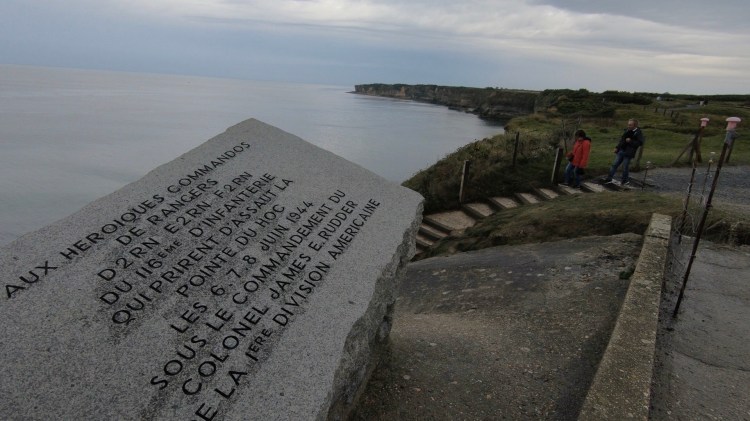
The Pointe du Hoc Ranger Monument is also here – at the very edge of the cliff overlooking the English Channel and Omaha Beach.
I purposefully chose to show the above picture first, because the monument itself is uh… well, I’ll let you decide what it looks like.
Tip: Pointe du Hoc is open 24 hours (but the Visitor Center only 09:00 – 17:00).
We did miss a few things specifically related to the American efforts on D-Day, for example, all of Utah Beach. With more time, I would suggest:
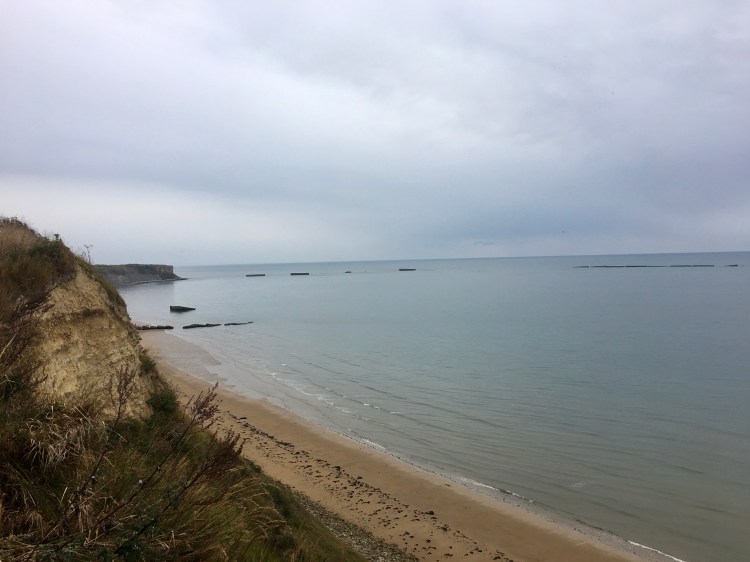
We honestly had no idea about this (remember, I said poor planning?). We were driving to get to the American Cemetery, crested a hill, and there was a spectacular viewpoint. In the distance you could see… things? Obvious remnants, but what we weren’t sure.
Notice the ‘things’ in the distance?
Turns out, those ‘things’ are leftovers of Mulberry Harbor B and you can actually walk up to them at low tide. There’s just something about things you can physically touch that solidify the history of a place.
Leftover beetles from Mulberry B.
Mulberry A (at Omaha Beach) and B (at Gold Beach) were code-names for the temporary ports which were built by the UK so cargo could be rapidly unloaded once the landing beaches had been secured. The pieces above, that you can walk to from the beach, were part of the road from the boats to the shore: ‘beetles’ (floating steel pontoons) held ‘whales’ (the roadway). What you see in the background are caissons and purposefully sunken ships to create a harbor and shield the roads from the sea.
Unfortunately, Mulberry A was destroyed in a storm, but Mulberry B was functional until November of 1944.
Tip: If time allows check out the Musée du Débarquement which goes into more detail.
We, unfortunately, didn’t have time for this and regretted it!
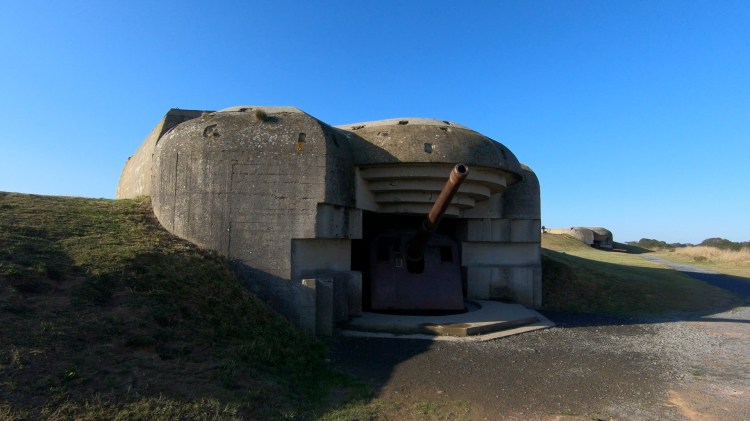
This is the only gun battery with the guns still in place!
It feels weird to be excited about big guns?
And, similar to Pointe du Hoc, you can walk in / around / over.
Tip: It’s also open 24 hours. Go before 10am and you’ll basically have it to yourself.
Do you play ‘happy & crappy’? My Sis & TB introduced us to the game and now it’s a thing. It’s simple. At the end of each day, you pick one happy moment and one crappy moment – whatever you want them to be. It’s a nice way to reflect on the day, especially on vacation.
Shane wanted to see this SO bad and we couldn’t find it the day before. We didn’t know the name, we didn’t know the location… After some serious Googling we managed to find it and went early in the morning on our way out of town. I know for a fact this was Shane’s ‘happy’ for the day, but I think it might have even made the top ‘happy’ for the trip (no offense, Sarah & Barend – we love you 😜).
Down the barrel…
Apparently, these bad boys had a 20km (13 mile) range…
View from the top of the gun bunker; English Channel in the background.
Tip: Hour long guided tours of the area are offered for only €5! Check out their website for details!
I think, despite only having 36 hours in the general area, we managed to fit in quite a bit! And, as an added bonus, we saw a little bit of Juno Beach. We rented an Airbnb with a great view and a 2 minute walk to the beach.
View from the Airbnb – Juno Beach Visitor Center in the background.
An abandoned bunker on Juno Beach.
General Charles de Gaulle monument on Juno Beach, commemorating his return to France.
My response when our friend, Michelle, asked what we were going to see on our road-trip through France.
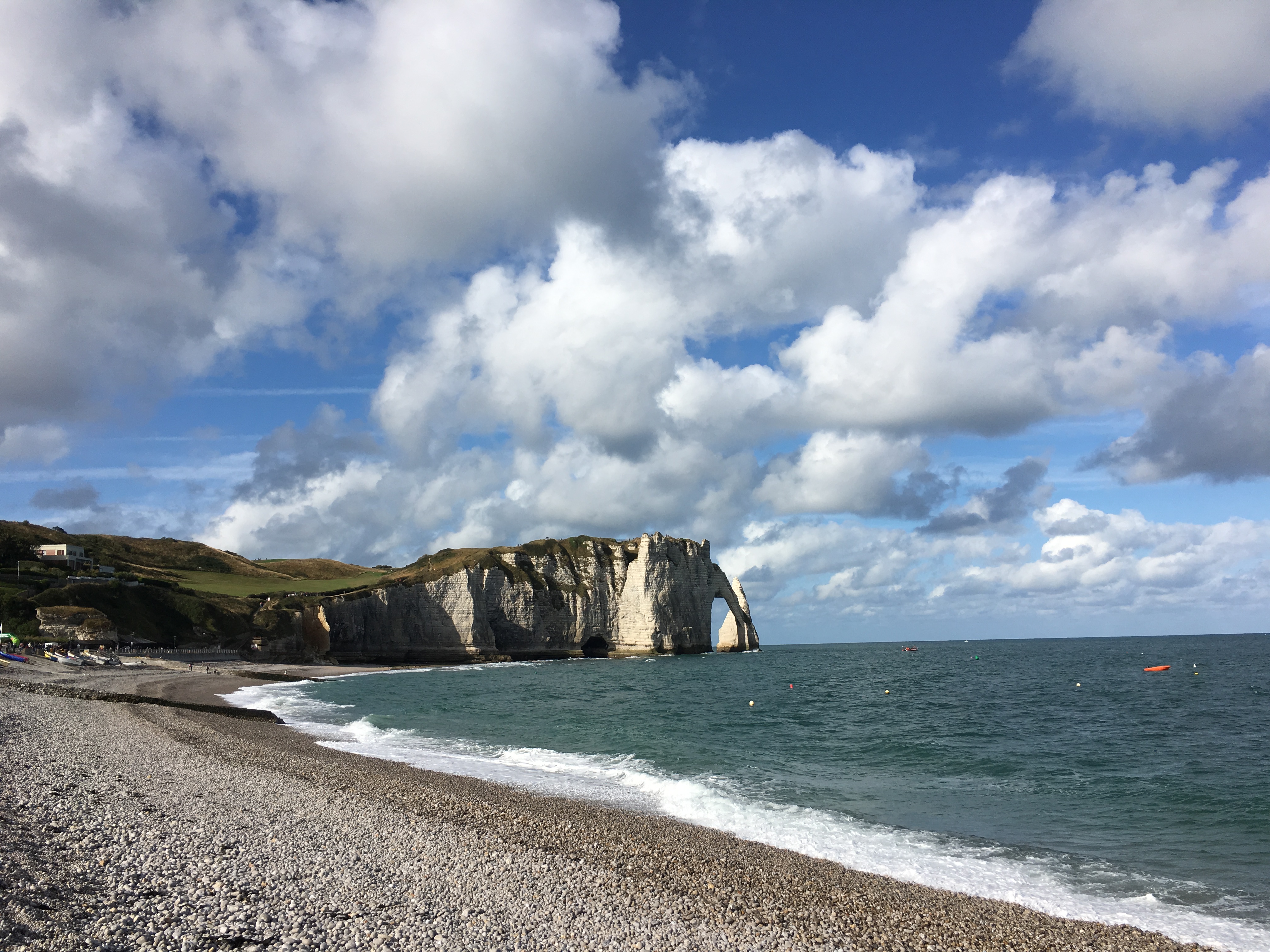
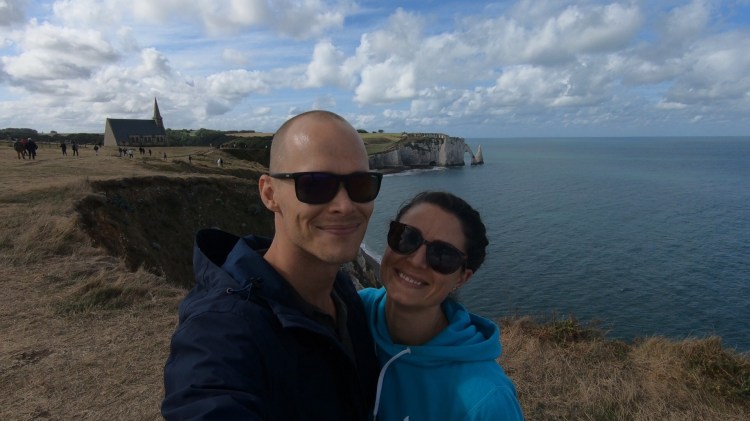
The cliffs at Étretat.
It’s been a long and boring summer – well, for me at least. Hence why the blog was dead as a doorknob until Shane came back from Corsica.
In all honesty it hasn’t been that bad. Maybe you heard, but we actually had a few heat waves in Europe (38 ºC here!) so we spent a lot of time outside and at the bouldering gym. Regardless, June through August is vacation season in the Netherlands, so one can get a little salty watching colleagues leave for their (standard) three-week summery vay-cay.
But alas, I endured! (ha)
Thanks to our friends, Sarah & Barend, we were heading to the Brittany region of France to see these two lovebirds get married and decided to turn it into proper road trip.
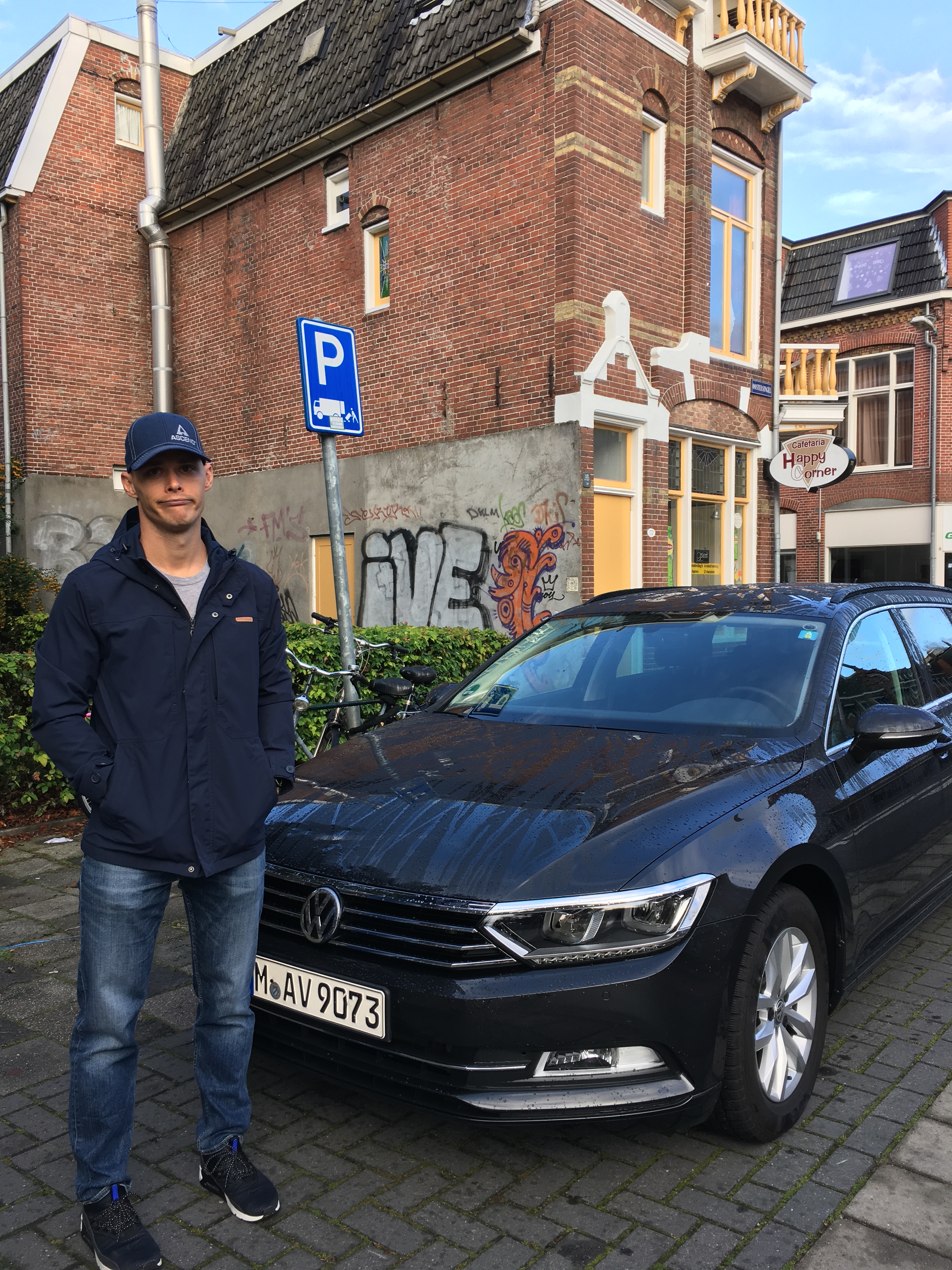
We booked a Mini Cooper. We got a VW wagon. Slight disappointment.
First up, the cliffs! I’ll get to the sh*t later. 😏
Fécamp
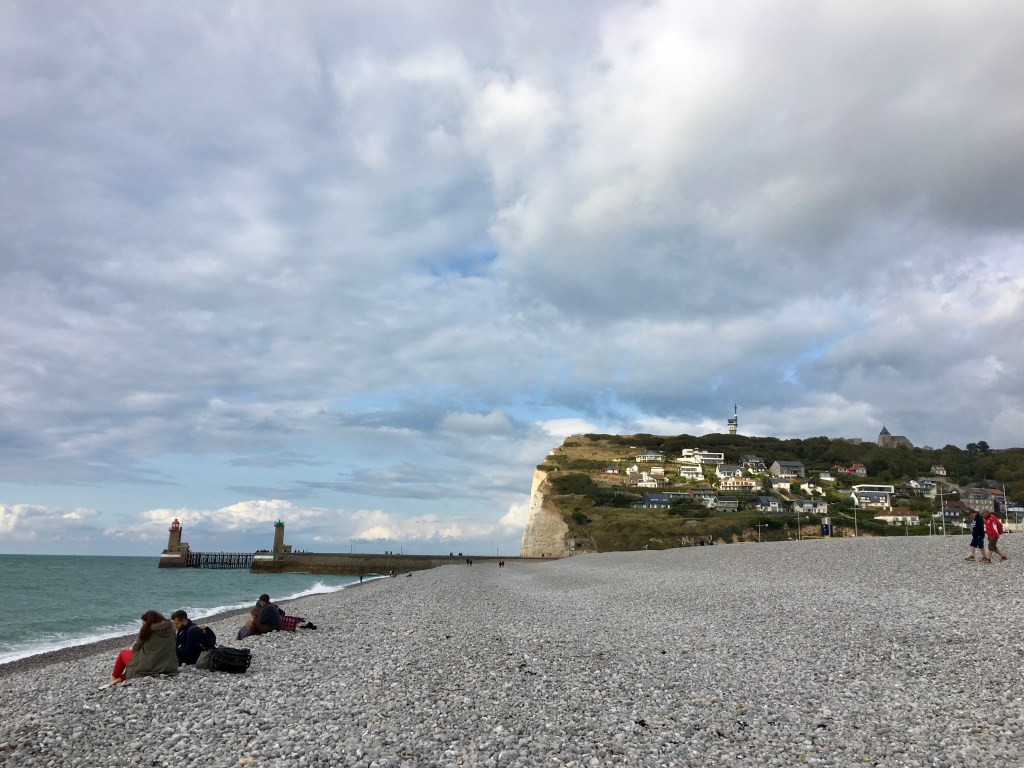
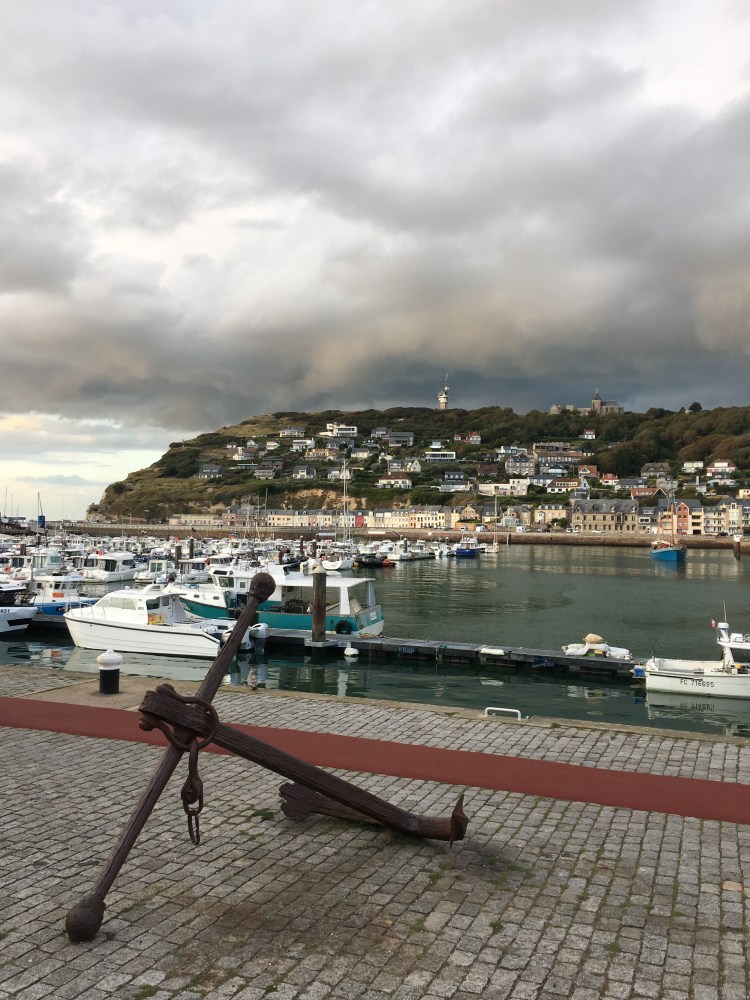
I’ll be honest, the only reason we stopped in Fécamp was because a night in Étretat, even in the shoulder season of September, was more expensive than we were willing to pay. Fécamp, located on the coast of Normandy, is a quick 25 minutes north of Étretat and 7 hours south of Groningen so it was a good stopping point on day 1.
Tip: For a stopover night on a budget, stay at the Ibis Budget Hotel. It has free parking and is an easy 25 minute walk to the boardwalk.
Honestly, it looks like a painting. So it should come as no surprise that this area of Normandy has been the inspiration for many an artist over the years. Displayed on the boardwalk is a plaque with the painting below, by Jules Achille Noël, from 1871. I was shocked by how alike the painting and the modern day view were – even the church is still there!
The beach at Fécamp.Crinolines sur la plage, Fecamp (thank you Wikipedia for the image).
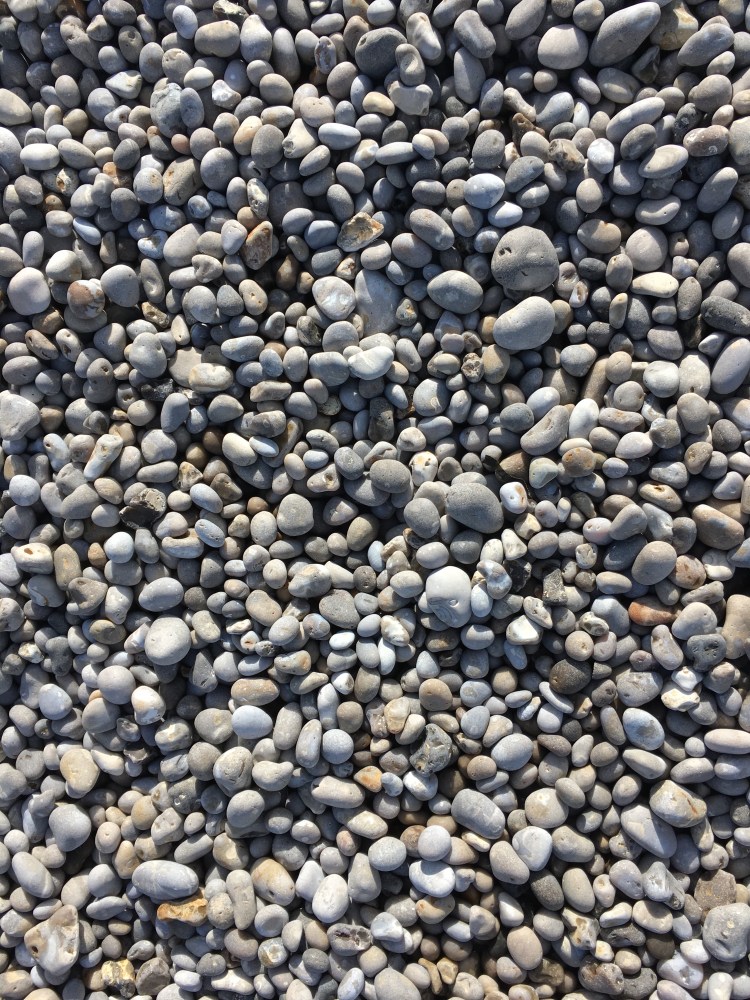
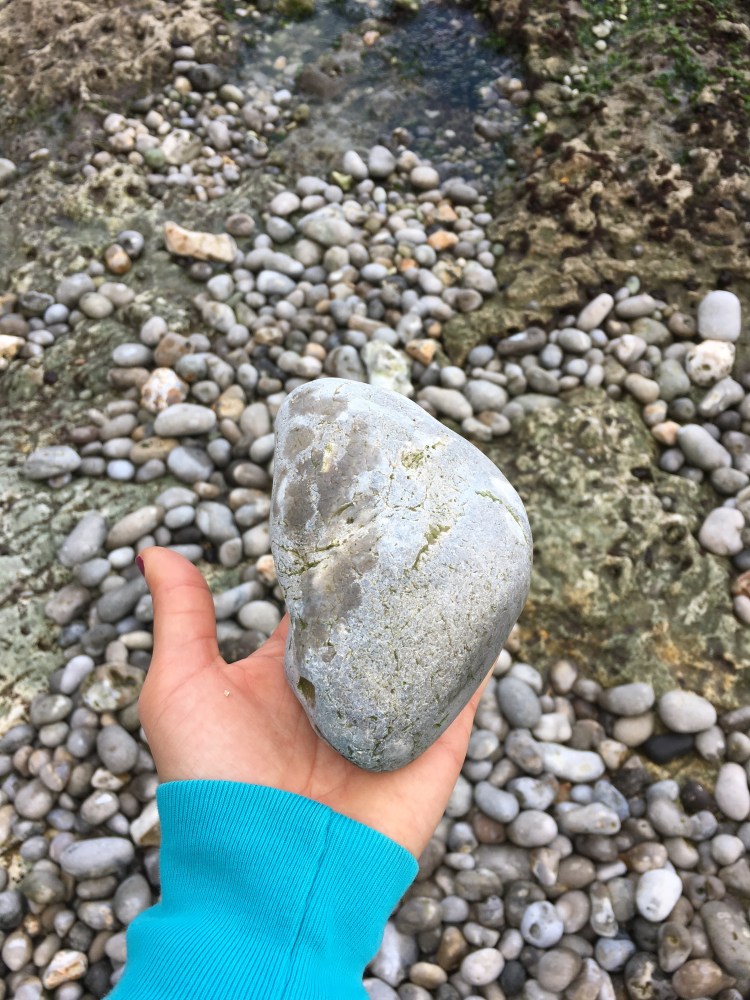
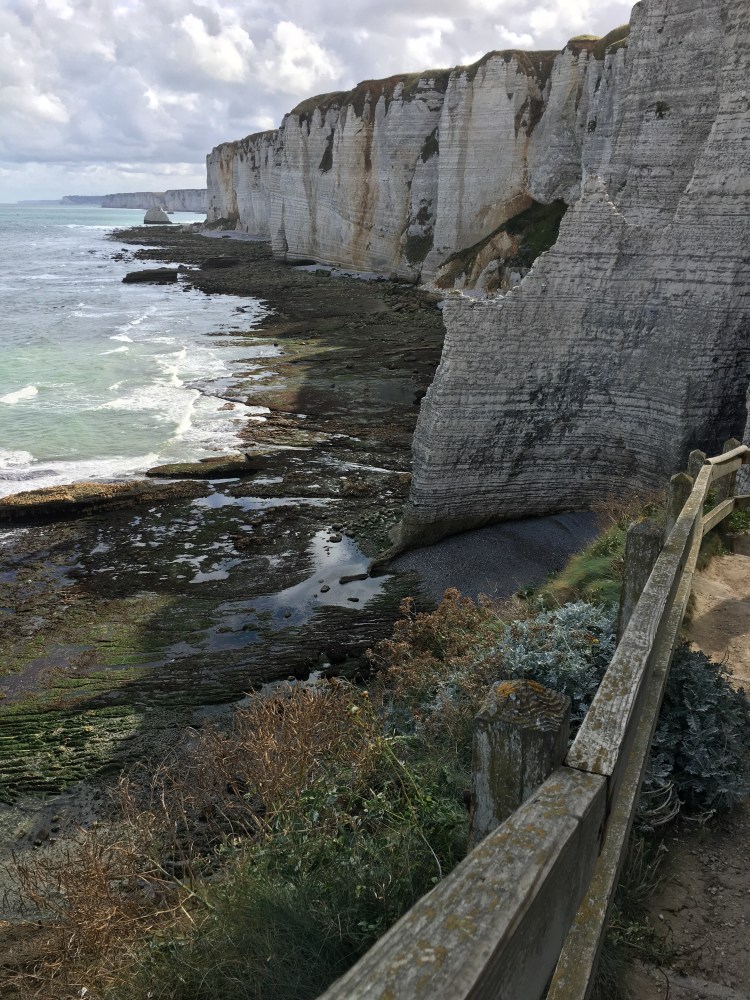
The other unique thing about both Fécamp and Étretat are the “pebble” beaches. I say “pebble” because some of them were flat-out rocks. The pebbles are created from the soft white chalk cliffs that make up a 125 km (80 mile) stretch of coastline called La Côte d’Albâtre (the Alabaster Coast) where these two towns are located. Over time, they are perfectly polished by the waves. The sight and, oddly enough, the sound of the water moving through them was a new experience for both of us!
Tip: Have a drink (or a snack!) on the boardwalk around sunset. Hard apple cider and mussels are a specialty of the region.
Étretat
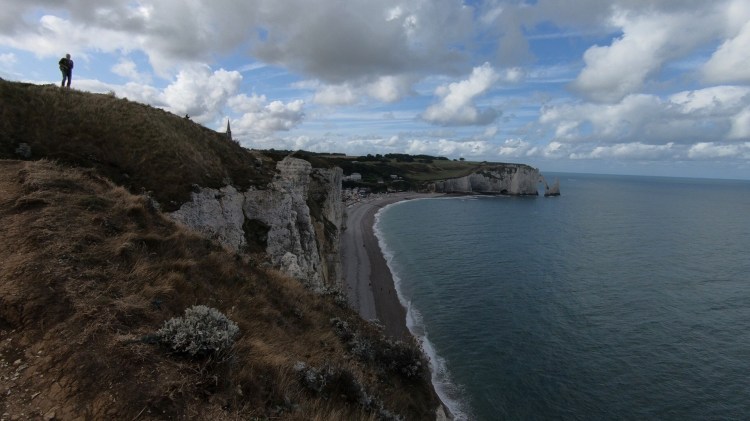
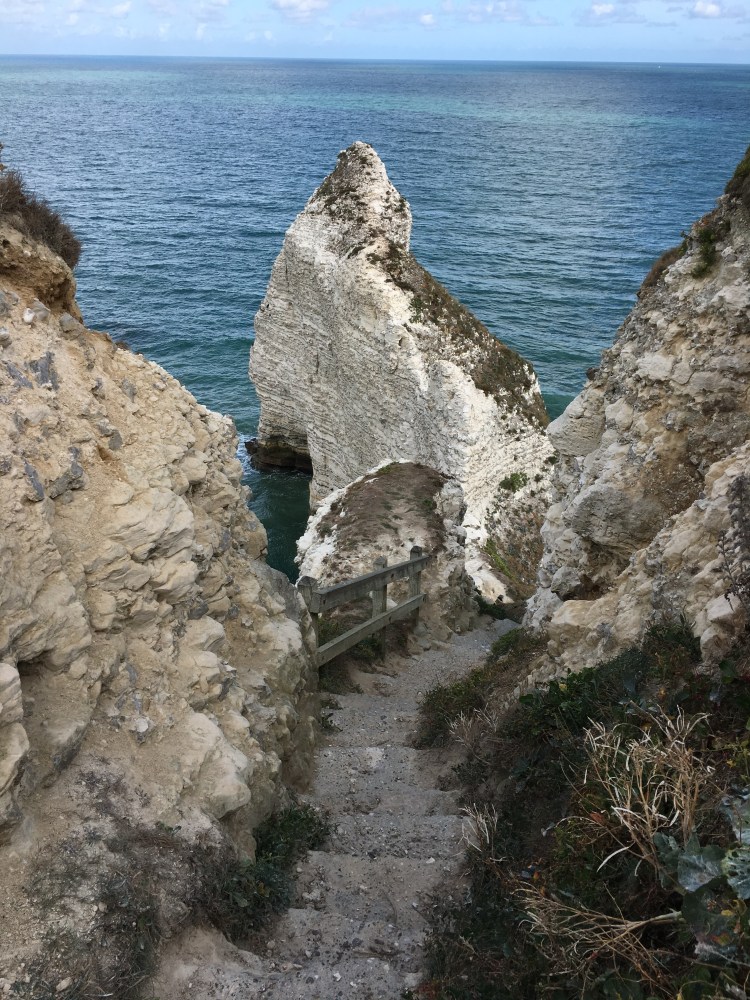
Étretat is home to (in my opinion) the most famous cliffs on the Alabaster Coast, and for good reason! They are STUNNING. The kind of place that photos don’t do justice. We arrived in the area not knowing what to expect and left in awe of the natural beauty!
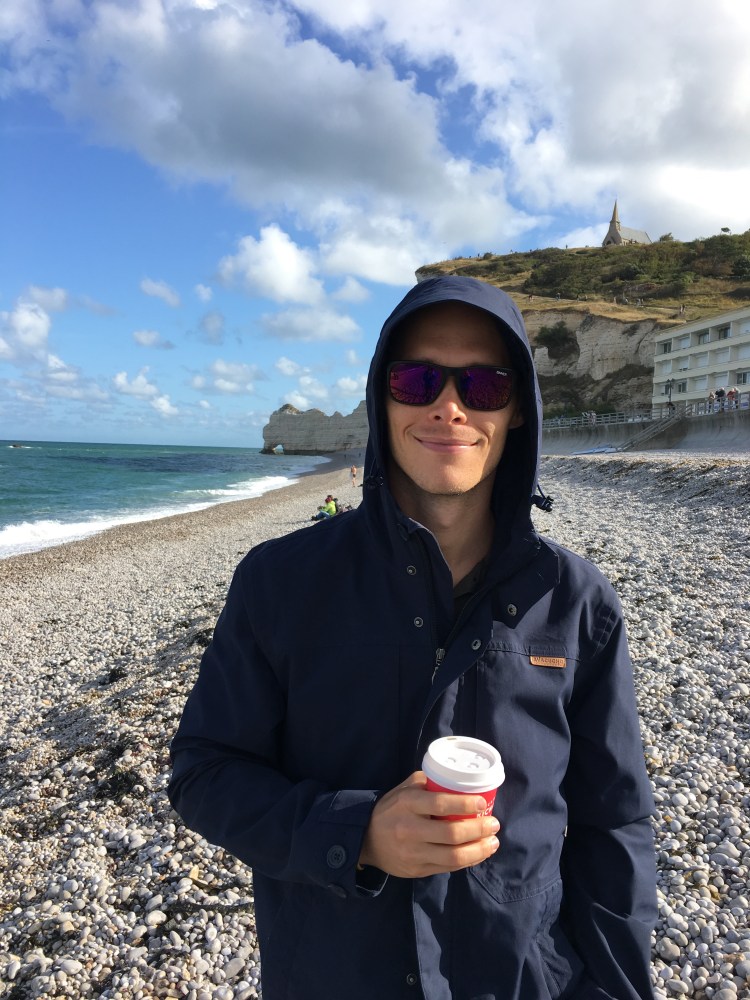
Similar to Fécamp, there is a boardwalk on the beach which allows direct access to paths up the cliffs on either side. We arrived early enough to enjoy a coffee on the beach, then head up the cliffs. We started to the right of the beach, if you’re facing the English Channel.
Tip: Park for free outside the town and walk in. The signs say 10 minutes walking; expect 15 – 20 minutes but it’s a straight shot.
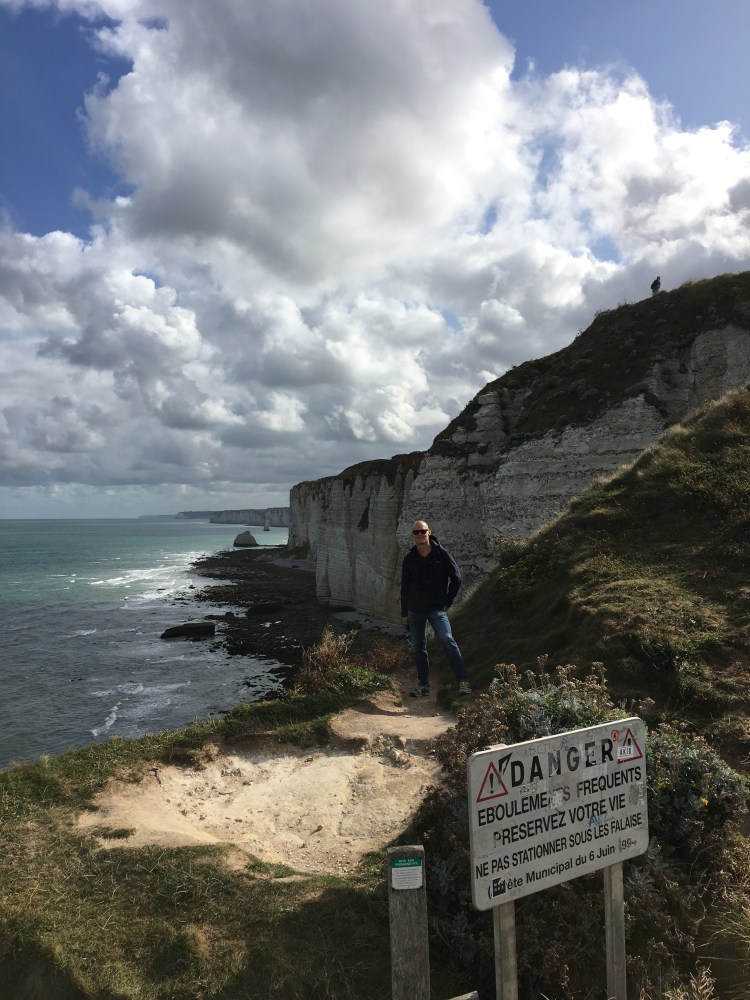
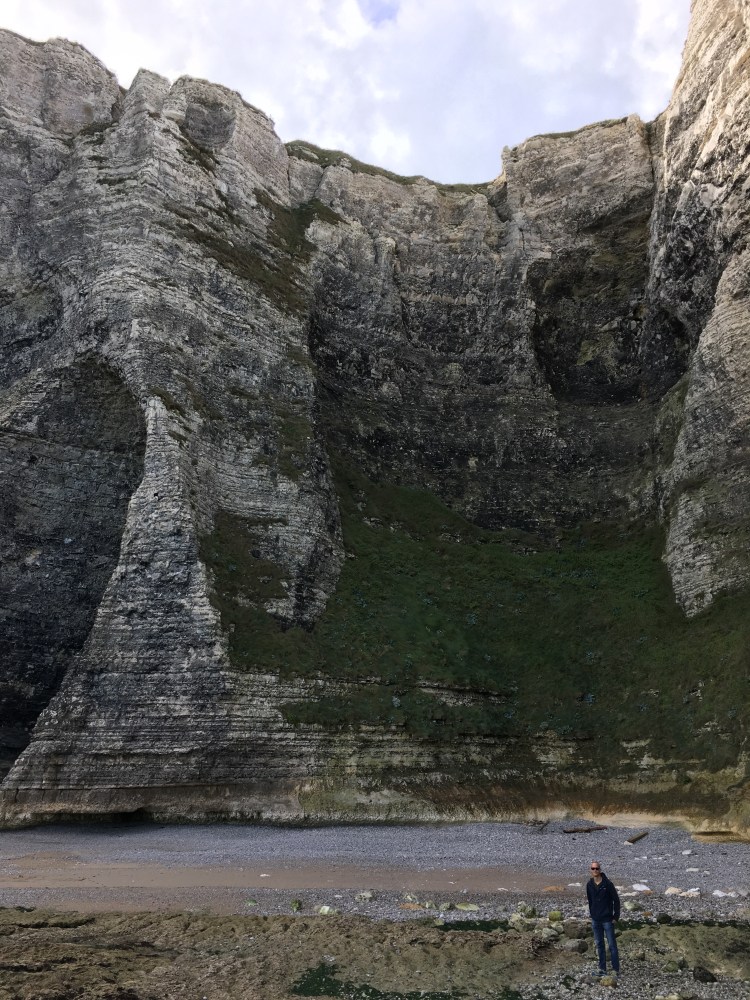
Of course, you can go up and stop – that’s were a lot of people ended their cliff journey. But if you’re feeling a little adventurous and the tide is out, then pick one of the paths down and go exploring! We followed the path less traveled and ended up by ourselves on the beach underneath the cliffs.
Danger?! He laughs in the face of danger! Ha Ha Ha Ha! (name that movie… 🦁)
We made it!
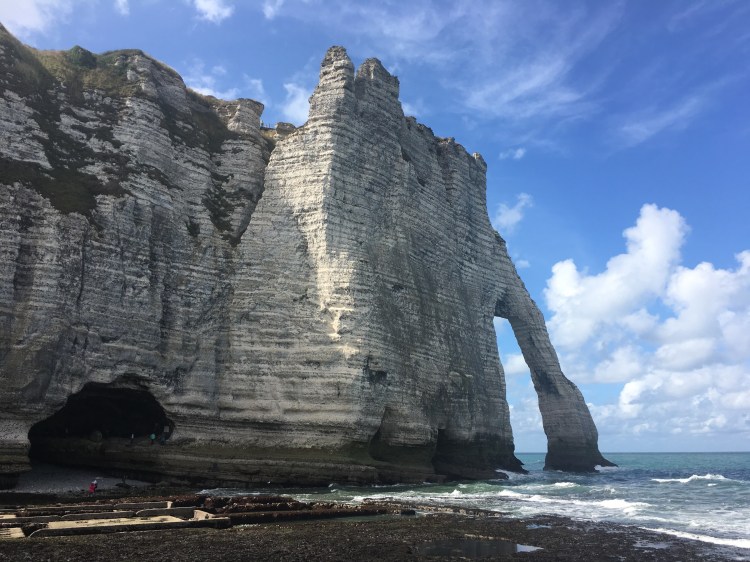
The cliffs look huge from a distance, but standing at the bottom really put things into perspective. Can you spot Shane?
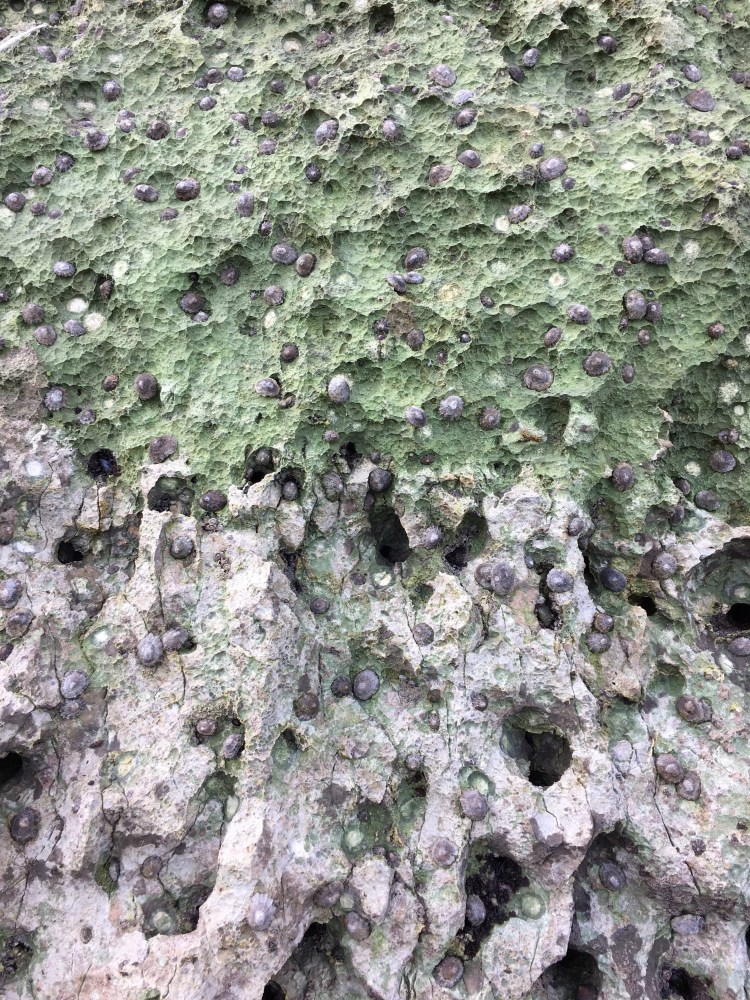
This was also biologist Shane’s dream world – so much life in the rocks that wouldn’t have been visible at high tide. Mussels, anemones, other things I certainly can’t identify…
Tip: If rock-hopping is your thing, look up the tide schedules before you go and plan your day accordingly.
And, a little public service announcement:
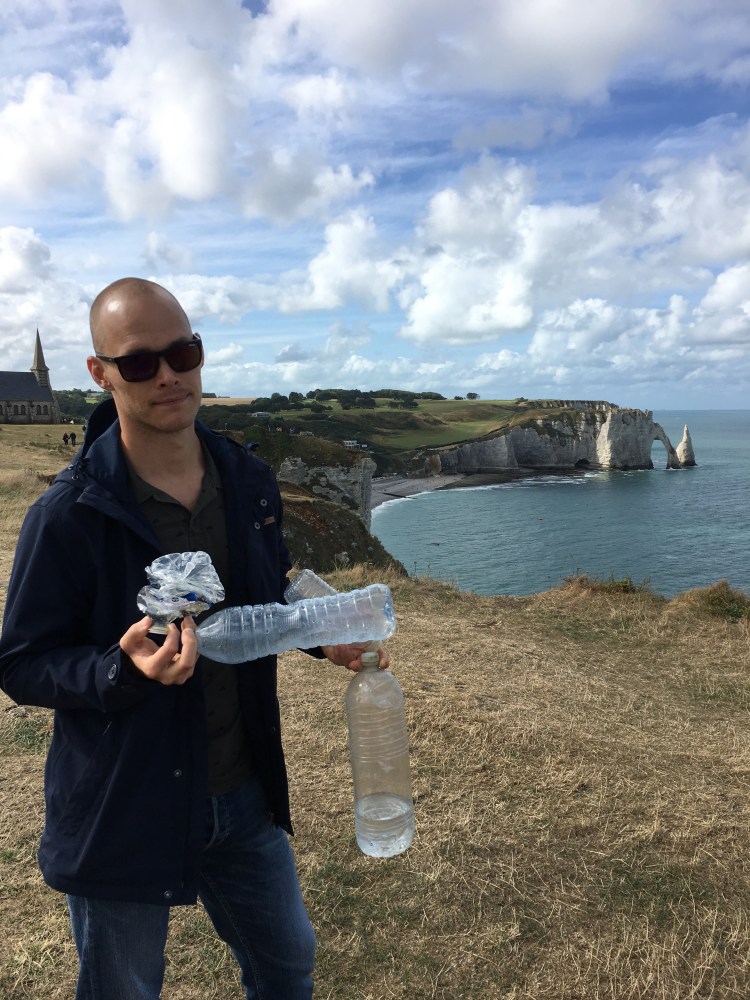
Don’t be an asshole – throw your trash away in a proper trashcan! Better yet – ditch the plastic and get a reusable bottle. We brought as many plastic bottles that we could safely carry back up the cliffs, but it’s always astounding the amount of trash tucked away in corners. #endrant
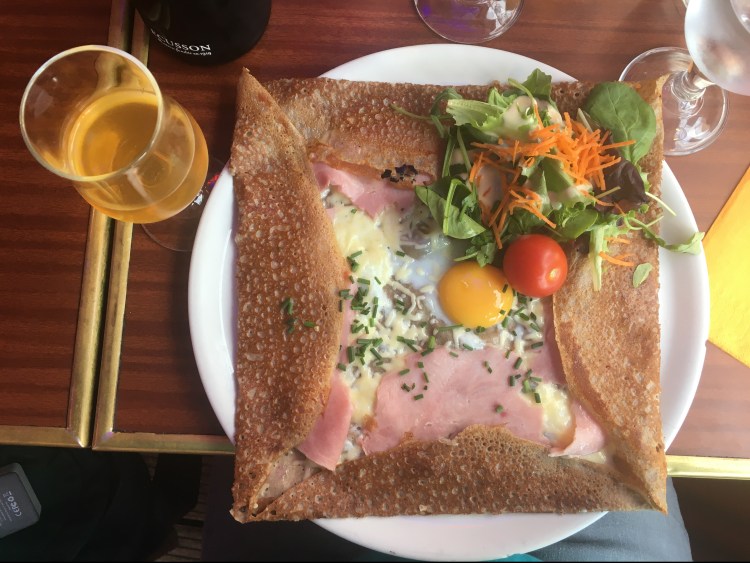
All that danger (and trash collecting) works up an appetite – a galette and some cider did the trick, then we were off to explore the other side!
If you’re facing the English Channel and turn left, you will walk towards two natural arches (Porte d’Aval and The Manneporte) and L’Aiguille (The Needle), a 70m tall pointed chalk formation. Similar to heading right, you can walk up a clearly marked path to the top for what I can assume are some spectacular views. Unfortunately for us (or maybe fortunately?) there was a triathlon taking place which used the path so it was blocked off. No worries though, the tide was low and I read online that you could walk THROUGH the arch at low tide!
And damn it – if I could walk through that arch I was walking THROUGH THAT ARCH!
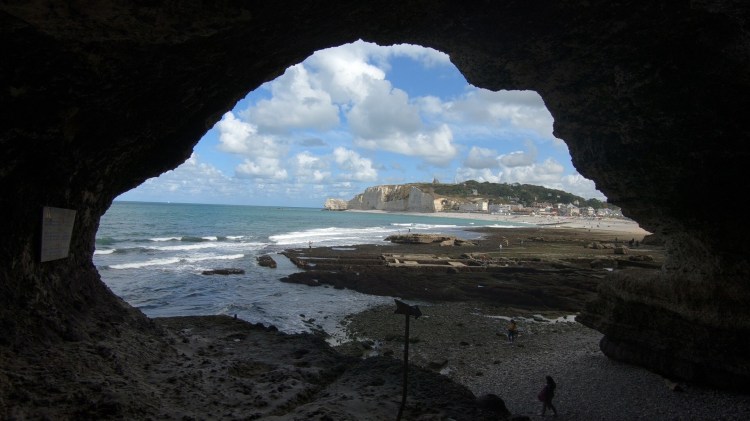
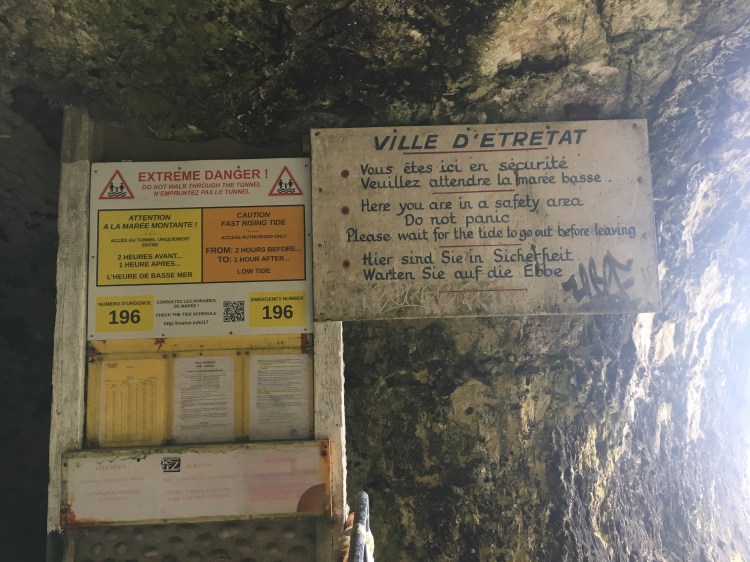
That wasn’t quite the case – the water in no way goes out far enough at low tide to walk through. What you can access is a cave with a tunnel that shoots you straight through to the beaches on the other side.
I’ll take it.
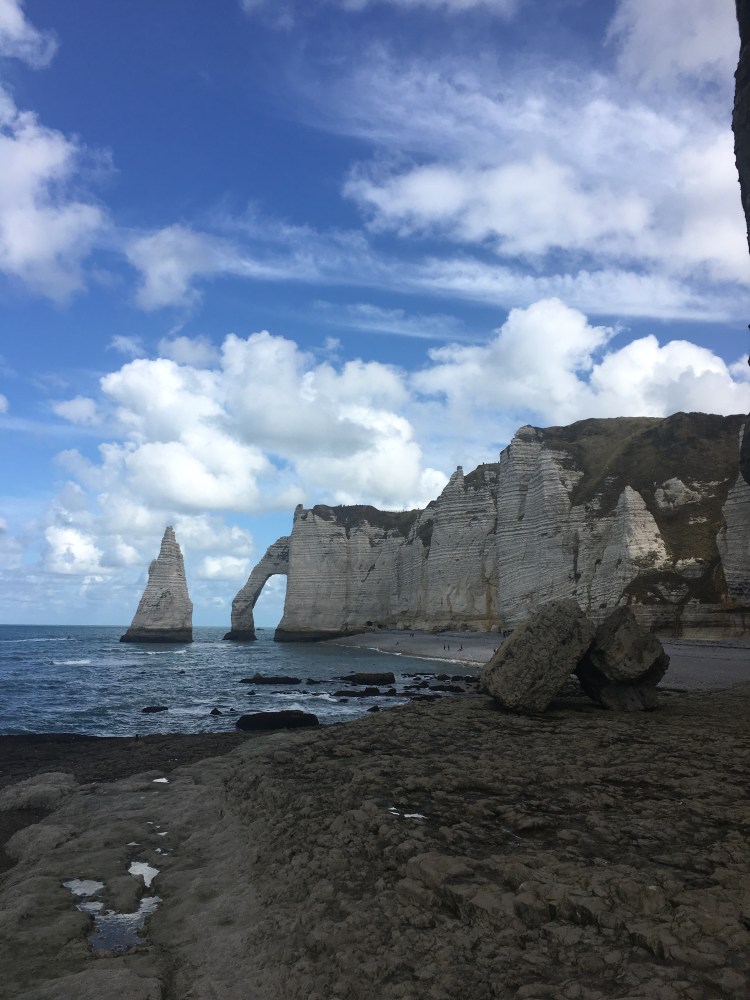
View of the beach from inside the cave.
And don’t worry – if you improperly time your adventure the cave is a safe spot. You’ll just be waiting a while before you can leave again…
The views from the other side certainly made it worth the risk (the Needle & Porte d’Aval (arch)).
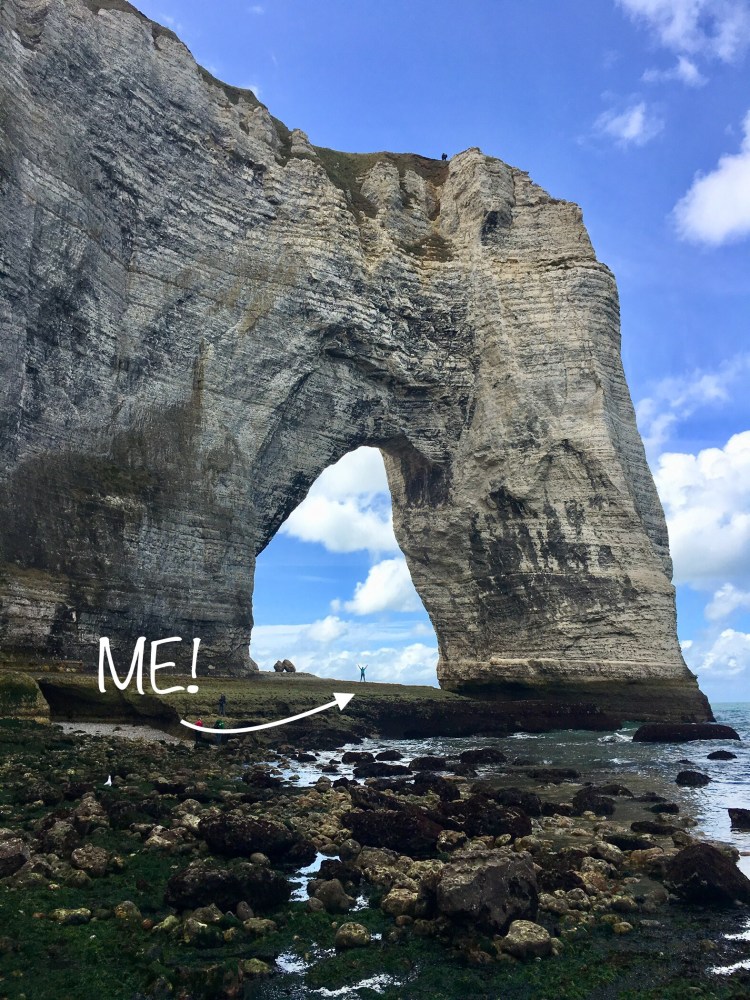
In the photo above, we are actually standing underneath The Manneporte (the largest arch) so I guess I did get to walk under one after all! And to put things into perspective the sheer size of this arch…
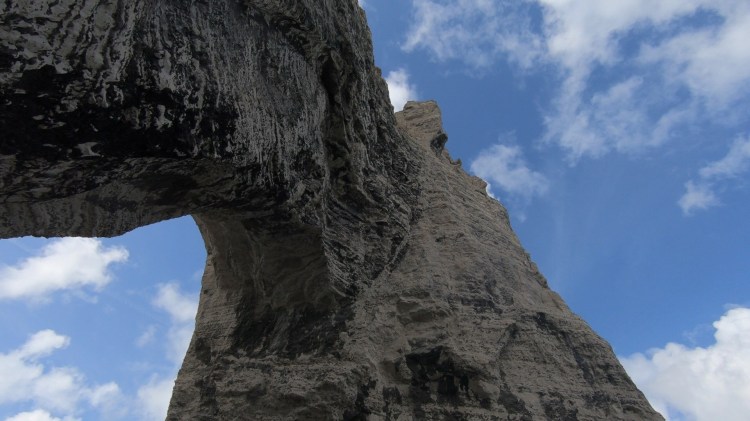
Looking up.
Tip: Wear sturdy shoes. Your feet will thank you later.
With tired calves we made our way back to the car for the ~2 hour drive to our next stopping point – the D-Day landing beaches.
Final tip: Visit this area (!) and go in the shoulder season.
The towns, the cliffs, the views – all exceeded expectations, and by coming in the fall you miss the masses of tourists. The towns themselves are small; by mid-day it was a little crowded but not annoyingly so, and you were able to be alone out on the cliffs. I can imagine it being easily overwhelmed during peak-season.
By car, it’s a little under 3 hours from Paris so it could be seen in a day, but if you have the time then spend the night so you can explore at leisure.
If it’s inspiring enough for Claude Monet to create 20+ paintings, it’s good enough for a one night stay!
“The blog is dead. It needs your contribution on account of I have nothing.”
….maybe I should write a blog post about my trip to Corsica?
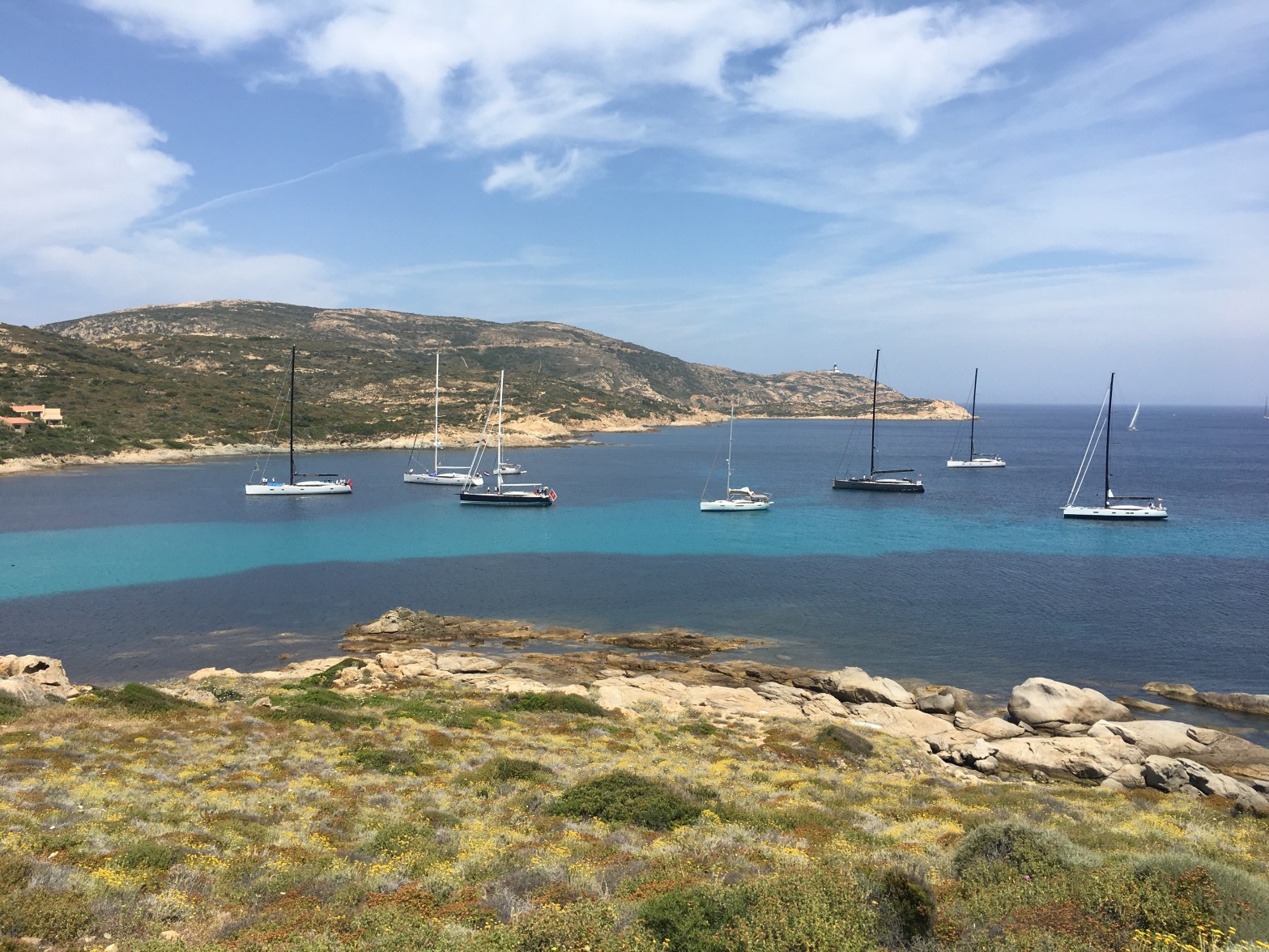
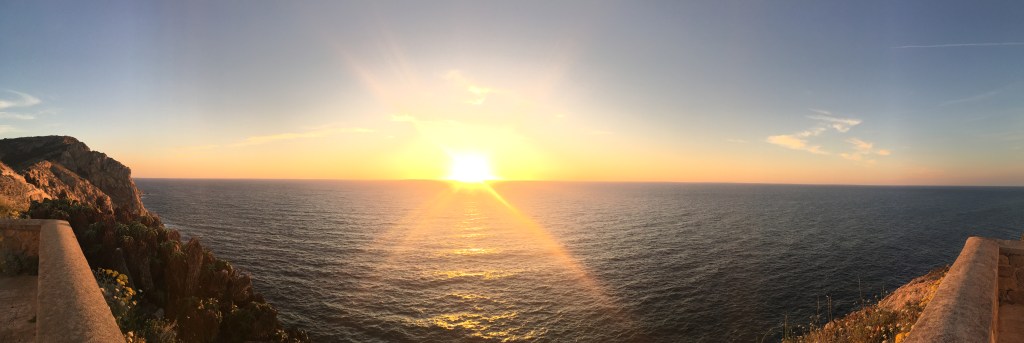
I spent the entire month of June on an island in the Mediterranean Sea! Believe it or not, this was a work trip; a fieldwork to trip to be more precise. Not a bad place to work, huh? For all it’s frustrations, science can be pretty cool sometimes.
Perhaps I should explain how this came to be. Last year, I interviewed for a postdoc position in Tübingen, Germany. Ultimately, this position did not pan out, but it did lead to further discussions of potential collaboration. Simply put: this is science lingo for saying “write your own project and come do it here”. As an aspiring academic researcher, this exactly the exciting/scary/adventurous/bold opportunity I was looking for. To survive in academia, you have to 1) develop your own, independent line of research and 2) fund that work through grants. If this is to be my chosen career path, then why not start now?! So, since finishing my PhD, this has been my focus: I have written and submitted my own grant applications, in hopes of continuing my research career in Tübingen.
As part of this process, I have been in continual contact with my potential postdoc host. In one such conversation, I was offered an opportunity to join the group on their upcoming fieldwork trip. Naturally, I accepted. The fact that this trip would be to Corsica, France was an obvious plus, but more relevant was what it would mean for my research experience. For both my Master’s and PhD, I completed fieldwork very early in the project. These experiences proved invaluable to my later work – in evolutionary biology and behavioral ecology, it’s important to place your work in a larger context and to remember that these are natural systems, with real implications. Fieldwork definitely drives this point home. For all those non-science nerds out there, it’s also really freaking cool to spend a month diving in the Mediterranean!
Getting to (and from) Corsica was an adventure in itself; not because Corsica is so remote, but more so due to the logistics of scientific research. Any fieldwork trip, by necessity, requires lots of gear. As you can imagine, transporting all this gear to and from the field comes at a great expense. Scientists would much rather spend their hard earned grant money on actual research, so if a cheaper transport opportunity presents itself, you take it. Case in point for getting to Corsica: drive. For me, this meant the following travel schedule:
Day 1: Groningen -> Amsterdam (2 hour train ride) Amsterdam -> Stuttgart, Germany (1.5 hour flight) Stuttgart -> Tübingen, Germany (~1 bus ride) Overnight in Tübingen
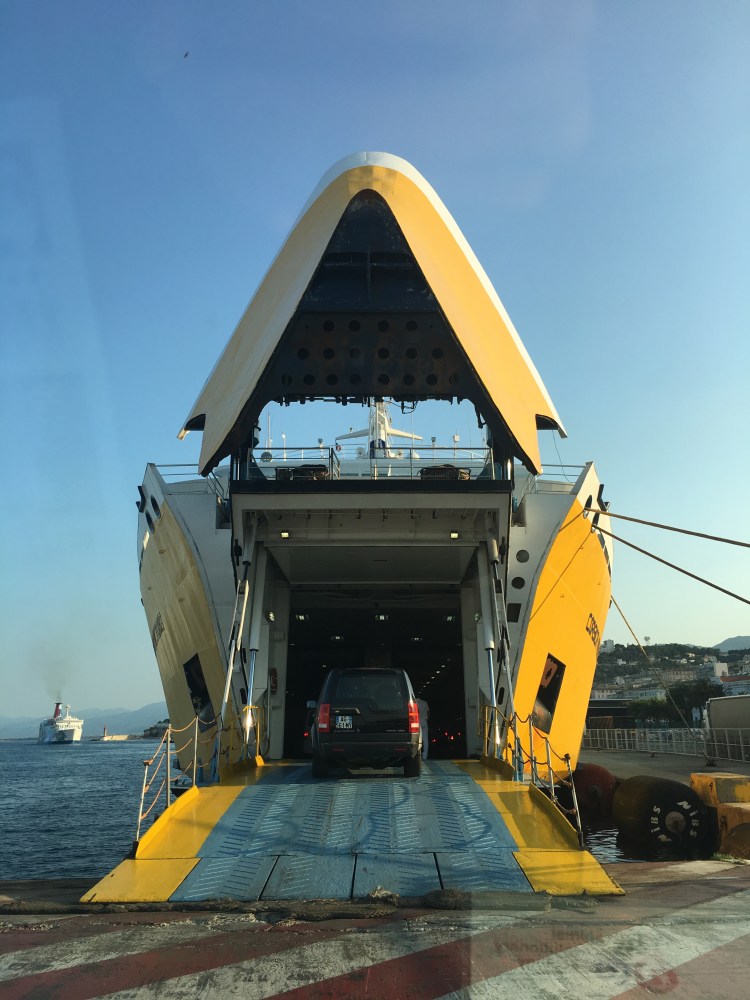
Day 2: Tübingen -> Savona, Italy (~9 hour drive) Savona -> Bastia, France (overnight ferry)
Day 3: Bastia -> Calvi, France / Stareso (~3 hour drive)
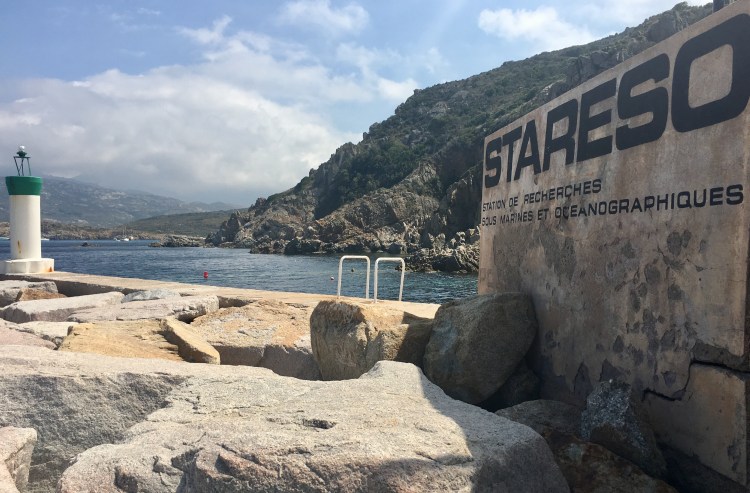
Station de Recherche Océanographiques et sous-marines or Stareso, for short, is a marine biology research station, located just outside of Calvi, in northern Corsica. Originally built in the 1970’s, Stareso has been the annual fieldwork destination of the Tübingen visual ecology group for the past 10 years. There are, of course, many other research groups that also make use of the station, many of which also have a long history of coming to Stareso.
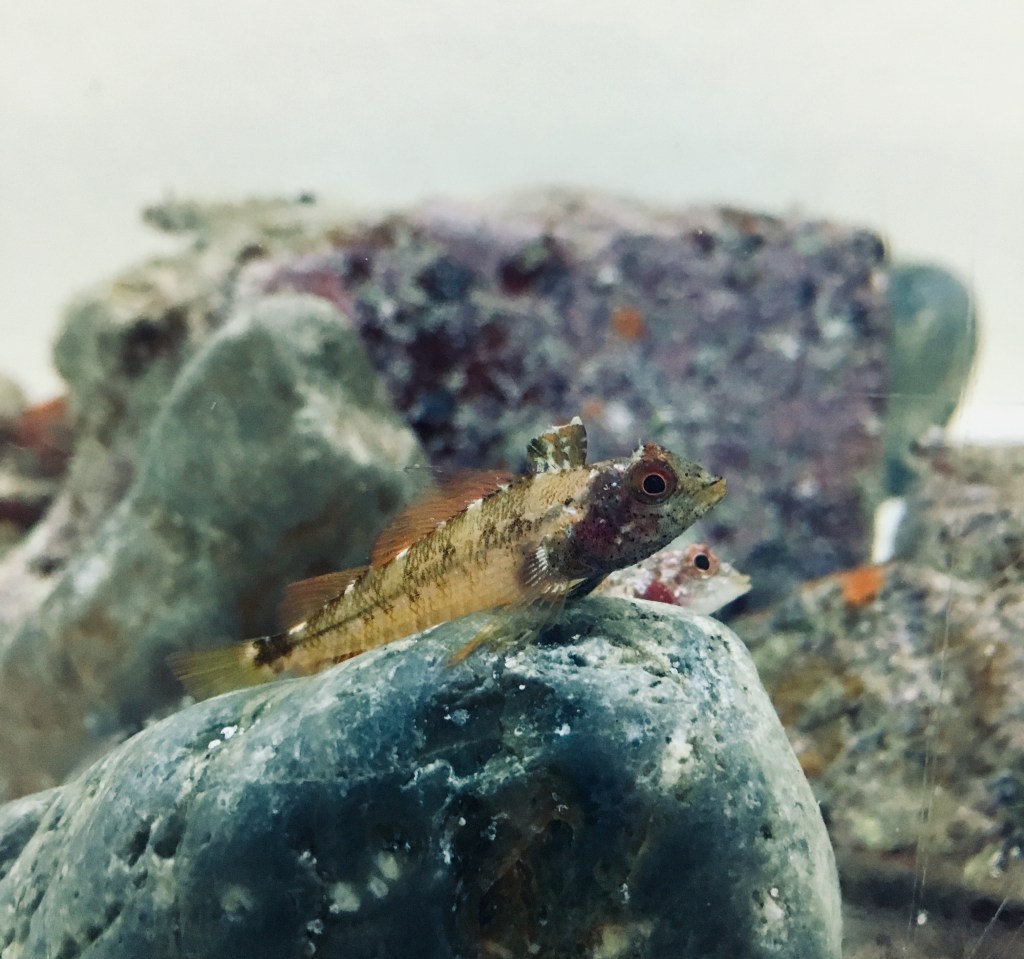
I’m not going to go into much detail of our work at Stareso, as it’s not my research to share. However, I will give a quick rundown of what we did. In short, we conducted a large-scale behavior experiment using a small fish that naturally occurs in the Mediterranean Sea. This is particularly relevant for me, as this is one of the fish species I want to study (should I get funding).
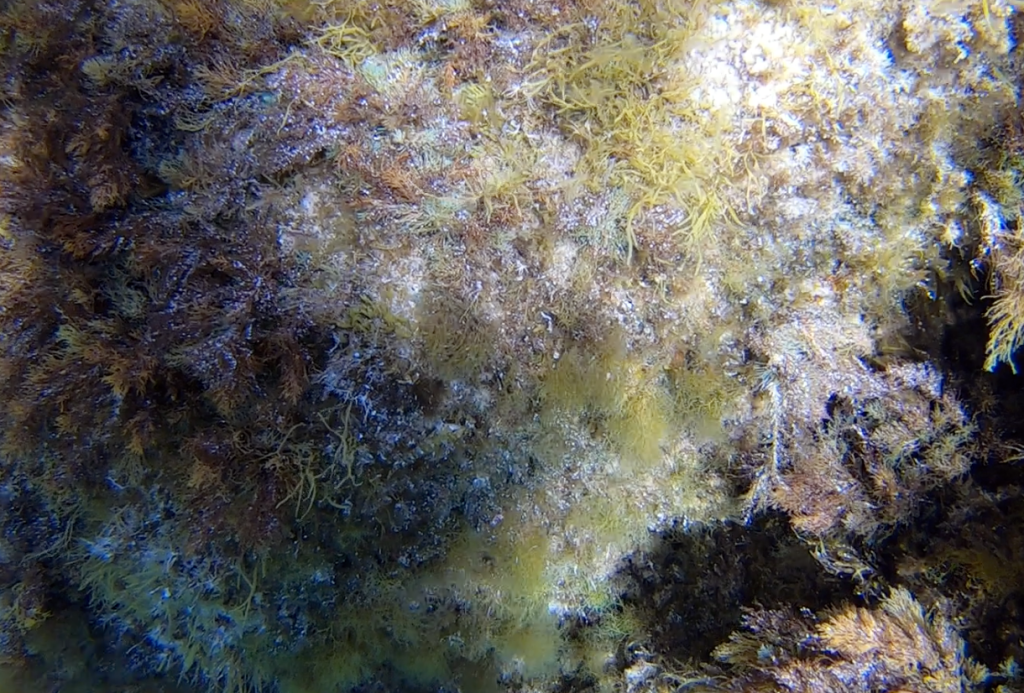
Can you spot the fish?
A triplefin blenny – in the aquarium
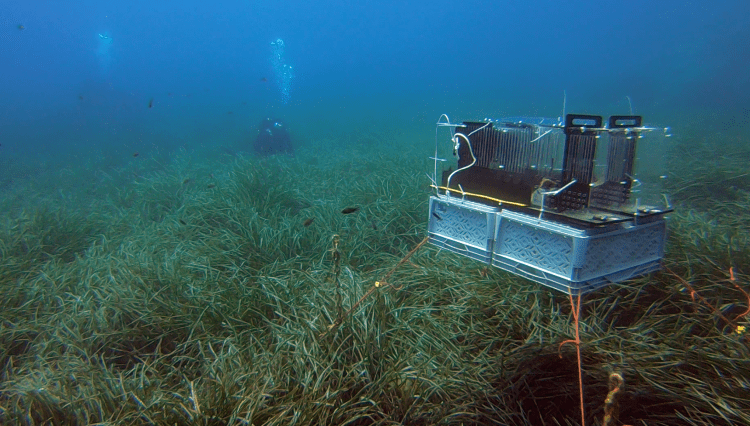
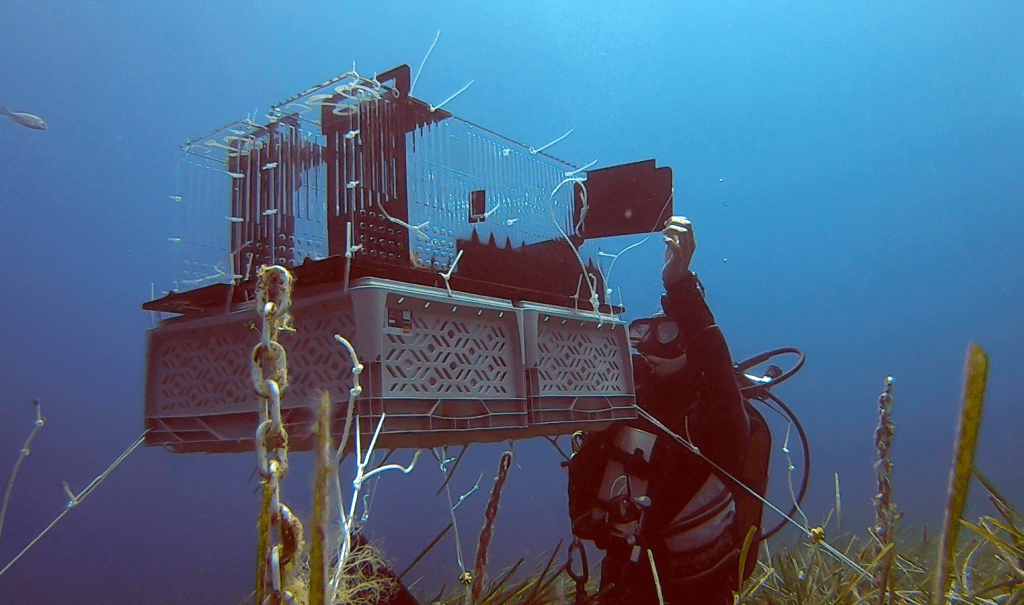
For this trip, we had an array of experimental tanks anchored in a seagrass bed at ~10m (~33 ft) depth.
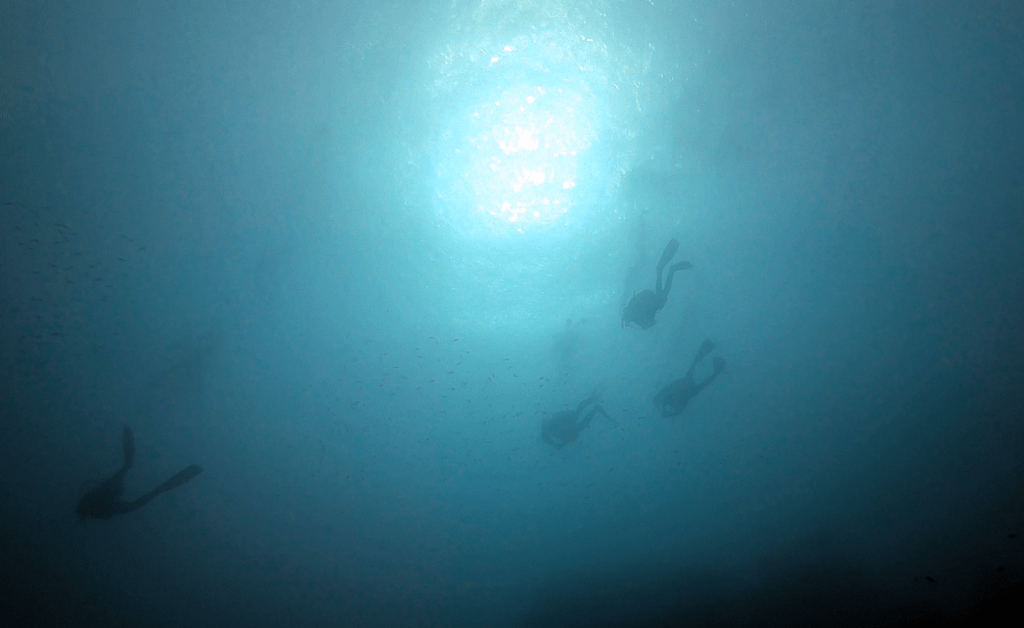
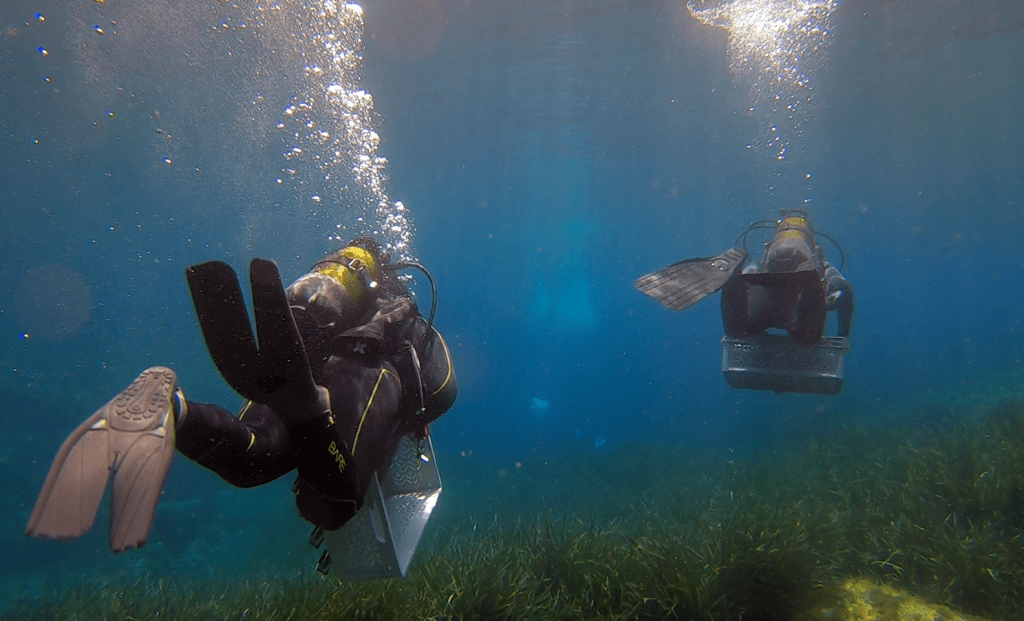
Each day, we’d work in small teams of 2-3 divers to transport fish to the tanks and then run a behavior trial for ~1.5 hours. A second team would then return to the tanks to collect the fish and GoPro’s used to record the trials. Meanwhile, there was the continual task of collecting wild fish for use in the next day’s trials, as well as the general upkeep and maintenance of the tanks themselves. As you can see from this list, we spent a lot of time under water. I logged a lot of dives on this trip!
Again, I won’t go into any details of the experiment or the results, but I can say that it was a very successful trip! All-in-all, the experiment worked well, we had no diving- or fish-related issues, the weather was great, and to top it off, the food at Stareso was phenomenal! This was certainly a much different field experience than when I worked on Lake Victoria.
In other news, we have been pretty low-key lately. Whitney has been busy working, while I am writing funding applications. Thus far, I’ve submitted one proposal and will soon submit a second. These processes are annoyingly slow; it will be November, at the earliest, before I hear any result. In the meantime, I’ll keep myself occupied with a few remaining publications for my PhD work and also enjoying life with little responsibility. After 5 years of intense PhD research, it’s nice to relax.
Stay tuned for blog-life to return to normal, as Whitney will be posting about our upcoming trip to France (in September).
So when we were discussing where to go with the family after Shane’s Ph.D. defense, I jumped at the opportunity to go back. The direct flight from Groningen settled it and off we went for 5 days in London!
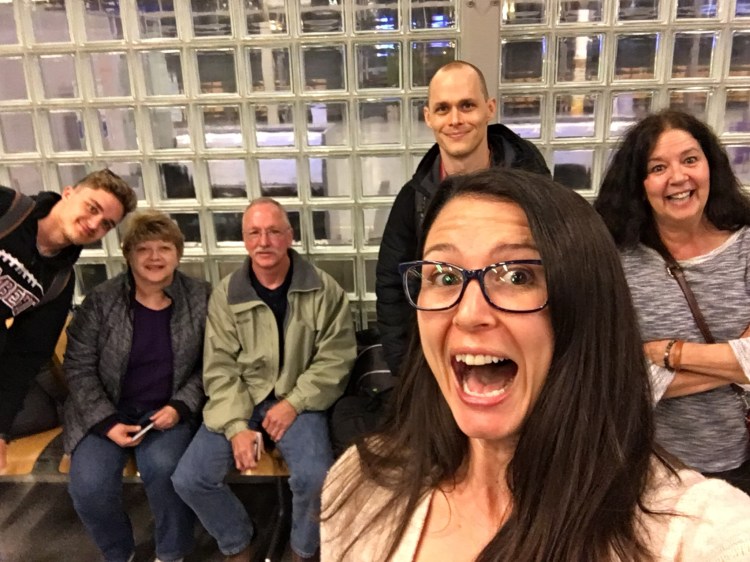
Obligatory airport us-ie. It was getting late, I’m not sure everyone was genuinely thrilled about this.
Our small plane from Groningen.
As I mentioned before, Shane and I have been to London a couple of times now, but his family hadn’t and it had been a while for my mom, so we decided to do something a little different this time.
These type of passes you can find in most major European cities. In fact, we bought the Budapest Card when we spent a long weekend there a few years ago.
In short, with the pass you have access to over 80 attractions in London – some with fast-track entry, it provides discounts at participating restaurants, and you can choose to have it act as your transportation card. The pass can be delivered to your house as a physical card before you travel (which Shane’s family chose), or you can have it delivered to your phone where you can access it with or without internet (which we chose).
All in all, it can be a one stop shop! For this post, I thought I’d go through a few advantages and disadvantages of the London Pass.
Advantage:
You have access to *almost* all of London’s major attractions.
Which means you’ll do things you probably wouldn’t have done if you were paying individually. For instance,
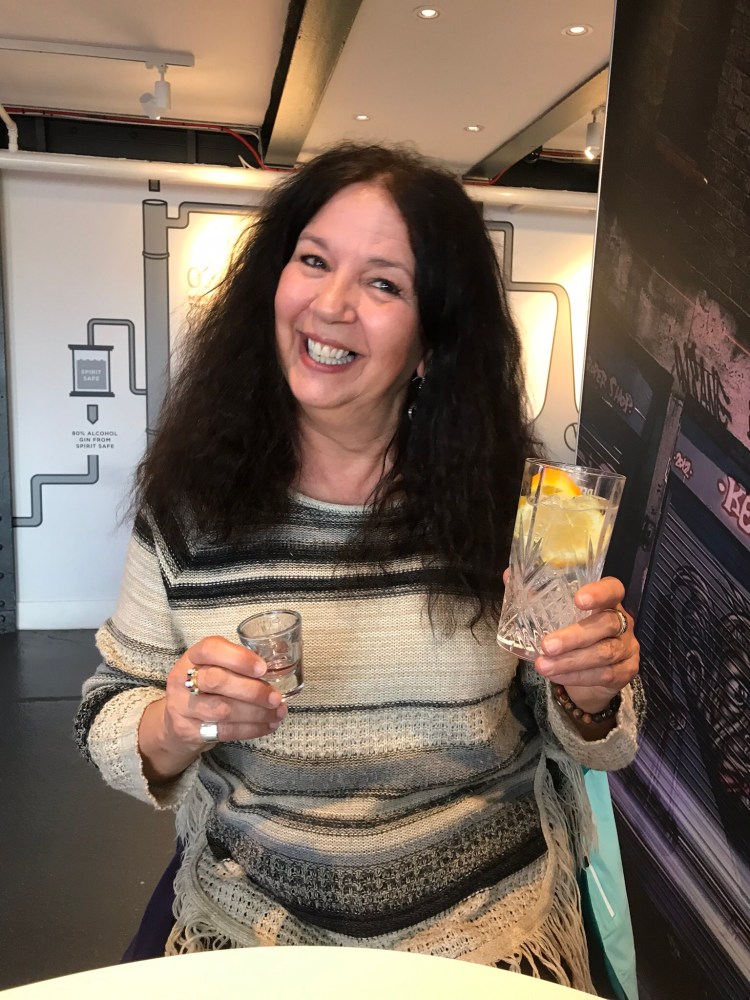
The Beefeaters Gin Tour (£15)
I love gin, my mom loves gin, but would we have slugged ourselves across town for a gin tour without the pass? I’m not so sure.
Was it worth it and should you do it?
Yup! (well, if you like gin that is…) The tour includes a few tastings and a G&T at the end so… 😉
A Hop-on Hop-off Bus Tour (£34)
Shane & I are walkers. We will have blisters & bleeding feet before we think *DUH*, public transportation. Don’t ask me why, it’s just what happens. This is why I say that the hop-on hop-off bus tour is something we wouldn’t have normally done.
It ended up being great though – a nice overview of the city on our first day there. And, it ended up being double great since Shane’s mom tore her meniscus in TWO PLACES in a freak wrong-stepping accident on the plane to the Netherlands. Needless to say, she was happy to sit & see the sights at the same time!
The tour guide says “Want me to take a picture of your group with The Shard in the background?” I mean, I guess it’s technically in the background – but not quite what I expected. *facepalm*
The Monument (£5)
To the great fire of 1666 that is!
Fun fact: Because of the fire, which basically wiped out medieval London, to this day buildings are not allowed to be built with wood.
311 stairs will take you to the top with sweeping views. And don’t worry, you get a certificate to show you made it.
View from the top of The Monument.
The Churchill War Rooms (£22)
This museum was crazy cool and something we’ve been wanting to do. If you’re into WWII history, then the bunkers where Churchill strategized during the war is a must-see.
Maps used to track during WWII.
And you’ll definitely do the well-known stuff such as,
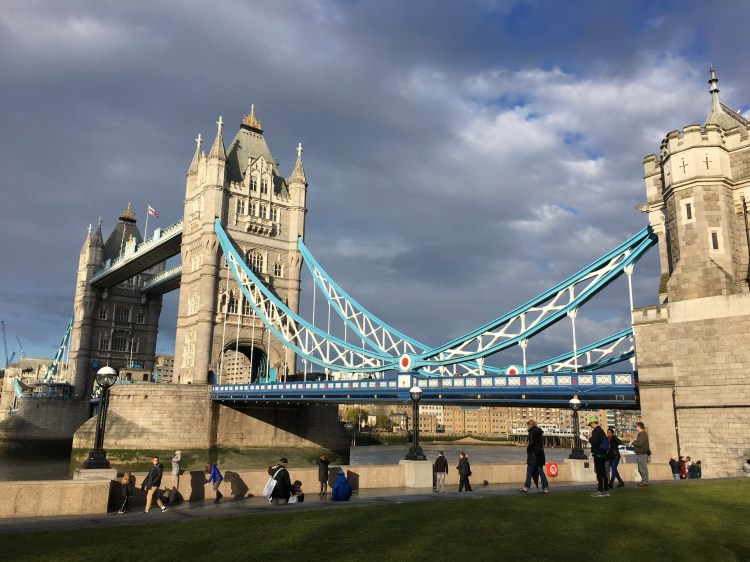
The Tower of London (£28) & the Tower Bridge (£10)
Would you brave the glass floor in the Tower Bridge?
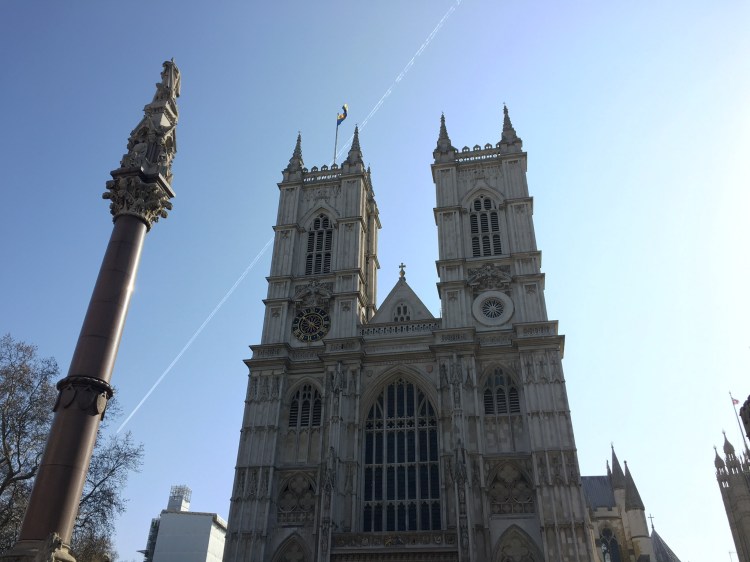
Westminster Abbey (£23)
Another must-see. An audio-guide is also included in the admission price.
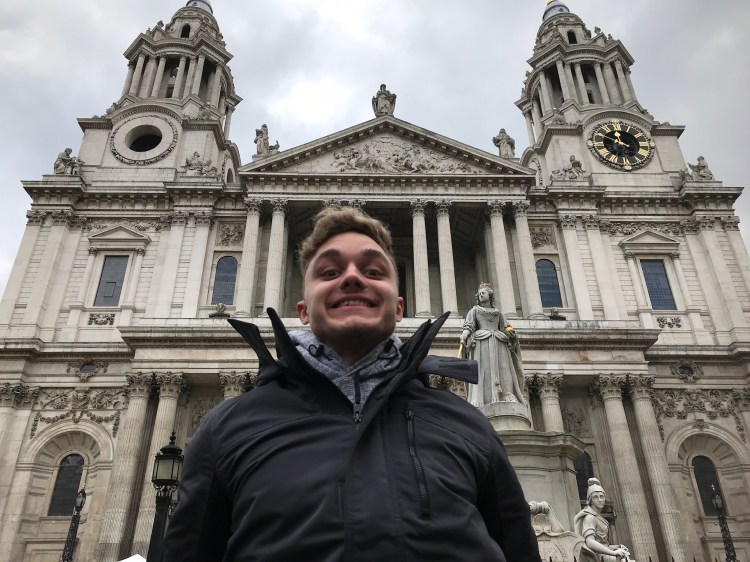
St. Paul’s Cathedral (£20)
FYI – there are no pictures inside St. Paul’s. A sign I missed until I was essentially tackled by my mother who was concerned about me breaking the rules…
photobombed.
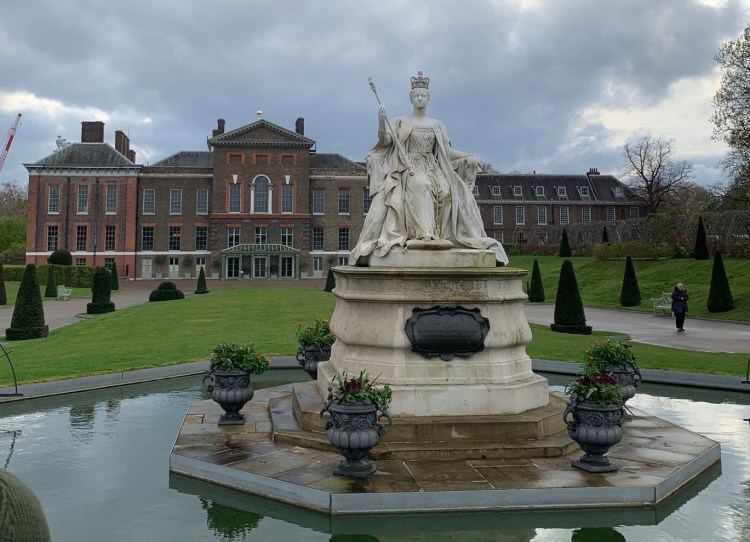
Kensington Palace (£20)
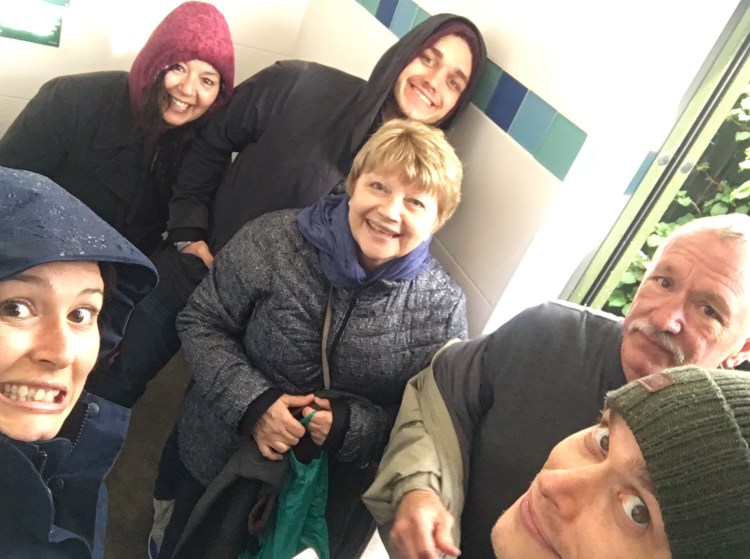
We had intentions of touring Kensington Palace, but our walk through Hyde Park was slower than anticipated on account of a heavy rain storm. Heavy enough it resulted in us hiding out in the women’s bathroom for 15 min to let it pass. By the time we got to the palace it was almost closing time, but it is indeed included!
…stuck in the bathroom.
Kensington Palace. Wonder if Will & Kate were home?
For me, the most impressive and exciting thing included in the pass was
The View from the Shard (£32)
The Shard is the tallest building in Western Europe. It’s called The Shard because the top is kind of jagged, like a shard of glass.
A view OF The Shard – the tallest building across the river.
I’m a sucker for a good view, but I just couldn’t bring myself to pay £64 (for two people) to go to the top of a building. I mean, we only payed £55 (for two) to go up the Burj Khalifa – the tallest building in the world. See my problem?
Lucky for me, it was a non-issue because it’s included in the pass!
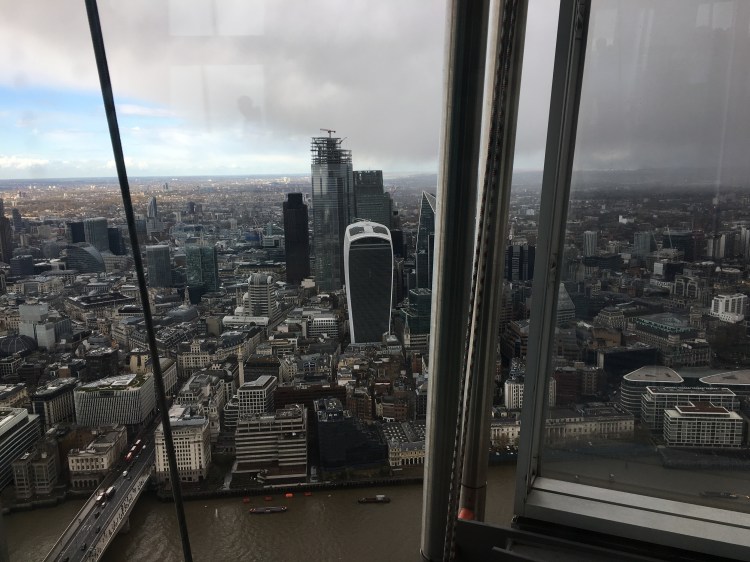
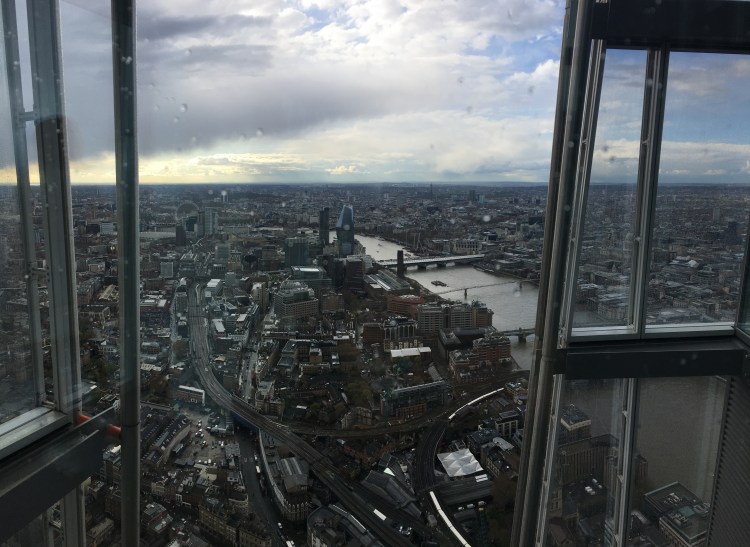
Views FROM The Shard on level 72.
Can you spot the London Eye?
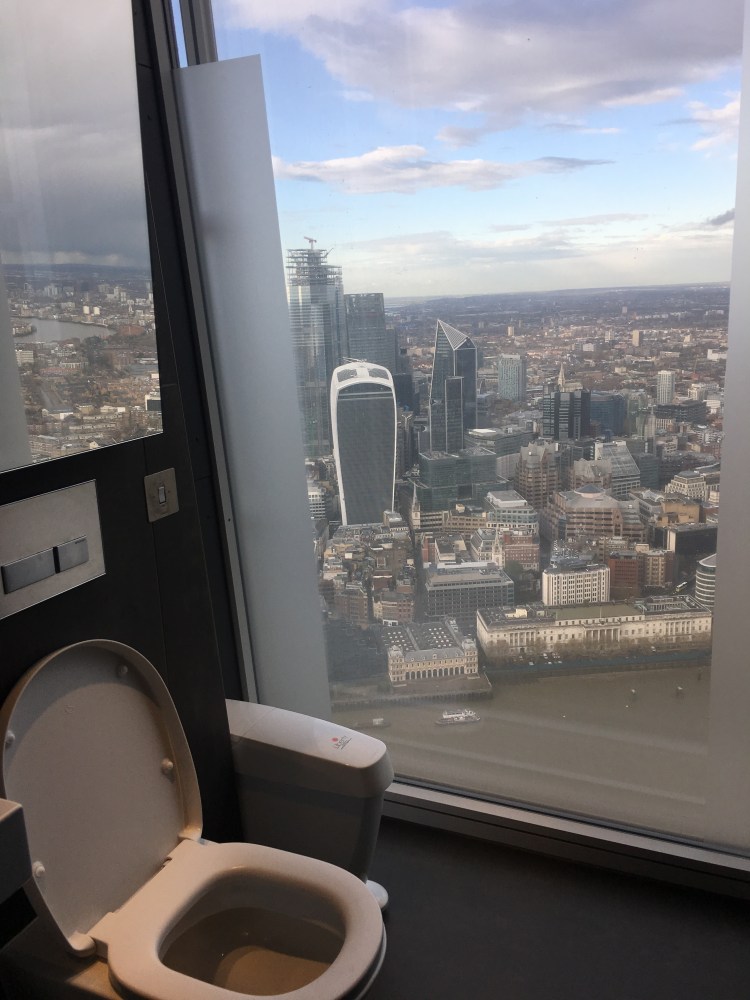
And, even if you don’t have to, go to the restroom at the top. #loowithaview
Disadvantage:
You have access to *almost* all of London’s major attractions.
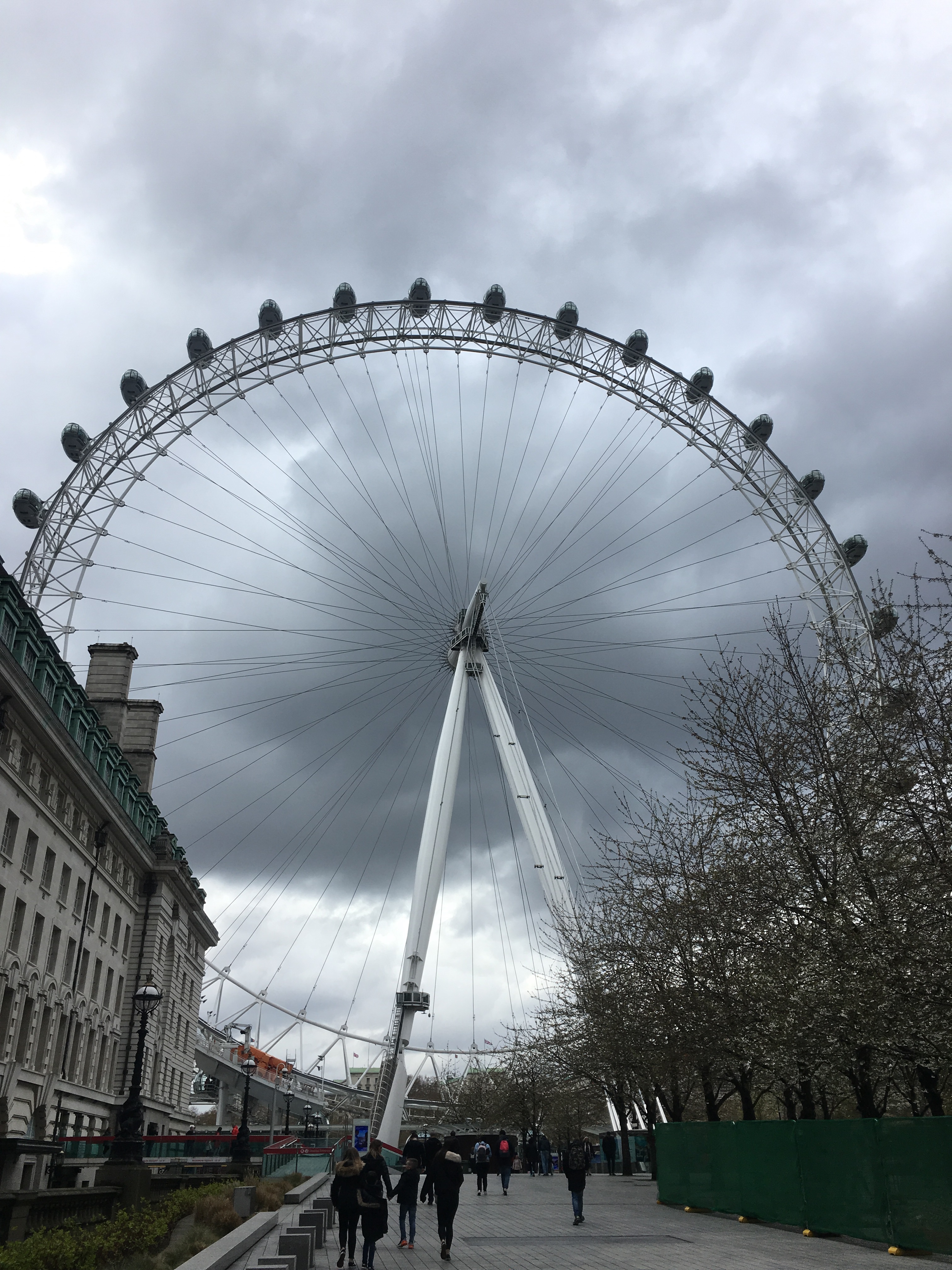
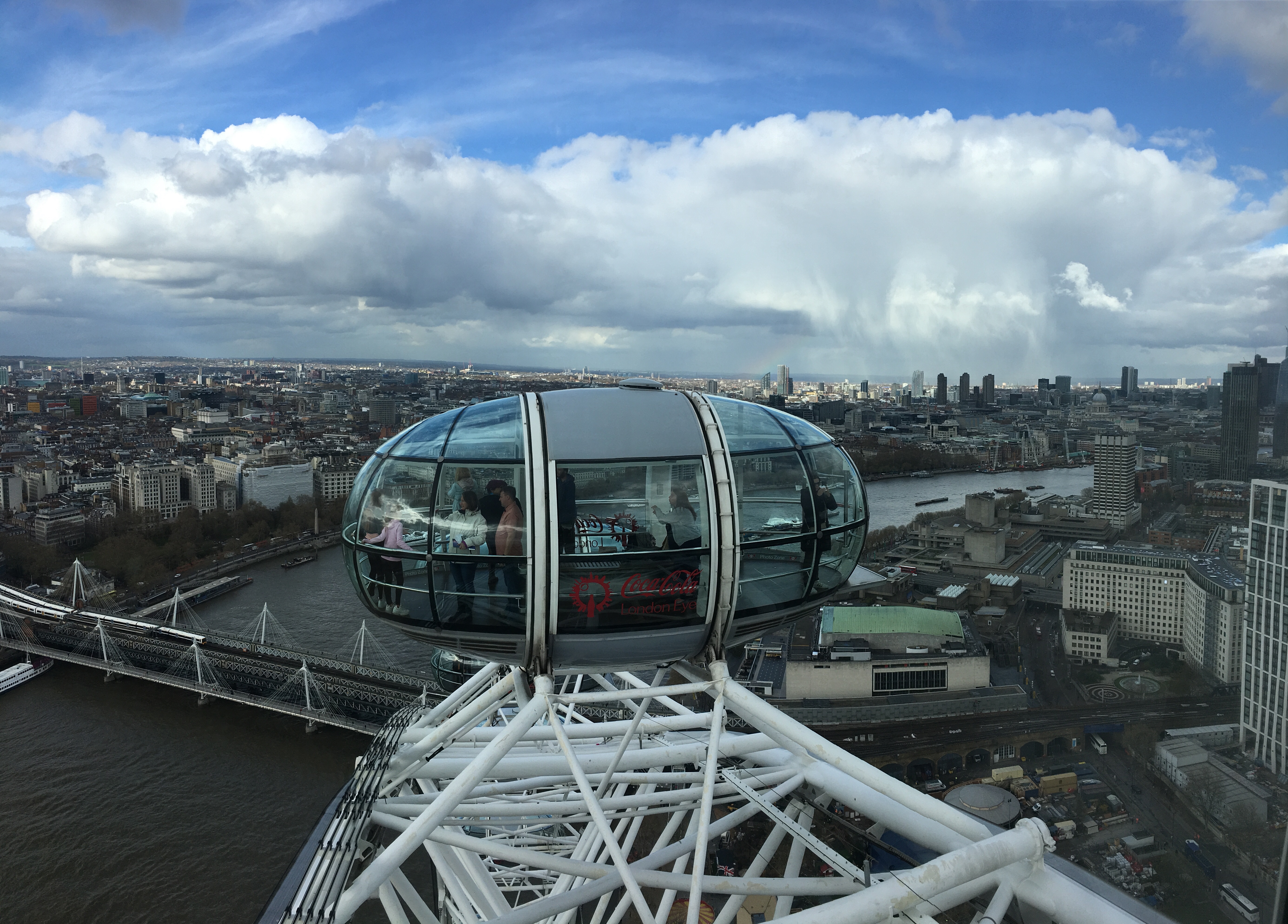
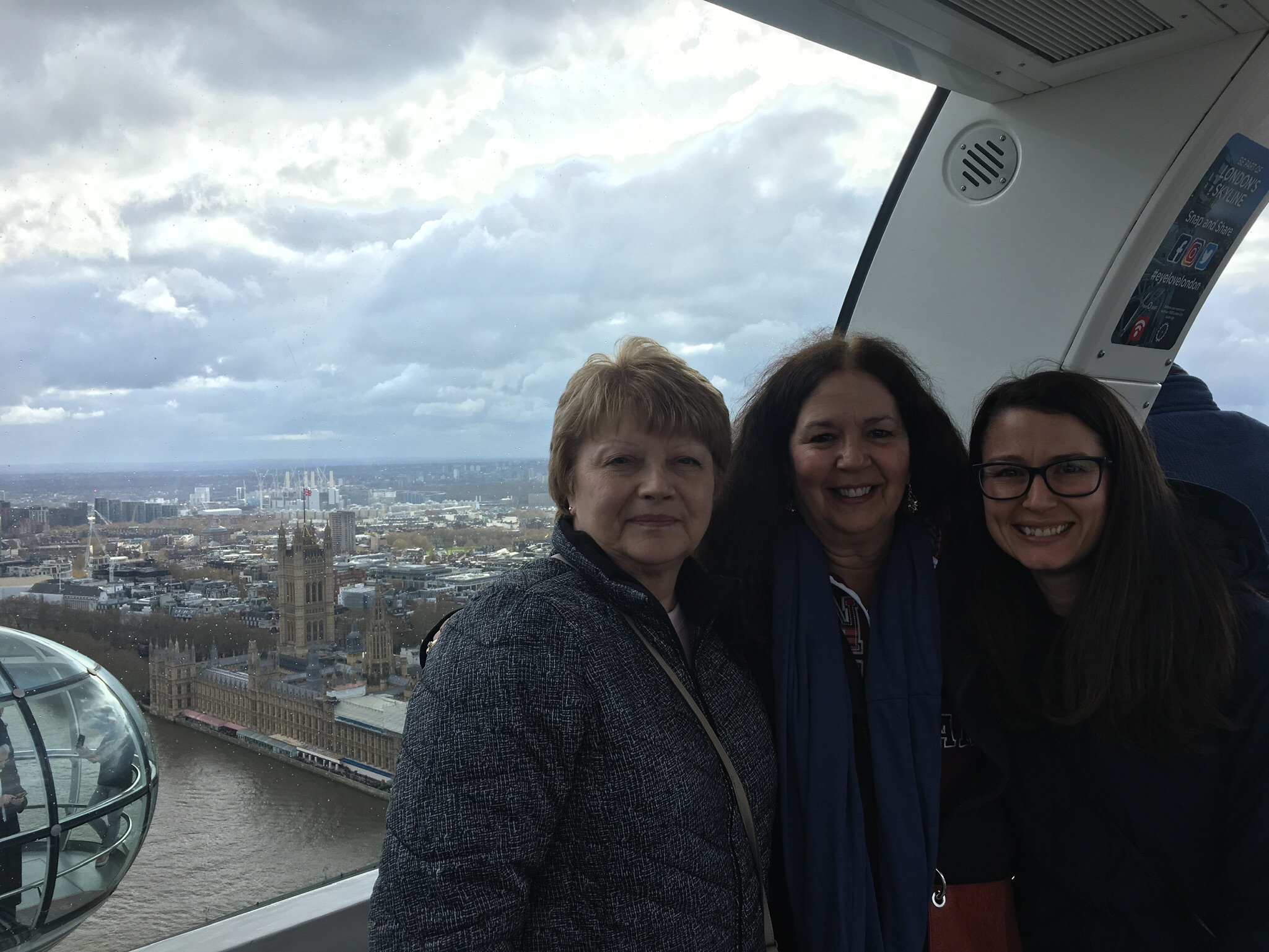
Unfortunately, Buckingham Palace and the London Eye are not included in the pass.
We did have a stop from the hop-on hop-off tour in front of Buckingham though, and chose to pay extra to ride the Eye.
Buckingham Palace.
Mom and I took the “portrait mode” directive a little differently… ha!
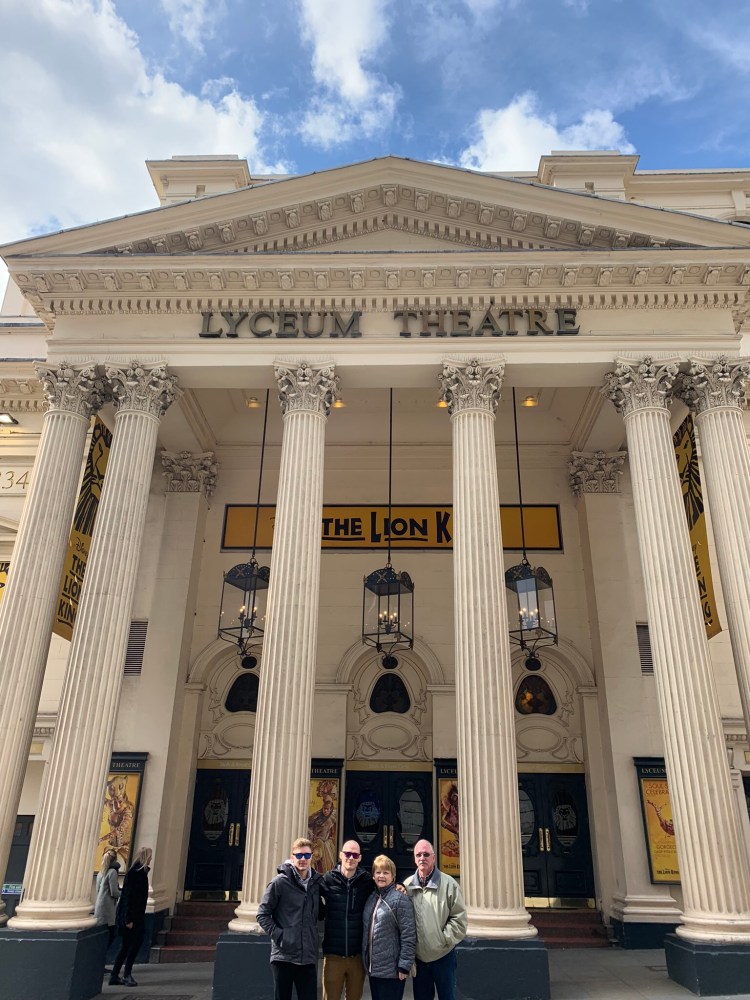
And, if you’re interested in the theater, tickets are not included in the pass, but you are entitled to a discount – up to 25% off! We checked off one of Shane’s lifetime bucket list items and saw The Lion King. It was INCREDIBLE!
Advantage:
Mobile Pass Access
Just download the London Pass app and you’re ready to go! I say this as an advantage, because if you lose the physical card – for instance, on the tube like this suave guy below did – then you’re kind of screwed. My advice, especially if you’re prone to losing things: do the mobile version!
Disadvantage / Advantage:
The Price
It’s a double-edged sword. In my opinion, the pass itself is expensive, but then again London is an expensive city. We had 5.5 days in London, so we bought the 6 day pass. For this amount of time, I think the price was reasonable (~£135 pp); by day 4 we had made up for the price of the pass without having to kill ourselves to make it worth the money. For one or two days, I’m not so sure.
It does seem like it goes on sale quite frequently, we bought it with a 20% discount at the time, so if you’re considering it then watch for sales. And, the more days you purchase the cheaper the price is per day.
In summary – I’d buy it again.
There are other great things included that we didn’t do for various reasons: Hampton Court Palace and Windsor Castle if you’re looking for a day trip, or a bicycle tour and a walking tour if you’re feeling active.
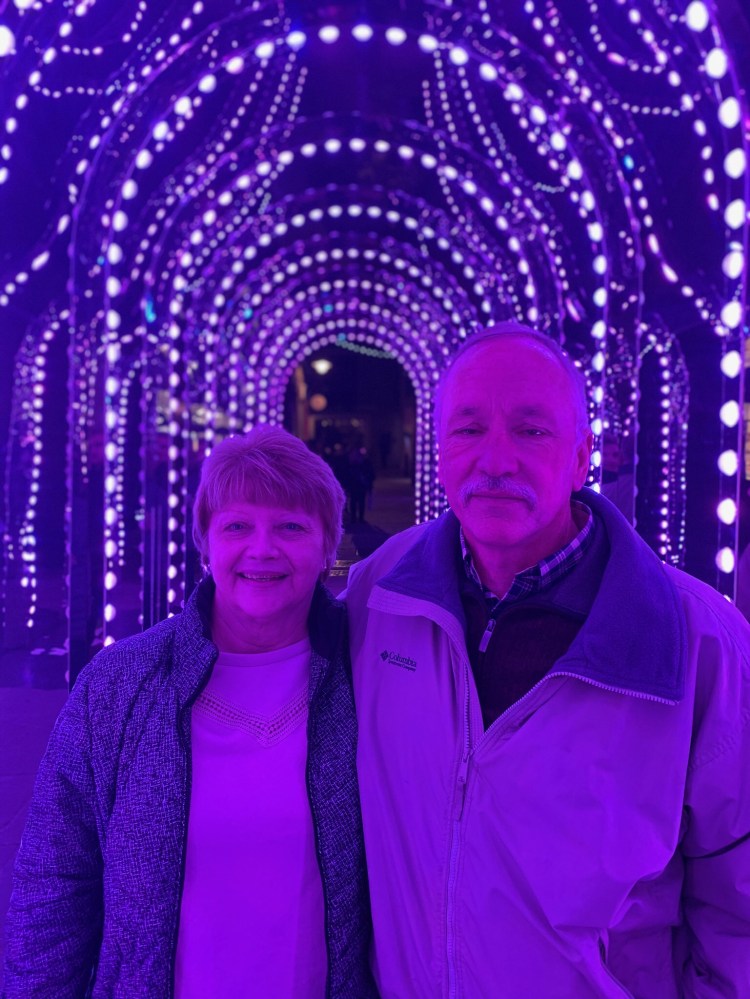
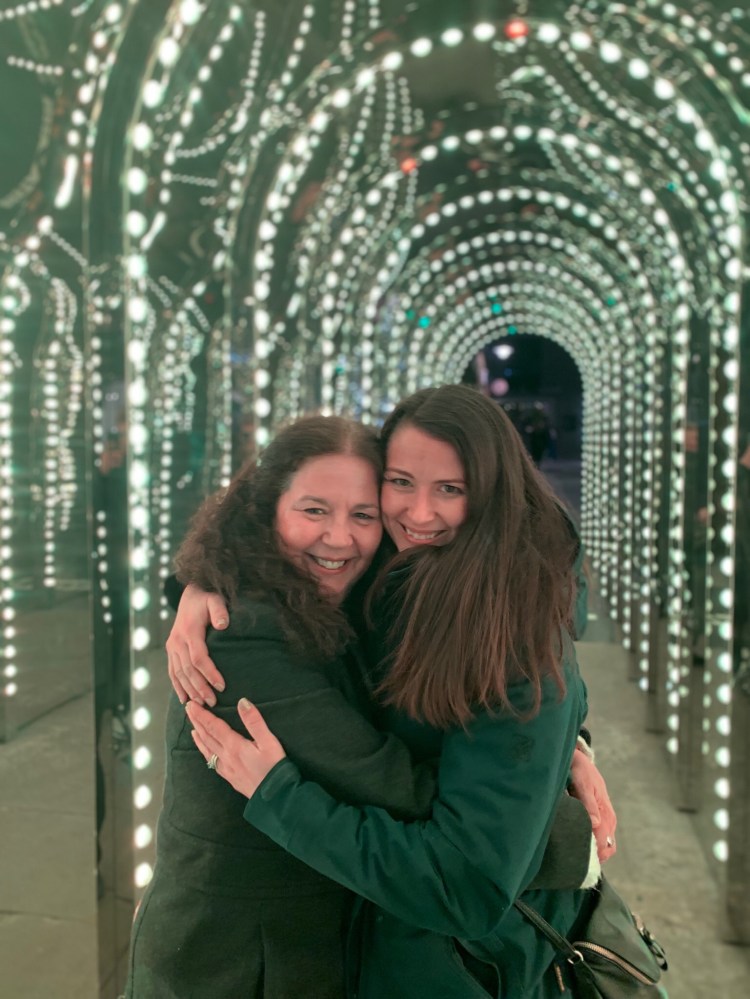
Whatever you decide to do, next time you’re in London you should find this light tunnel because it was magical.
I can’t quite believe what I’m writing, but this weekend marks our 5th Dutch-iversary!
The whole reason we sold all our stuff, packed up the cat, and moved across an ocean was for Shane to start a Ph.D. program at Rijksuniverseteit Groningen (aka: the University of Groningen). I’m beyond thrilled / proud / insert other overly excited adjective to say that on March 29th, 2019 this goal was realized, and Shane officially became Dr. Wright!
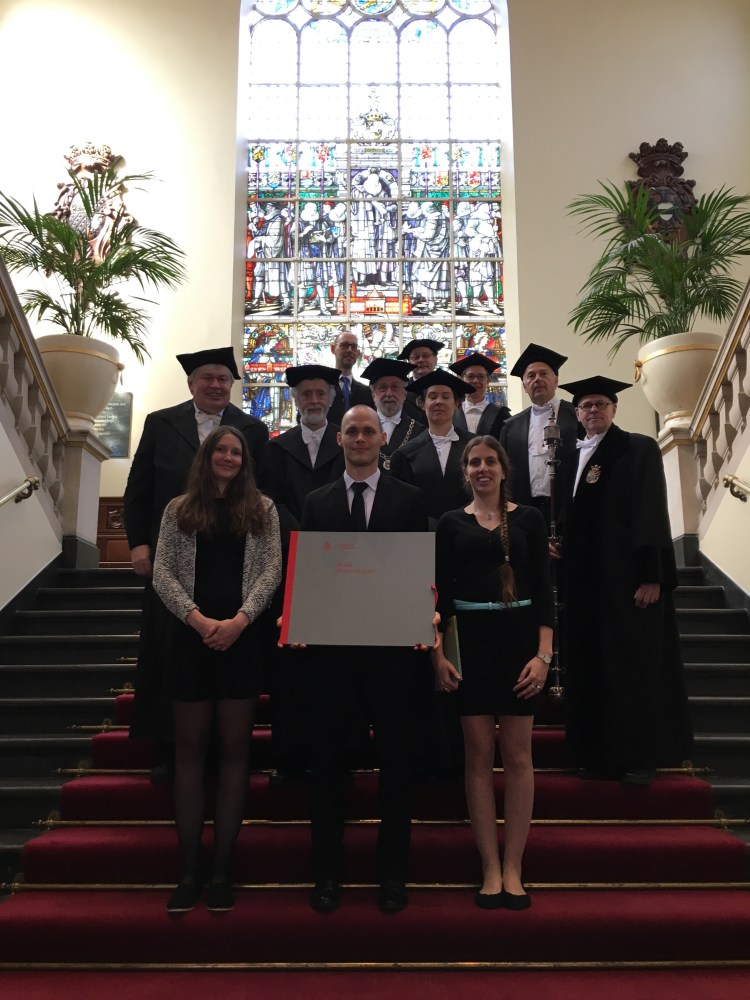
Dr. Wright with his paranymphs and examination committee.
In honor of the newly-minted Doctor and our 5 year Dutch-iversary, I thought I’d give you 5 reasons why Shane loves Groningen, the largest city in the north of the Netherlands.
One : Rijksuniversiteit Groningen.
The University of Groningen.
I think this one is self-explanatory: it gave him his degree!
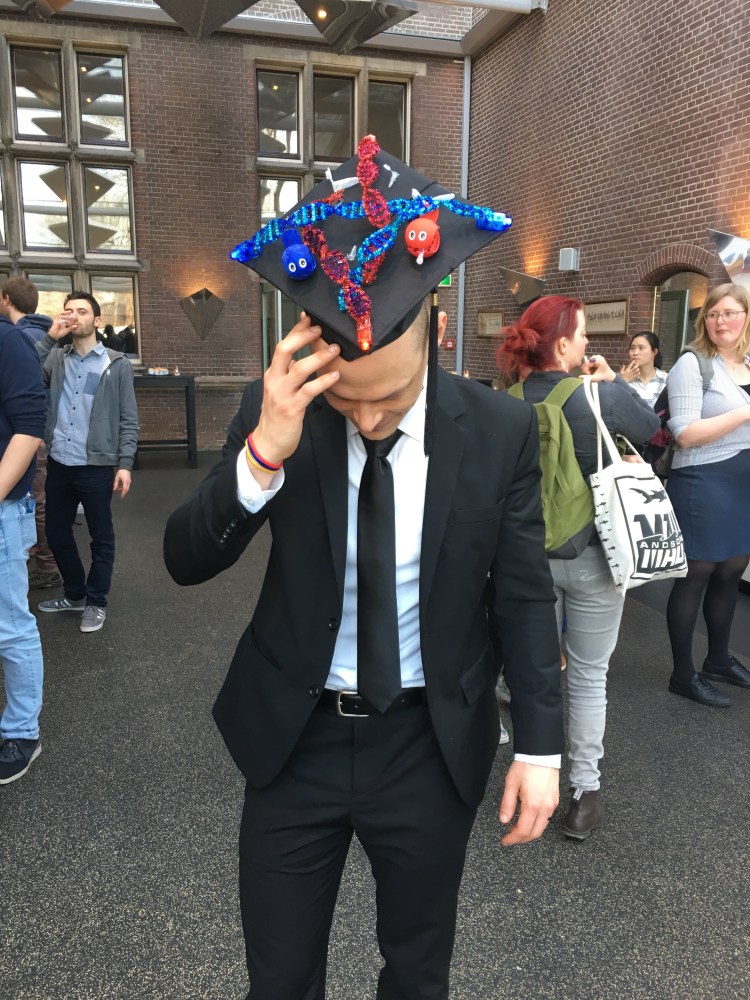
His lab mates gave his this beauty of a graduation cap though…
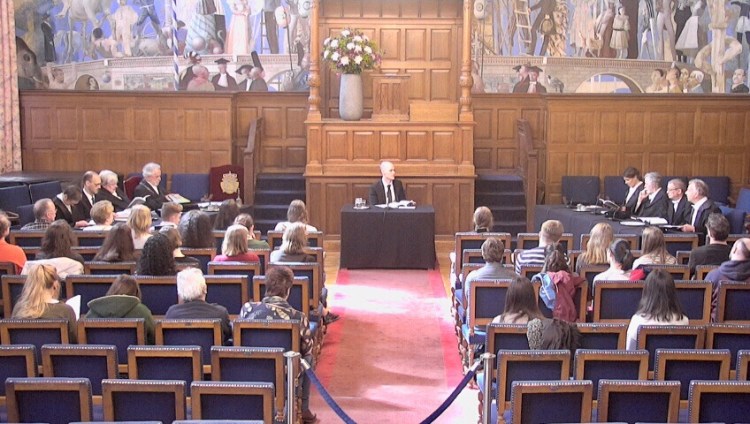
And, I should be clear. They didn’t just give him a degree. After 4 years of research, submission of a 200 page book, and a 45 min question/answer session from an 8 person committee in front of the public they declared him a doctor!
The defense – the final piece to earning that Ph.D.!
Aside from this, the university can really be considered the heart of the city. It was founded in 1614 and is the main employer (between the university itself & associated hospital) of Groningen.
Can we just side-step for a second back to the founding year?
1614.
Maybe this is nothing for some of you out there, but as an American, to think that this university is more than 100 years older than our COUNTRY will never cease to amaze me. And, they’ve had some notable alumni and faculty over the years. For instance, Aletta Jacobs – the first female physician in the Netherlands, founder of the first birth control clinic, and advocate for women’s suffrage. More recently, Ben Feringa, who won the Nobel Prize in Chemistry in 2016.
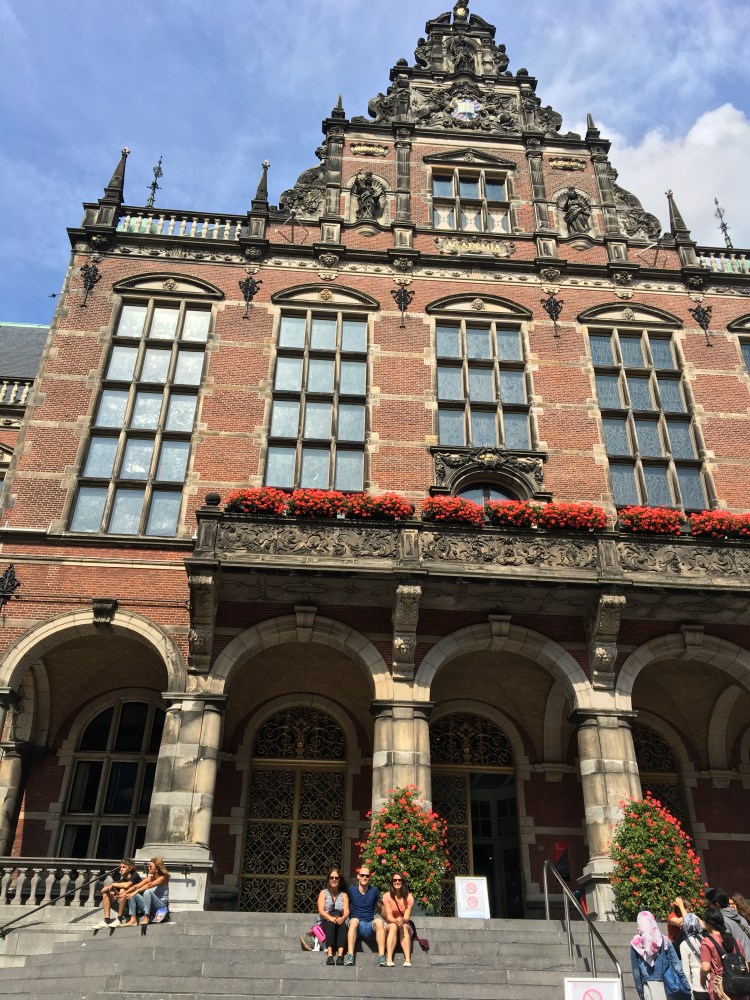
Mom, Shane and me in front of the Academy Building.
The Academy building, pictured above, is one of the older university buildings and the location of Shane’s Ph.D. defense. This building is in stark contrast to the modern building where Shane worked; the varied architecture is another reason why he (and I) like the university so much.
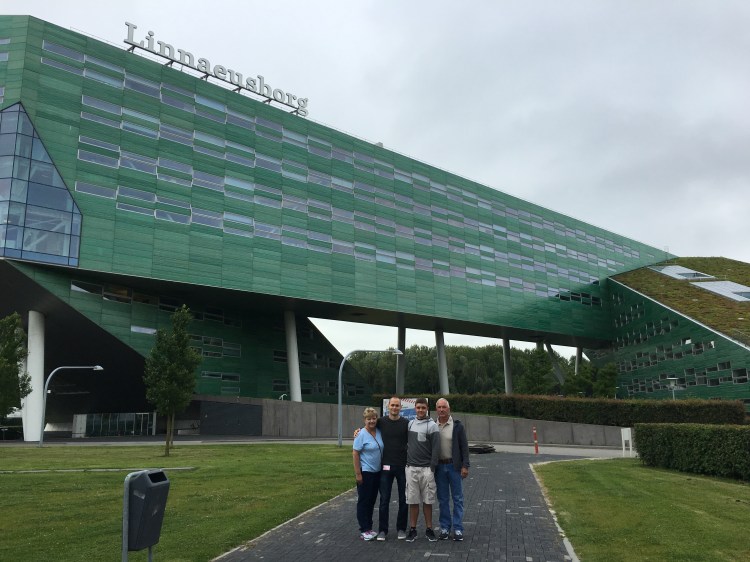
The “green building” on the university’s Zernike Campus was Shane’s day to day work spot.
Two: Biking
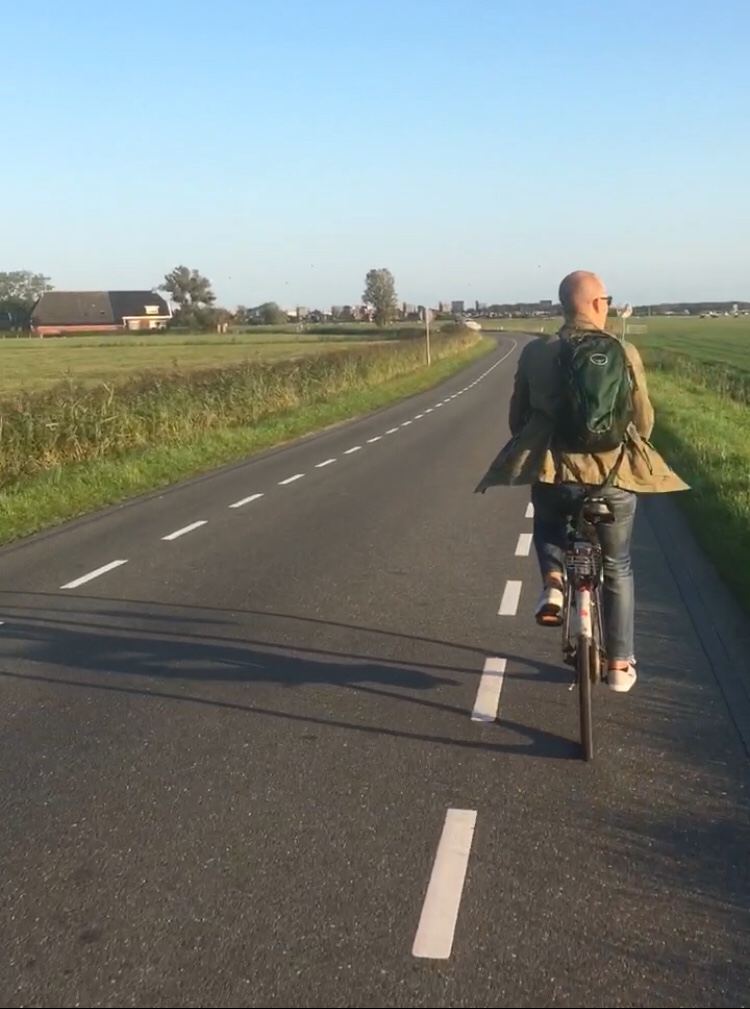
Bikes are everywhere! This isn’t new – we’ve talked about this before – but it certainly is one thing that we’ve both grown to love the most about living here. Especially because the city has been built to be more bike and pedestrian friendly than car friendly.
Bikes in the Grote Markt of Groningen city center.
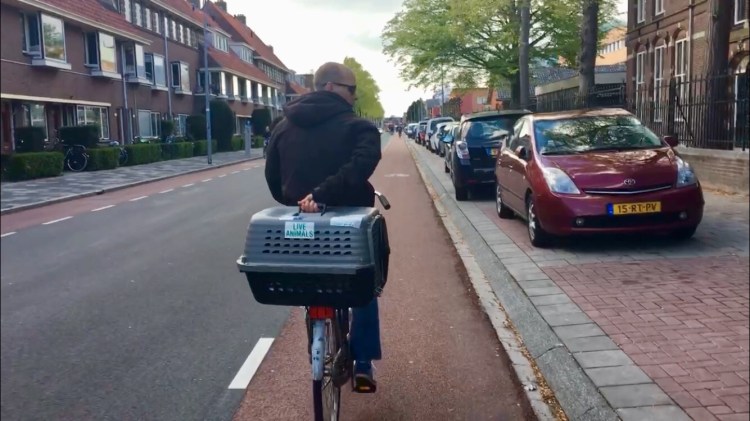
Shane’s gotten pretty good at biking over the years – I guess that happens when you have to bike 15 min one way to get to work. In the winter, he can bike just about all the way to work with his hands in his pockets & has learned to carry a variety of things on the back of his bike: crates of beer, luggage, the cat…
Three: The Market
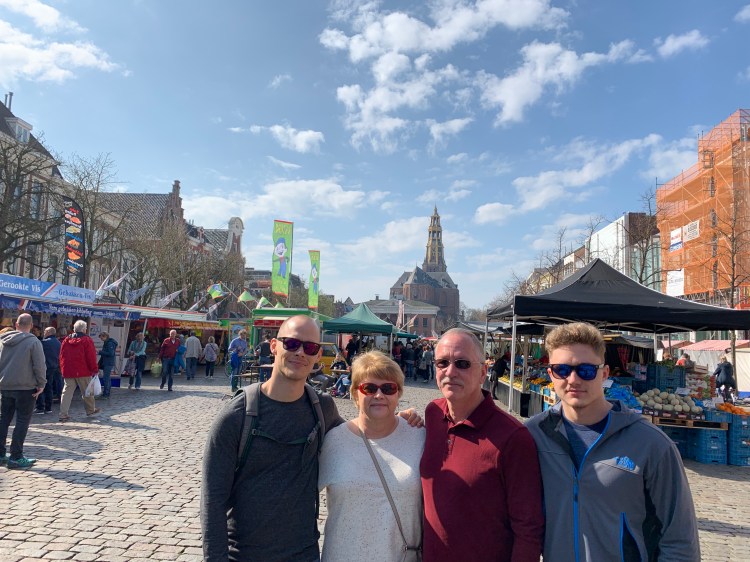
Ahh, our beloved market.
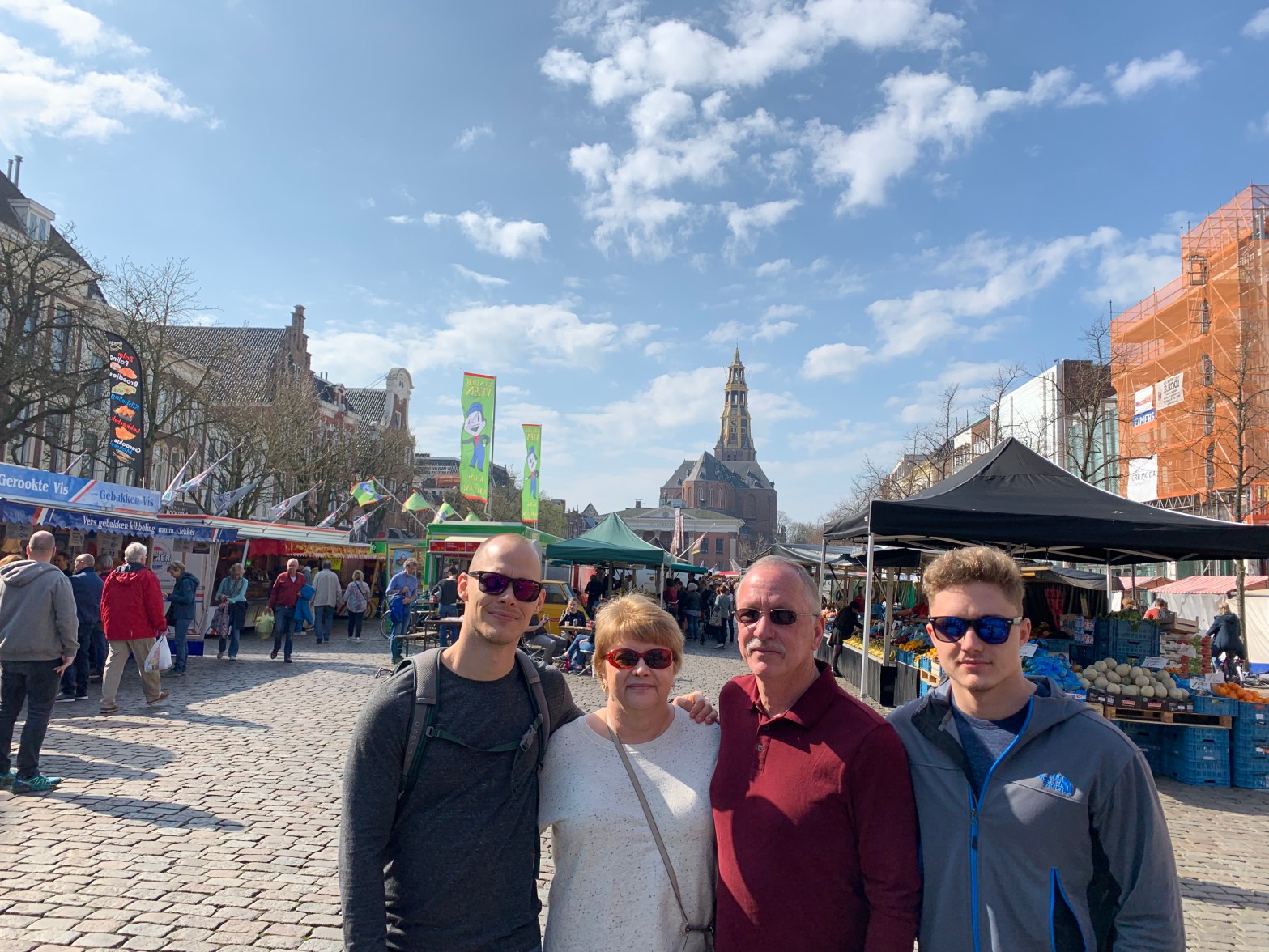
Every Tuesday, Friday, and Saturday “the market” takes over the Vismarkt (Fish market) in Groningen. Food wise, you can find just about anything you need here and considerably cheaper than the grocery stores. Meat, fish, fruit & vegetables, cheese, nuts, baked goods… I could keep going.
My number one recommendation for anyone moving to or visiting Groningen is to go to the market. You will not be disappointed.
Four: Konbu Street Food & Martinus Brewery
We don’t eat out very much, but if we do our go-to place is Konbu Street Food.
It’s a Southeast Asian restaurant (which we discovered BEFORE our trip to Southeast Asia! ha) located on the Oosterstraat in city center. In my opinion, one thing Groningen lacks are moderately priced restaurants with quality food, but Konbu fits this description perfectly. The main dishes include varieties of pho, ramen, and bun, but don’t skimp on the appetizers. You have to order ‘Something’ (a cheeky name for the spring rolls) & the kimchi pancakes!
Top it all off with a Lucky Buddha (rice) beer & Shane is one happy camper!
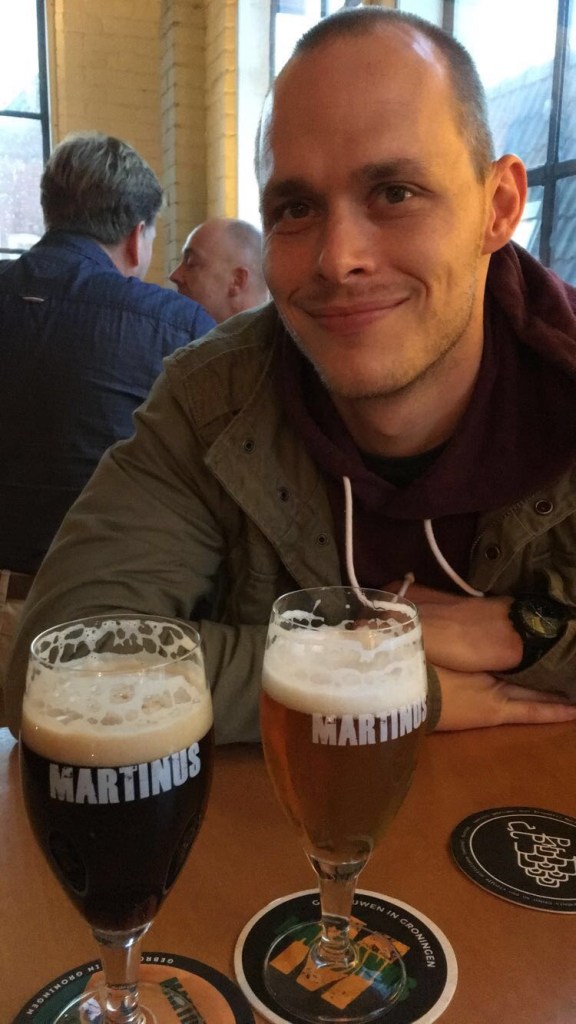
Tucked away on a side street towards the outskirts of city center, this Groningen based brewery is only a 10 min walk from our house and is quite ‘gezellig’ (I’ll let you look that one up…).
With a nice terrace, cozy tasting room, and tasty quadruples (Shane’s favorite) it’s a fun place to go when we want some special beer.
Five: Climbing
Last but certainly not least! If I’m being honest, it should probably be moved to first…
We’ve discovered climbing! I think it’s safe to say it’s his favorite activity now.
This may come as a surprise considering the size of the city (only ~200,000 people) but Groningen has three climbing gyms.
The first is part of the university’s gym (ACLO); I wasn’t allowed to use this since I wasn’t associated with the univeristy, but regardless it’s there.
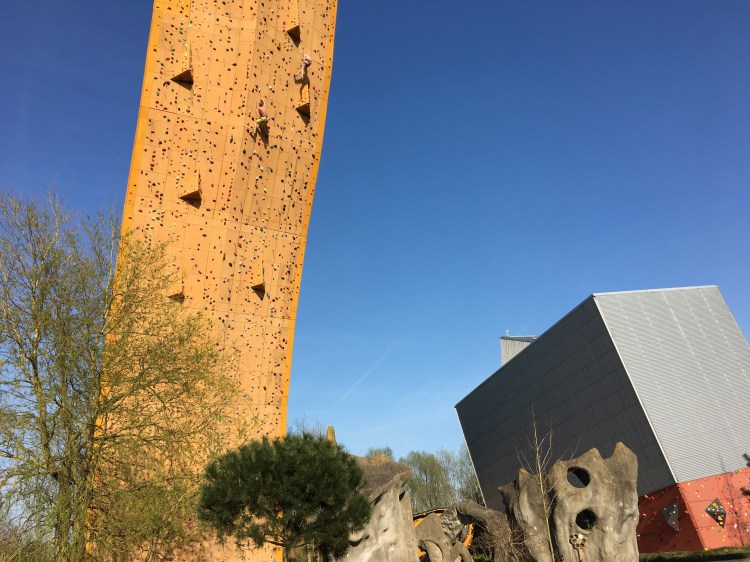
The 2nd is Bjoeks, located in the Kardingen sport complex about a 20 min bike outside of city center. This is where we got our climbing certifications! This gym is mostly route climbing with some (advanced level) indoor and outdoor bouldering options. I think what Bjoeks is most famous for is Excalibur – the 37m high (with 11m overhang!) climbing tower!
It’s so tall, you can’t see the top (indoor climbing hall to the right of the tower – for scale)!
At one point, Excalibur was the tallest climbing wall in Europe. This may still hold true, though I’m not entirely sure. To climb the front – with the overhang – you should be an advanced climber & lead-climb certified. Needless to say, we haven’t climbed this yet! In the summer months you can top-rope climb the back (easier) side of the wall so hopefully we can check this off our Groningen bucket list in 2019.
And, just a heads up for anyone who dares… there’s a 1000 euro prize waiting for anyone who climbs the 9a route on the overhang side set by Jorg Verhoeven back in 2017. I haven’t yet heard of anyone accomplishing it…
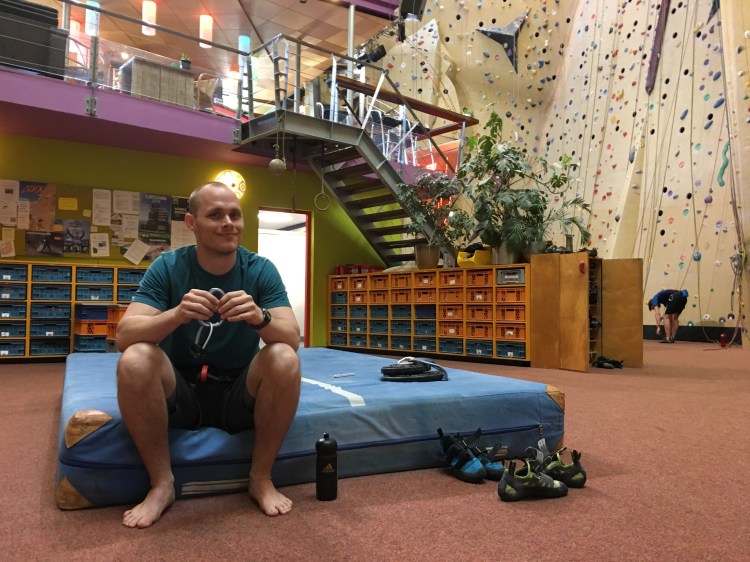
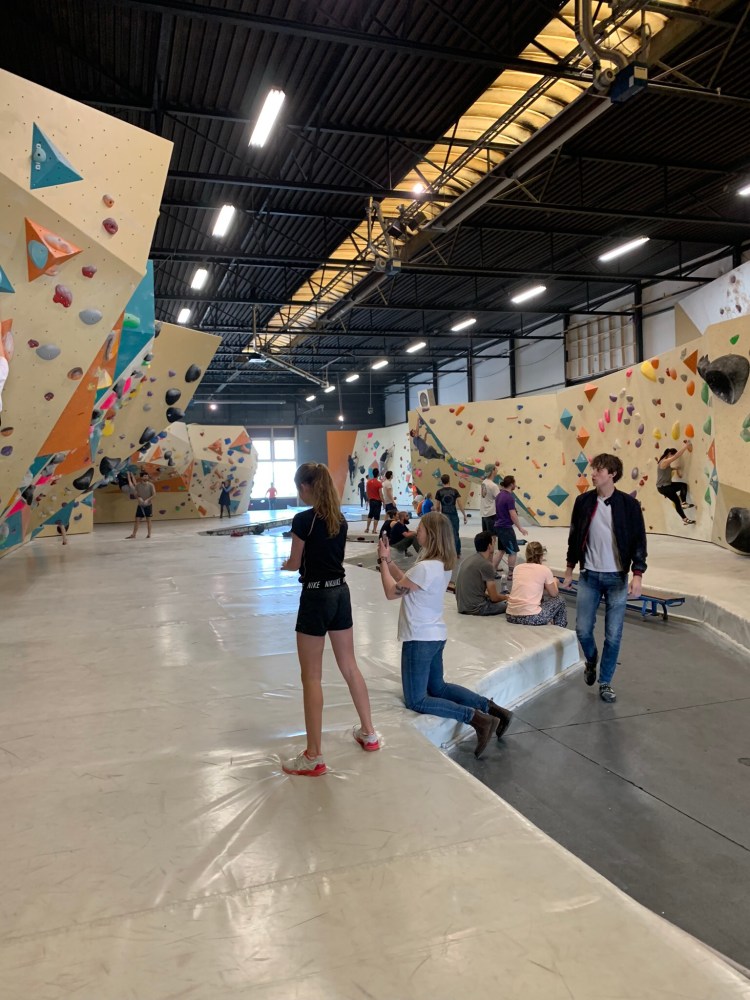
Bouldering is a completely different style of climbing as compared to Bjoeks; the main difference being no ropes or belayer required. The ‘problems’ are shorter and only tall enough to be a safe jumping/falling distance.
This is nice for us right now, since you don’t need a partner to go. Shane will be heading to Corsica for field work (potential new research project!) during the month of June. I’ll be here getting really good at bouldering…
It’s safe to say that Shane has all the indoor climbing options he could want!
It’s uncertain the amount of time we have left in Groningen – the next step for Shane is to find a postdoctoral position in a lab where he can start developing his own research ideas to eventually run his own academic lab. But, that’s for future Shane and future Whitney to deal with. For now, we will just enjoy this city while we have it!
I’m going to tell you a story about our wintersport holiday!
…wintersport holiday. Can you tell we live in Holland?
Since we’ve just come back from our month long adventure in Cambodia and Vietnam, we really only had two goals: snowboard & snowboard cheaply.
Turns out, Eastern Europe has plenty of good snowboarding if you’re willing to sacrifice piste kilometers, and since we were looking at a 3 day trip that’s exactly what we decided to do.
Shane originally found Jasna, Slovakia on an Apple News article talking about “little known ski areas” – something to that extent. Once Jasna was on the radar, I started researching.
Turns out, there’s not much out there on snowboarding in Slovakia.
For real, if you don’t know about this site then you need to. It gives you the whole run down of how each mountain ranks specifically for snowboarding. It’s how I found Livigno, Italy last year and where I generally start planning trips. For us, anything 7 and above is a winner!
How to get there:
There are three nearby airports: Propad (Slovakia), Krakaw (Poland) and Vienna (Austria). Propad being the closest, but appeared to only be serviced by carriers originating in the UK.
For us, coming from Amsterdam, the best option was to fly to Krakaw and drive ~3 hours to the mountain.
We flew with KLM for ~180 euros per person including 1 extra checked bag for the gear. KLM allows you to check a ski or snowboard bag with not additional fees, which is quite handy.
See ya, Holland!
A car rental from the Krakaw airport from Wed – Sun was ~60 euros, which we were thrilled about! What we were not so thrilled about was the 200 euro fee to cross the boarder from Poland to Slovakia. If you rent a car in the Netherlands you could literally drive the thing TO Slovakia and they could care less, so this was really a surprise for us.
Consider yourself warned! If you rent a car in Poland you will be charged a fee to cross the boarder!
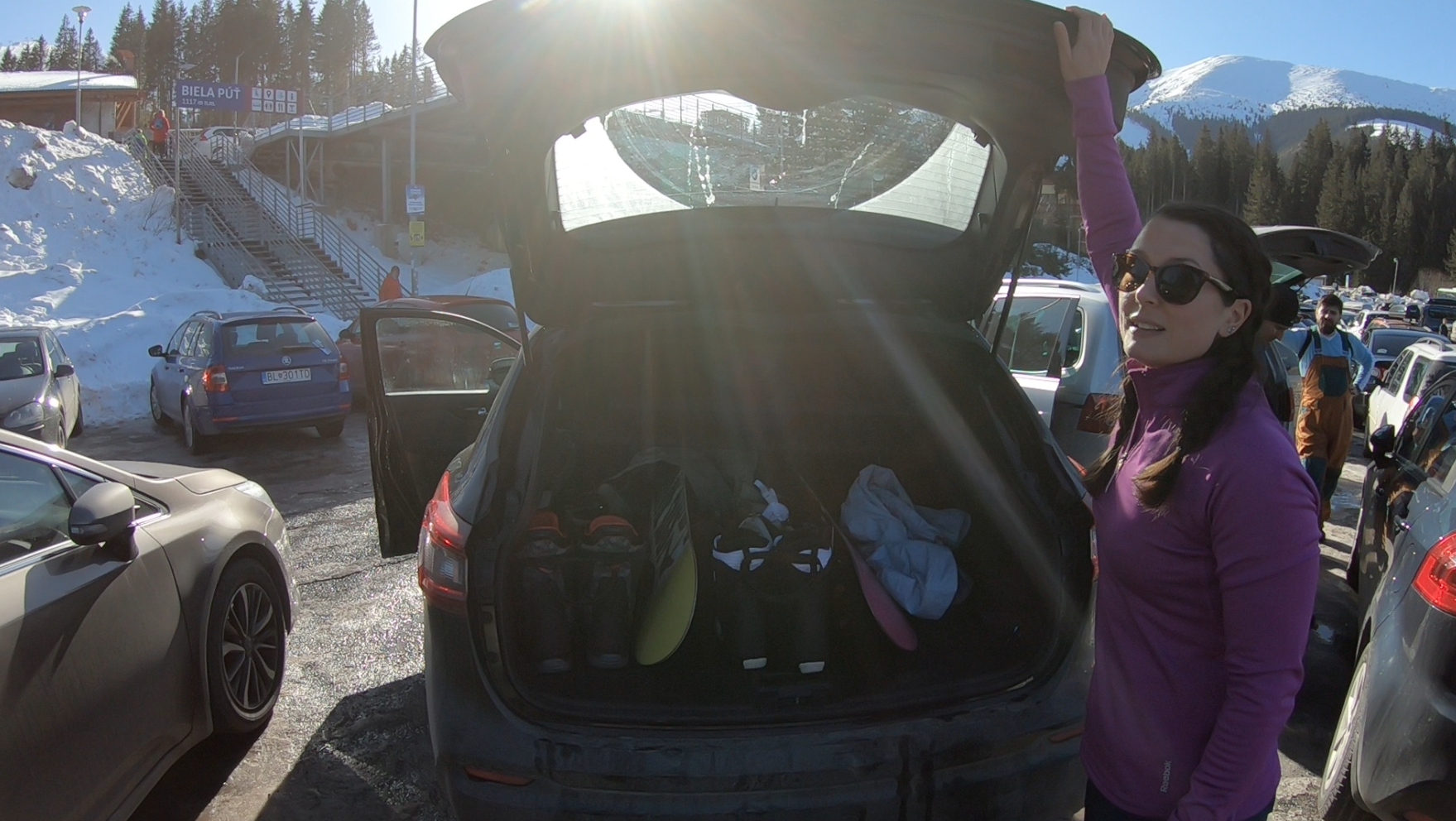
Our handy dandy car rental that perfectly fit all our crap!
Where to Stay:
This was a tricky one for me. We were trying to keep it cheap, so staying on the mountain itself was definitely out. You can stay in what looked like gorgeous ski in-ski out lodges and spas on the mountain, but you’re also going to pay a hefty sum for that.
We also are grown-ass adults and weren’t trying to stay in a dirty run-down hotel. Balance, ya know?
We settled on Penzion Routunda which is located smack in the center of Liptovský Mikuláš; the closest town to Jasna Chopok – the main mountain. 160 euros got us 4 nights in a 1 bedroom apartment with free parking, enough room to store the gear, and enough kitchen to cook breakfast before we headed out.
Staying in the center of Liptovský Mikuláš was a great option. There were plenty of restaurants for dinner and a grocery store nearby. You, of course, won’t find your typical après-ski, but for us having some cold beer and a snack at home before we ventured out to dinner worked perfectly.
You can buy beer by the 1.5 LITER in Slovakia!
The Mountain:
Ahh.. and on to the good stuff. The mountain itself!
Jasna Chopok is located ~15 min driving from Liptovský Mikuláš. A ski bus is available, but we could never find a clear ski bus map with pick up locations or times so we decided to drive.
The first day we were a little late out the door – lifts opened at 8am and we were on the road probably at 8am. If you want good parking, don’t do that.
It was fine. There is parking (P4) at the bottom of the mountain and a shuttle bus that takes you up, but the shuttle is jam packed and only ran every 45 min (?!?!) and when you’re tired and ready to go, you’re tired and ready to go!
The next day we got our sh*t together and were in the P1 parking lot – the closest one to the main lift – by 7:15am.
Even made it in time for a pre-lift pick-me-up.
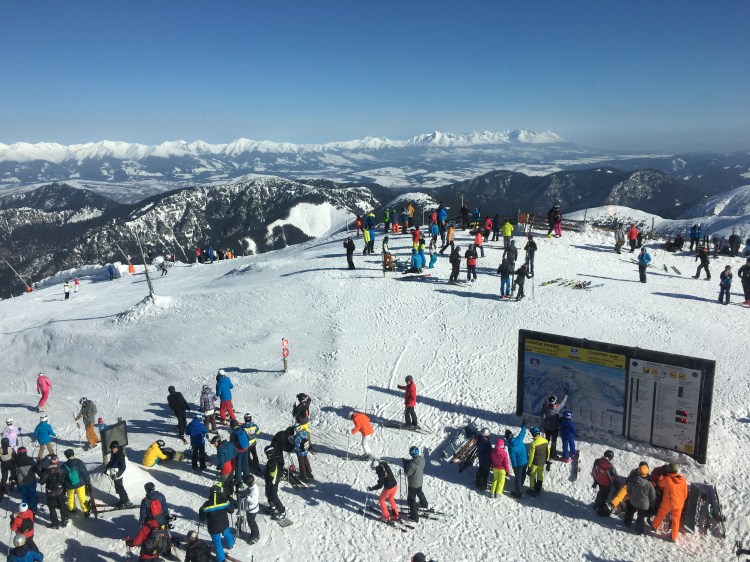
As for the snowboarding… it was perfect for a 3 day trip.
This is the first year that I can truly say I’m a proper snowboarder. I can finally handle my own and enjoy a good fun park!
…there were no fun parks in Jasna.
Ok so there was one small section, but the only access was a terribly slow lift or the bain-of-a-snowboarders-existance: the tow rope.
I would say most of the pistes were intermediate level. Shane, who’s been snowboarding for much longer than I have, might say otherwise. Regardless, after three days we had fully explored the area, and if we stayed longer we might have been bored.
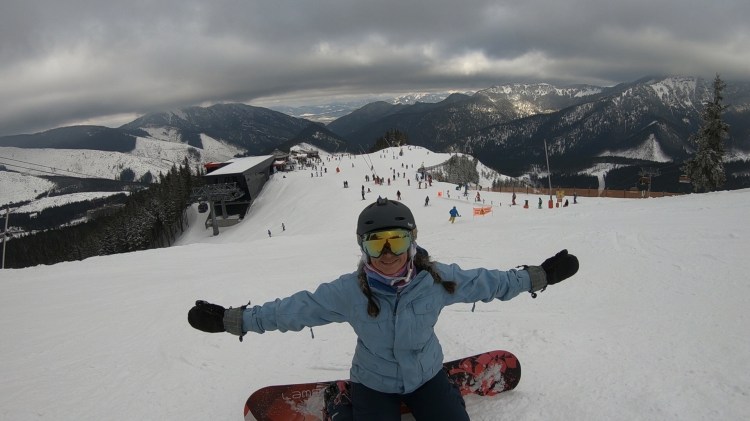
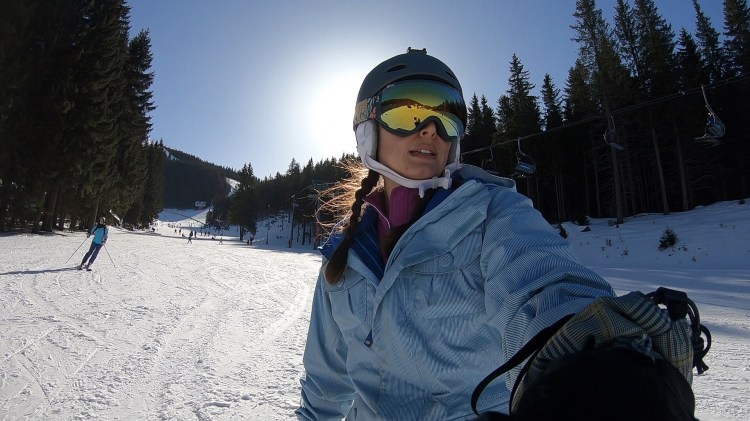
Easy riding meant I could practice my snowboarding selfie skills.
I would also like to disclaimer that my opinion on this would probably be 100% different had we had fresh snow. The entire back-side of the mountain was essentially off-piste, but since there was no new snow it was all ice and unusable.
We were able to sneak out a few good powder runs on the first day after ~10cm from the night before, but to get there, we had to brave the white out…
uh… where’s the mountain?
There is it!
So,
Was Jasna worth it?
Yes.
A 3 day lift pass was 90 euros per person – a fraction of the cost for a 3 day pass somewhere in the alps. Our total expenses (excluding food and drink) were 620 euros including our surprise boarder-crossing fee. The average dinner for two (including drinks) was ~20 euros. Compared to your average ski holiday in Switzerland, Austria, or France – it’s a steal.
I would also highly recommend Jasna to anyone who’s learning, or who might take kids. There’s plenty to keep those who are more experienced entertained, while letting the newbies gain some confidence.
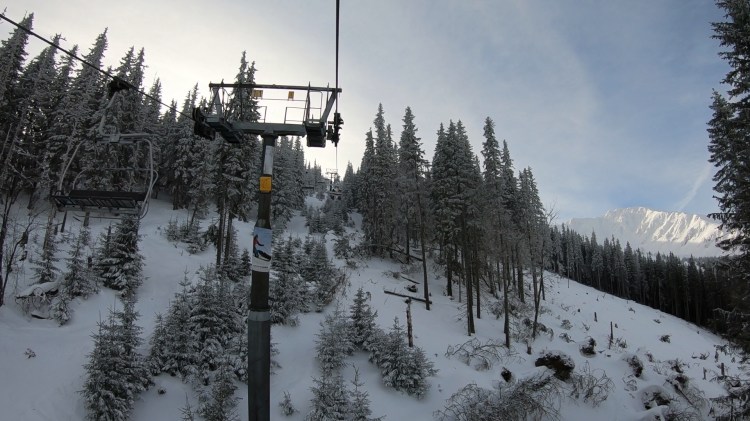
And of course, had there been fresh snow, the off-piste area would have been amazing! Instead, I stared at it with envy from the gondola…
Biggest downside? No funpark. I was looking forward to landing some sweet jumps (and by jumps, I mean baby-sized jumps)! Maybe next year.
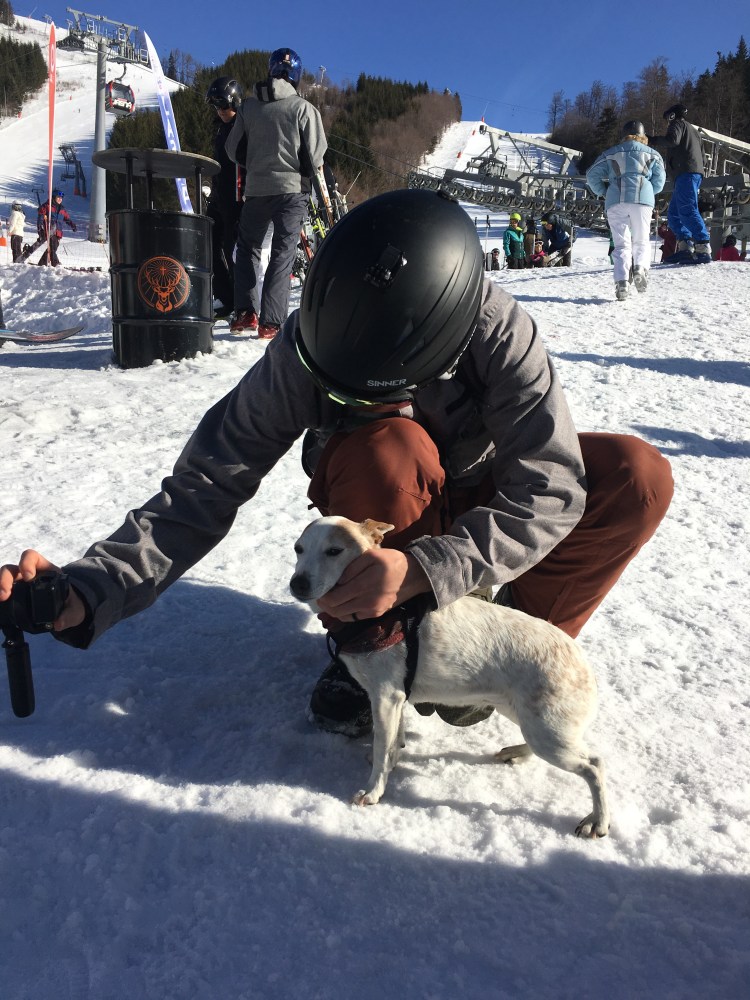
But, Shane found a dog (he named him Pablo) so it couldn’t have been all bad, right?
































































 The Shwits