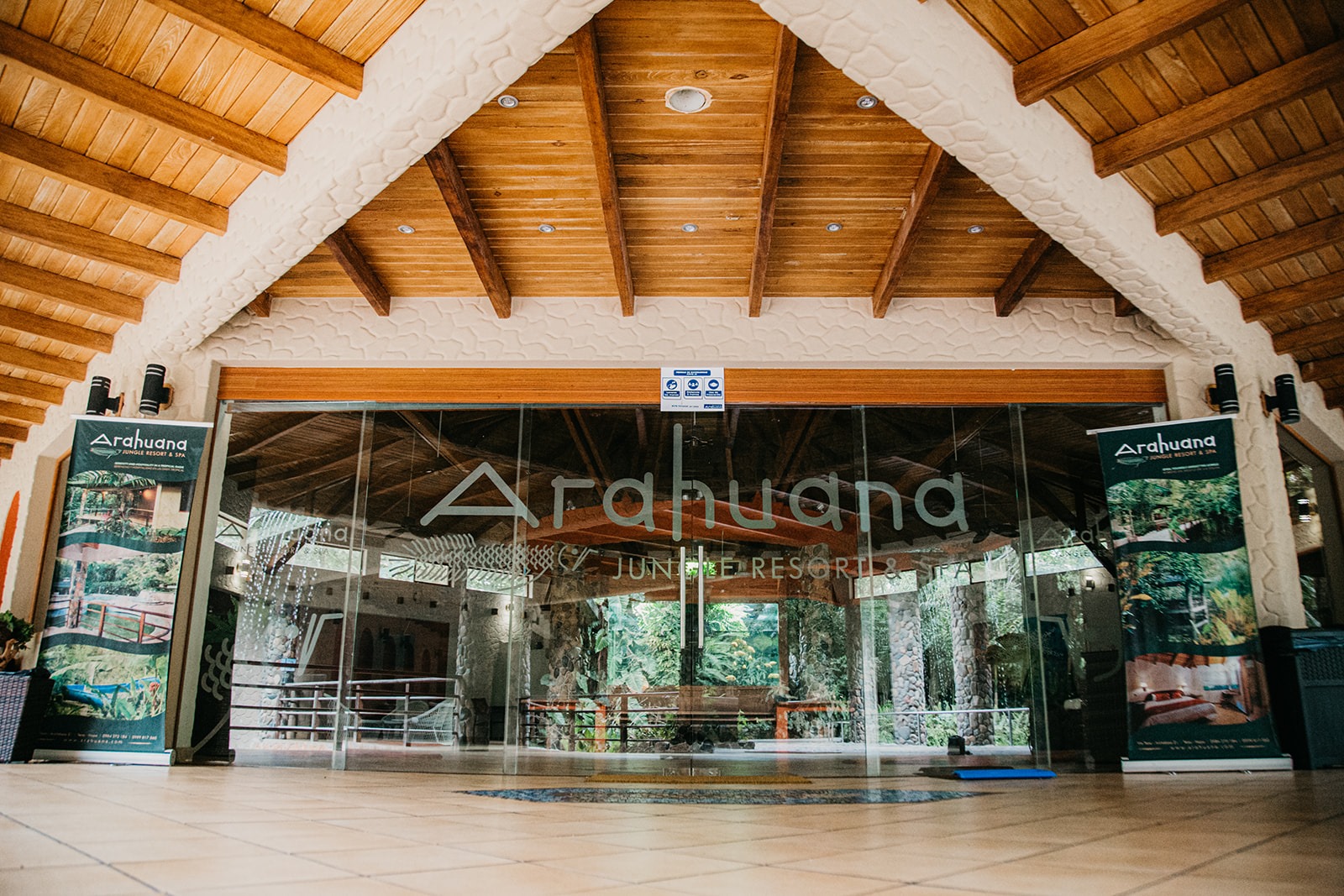
Sometimes I forget that Tena is actually a city surrounded by nature…rainforest nature. A mere 2.6 km outside Tena is this beautiful resort tucked away in the forest. We first heard about Arahuana from Shane’s work colleague, who described this magical Resort del Dia (resort for the day) package. So, a few weeks ago, when Shane had a day off, we decided to switch up the routine and check it out!
When I said “a few weeks ago, when Shane had a day off work,” I meant that in the literal sense. As of this post, he’s on day 17 in a row. I recently posted about our six-month impressions of Ecuador. What I didn’t include in that post was our six-month impressions of the work.
In short, it’s relentless.
I think I can speak for Shane when I say that the project is great, and he genuinely enjoys what he does on a day-to-day basis. However, the problem is two-fold.
It’s a lot of ‘effin work to take care of 100+ caterpillars, a plant house to feed those caterpillars, and 15+ cages of butterflies. Every. Single. Day.
His experimental design takes about ~2 weeks for one round of data collection.
For some context, it takes 1 to 2 hours to feed the butterflies and anywhere from 4-6 hours to feed the caterpillars. Shane and Lucie should also be running experiments somewhere in there, given that’s the whole reason we’re here.
They’ve hired research assistants and have recruited student interns, but at the end of the day, it’s still just a lot of work that can’t be neglected. Unhealthy caterpillars mean no butterflies, which means no data.
So, my least favorite part about living in Ecuador has nothing to do with Ecuador itself; it’s Shane’s work schedule! Honestly, I expected him to be busy, but I did not expect the lack of routine days off. But, with time, I (we) have come to accept this new reality. I, especially, needed to shift my expectations so I wasn’t aNoYEddd 😤 all the time. And luckily, I’m a field biologist now, so I can come and help when he needs or wants it.
I share this because I think being honest about living and working abroad is important. It can look dreamy from afar, but there are downsides.
I also share this to emphasize how EXCITINGGGG it was to go relax at a resort for the day!
Ok, so back to this magical place in Tena.
The Resort del Dia package is $25 per person for 3 or more people (or $30 pp for 2). It includes access from 10 am to 4 pm to the entire property, which has beautiful paths throughout, an observation tower, and a spa (for an extra cost). Most importantly, they have two pools… and let’s be real. We were there for the pools!
Pool 1.
The package also includes a $15 credit towards food and drinks (alcoholic also) and a room for the day. 🤯 Anything you spend over the $15, you can pay at the end of the day.
Paths through the property.The observation tower.The view from the top.Our room for the day (it was actually two bedrooms).
By the grace of the weather gods, we had a beautiful, sunny day, which we spent by the pool drinking German beer (apparently the owner is German) and just… doing nothing! It was fantastic. We didn’t eat in the restaurant, but we did consume more than just beer! 🤪 We opted to order lunch from the pool bar/bistro.
Pool 2.
We went on a Tuesday and essentially had the place to ourselves. So, the next time Shane has a sunny day off, I think you’ll know where to find us!
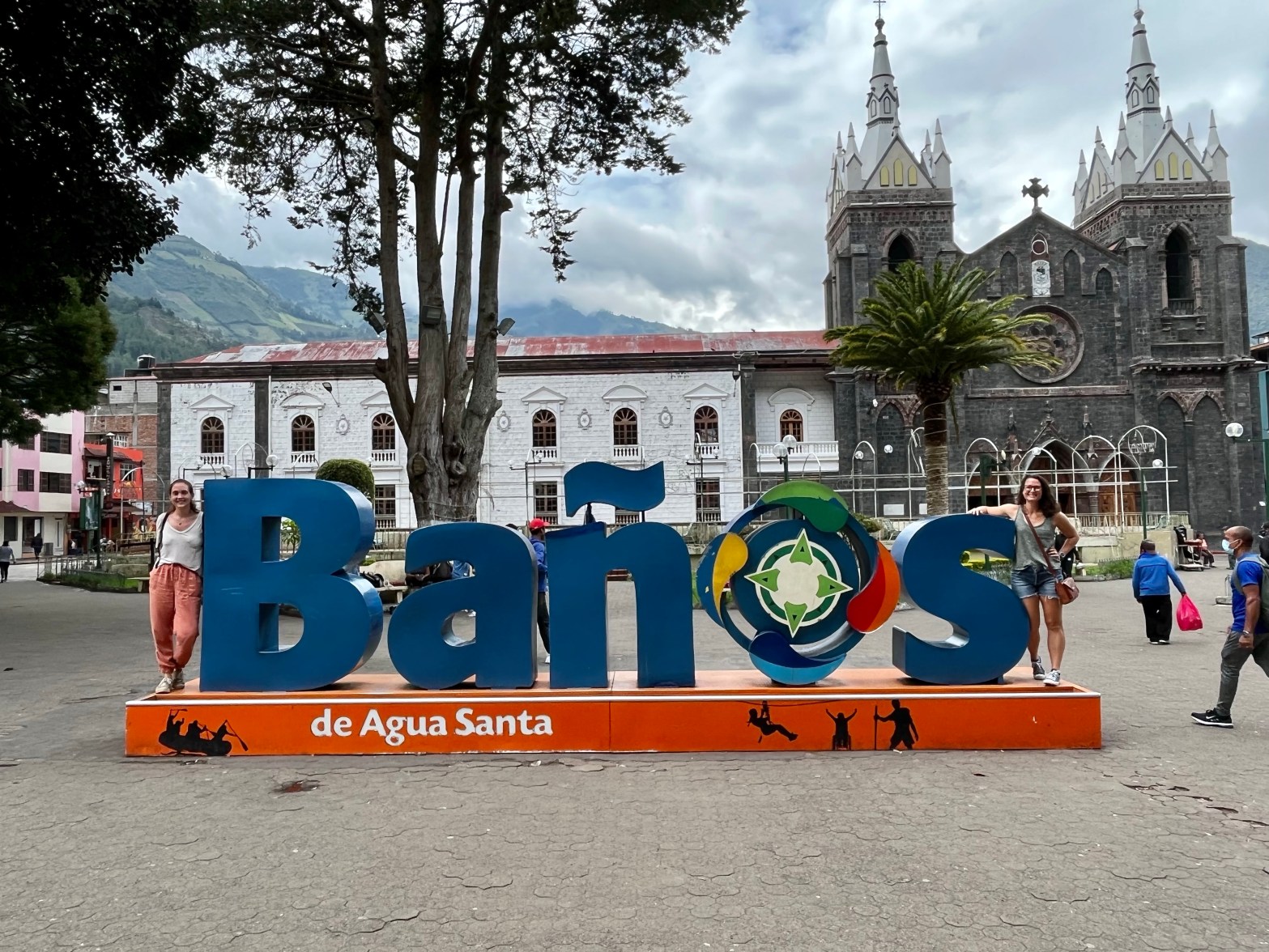
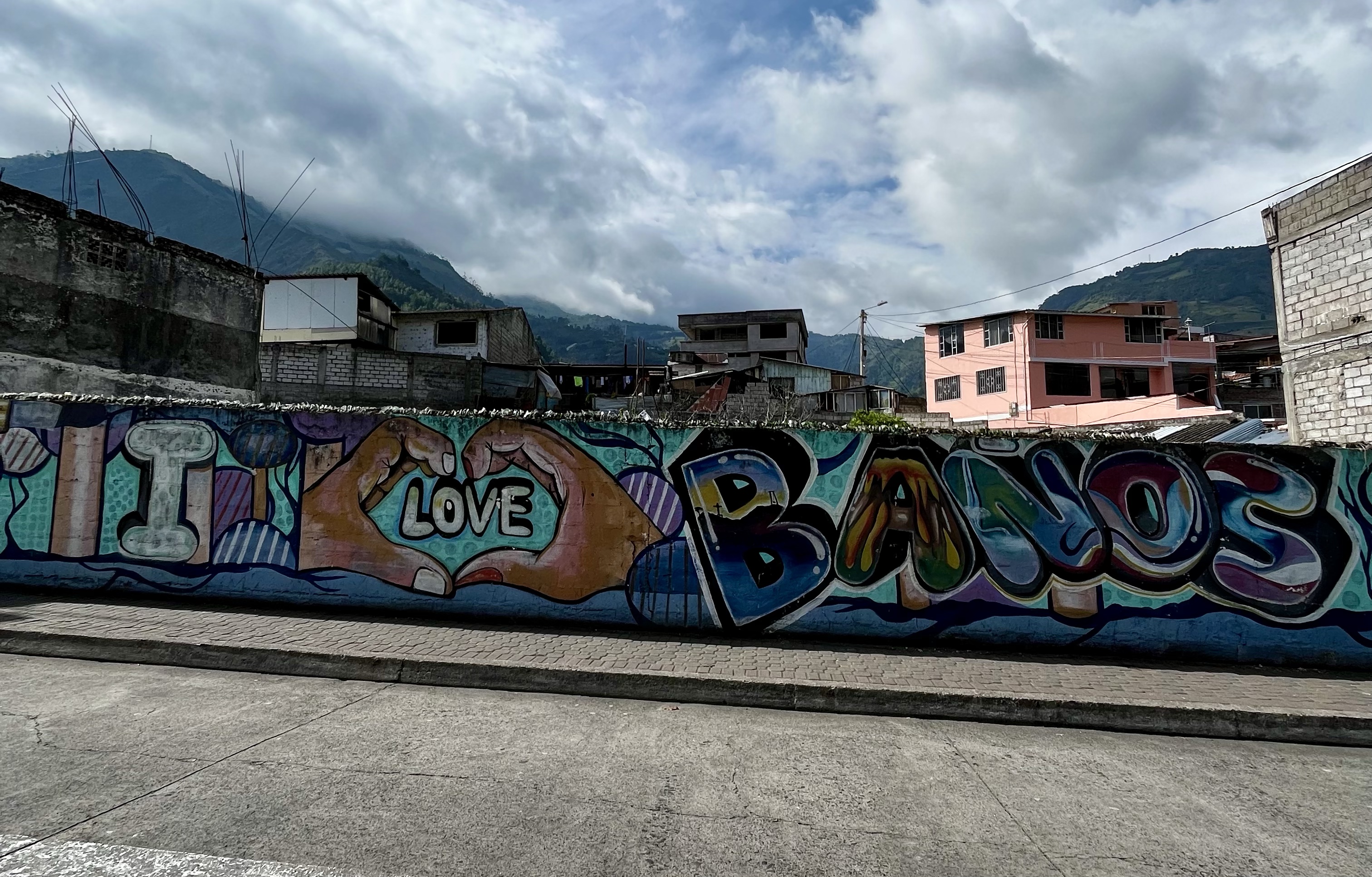
That’ll technically be Baños de Agua Santa since you may know that baños also means toilets. However, throw that “de aqua” behind it, and you’re talking about a water bath, for which the town is named. Baños de Agua Santa is near the Tungurahua volcano, thus named for the natural hot springs in the area!
Besides the thermal baths, Baños de Agua Santa (commonly called Baños) is known for its adventure activities. It’s also only ~3 hours from Tena by car (~4 hours by bus). So, when Lucie considered what to do for her 30th birthday in March, Baños was an obvious choice.
So, Lucie, Edd, and I kicked off the weekend with birthday pancakes, then hopped a bus to Baños!
Unfortunately, our weekend was a bit muted since Lucie’s stomach decided to revolt (as they do every now and then). Apparently, it missed the memo on Baños the town versus el baño…
Anyway, Baños has apparently exploded in tourism over the past few years and was nearly unrecognizable to Lucie, who visited about 8 years before.
The bad news. It’s a bit more expensive (but by no means unreasonable), and you have more of that typical tourist city center vibe. The good news. There’s a ton to do and nice places to eat!
Stuff to Do
Hikin’
Since we only had the weekend, we didn’t venture much outside of the city, but there are a ton of hikes and waterfalls in the area. The most famous is probably the Ruta de las Cascadas (the waterfall route), which is not a hike per se, but some hiking is required to get to each spot.
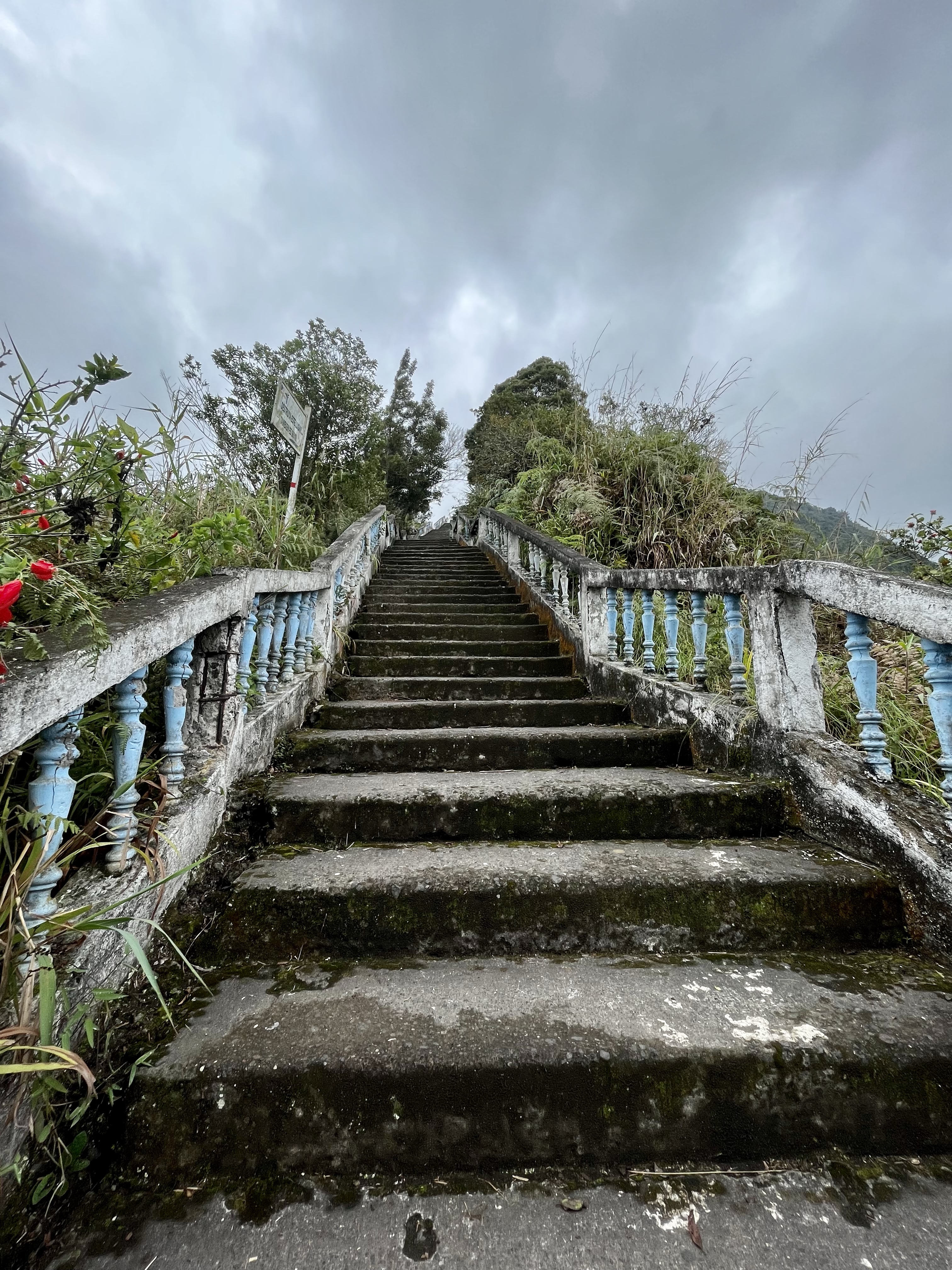
However, from town, you can hike to laCasa del Arbol, a famous treehouse swing with a view of the Tungurahua volcano. That hike (called Las Planes-Runtún-Ventanas on the sign) is ~3 km and takes about 2.5 hours. Since we were without Lucie, Edd and I decided to do the Virgen de Ventanas route, which takes about 1 hour for 1 km.
…Yes. You read that right. 1 hour to go 1 km? We thought no way.
So many stairs.
Yes, way.
There were A LOT of steps. Honestly, I was really sad Shane wasn’t with us. It’s one of his favorite things to do in new places, climb a sh*t ton of stairs.
…that’s sarcasm. It’s me. I can’t resist the stairs.
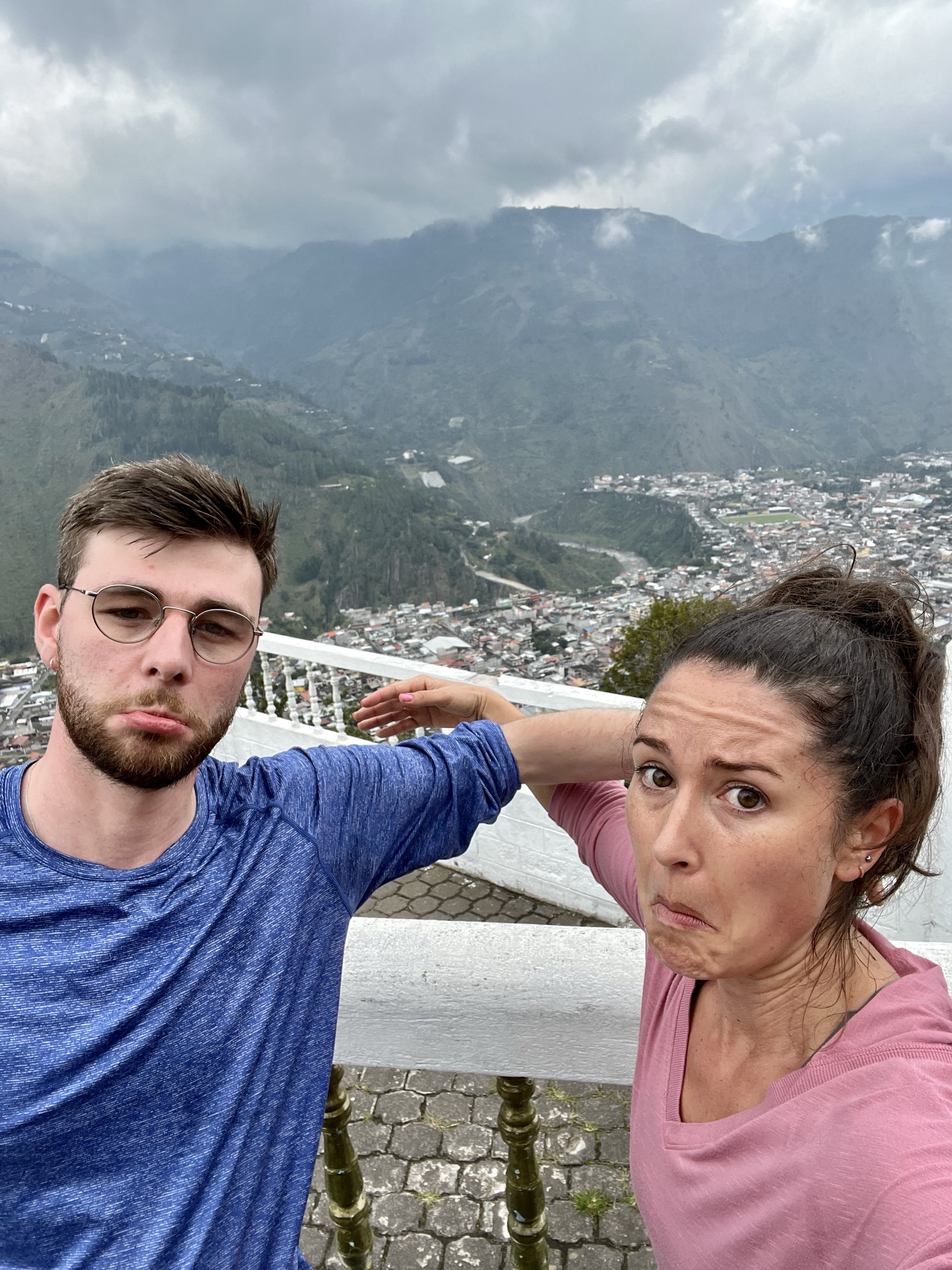
Anyway, the views are lovely on the way and at the top, so it’s worth it. We forgot to pay attention to what time we started, but it took at least 45 minutes to get to the viewpoint.
Missing one.
Adventurin’
Considering you can bike the Ruta de las Cascadas, I’d also put that activity in the adventurin’ category. But wait, there’s more! You can go rafting, ziplining, canyoning, and via ferrata-ing (is that a word?)! There are tour companies everywhere, so these activities are easy to schedule. Also, most can be done in the rain, which is good news since Baños is located in the cloud forest, which means rain is common.
We opted for ziplining ($25 per person). This was a great activity on the morning we planned to leave since the whole trip (from hotel pickup to drop-off) took about 2.5 hours.
The entire experience was really fun and included 6 routes that got progressively longer. The final route was 550m over the canyon with gorgeous views of the river below! Lucky for you, I brought the GoPro… and then left it in my backpack. 🤦♀️
Zipline adventure success!
Relaxin’
Do you like all things Spa-like? Well, Baños has got ‘ya covered. There are tons of spas in the area that offer a wide range of treatments (at various costs). For the most part, though, if massages are something you enjoy, they are VERY reasonably priced here.
For example, we went to the Huellas Natural Spa and had an hour full-body massage and a half-hour full-body scrub with volcanic ash for $40. I CANNOT recommend that full-body scrub enough! The massage was wonderful, and the scrub made my skin feel like butter. So, DO IT.
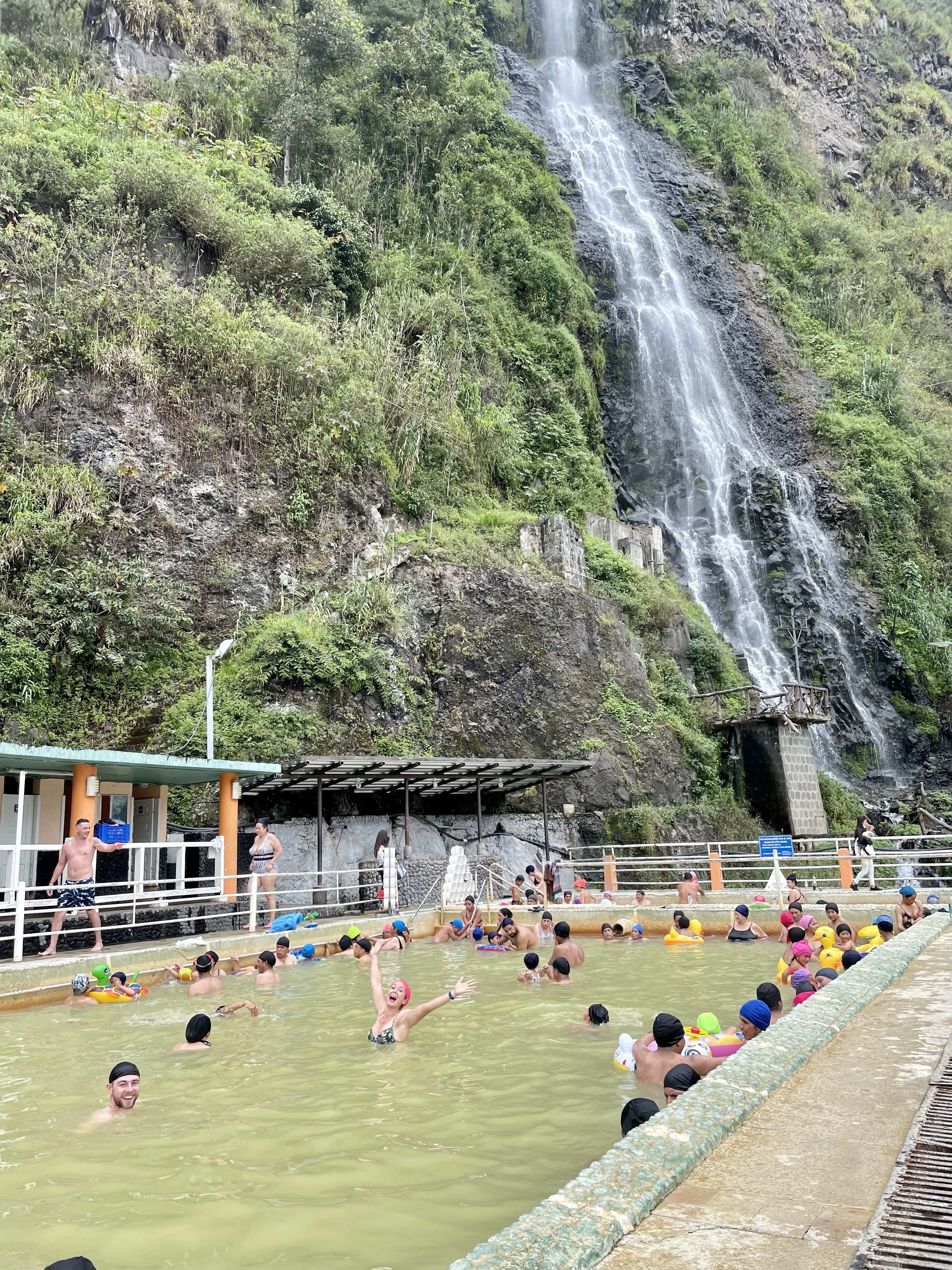
Regardless of the spa treatments, Baños is famous for its thermal baths. I must admit, I wasn’t too sure what I would think of the thermal baths. Shane and I went to one in Budapest, and we mostly just felt kind of bored and awkward. Everyone was just sitting around, not really talking… I dunno. It was weird.
Not here!
Can you spot me? Shane said it was like “Where’s Waldo,” wife version.
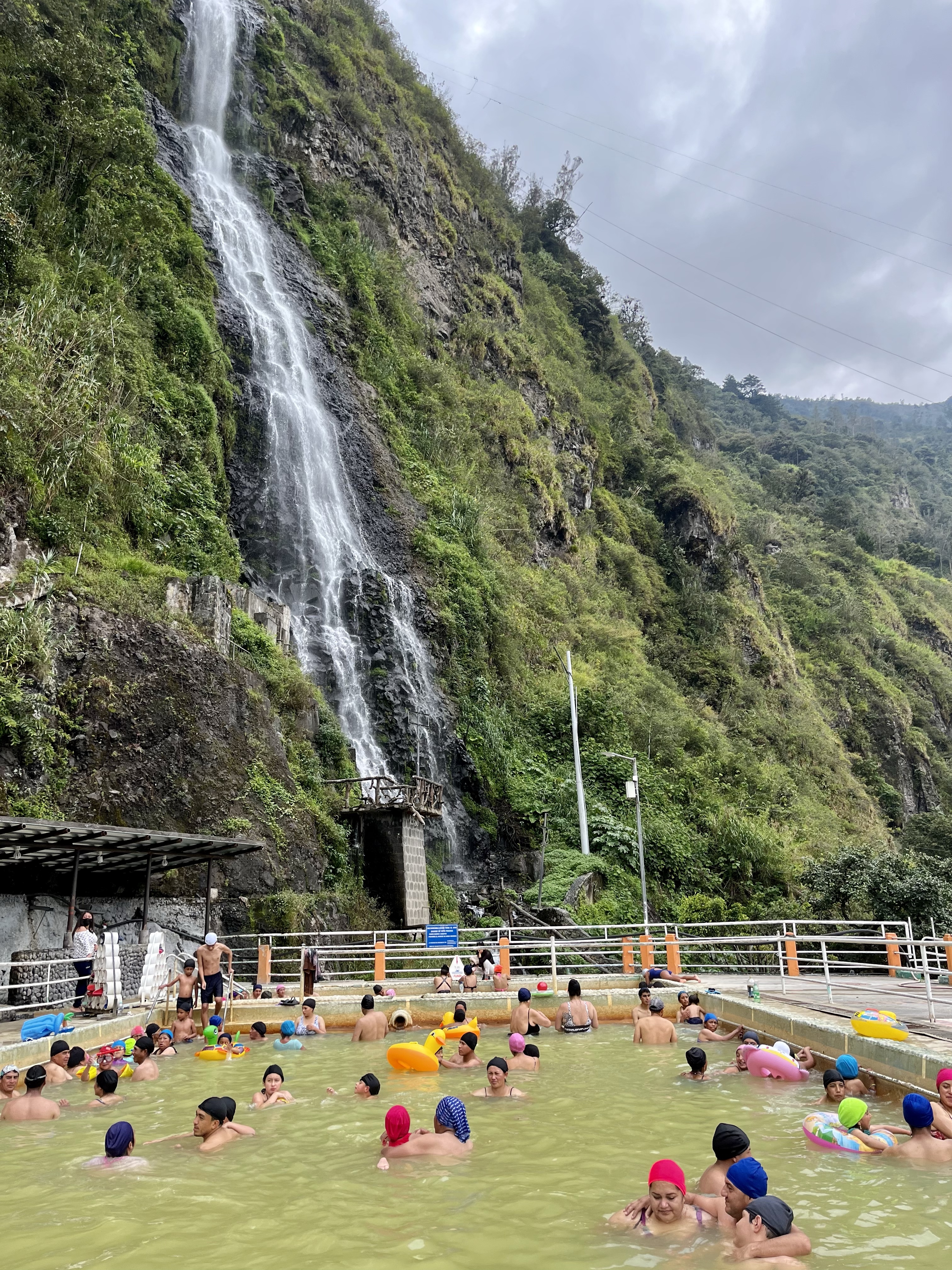
We went to the original Termas de la Virgen, but there is also a newer and larger complex a minutes walk past the original ones. However, I’d go back to the original ones! No awkward vibes here. Everyone treated the baths like warm swimming pools, and the atmosphere was relaxed but fun.
Termas de la Virgin
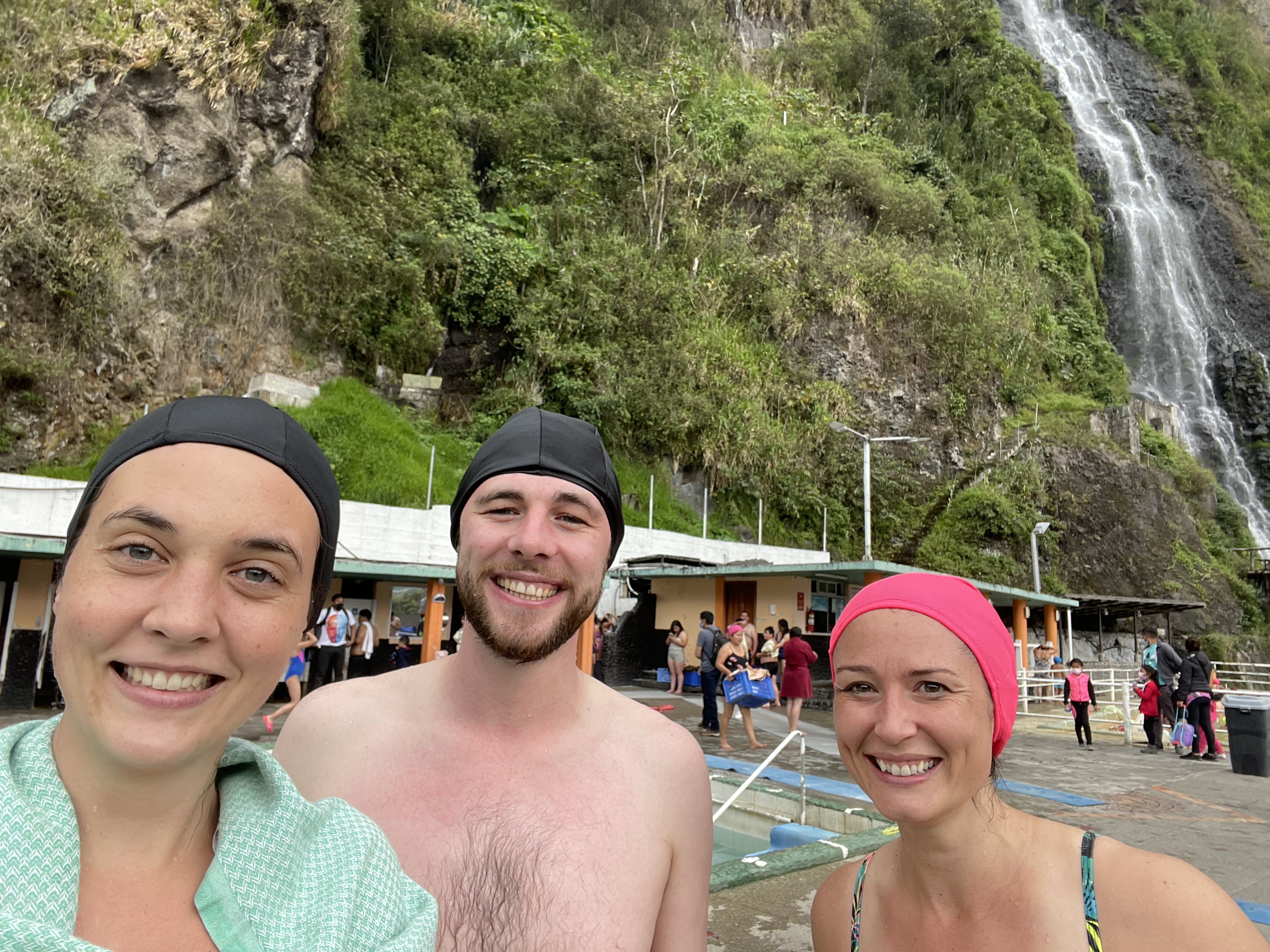
Oh and yes, the swim caps are required. You can buy one for $1 at the baths, but we bought one from a vendor on the street for $0.50.
These baths cost $3 and are open from 5 am to 4 pm, then they close for a bit and reopen from 6 to 9:30 pm (for $4, not sure why it costs more).
If you’re feeling fancy, there are some amazing-looking baths at the Luna Volán Adventure Spa that overlook Baños, but they are considerably more expensive. You can stay in the hotel, which includes the baths or pay $66 to visit. However, this does include the baths, a facial, and dinner. Maybe next time.
Things to Eat
There were a ton of restaurants to choose from, some better than others. We did have a delicious dinner at Haycha Restaurant (Ecuadorian food) and some proper coffee (Honey Coffee & Tea is a popular spot).
However, head to the Mercado if you want a more authentic (and less expensive) food experience. We tried llapingachos ($3), fried potato pancakes served with egg, sausage, and avocado that originated in the Tungurahua region (aka, Baños area). And, of course, there are tons of fresh juice stands. We also saw cuy (guinea pig), if you’re feeling adventurous.
Llapingacho (the potato pancakes are buried under sausage and egg).
We also encountered some, uh, unexpected sweets.
The sweets.The tree.
Apparently, this has to do with a tree that, legend has it, would… um… improve the size of one’s particular appendage. 🤷♀️ We definitely didn’t expect to see this, though!
Where to Stay
There are an overwhelming amount of hotel options, but we finally narrowed it down to La Posada del Arte, which was very close to the thermal baths and out of the main area, so it was quiet at night. The breakfast was fantastic, and our rooms had a waterfall view!
So, Happy Birthday Lucie, and until next time, Banos!
It’s hard to believe, but we’ve been in Ecuador for six months!
Talking about how time flies feels cliche; it’s simultaneously so overused but so true. On the one hand, it feels like we’ve been here for a while. We’ve settled into our apartment and gotten into a daily routine. On the other hand, where the hell did six months go?! And on Shane’s hand (…’cause I ran out of hands), I think, “We’re running out of time!” Two years here are going to FLY, and I have a lot of travel plans!
…I guess Shane has a lot of data to collect too, but, ya know, I have my priorities, and he has his. 😆
Anyway, impressions of Ecuador! That was the purpose of this blog, so here we go.
Luckily, the ability to work here isn’t a problem since his salary comes from Germany. However, our ability to stay in the country longer than the six-month tourist visa allows IS a problem. I’ve got a whole post about this, but I had been waiting to post it until things were resolved. This only happened literally last week. So, if you’re into reading about the real-life struggles of moving abroad, it’s a post to look forward to! 🙄
The main problem? The rules aren’t clear. Look, we are those overly-prepared people when it comes to this kind of thing, but you have to know what you actually need! It really trips my trigger, so I’ll just leave it at that. 😆 The second problem? Our Spanish isn’t that good yet, and people’s patience with bad Spanish is hit or miss. We were lucky to have Lucie to translate.
Oh, and FYI. Notaries are the kings of this country. Any official document needs to be notarized, but you’re at the total discretion of the notary. This process for various documents has taken 10 minutes to 3 hours. So, ya know. Go prepared and bring a snack.
Mixed emotions after a 2+ hour trip to the notary… all in Spanish.
Necesitamos hablar Español.
We immediately assumed that Spanish would be necessary, unlike in the Netherlands or Germany. Honestly, this isn’t a bad thing. We spent six years in the Netherlands and should have spoken better Dutch than we did, but we weren’t forced.
After six months of living in Ecuador, my Spanish is better than my Dutch or German was after the equivalent amount of time. I know that Shane would say the same thing.
We’re both improving, but we are also having two different learning experiences! Shane is getting that “thrown in the deep end” kind of deal through his work interactions. The guy that delivers their plants even told him that his Spanish had improved! On the other hand, since I’m working from home, I started online Spanish classes with Lingoda. Occasionally, they have “Sprint” promotions. So, I committed to taking 15 1-hour classes per month for two months. If I complete them all, I get half of my money back. I’ve already decided the refund will go towards more lessons because I’ve really enjoyed this method and can tell I’ve improved!
So, maybe the next time we need to deal with the notary, they will be a little more willing to work with us.
The food es más o menos.
It’s alright.
Now, I can only speak for the Tena region because the food seems to vary if you’re on the coast, in the mountains, or in the jungle.
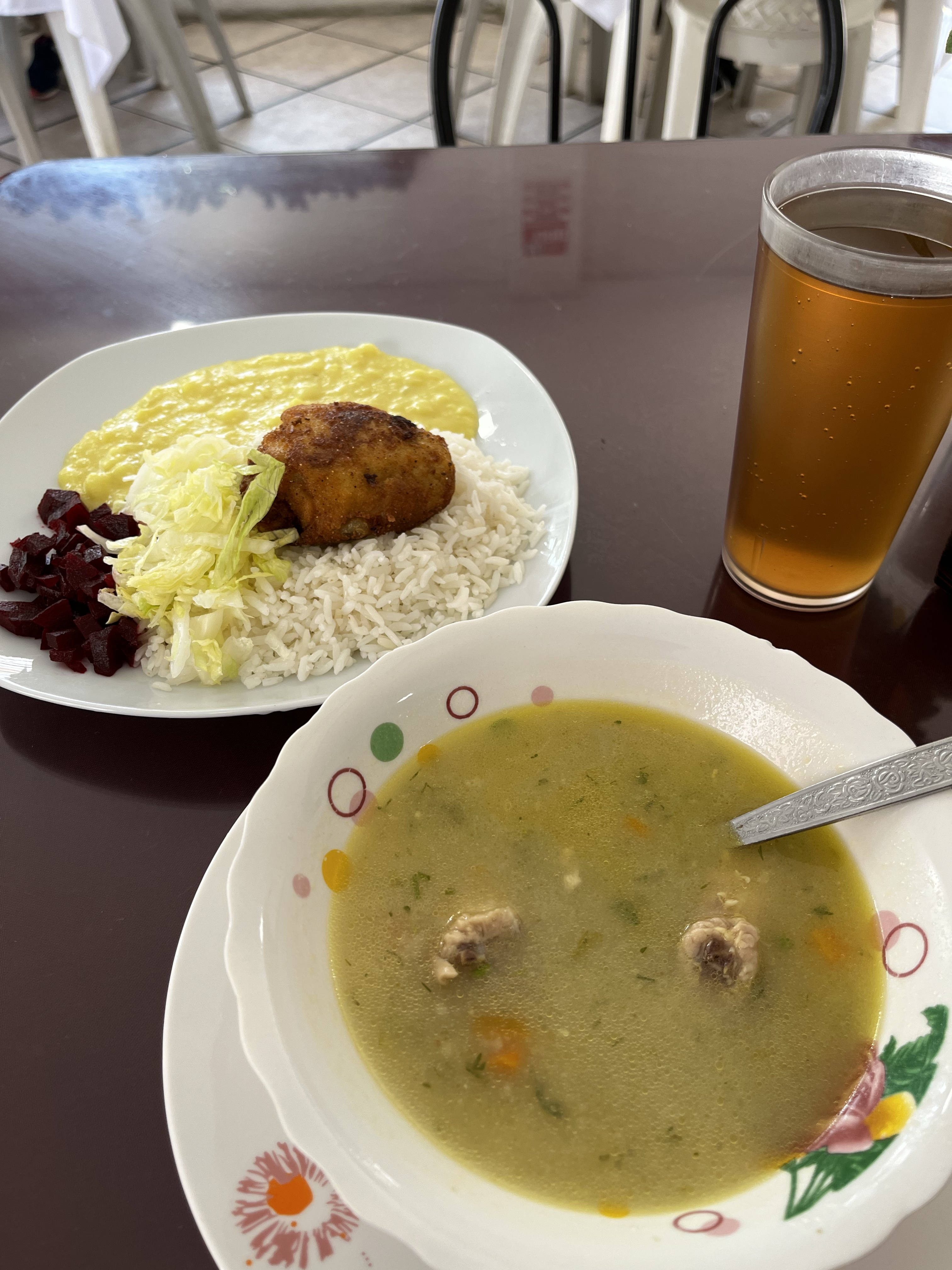
I say the food is alright because it’s kind of boring. We’ve certainly got some favorites (ceviche, anyone?!). Still, outside of those handfuls of things, there aren’t a lot of options in Tena. For example, I really enjoy $2.50 almuerzo (lunch), but it’s all variations on the same–soup, tea or juice, a small piece of meat, a small salad, a huge portion of rice, and usually a side of beans, lentils, or potatoes. It’s delicious, but every restaurant serves something similar.
Typical almuerzo.
Our food options for cooking at home are also more limited here, so we’ve had to completely rethink what meals we prepare. We’ve found that we are missing at least one ingredient for nearly all our go-to meals in Europe. We actually have a decent selection of vegetables, but their availability is hit or miss. So, meal planning is doable but more challenging.
But, as I said. We’ve found a few favorite Ecuadorian dishes and a couple of repeat-worthy restaurants in Tena. So, the food esmás o menos.
Choclo con queso.Tigrillo.Helado con queso.Some of our favorites.
Nevertheless, we really enjoy Tena.
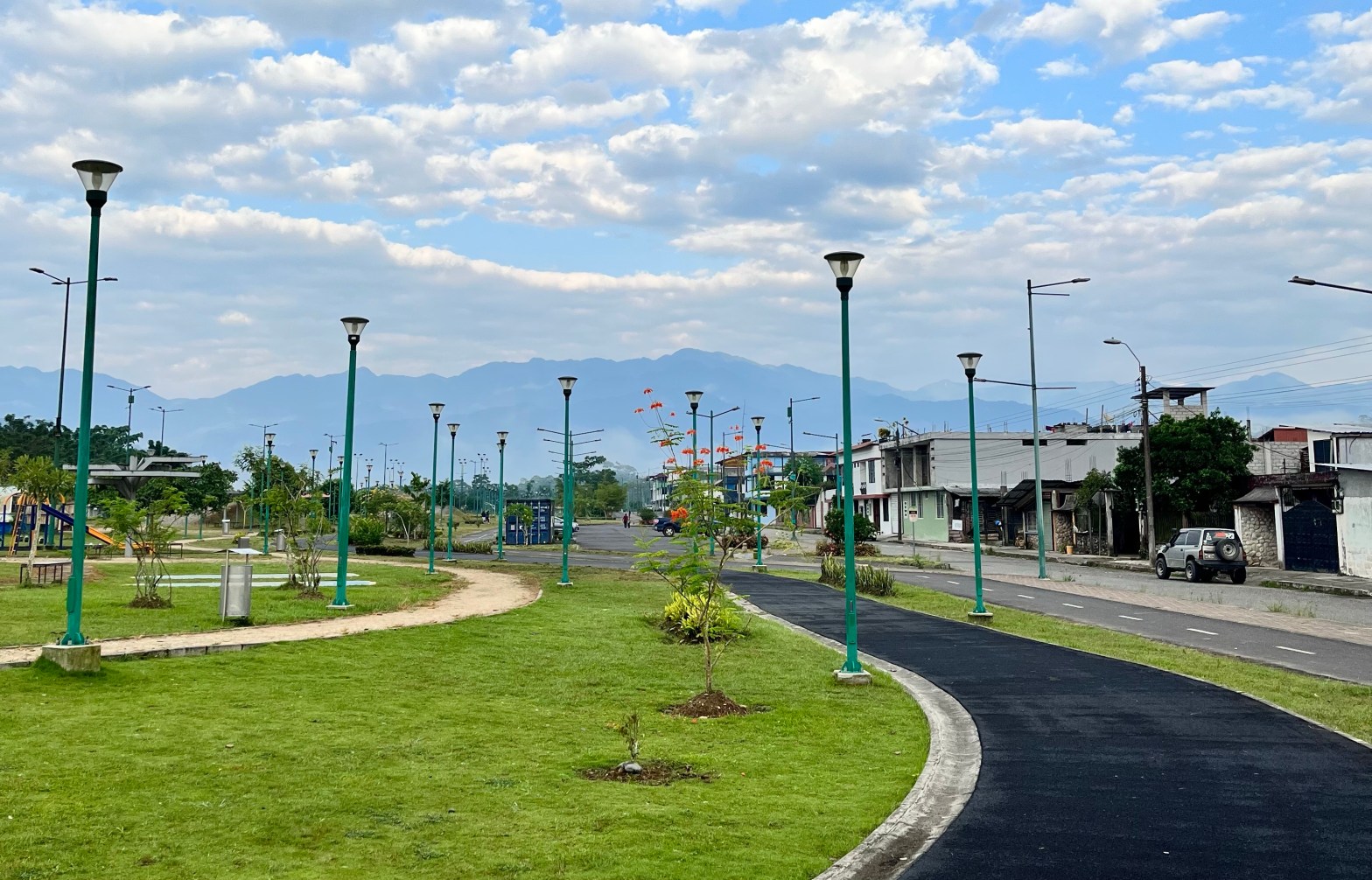
Tena feels like a city in the jungle.
I mean, you can see a volcano from our roof!
It’s more impressive in person.
The city itself has a lot of cement…but! you don’t have to go far to be fully immersed. Ikiam University, where Shane works, is a prime example. It’s only 8 km outside of the city but is surrounded by jungle.
Ikiam University
Speaking of the city, everything is LOUDDD.
The gas and trash trucks play music*, the shops blast reggaeton from massive speakers on the sidewalk**, and people CAN NOT resist a microphone and a speaker. On the sidewalk, in the bed of a truck, in front of a restaurant. It can be a lot***. 😆
* I personally love it, but it’s still loud.
** Again, I don’t hate it, but it’s still loud.
*** Perhaps it becomes more enjoyable as my Spanish improves.
Finally,
Tena feels like our new normal.
When we arrived 6 months ago, I didn’t anticipate feeling this way. We didn’t have expectations other than we knew it would be very different from Europe and the US. However, when we first arrived, I remember feeling overwhelmed by all the newness: the language, the cultural differences, even just learning how the shops worked. Every day was a new learning experience.
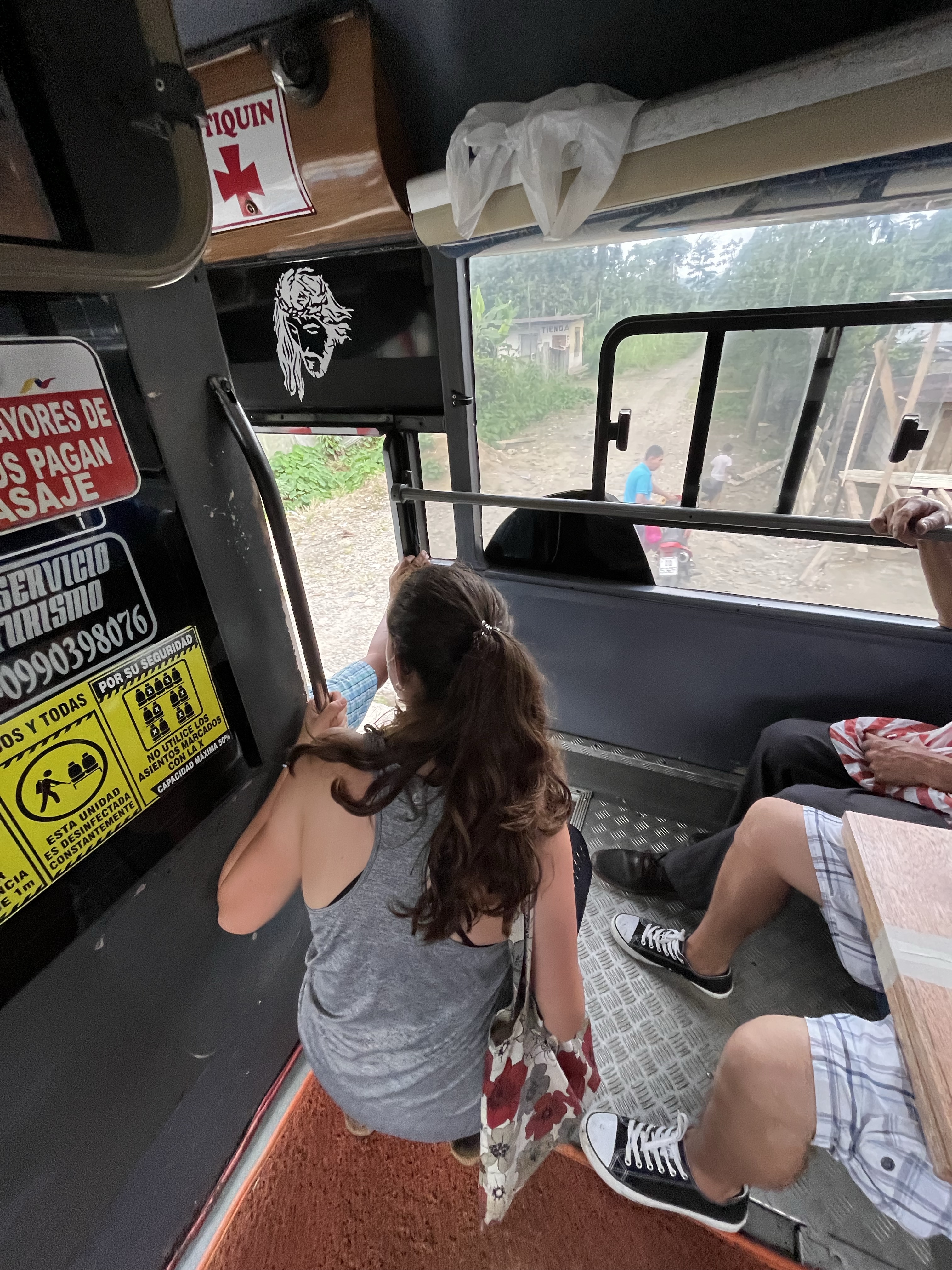
For example, how do you get off the bus when there’s no stop button? Yell “gracias!!” when you want the driver to stop, of course!
Lucie looking for our drop-off spot, waiting to yell “gracias!”
We also didn’t anticipate how much it rains here. Sounds ridiculous, I know, given that we’re in the rainforest, but when you envision Ecuador, do you think of heavy rain every day? We didn’t. 🤷♀️
It’s funny, though, how with time, things just become normal. Six months ago, I didn’t anticipate being OK with literally chopping the head and feet off a chicken to make dinner. I also didn’t anticipate finding it strange to flush your toilet paper (now, it goes in the “baño bin”). And, I certainly didn’t anticipate being on a WhatsApp texting basis with the couple that runs the laundry service. Hell, I didn’t expect to have a laundry service! Shane never thought he’d be crushing spiders with his bare hands to save the butterflies, but here we (well, ‘he’ in that specific example) are!
Wash, dry, and fold with pick-up and delivery included for $1.50 per kilo. It’s the best!
But, for us, that’s the beautiful part of living abroad. Tena has been our biggest “challenge” to date, but I also wouldn’t have it any other way.
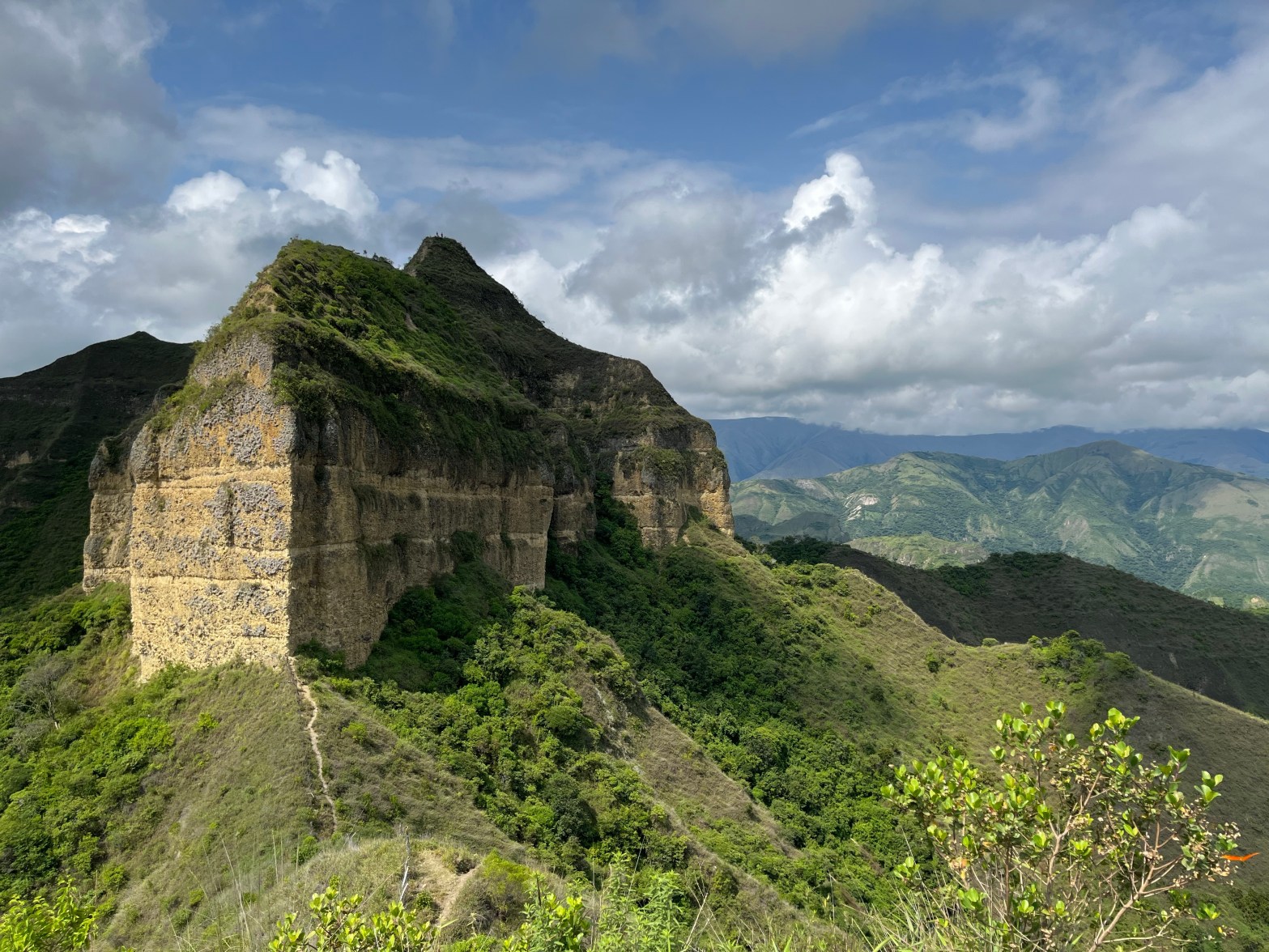
Cerro Mandango, also known as “the sleeping Inca,” isn’t the only attraction in Vilcabamba, but it’s certainly one of the main ones. It felt wrong to leave without checking it out. So, when we found ourselves without plans on the last morning of our butterfly collecting trip, we hit the trail!
This was quite easy to do since the trail shows up on Google maps, and you can walk from the center of town.
Look for the signs as you follow the road away from Vilcabamba.
The start of the trail with a semi-view of the sleeping Inca.
The hike itself starts out pretty easy. The path is well marked, and it’s not so steep. In fact, we found ourselves alongside a youth group from a local church, and two men carrying a giant cross passed us going up. Turns out, they were holding a church service that day around the halfway mark.
An easy going start.
Eventually, the trail does get steep and rocky. Still, I’d say it’s accessible to just about anyone. However, I would recommend feeling sure on your feet and taking your time.
Going up with views over Vilcabamba.
The trail has three viewpoints. The first is at a cross with 360-degree views of Vilcabamba and the surrounding valleys.
Looking up towards the first viewpoint.
The first viewpoint.
The second is across the ridge, presenting you with that prime-time view of Cerro Mandango!
The ridge leading to the second viewpoint.
Panoramic views over the neighboring valleys.
We didn’t make it to the third viewpoint at the summit of Cerro Mondango. Unfortunately, we were out of time, given that we had about four hours of butterfly packing ahead of us. It took us about an hour and fifteen minutes to make it to the second viewpoint. I would venture to guess another hour, and you would be at the summit. However, we were warned to avoid the summit on windy days since the trail is narrow and on the ridge.
Notably, the trail was pretty popular. We started fairly early in the morning and only encountered a couple of people (excluding the youth group that stopped halfway). However, we passed quite a few on the way down. So, I recommend an early start, especially if it’s a beautiful weekend day, as in our case!
Oh, and bring water! You’ll want it. 😅
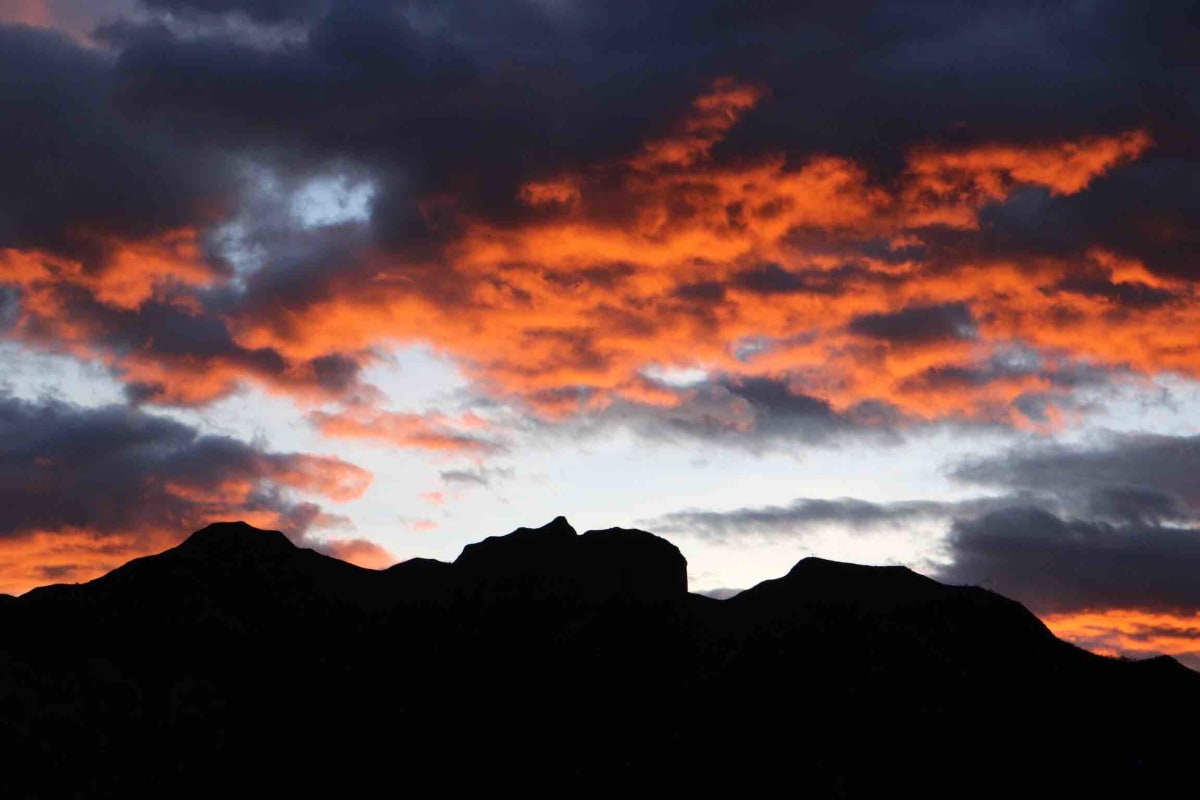
So, have you figured out why it’s called the sleeping Inca?
It might be hard to tell from my pictures, but the mountain looks like a face lying flat, looking up at the sky from the side.
Thanks to my mother-in-law for the hat, which really made me feel legitimate!
Ok, not really, but I did go on my first trip to the field with Shane, and I don’t think I did half bad! Shane has been to the field a few times now. He went to Tanzania for his PhD project and joined a group in Corsica between his PhD and postdoc. Honestly, these trips were pretty awful for him since I couldn’t come.
I’m being completely sarcastic.
They were hard work, but he loved it. On the other hand, I had to stay home and “go to work” and “be responsible” and 🙄. But you know what? Not anymore! Thanks to my freelance editing job, I have the flexibility to tag along!
This trip was quite a learning experience for me. So, I thought I’d go through some of the basics.
First things first…
How do you find the butterflies?!
Word of mouth!
We were looking for two specific types of butterflies: Heliconius erato cyrbia (the blue one) and Heliconius himera (the black, red, and yellow one). For us, locating them was relatively simple because Heliconius butterflies are an expansive and extensively studied genus. So, collaborators and other Heliconius researchers have shared or published GPS coordinates where they previously found these specific butterflies. I can’t speak for those looking for other species, but I imagine it’s similar.
H. erato cyrbiaH. himera
So, that’s how we ended up in Balsas (for cyrbia) and Vilcabamba (for himera).
Now, GPS coordinates are great and all, but they don’t actually tell you HOW to get to said location. For instance, when we showed up at the first location in Balsas, the GPS coordinates did not tell us to climb under a barbed wire fence, wade through the boggy area, and scale the (very muddy) hill.
The butterflies were up the hill to the left.
How do you catch them?
With a net, of course!
A rainy day in Balsas, Ecuador.
However, this requires a little skill, some quick (or quick-ish, in my case) reflexes, and patience. My crash course from Lucie was something to the effect of “never swipe from the top—it’s nearly impossible to catch them that way,” “try and swipe from behind so they don’t see you,” and “make sure you have a good swoosh and flip!” (to keep them in the net, naturally).
We all had misses, some more comical and frustrating than others. Conversely, there were some pretty solid catches—Shane and Lucie both had a couple of two-at-one-time instances! I found with time, I worked out my own “catching style,” if you will. Shane and Lucie are rapid-fire-quick-swoosh kinds of people. I, however, am not. 😂 I caught more butterflies once I abandoned the aggressive swoop and went for the steady swoop. Slow and steady catches the butterflies… that’s the saying, right?
Caught one!
It’s in my net. Now what?
Bag ’em up!
Ok, so it’s really more an “envelope ’em up” scenario. This trip taught me that while butterflies are fragile, they can withstand gentle handling. Once they are in the net, you can lightly pinch the wings to stop them from flapping and easily move them. The simplest mode of transport is a small envelope with a bit of cotton in the bottom, which maintains a small pocket inside the envelope so they don’t crush their head and eyes. Once the butterfly is in the envelope, it may be able to move around a bit, but it can’t flap around and damage its wings. Once it was safely in the envelope, they went into the “butterfly box” (an official term), aka a small plastic container, to prevent them from being crushed.
It’s hard to see, but there is a butterfly between my fingers.
A butterfly ready to go into the box!
Where do you keep them, and what do they eat?
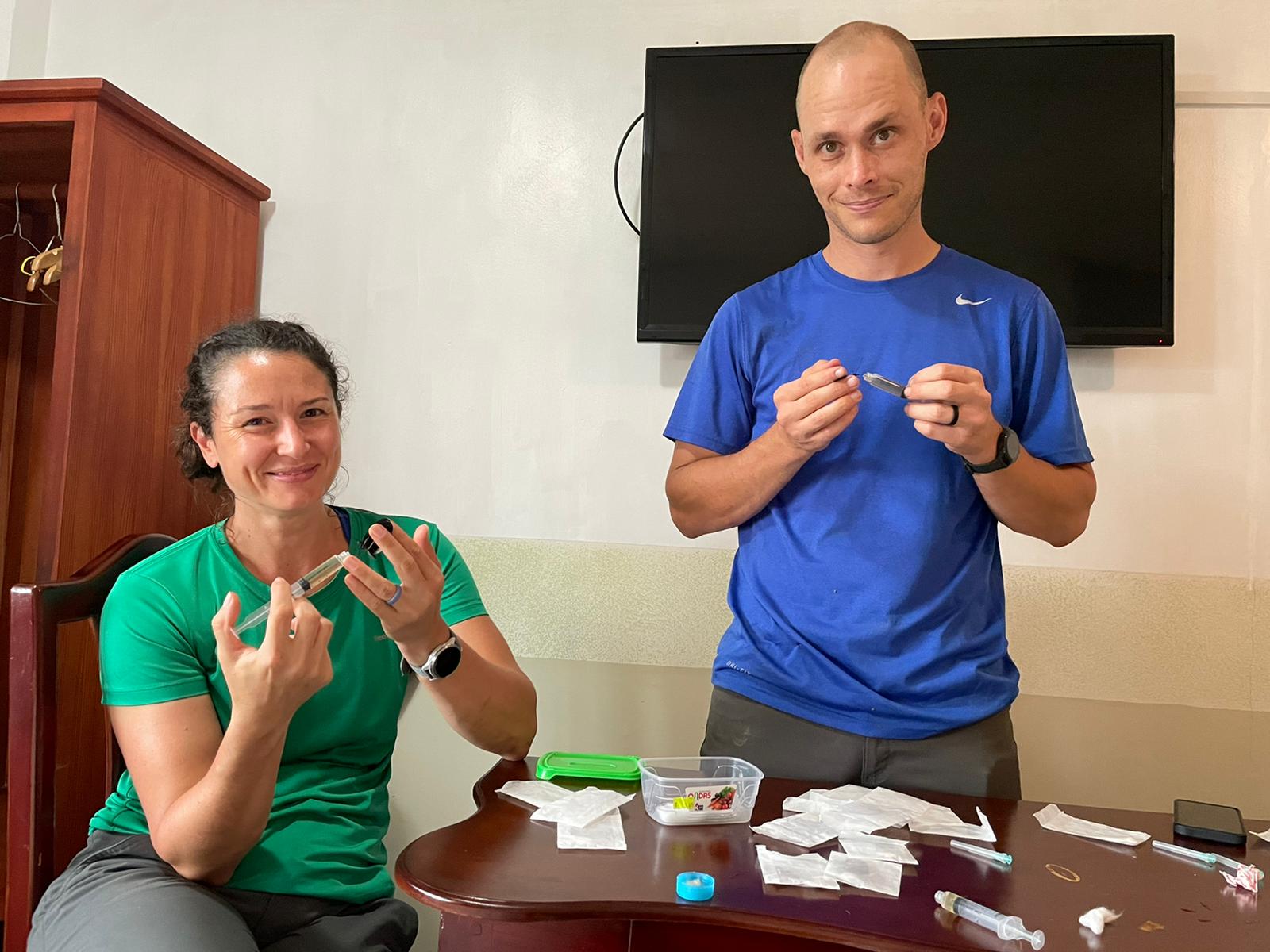
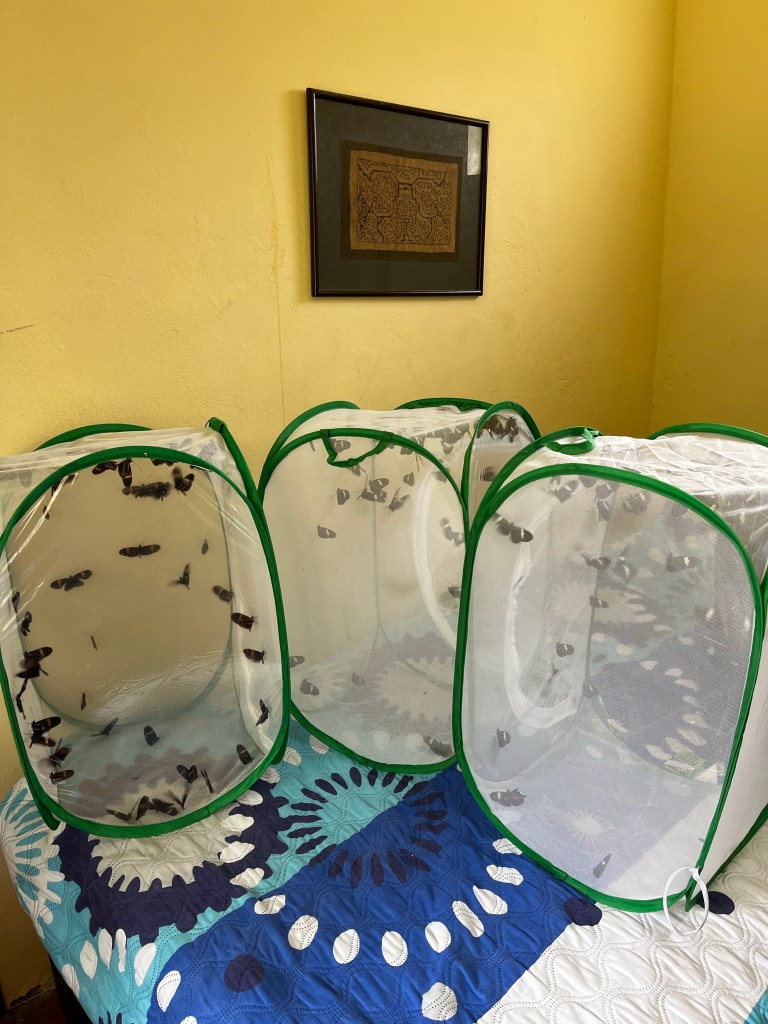
We temporarily stored the butterflies in pop-up cages so that they could fly around a bit (but not too much). As for food, we fed them sugar water… individually… by hand… twice a day. 😳
Syringe-feeding the butterflies.
You can imagine, as the number of butterflies increases, so does the amount of time it takes to feed them. By the end of the trip, we spent 2 hours in the morning and 2 hours in the evening feeding.
How do you transport them?
It’s out of the pop-up cage and back into the envelope, my pretties!
Before…and after!
This process takes quite a bit of time. I think it took us around 4 hours to pack ~150 butterflies. They need to be fed first, then carefully put into the envelopes—more so than in the field. Ideally, they ride on the little cotton ball, and a loose paperclip on the outside of the envelope holds them in position.
Once we were back in Tena, they were unpacked and placed in larger cages.
Back in Tena with all our new friends!
So, are you ready to go collecting now?
Theoretically, it’s simple. However, finding the butterflies can be challenging (especially so, depending on the species), and it’s a long day of work. Fun work! But it’s a come home-eat dinner-go to sleep kind of work.
A little belated, of course. A brief life update. We DO have visas now, but the process is still ongoing. So, more on that later. For now…
Christmas in Tena!
Parque Central, Tena
Since we went home to the US twice this year (🙌), we knew we were going to stay put for the holidays. Plus, someone has to take care of those darn butterflies. So, Shane, Sophie (a master’s student), and I stuck around Tena. It was quite a low-key Christmas. The city was decorated with lights and (fake) Christmas trees. Honestly, what I found most interesting about the decorations was that they were all made out of an outdoor, weather-resistant type of material. I mean, it makes sense given the periods of intense rain and sun. It’s just not something I ever considered! For example, the tree in the main square was a metal frame wrapped in green outdoor carpet-looking material. But, when you turn the lights on, you would never know the difference!
Christmas decorations at Ikiam, the university.
Also! I did manage to find a glühwein alternative while we were in Quito for the visas. May I introduce you to canelazo! It’s a warm, orange and cinnamon, alcoholic (or not) drink popular around Christmas. Since we’re jungle-dwellers now and froze at ~10,000 ft (2800m) in Quito, canelazo was a welcome find.
On Christmas Day itself, we spent a few hours in the morning with the butterflies, a few hours watching Christmas movies and the rest of the time sippin’ drinks on the roof!
I will say that the warm weather did influence our Christmas spirit, even though we heard it was quite warm in the US on Christmas, too. The build-up to Christmas just wasn’t as Christmasey without the cold. However, Shane, Lucie, and I did host our first lab Christmas party, which was full of spirit thanks to the Christmas decoration EXPLOSION in all of the shops around town. There was certainly no shortage of decoration availability. I think my favorite purchase was our nativity-like scene (we were missing baby Jesus).
Please note the donkeys…
New Year’s Eve
Fun fact. This is our 6th New Year’s Eve in a row in a different country!
And, what better way to celebrate than by setting covid on fire!
The ańo viejo (old year) is Ecuador’s biggest New Year’s Eve tradition. Essentially, at midnight, you burn paper mache characters or whole dummy’s made from old clothes and stuffed with sawdust (called monigote), leaving the old year in the past.
We didn’t experience this, maybe because Tena is a smaller city or maybe because of the pandemic, but apparently, some cities have huge monigote, making for equally huge bonfires.
Paper mache masks for the monigote.Other monigote.
So, we did as the locals do and bought a monigote and burned that mf’er in the street at midnight! Oh, and to solidify your good luck for the next year, don’t forget to jump over your monigote 12 times.
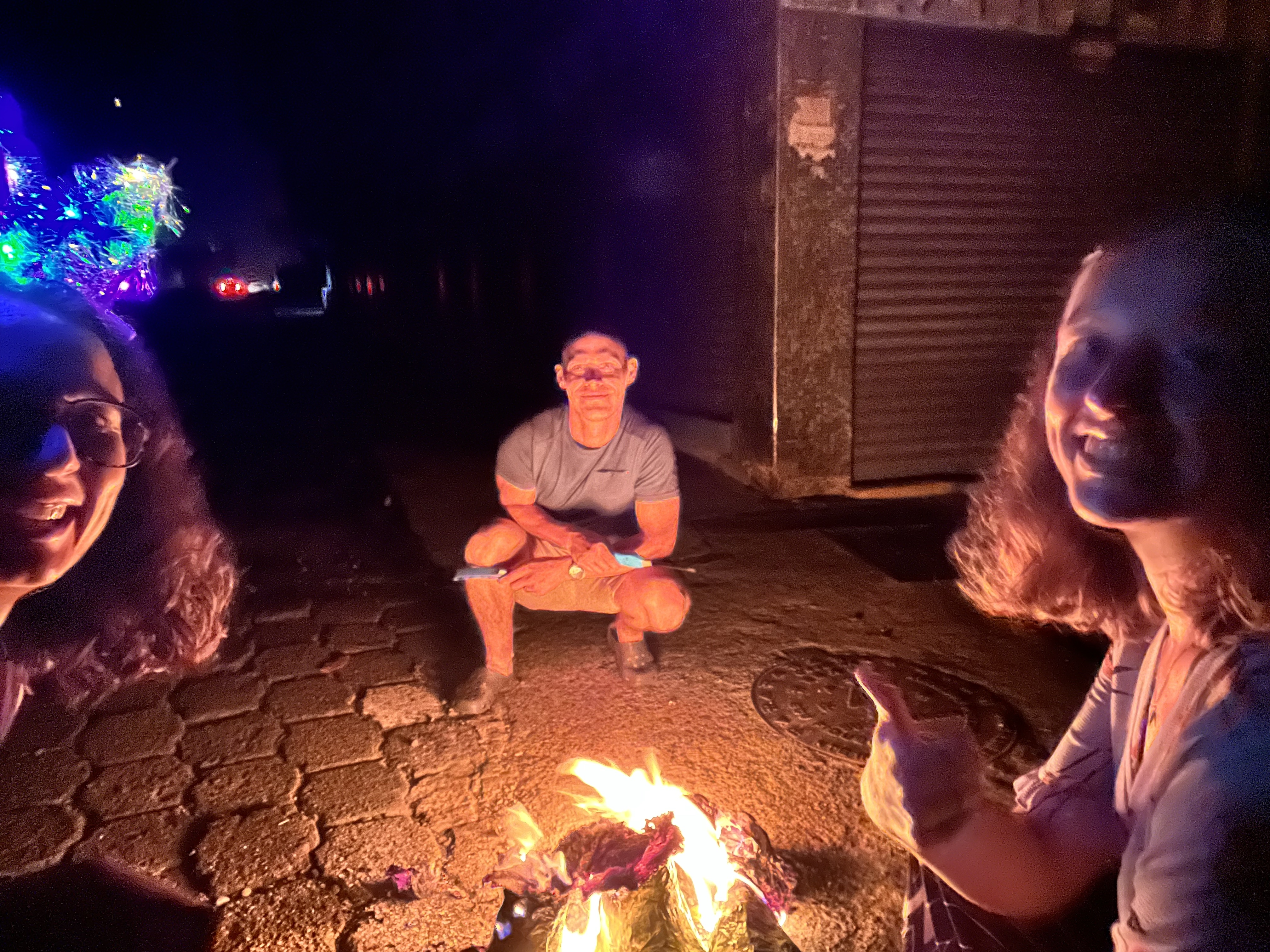
We burned covid in the street… notice how dark it is? That’s because the electricity went out shortly after midnight throughout the city for about 10 minutes. Seemed fitting for the burning, though.
See ya, 2021!
Other Ecuadorian NYE traditions include eating 12 grapes at midnight for good luck (also a tradition in Spain, which my family had already adopted) and wearing yellow or red underwear for general prosperity or love, respectively. Unfortunately, I found out about the appropriate underwear color too late, but I’ll be prepared next year. Individual fireworks are also popular, and we had a lovely view of them from our roof!
Shane and I did some reflecting on 2021, and overall it wasn’t a bad year.
It started out pretty bleak. We were in hard lockdown in our basement apartment for seven months, and I wish I had a heat map of the circles I walked in the neighborhood. I think the lowest month was around March, when things were improving elsewhere, but we had no end to lockdown in sight. Plus, we had no clue when we could go home again and if and when the lab would get approval to go to Ecuador. I’m a plan-ahead kind of person, and I couldn’t think about anything more than a week in advance. Essentially, I could only look to the following Saturday when I had my “big outing” to the grocery stores. We also had a major dip, losing Meatball unexpectedly. In hindsight, the trip to Ecuador would have been difficult on her 16-year-old kitty bones, and she would have melted in this heat. It’s not the same without her, though.
Peak lockdown boredom. München beer blind taste testing.
Missing her cuteness.
The beginning of the year may have been bleak, but for us, 2021 constantly improved. We got out of lockdown then limbo when Ecuador travel got approved. We enjoyed the beer gardens in Munich and went on a few hikes. We saw our families twice in one year!! My sister got married, and we celebrated our fifth wedding anniversary, canoodling through Munich. We moved to a new country and flew first-class for the first time. 💁♀️ Importantly, Shane is finally able to do the research that he was hired to do. Also, I bought my very first laptop at the age of 35, and Taylor re-released TWO albums! So, all in all, not too shabby.
Canoodling through Munich for anniversary photos.
Feelin’ first-class fancy.
Happy New Year, everyone, and best wishes for 2022!
Quito is a big city. Like, far-as-the-eye-can-see big.
Now that we’ve settled into life here in Tena, we need long-term visas, which we can only apply for in Quito. Long story short, we are visa-less, but that’s still in motion, so it’s a story for another day.
We planned for a long weekend in Quito, but most of Friday was consumed with the visa application, which really only left Saturday to do a little exploring. If you’re short on time, I find the best way to do that is with a walking tour!
You see things, you learn things, you eat things (sometimes).
We arranged a walking tour through our hotel, and, honestly, it’s one of the best tours we’ve ever had. We were greeted in the morning by Marcos, our accidental private tour guide!
The classic “I’ll take a picture for you but really sneak a selfie” picture.
I say *accidental* private tour guide because the standard hotel policy is a three-person minimum. However, with covid and recovering tourism, they’ve loosened the rules. We’ve only ever had a personal tour guide once before (in Egypt), and I can’t say I hate it!
We spent about four hours with Marcos, so I’ll just cover the highlights.
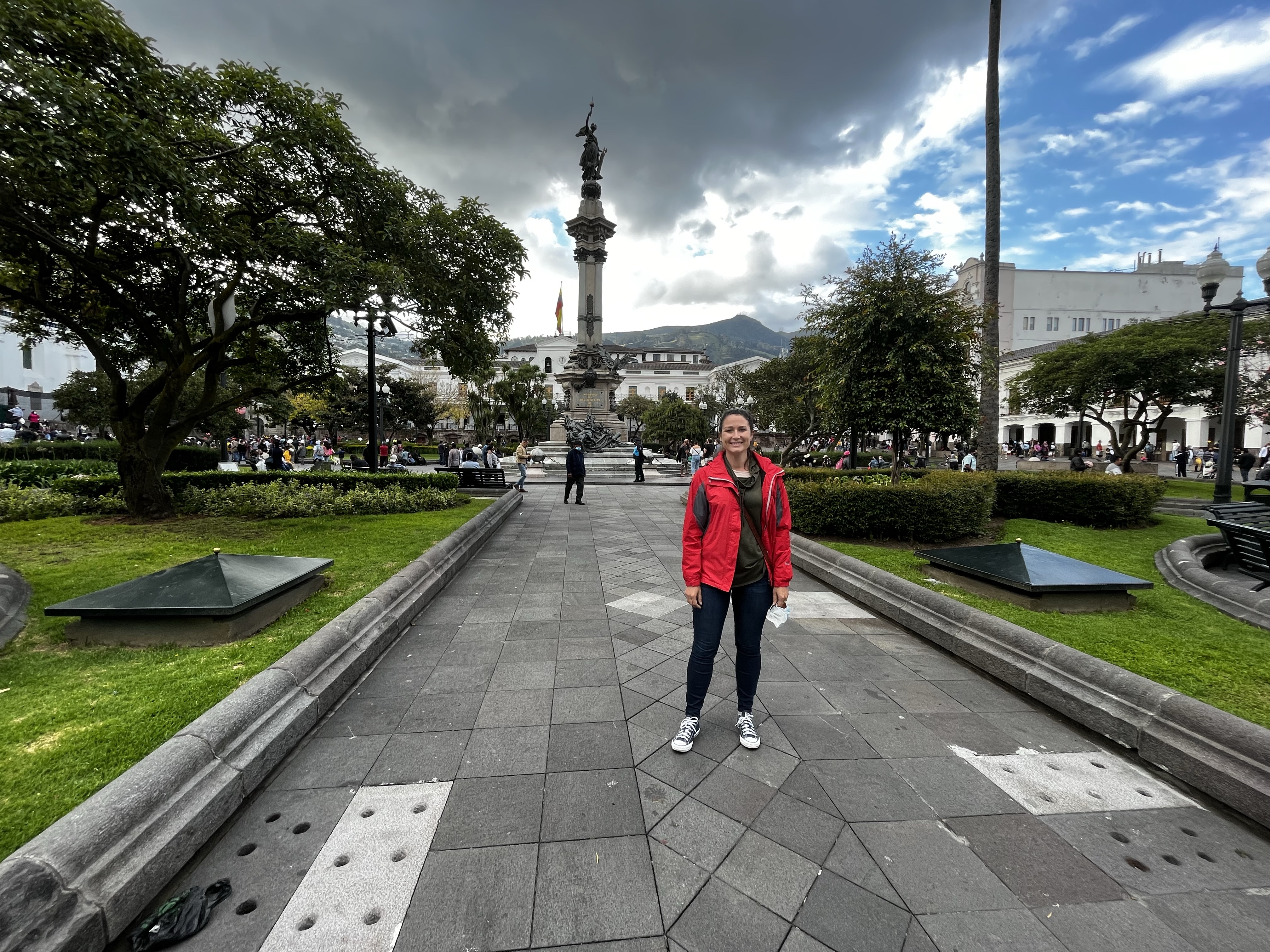
Plaza Grande
Also known as The Plaza de la Independencia, this is the heart of Quito’s historic center and our starting point. The square is beautiful and lively and home to the main Catholic church in Quito, as well as the presidential palace called Palacio de Carondelet (Carondelet Palace).
Which, if I’m being honest, I was shocked at how close you could get to the presidential palace. Like, touch the wall close. Like, there were hairdressers and small shops underneath it close. And, from what we understood, the president actually lives there.
Imagine if you could just walk up to the White House these days… 🤯
La calle de las Siete Cruces
or the Street of Seven Crosses.
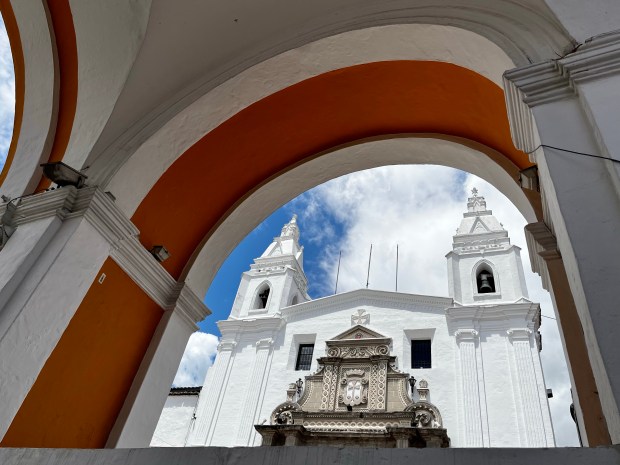
The seven crosses on this street are attached to seven churches. We were able to go into one of them, and it was quite impressive. We’ve added one church,La Compañía de Jesús, to our to-do list for next time. Apparently, the inside is covered in something like 53 kg (~116 lbs) of gold, according to our guide.
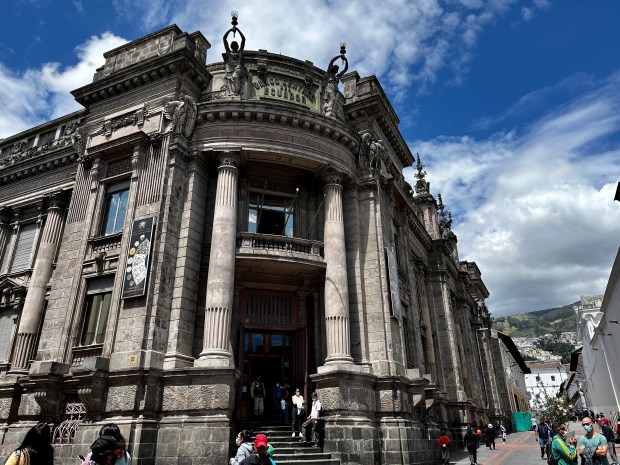
The street has plenty of other things to explore beyond churches. For example, we visited a hat maker. Fun fact, the classic “Panama” style hat is actually of Ecuadorian origin. The old Central Bank of Ecuador is also on this street and gave off some real Gringotts vibes. Now, it’s a museum about Ecuadorian currency, which I think might actually be interesting.
Snacks along the way.
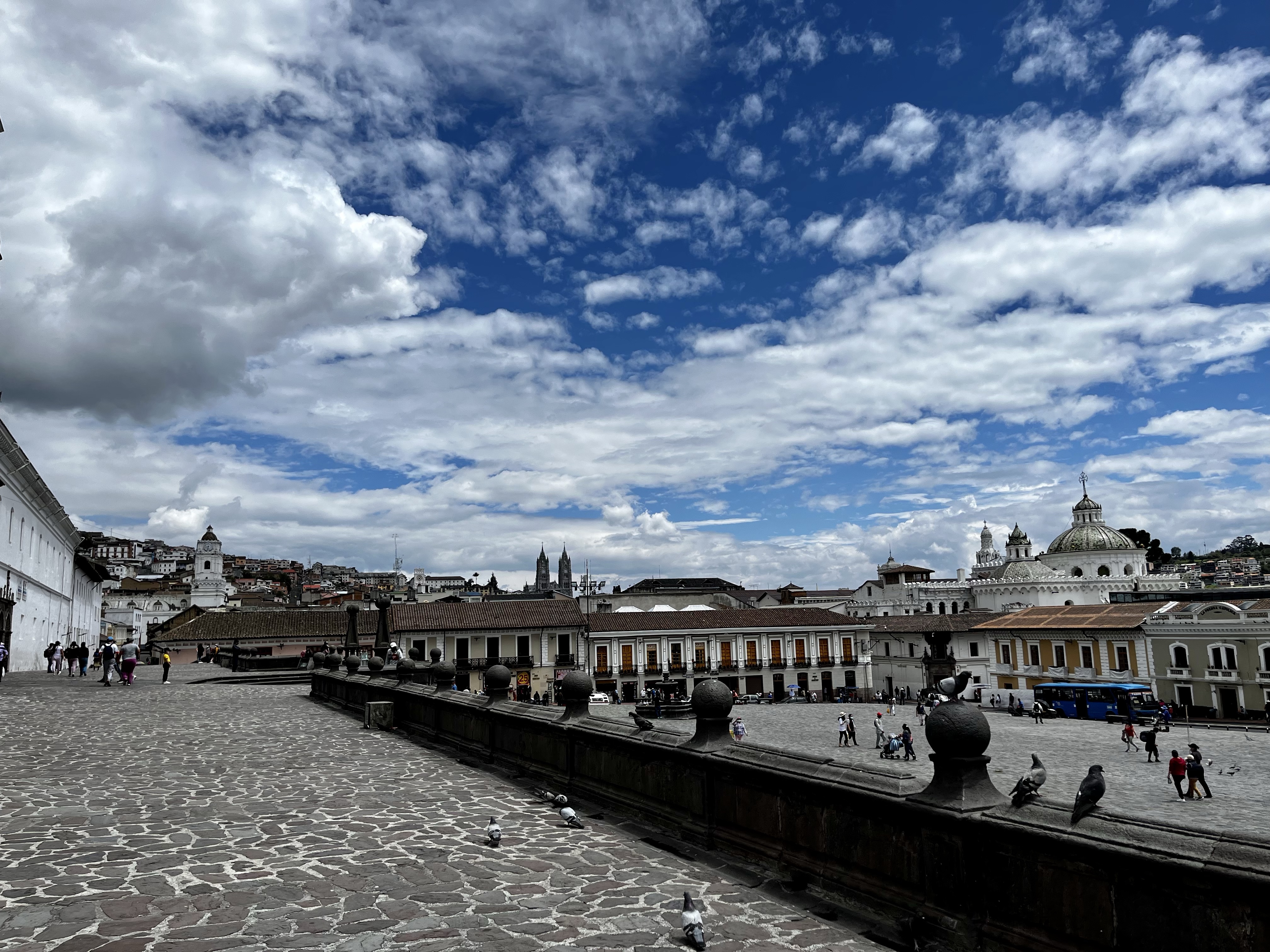
Plaza de San Francisco
This square was beautiful, and my photos don’t do it justice. It’s home to the most expensive hotel in Quito’s historic center (I tried to convince Shane to stay there, he said no) and the legendary San Francisco church.
I’m not exaggerating when I say it’s legendary. As the story goes, a local builder/architect was asked to build the church. He said yes, but the project didn’t go as planned, and he wasn’t going to finish in time. So, he made a deal with the devil for help. The devil would finish the work, but the payment was the man’s soul.
When the church was almost complete, the man panicked, not wanting to give his soul to the devil. So, he hid the final brick, technically leaving the church unfinished and saving his soul.
Supposedly, there is one missing brick, and if someone chooses to finish the church by putting the brick in place, the devil will come back for their soul. So, uh, I guess if you find a random stone in San Francisco Plaza, it’s better to leave it alone.
Chocolate Tasting at Yumbos
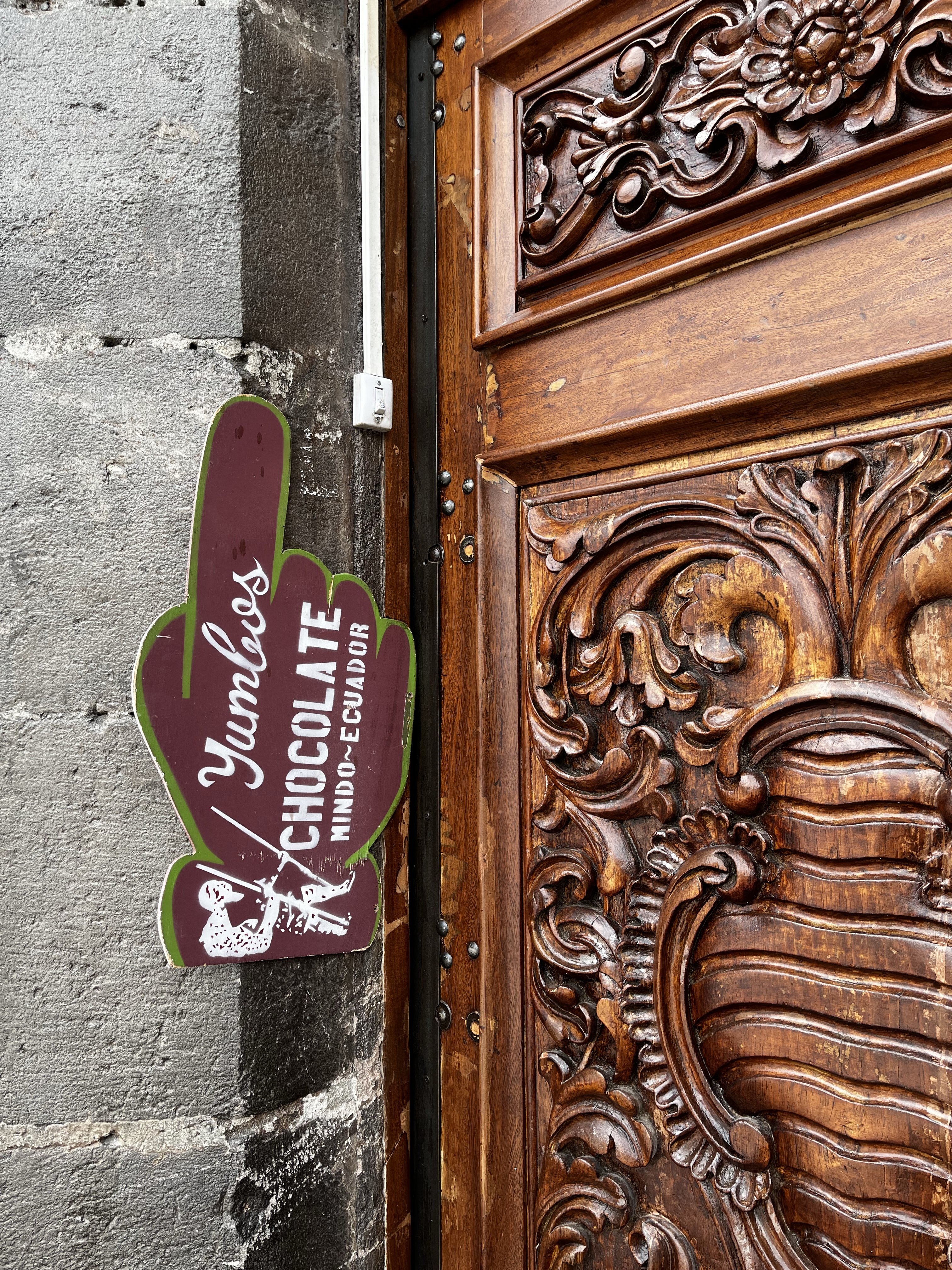
Across the plaza from the church is a nondescript door with an arrow pointing to the doorbell.
Ring. The. Doorbell.
Luckily, Marcos knew what he was doing because otherwise, we would have walked right past Yumbos artisanal chocolate shop. If you’re into chocolate, they offer tastings (in English) and have bars for sale. There is also a small cafe which offers one of the best brownies I’ve ever had. Plus, the view from the tasting room isn’t too bad either…
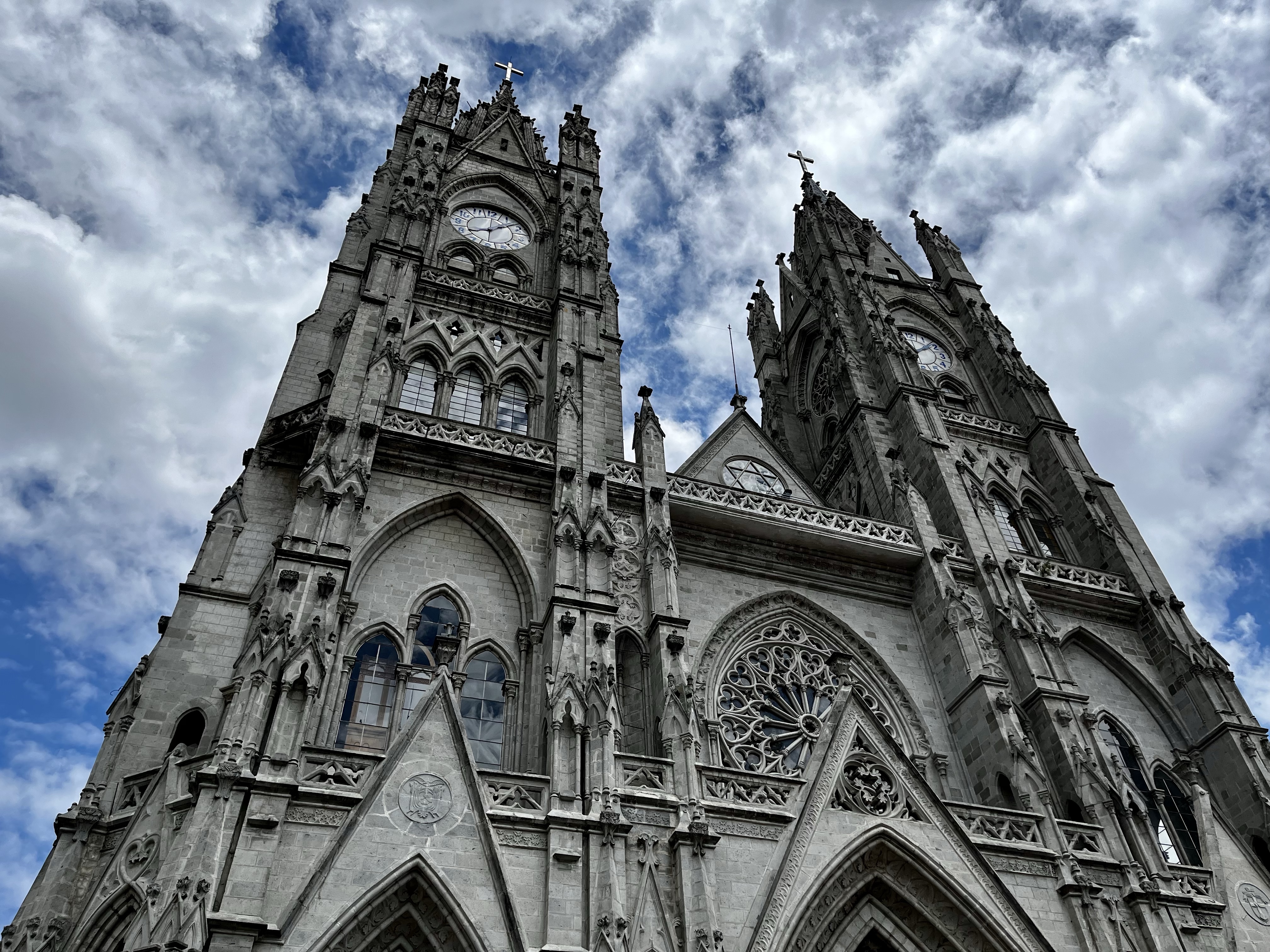
Basílica del Voto Nacional
This was the view I didn’t know I had been waiting for.
The view from the panoramic deck.
I’m honestly a little disappointed in myself for not knowing that this was *the thing* to do in Quito’s historic center. Great views and making Shane walk stairs against his will? It’s all of my favorite things!
It’s the national basilica because it’s meant to be the meeting spot for all Ecuadorian Catholics, and the inside houses flags for each province. You can see the basilica from most points in the historic center as it is at the top of a large hill (be prepared for a walk!). The view from the (easily accessed) panoramic deck looks across the historic center to Loma El Panecillo, which may look like an angel but is actually a winged Virgin Mary. So, as our guide put it, the church and the Virgin Mary protect historic Quito in between them.
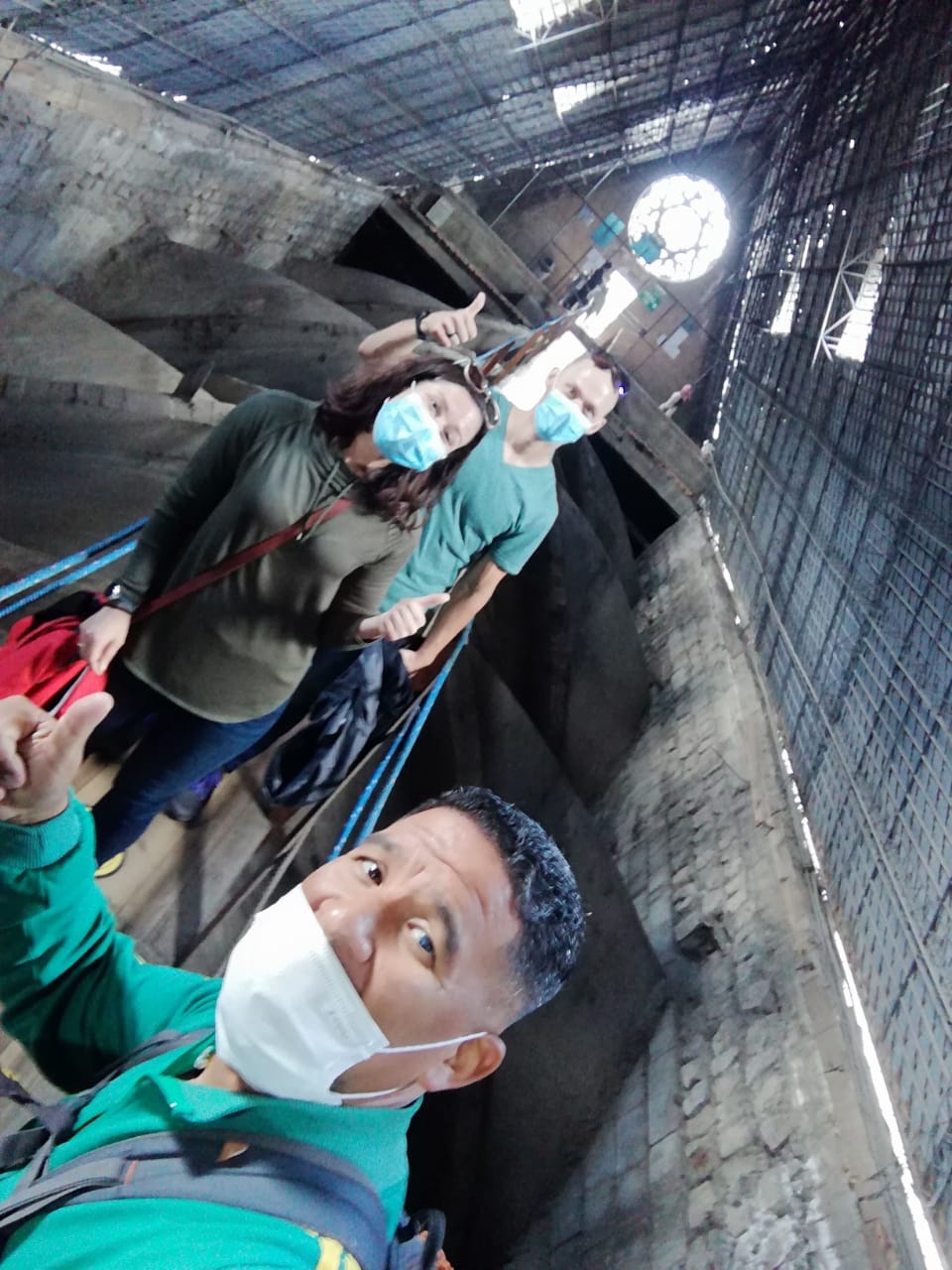
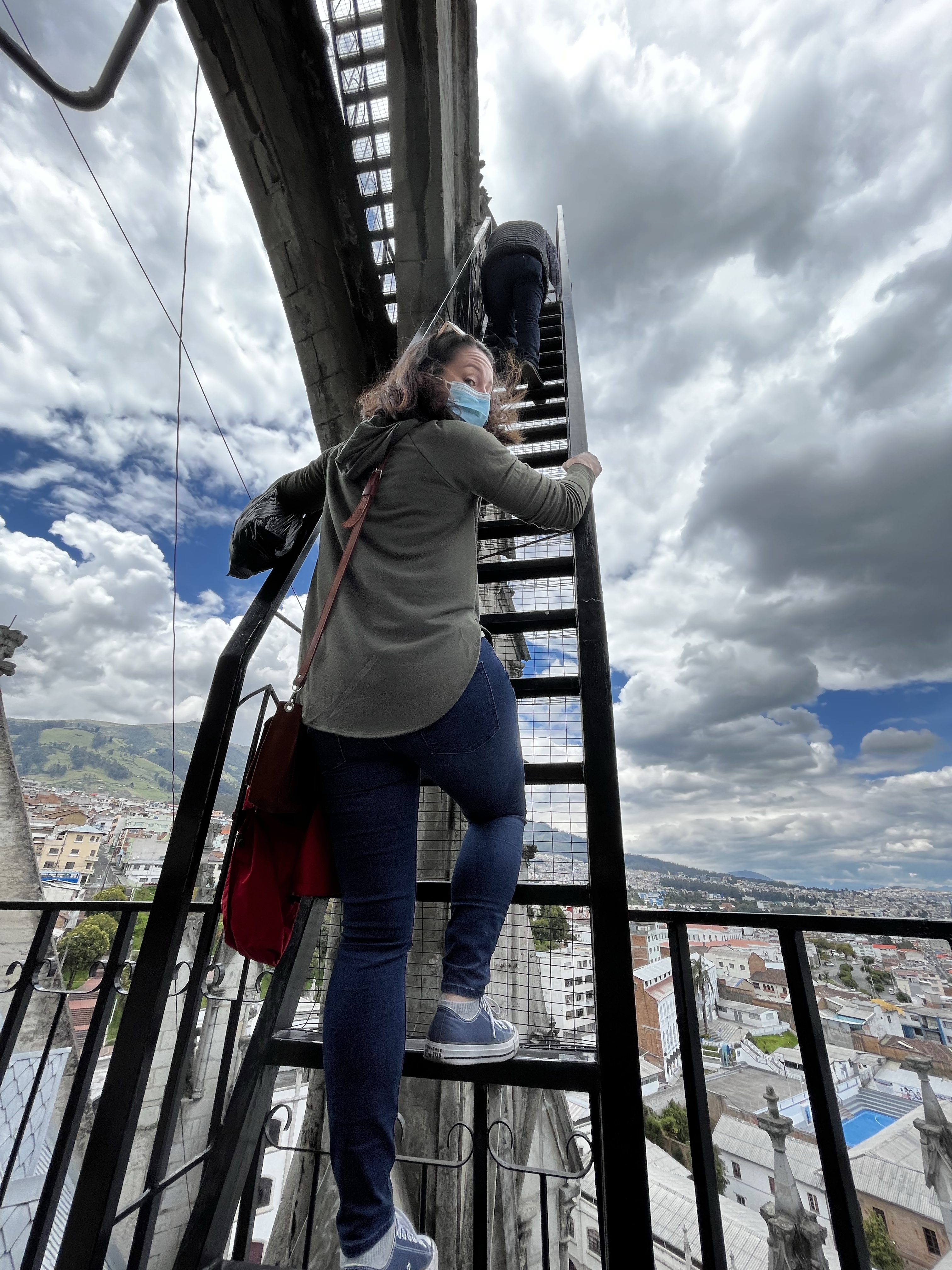
If heights don’t bother you, then take the sketchy wooden path that looks like you shouldn’t be on it to climb the tower. I’m not scared of heights, but these stairs were steep, so I warned you! The 360-degree view is worth it, though.
Sketchy little wooden walkway. It feels like you’re not supposed to be there.
The stairs up… straight up.
Part of the view from the top!
ElMercado Central
All those hills and stairs made me hungry. Plus, Marcos said that since Quito is at a high elevation (~2350 meters/9300 feet), your metabolism speeds up, and you get hungry faster. All I heard from that was, “you should eat more.” End of story. So, we went to the Central Market for some lunch. Thanks to Marcos, we had some of the best fried fish I’ve ever had.
If you’re visiting Quito, head to the market and find Jimmy.
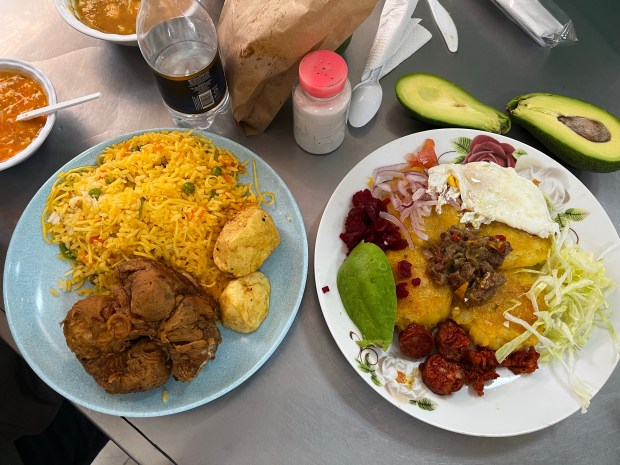
Shane and I split two things, the $6 plate of fish in the picture (that comes with sides) and mixed llapingacho (from another stand), which was basically potato balls with sides. ‘Twas very filling. Oh, and you can’t forget to have some juice; para mi, Naranjilla (Quito orange)!
And those are the highlights! We highly encourage walking tours in new cities, and Quito has one of the best-preserved historic centers in all of South America. So, it’s definitely worth it.
This wedding has been a long time coming, and I don’t mean because we were waiting for a proposal. Like a lot of 2020 bride and grooms, Covid put their original wedding plans on hold.
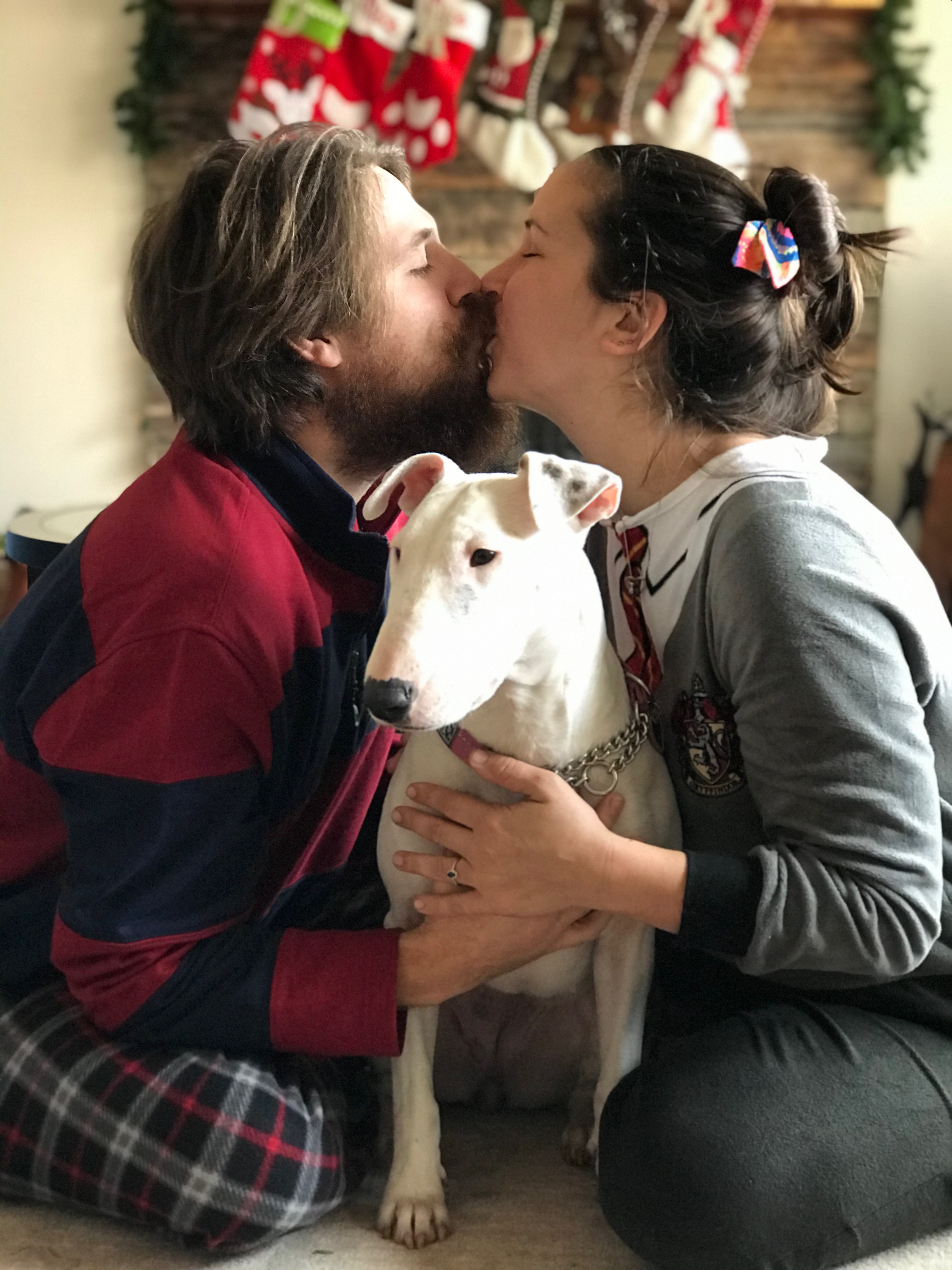
Christmas 2019
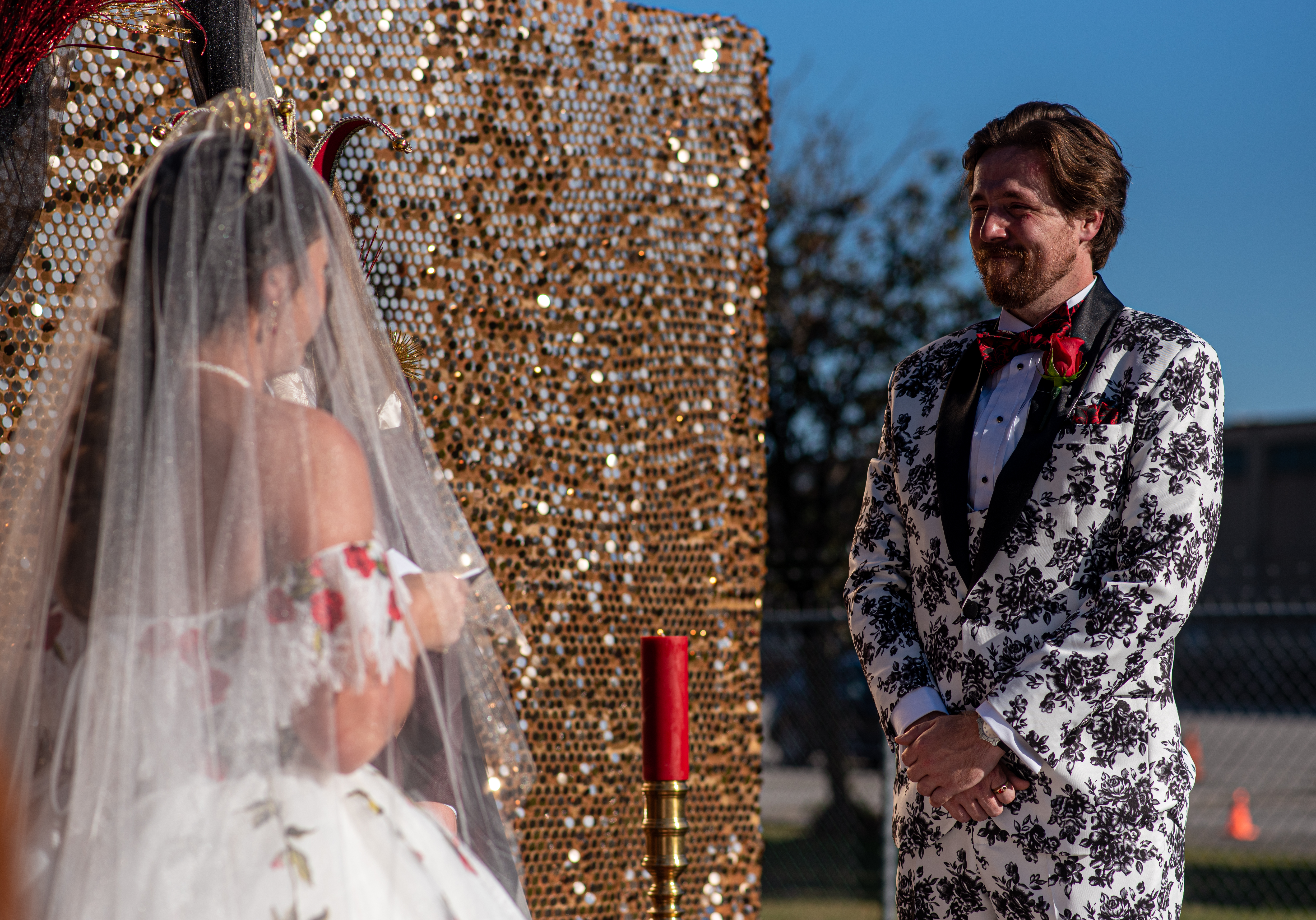
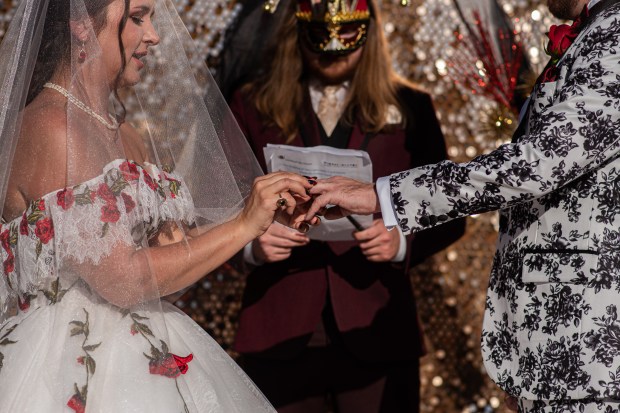
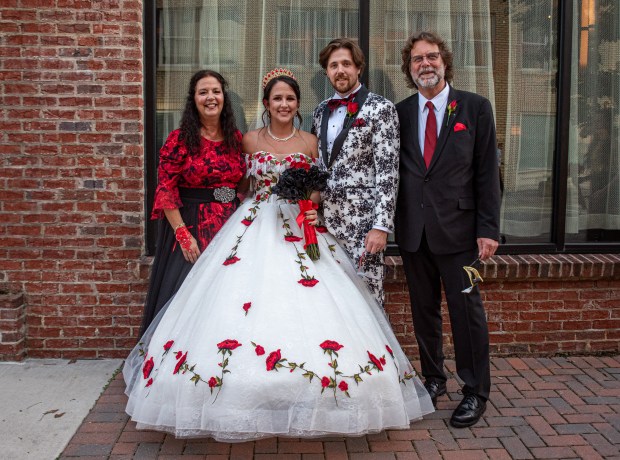
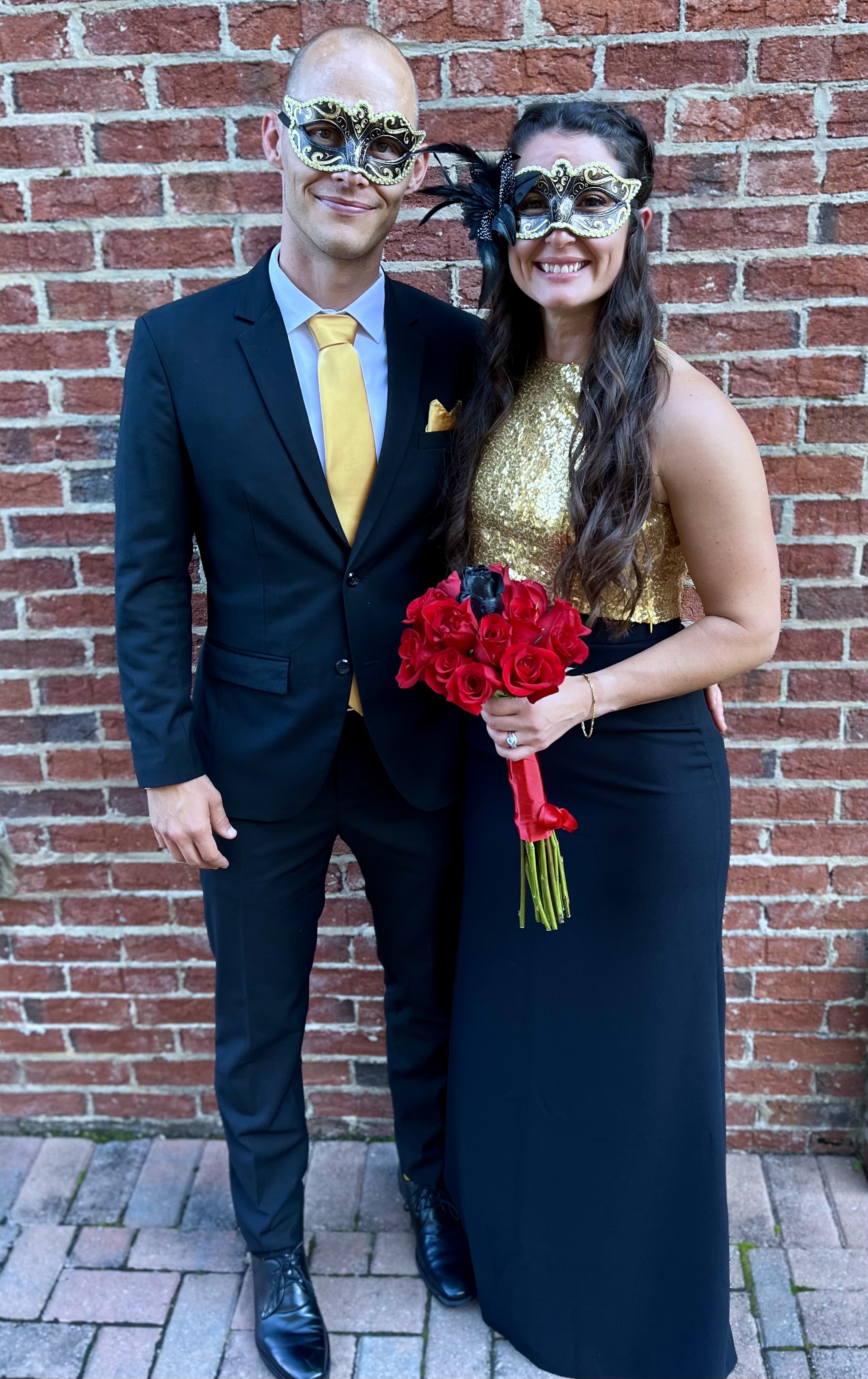
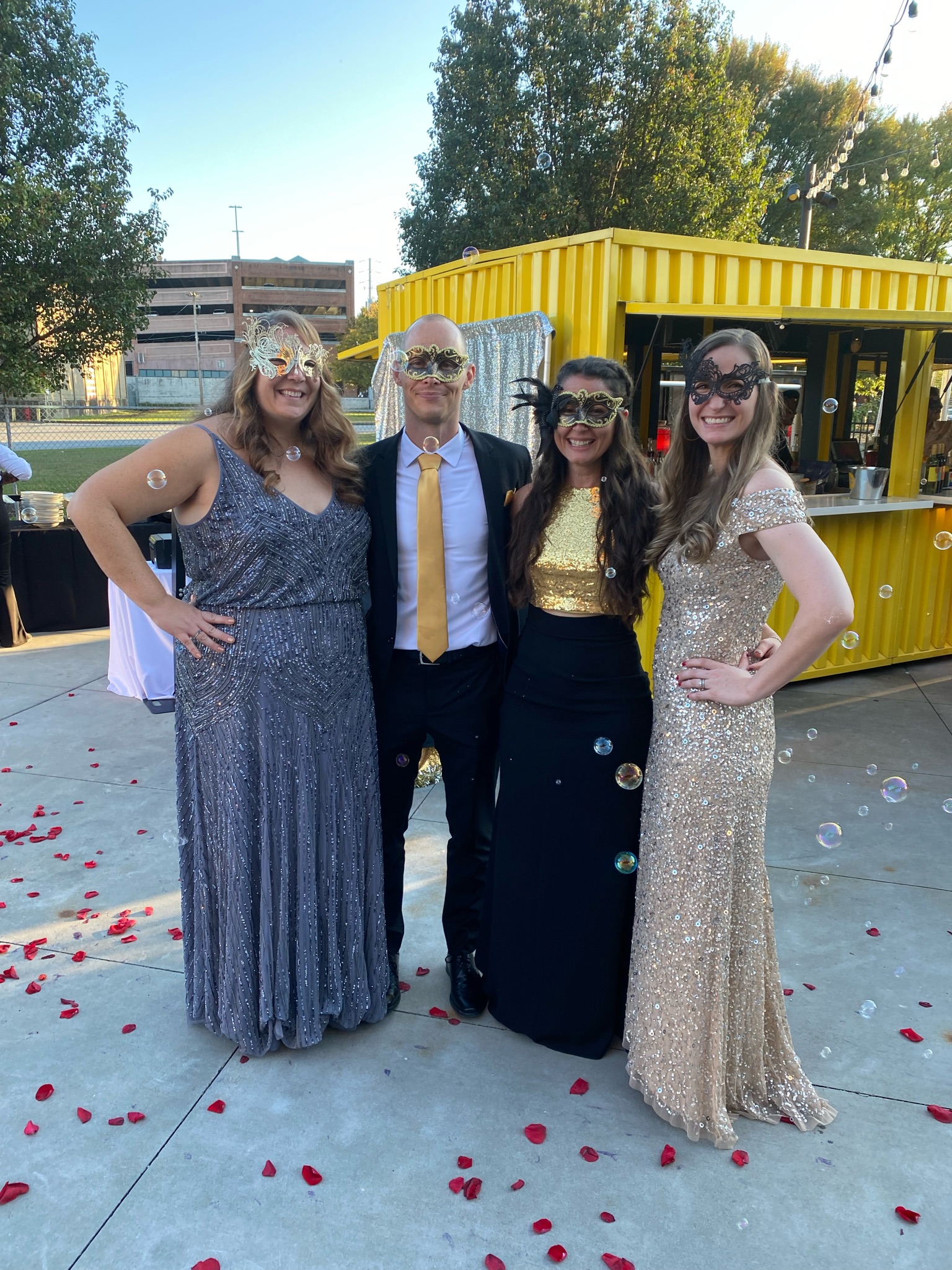
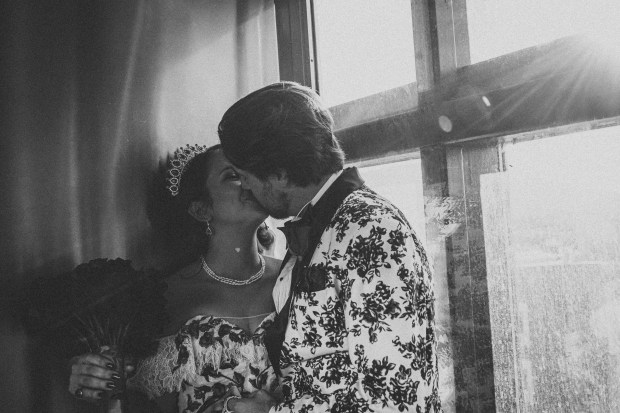
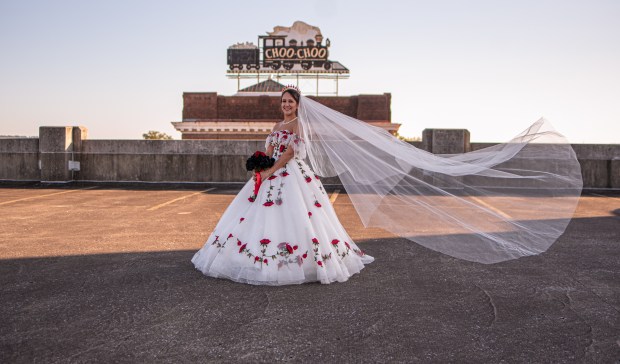
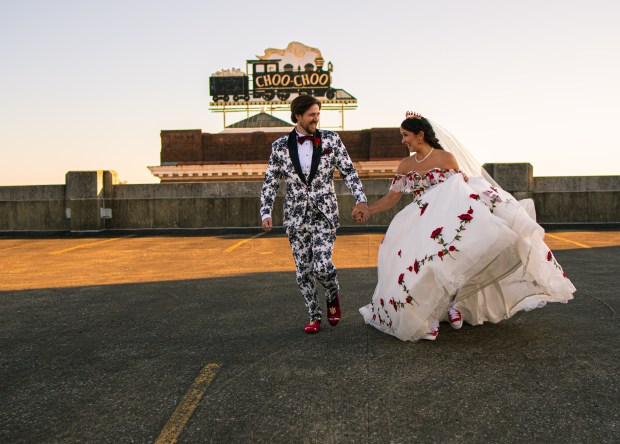
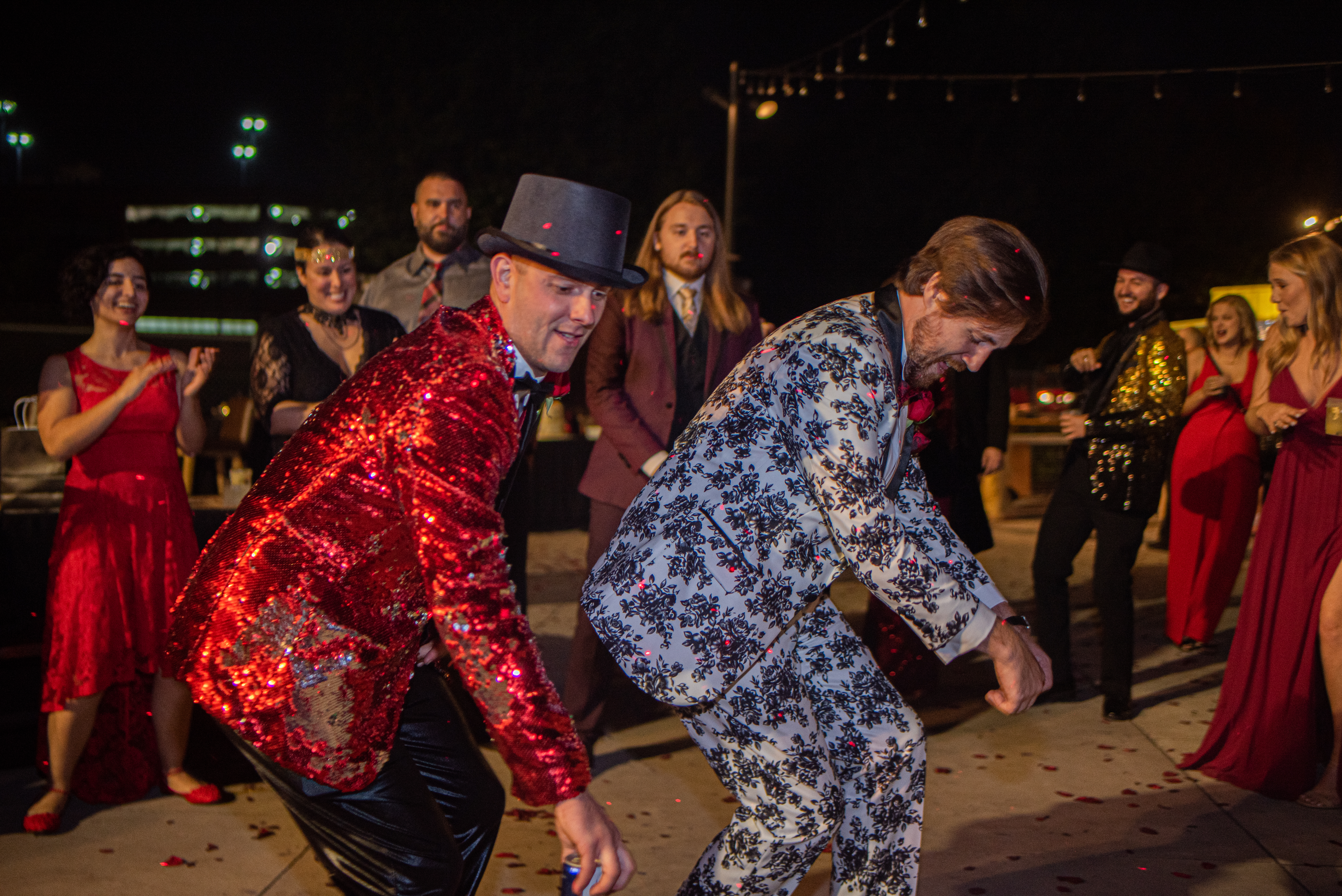
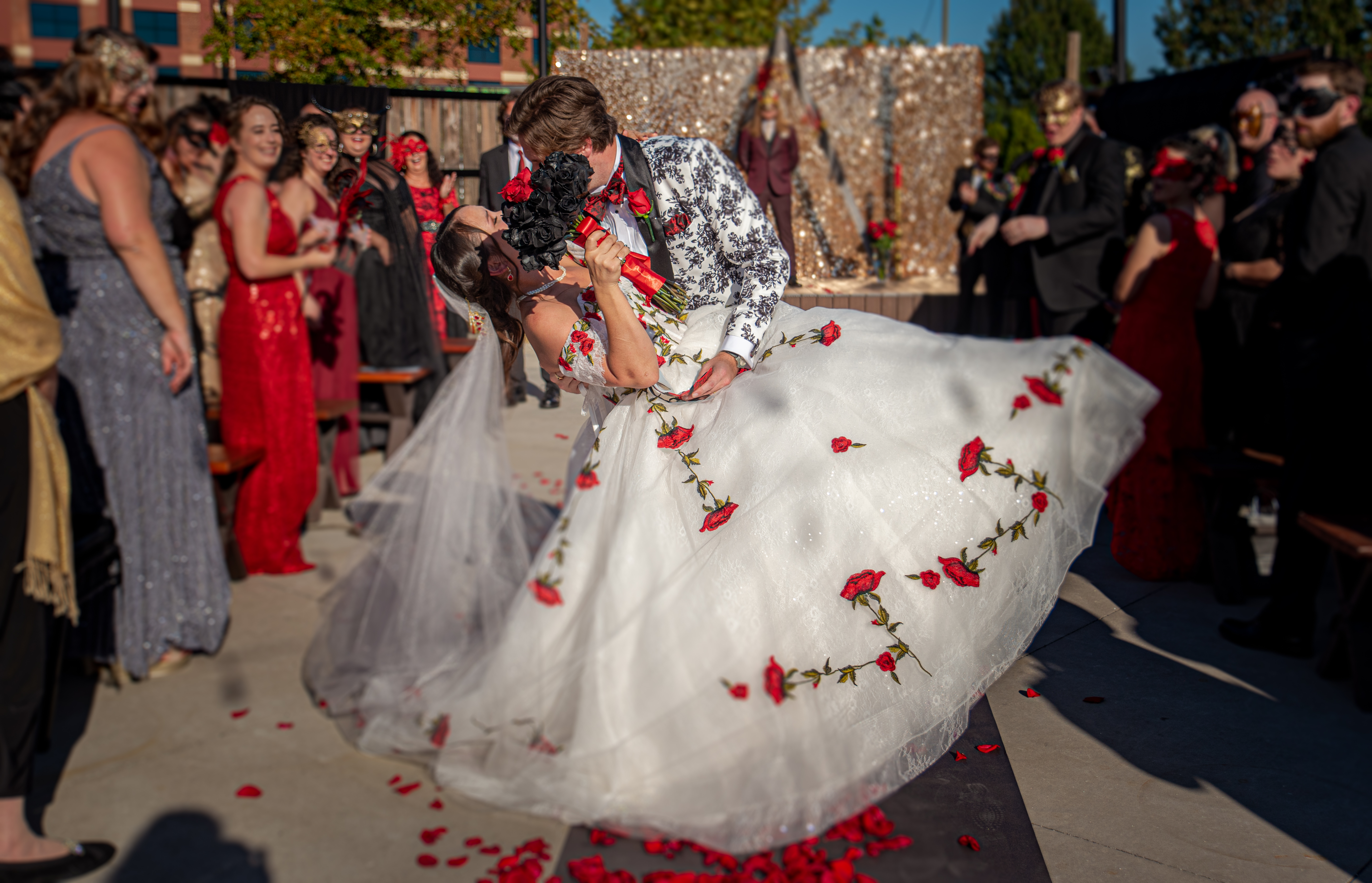
Honestly, I’m happy the original plans were scrapped because this wedding was amazing. I’m absolutely biased, but if they were on the TLC ‘Four Weddings’ show, they would definitely win that free honeymoon since these two had a masquerade-themed wedding.
I don’t have much to say, the ceremony was beautiful, and the party was fun, so I’ll let the pictures do the talking. However, I’ll reiterate what I told them at the wedding.
Do you know the show ‘How I Met Your Mother?’ Shane and I live by it. In one episode, the friend group talks about the ‘front porch test.’ Essentially, it’s an indication of how do you see your life when you’re old? Who do you want to share your front porch with?
First, I envision my front porch with my sister who’s been my lifelong best friend (well, minus a few years in high school 🤪). Then, Shane joined our front porch.
Now, Terry has joined, and I can’t imagine anyone else on our front porch other than him.
There’s not much more to say other than congratulations Sis and Terry! I love you guys! ♥️









































 The Shwits