We may not get to *actually* travel much this year, but I can at least say I’ve been to Austria twice! ANNDDD technically I’ve walked across the border, so if that’s not an adventure then I don’t know what is.
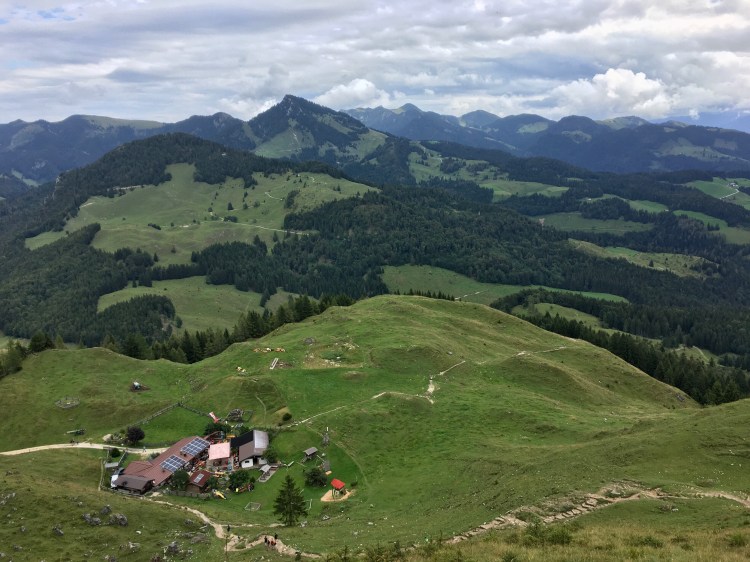
View over the Kranzhorn Alm. Not quite the summit.
We’re pretty lucky to have two friends from Groningen also living in the Munich area, so when Theresa invited us for a weekend hike, we obviously said yes. This week’s trip was unique because the mountain straddles the border of Germany and Austria. At the summit, if you look to the left, you’ll see Schieben, Austria. If you look right, you’ll see Windshausen, Germany.
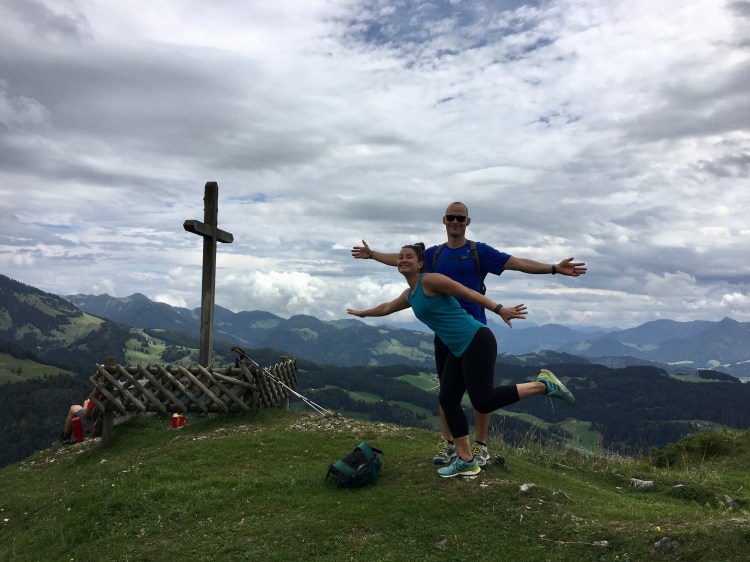
The summit (1366 m), looking left over Austria.
The summit, looking right over Germany.
Technically speaking, this was an easier hike than our Ehrwald adventure. Wide, clearly marked paths, no bolted metal cables required. It lulls you into a sense of hiking security… but be prepared for a sore butt the next day. The first ~1.5 hours are nothing but up!
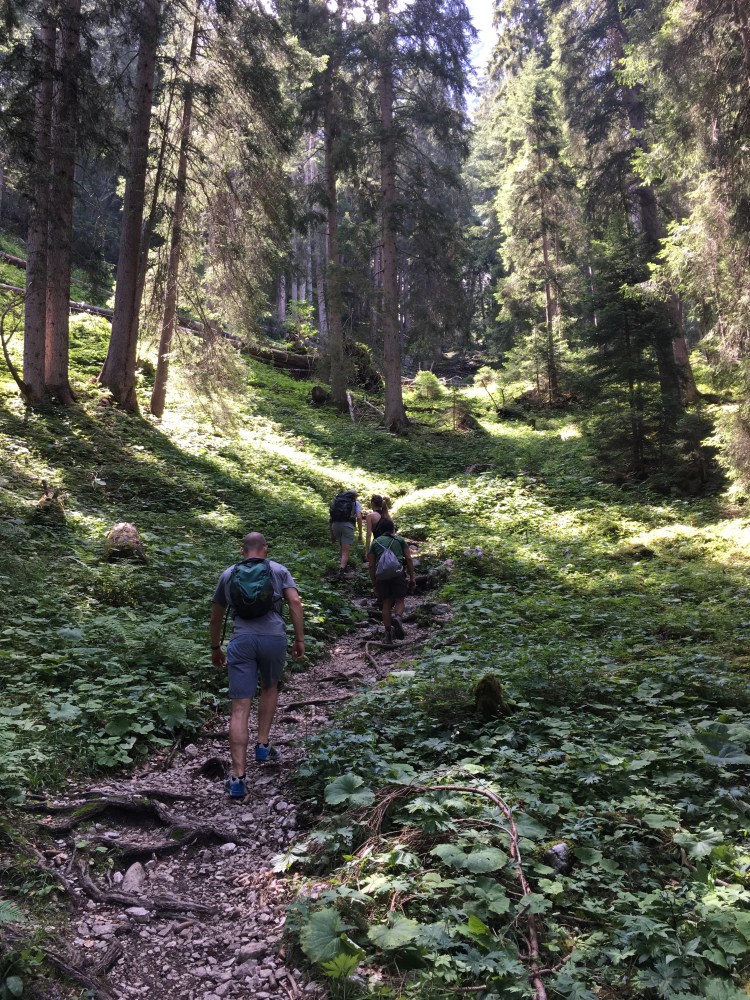
The mountain can be approached from either side, but we started our adventure in Nussdorf (aka ‘nut village’), Germany. This (less traveled) route starts directly from the small (free) parking lot towards the Kranzhorn Alm. The more popular route begins on the Austrian side, in Erleberg (with paid parking). The path is mostly through the woods, and although you’re constantly going up, it’s never too steep. We were even passed by several mountain bikers and power-hikers.
The two best parts?
You walk between Germany and Austria!
As I said before – walking across country borders makes me feel cool. The borders are marked by these painted rocks, so keep an eye out!
Blue and white for Bavaria, red for Tirol.
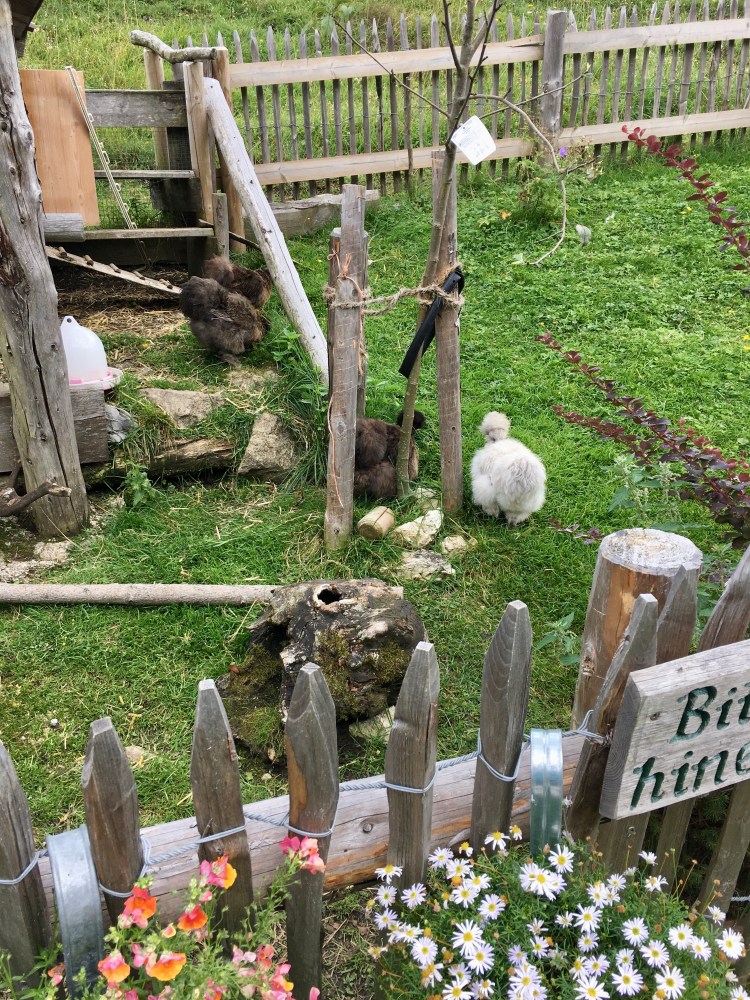
The beer hut, Kranzhorn Alm, has a petting zoo with the fluffiest chickens I’ve ever seen.
Black and white fluffy chickens!
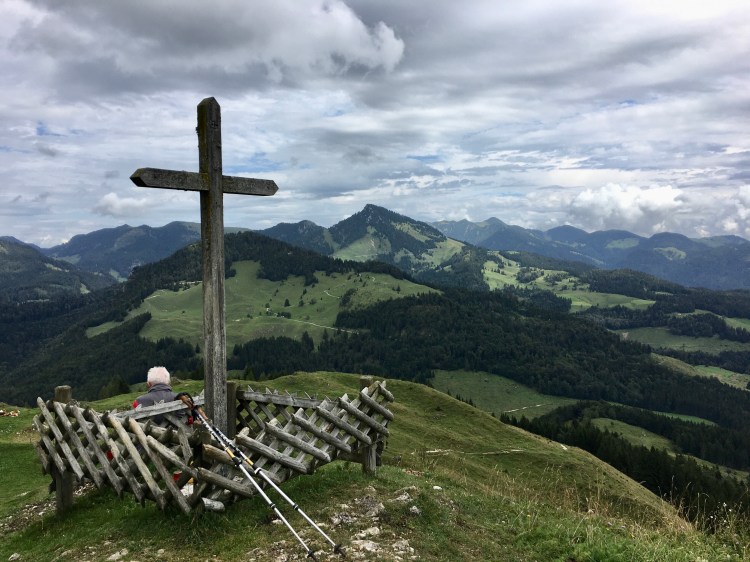
One thing you can’t miss – the summit crosses.
You’ll find a cross on almost every summit peak in Bavaria (and Tirol), which are predominately Catholic states. The summit crosses started in the 1400s but picked up steam in the 19th century when mountaineering became more popular. The cross was obviously a religious symbol (as the mountain peak is closer to Heaven), but also a sign that the mountain itself had been summited. For some, a picture next to the cross is proof you made it all the way up.
We may not be religious, but I certainly think they make for lovely photos.
A third cross, on the Austrian side, for a smaller peak.
Since the Kranzhorn straddles the border, the summit actually has two crosses – one for Germany (the wooden one) and one for Austria (the metal one). Unfortunately, a picture of both at the same time was practically impossible, given the small summit area.
The Austrian summit cross.
And don’t worry. If all that hiking makes you hungry, the Kranzhorn Alm has got ya covered.
Practical Info
How to get there: Check out here (for Windshausen) and here (for Erlerberg) parking / starting info. Windshausen was only ~ 1 hour drive from Munich.
Distance from Munich: By car, ~1 hour. ~2 hours with public transportation (train + bus) .
Hike Direction: Head for Kranzhorn Alm (follow the fork/food symbol!)
Difficulty: Easy. Suitable for beginners or families – nothing special required!
Time: 3 – 4 hours, depending on your speed and how long you linger at the top.
Rating: 🧡 If there’s time.
Not ‘highly recommended’ simply because there’s no convenient public transportation option. If you have a car and are looking for an easy day trip to the mountains, then definitely check it out!
Wednesday is our 4 year anniversary (!) and the mountains are calling us! So, until then…
It’s hard to believe that we’ve been in Munich for three months. Even harder to believe that Shane still isn’t working, but that’s a post for another day (I don’t have nice things to say, and we need the good karma). A month into our German expat adventure, I wrote about my (our) first impressions. Now that we’ve been here for three months, I thought I’d do it again with an added bonus – the joy report! I’m certainly a ‘glass-half-full’ kinda gal, and I really enjoyed writing my July Joy Report, so I think this will be a thing now.
Anyhow, let’s begin.
3 Month Impressions:
Let’s begin with a follow-up.
I actually enjoy the recycling.
I saw someone on Reddit the other day asking the Munich sub if everyone really had 7 bins (yes, I say ‘bin’ now).
“7 bins?! No way. Oh wait…. I just counted. Yes, 7 is correct.” – said everyone.
We don’t have 7, but we do have 5 (regular trash, compost, paper, glass/aluminum/plastic, & returnable bottles). It was annoying at first, but now I’m all for it. We take the regular trash out once every two weeks, we get to compost even though we’re in the city, and just about all plastic in Germany is recyclable.
*pats self on back*
A ‘recycling island’.
Groceries and toiletries are cheaper.
We’ve been consistently €20 under our grocery budget each week. 🙌 Works out well when you’re still waiting on a salary.
We are buying comparable things, organic if it’s available, but probably the main difference is in the price of meat. We were shopping at an organic butcher in the Netherlands, but we’ve not found one near us. I’m speculating, but a lot of the produce (and meat for that matter) are relatively local, which may also contribute to the lower prices. The EU mandates ‘country of origin’ labeling and a lot of the products available to us are from Bavaria or neighboring states.
The weirdest thing we’ve tried so far? Handkäse (hand cheese). I love a block of good cheese, but “sour milk cheese” just didn’t cut it.
One thing we can’t find? Peanut butter. It’s a true tragedy.
Toiletries are also 50% cheaper than in the Netherlands, except ibuprofen. Here, you have to buy it in an Apotheke (pharmacy). It’s over the counter, but has to be distributed by a pharmacist and was €4 for a box of 20 400mg tabs. For comparison… the same box was €1.79 at the grocery store in the Netherlands. For a country that loves beer, their painkillers are hard to find…
Relatedly…
Grocery store cashiers are LIGHTNING FAST.
You know in America how sometimes it feels like the cashiers were trained to go as slow as humanly possible, or where you have a particularly chatty cashier – both of which slow down your whole transaction? Oh, and remember how in America someone else bags your items for you?
Sorry Americans, you won’t survive a German grocery store cashier.
THEY THROW THINGS OFF AT THE SPEED OF LIGHTNING PLEASE JUST GIVE ME TWO MORE SECONDS SO YOU DON’T SMUSH MY CHIPS AND…. nevermind. Smushed.
You literally need a strategy. Produce takes a little longer to scan since they have to weigh it first so…
Pro-tip: bottles and heavy things on the belt first, followed by produce (which gives you time to get the heavy things in your bag), cold items, and finally the ‘breakables’. And just go ahead and have a separate tote bag ready for those chips – then you can snatch them up before it’s too late.
Biking isn’t a social activity.
There are plenty of bike lanes (at least in Munich) and everything feels very safe, but it’s certainly not a social activity. In the Netherlands, it was strange to bike single-file. Part of the biking culture was the chit-chat on the way to your destination, and the rules dictated that you could ride side-by-side. Here, you can only ride side-by-side in a park, otherwise, you should be single-file. Going for a leisurely bike ride (instead of a walk, for instance) isn’t as fun because you can’t really talk.
The plus side, as I said before, the city is very bike-able which is nice because we don’t HAVE to rely on public transportation. It makes the city feel much more available.
The downside, everyone uses these Dyno bike lights which use the power of peddling to turn on the lights. Naturally, the bike I bought was wired incorrectly (the best we can guess) because I peddle and nothing happens, but as soon as I brake the light comes on. 🤦♀️ We didn’t want to take it to a bike shop just yet and went searching for some battery-powered lights. They are so expensive! €15 for a front and backlight, which as I type this does not sound like a lot, but in the Netherlands, you could get a similar set for €5, so it hurt my heart a little. Oh well.
A bike adventure through the English Gardens to the Isar River.
Still working on German…
But we’re getting better! I’d say we’re at the phase where we are learning as much vocabulary as possible. We’re starting to be able to understand and reply in basic scenarios (at the grocery store, at the beer garden, etc.) and our (very) basic reading comprehension has improved. We randomly get a newspaper twice a week, and while I’m not reading full articles, I can at least distinguish the headlines now, and I call that a win!
My take-away impression?
We still don’t have a true impression.
Since Shane hasn’t been able to work yet, it really feels like we’ve just spent a very lovely summer as tourists in Munich. Sure, we’ve had to figure out the grocery stores and changed phone numbers (phone plans are also cheap, btw), but ultimately we aren’t truly ‘living’ here yet. We haven’t had to navigate the work/life balance, we can’t open a bank account until we have a steady salary, and we can’t partake in any social benefits (aka insurance) until we have residency. So, we haven’t done things like figure out the doctor or the dentist. As of now, we have a wonderful impression of Munich, but can’t really speak to what it’s like to actually “live” in Germany.
Fingers crossed that this changes soon! I would love to report otherwise.
Now, on to the…
August Joy Report!
(I make no apologies for my use of exclamation points in a joy report.)
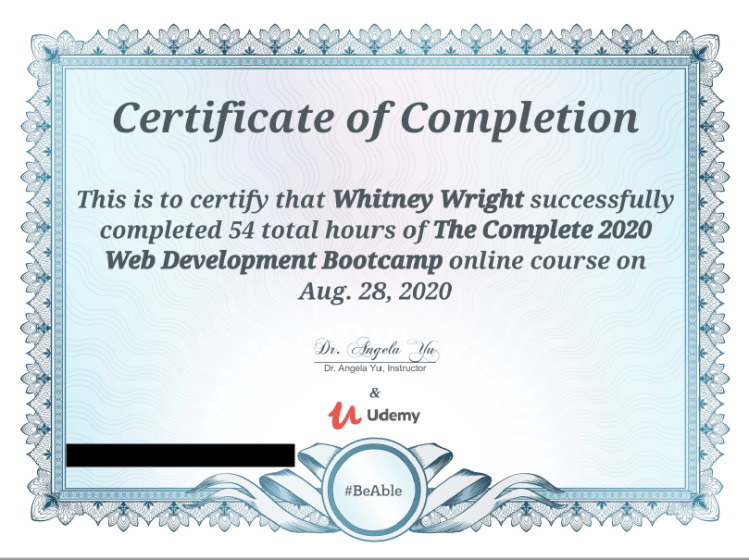
I finished my first web development course!
After starting the blog, I became more and more interested in web development. The blog inspired me to want to know the ins and outs of how I am actually presenting you this information. While I am by no means ready for professional employment, I completed my first 54-hour course and would confidently say I have a good foundation. Who knows, maybe in a few years I’m building science-based websites instead of working in a lab.
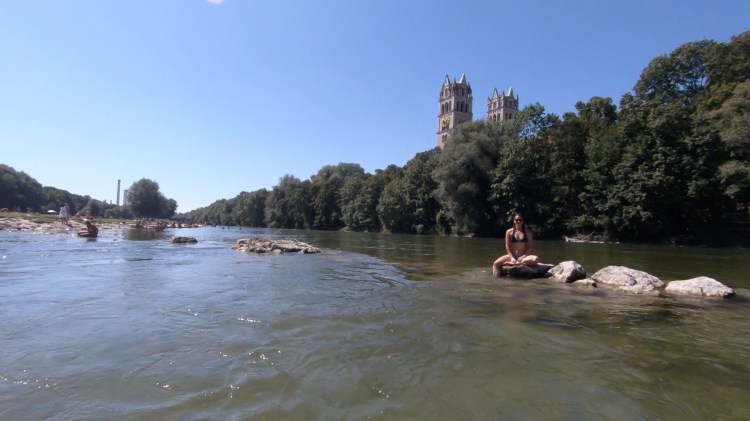
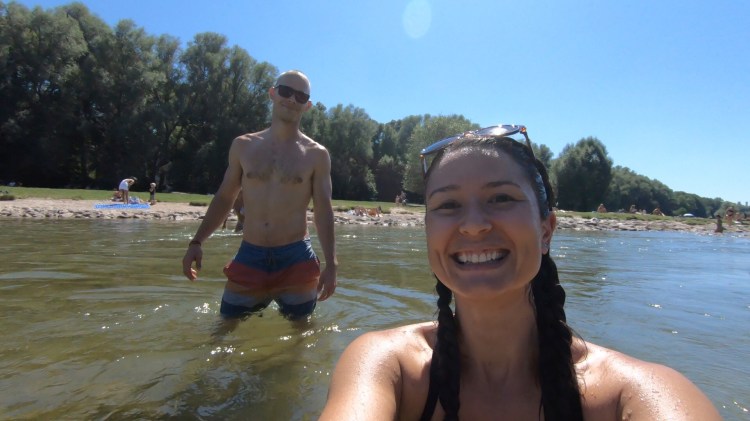
We finally swam in the Isar River!
Two weeks ago we accidentally stumbled upon an excellent Isar River swimming spot, right in the heart of Munich. Friday of last week was more than likely our last truly HOT summer day, so we packed a cooler and biked 35 min back to that spot, and boy oh boy was it a great time! The river & the sangria were cold, the sun was hot, the people watching was great, and I feel like I’ve taken a big step towards becoming a true Münchner.
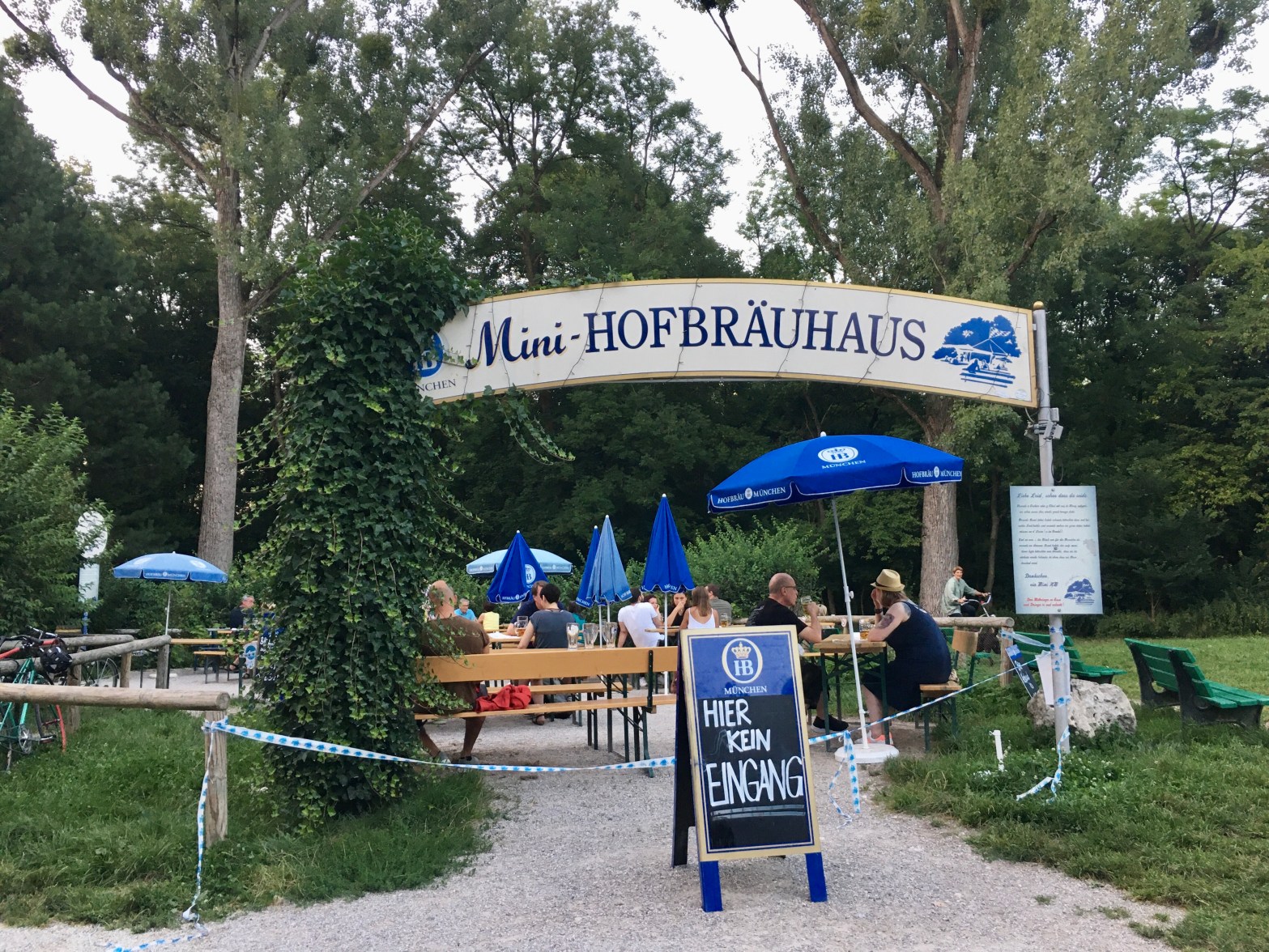
We went to the Mini-Hofbräuhaus!
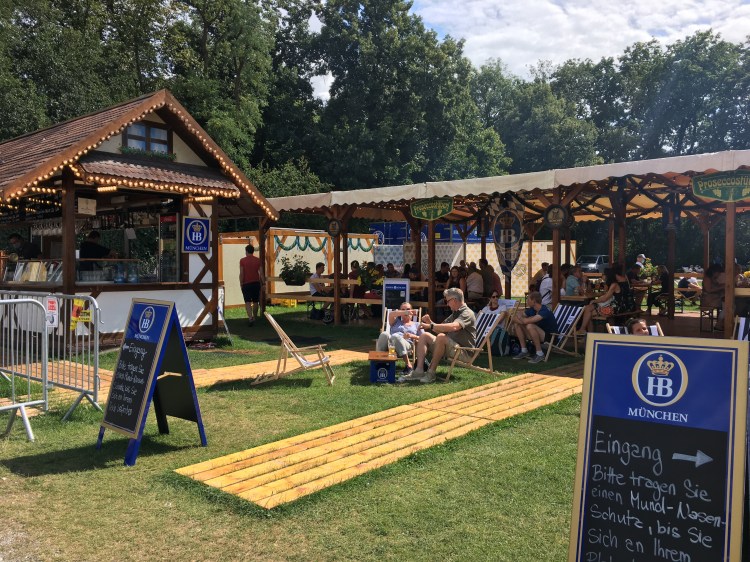
Yes, a mini version of the big Hofbräuhaus exists – in the English Gardens!
I highly recommend a bike for this adventure, depending on where you live, because the Mini-Hofbräuhaus is located in the “wild” part of the English Gardens – aka the ‘not easily accessible by foot’ area. Do you like dogs? Well then you’ll love this place as it’s super dog friendly. Added bonus – the beer prices are lower than the main HB in the city center (€7.40 vs €9.20 for a liter).
Speaking of beer…
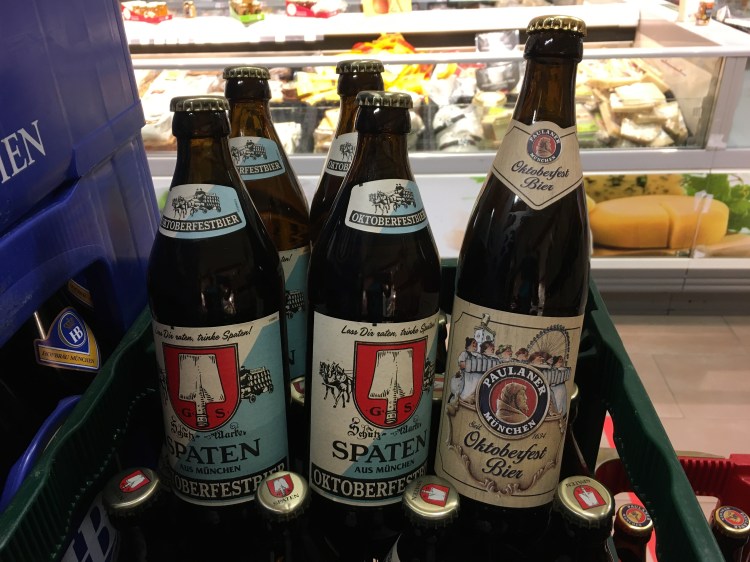
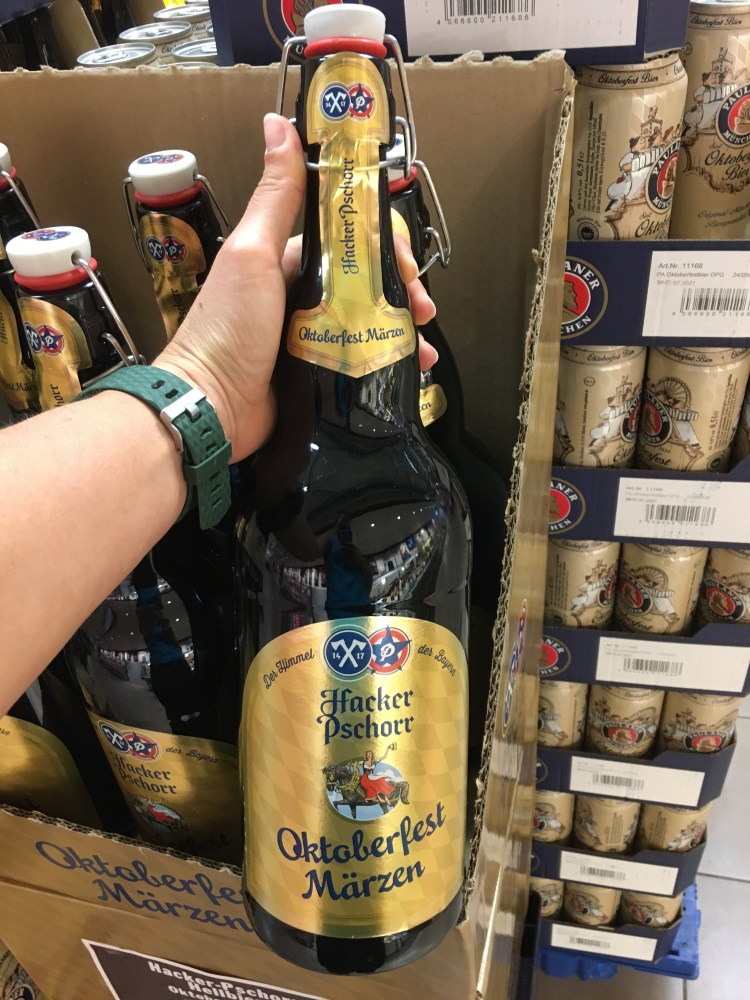
We can buy Oktoberfest beer in the grocery store!
I’ve yet to figure out if this is an annual thing, or if this is special for Covid times. Regardless, if we can’t participate in Oktoberfest this year then at least we can try the beer.
If the 0.5L bottles aren’t enough, you can grab a 2L bottle instead.
And finally,
We’ve been to the Alps twice!
We’ve had two hiking opportunities, one was a little harder than the other, but both were fantastic, and it’s nice that the Alps are only an hour (to hour and a half) drive from Munich. First up was Ehrwald, Austria – which I blogged about here – and our 2nd trip was to the Kranzhorn mountain (blog post to come).
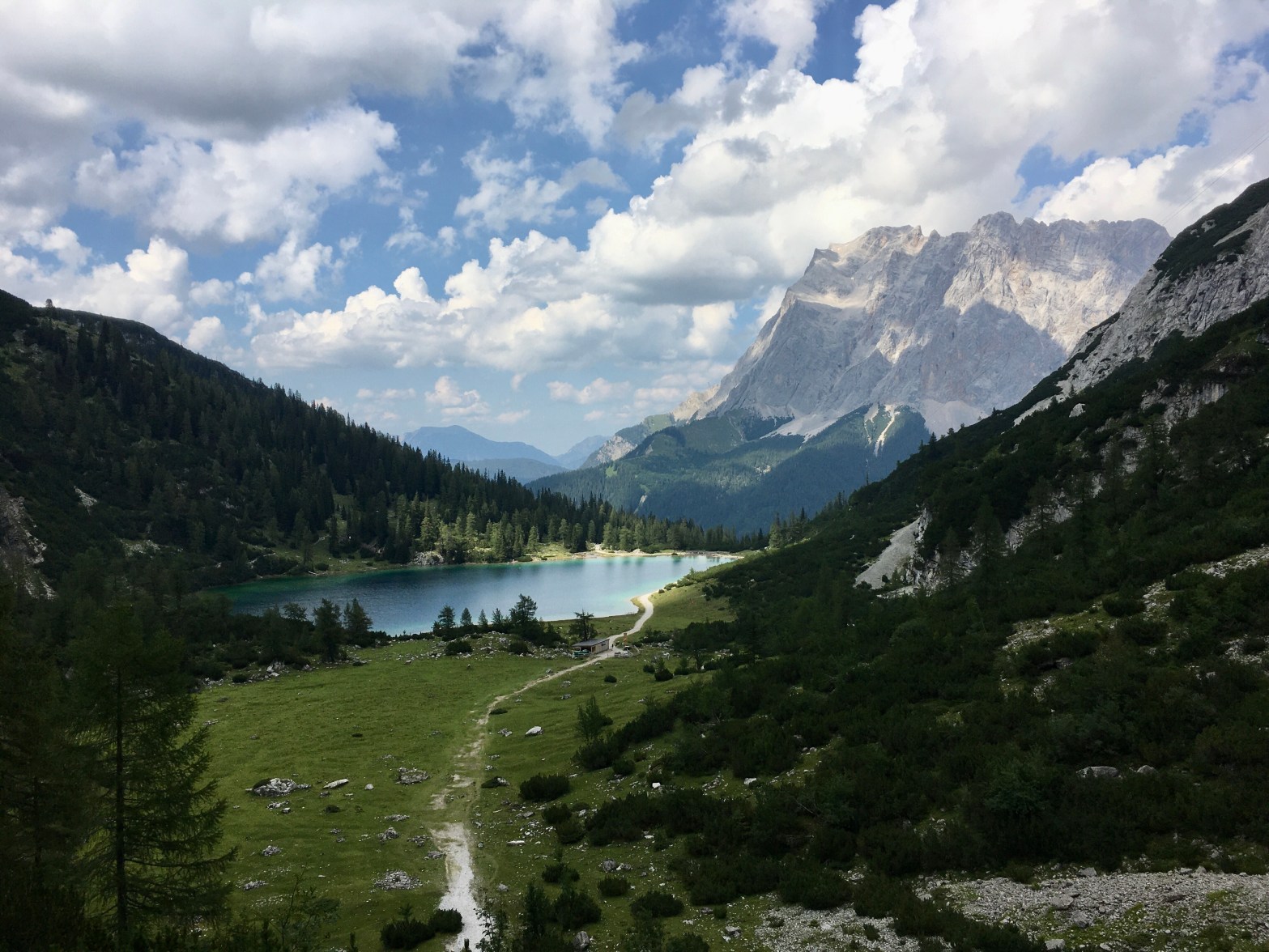
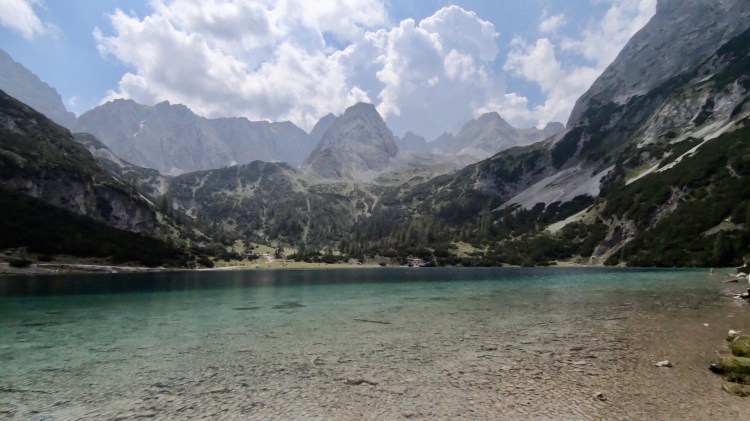
The Seebensee in Ehrwald, Austria.
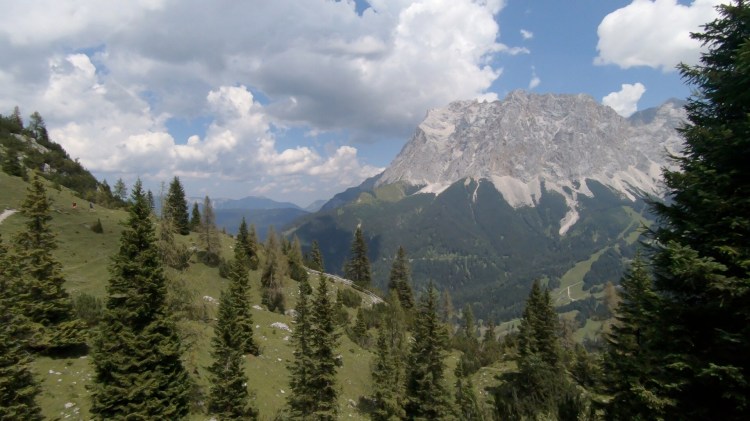
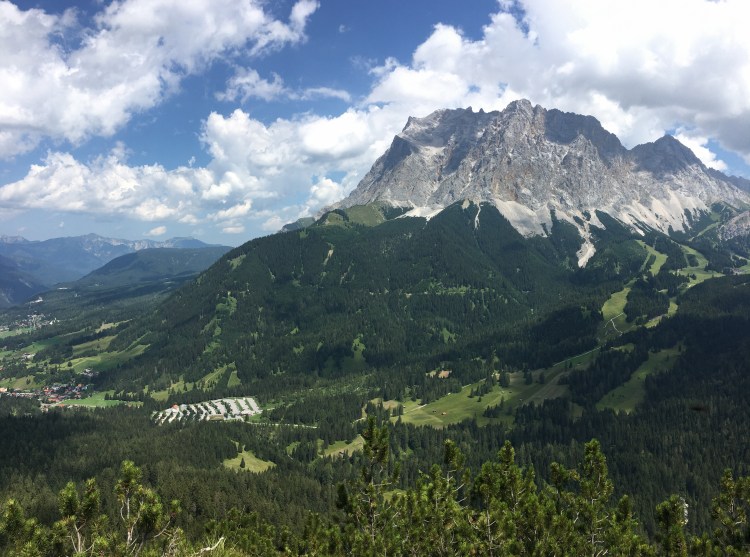
Overlooking the Hut on the Kranzhorn mountain, Austria & Germany (it splits the border!).
Honorable Mention:
My favorite German-words-of-the-month: Mietwagen (pronounced “meat wagon”, lol) which means ‘rental car’ & Sehenswürdigkeit (pronounced “seyens-wor-dig-kite”) which means ‘attraction’, or literally ‘something worthy to see’.
Until our next Sehenswürdigkeit (yes, I realize I used this incorrectly)…
Remember that time I was super excited to move to THE Oktoberfest city and then it was canceled for the first time since WWII?
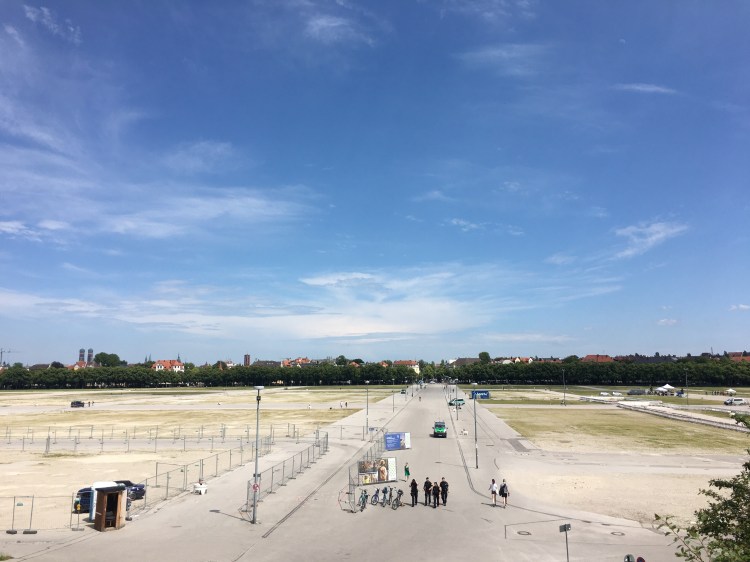
Oktoberfest is the largest Volksfest (folk festival) in the world and generally brings in ~1.5 billion euros from tourists each year. Until we moved here, we didn’t realize that there’s more to Oktoberfest than your average American probably assumes. Yes – the giant beer tents are the main attraction, but the festival grounds also have carnival rides, food vendors, and some cultural events. It’s essentially a State Fair on steroids. The festival takes place in the Theresienweise, which is a massive 420,000 sq. m (4,500,000 sq. ft.) area just outside the old town. You can really feel the vastness of the festival grounds when it’s empty.
Empty Oktoberfest grounds. It looks so sad.
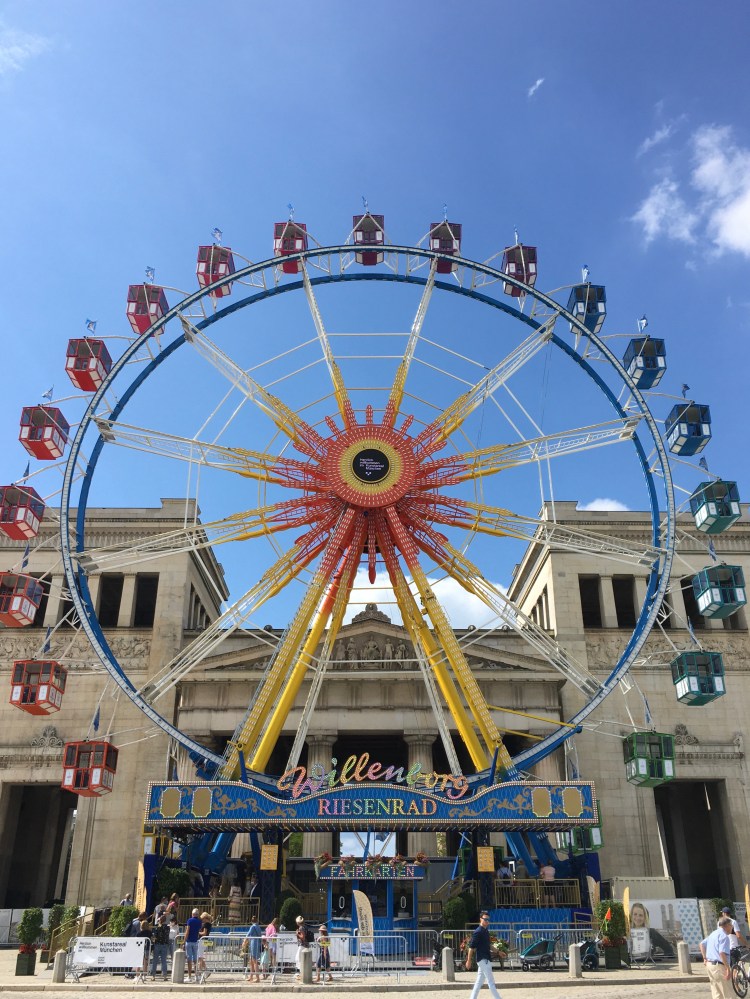
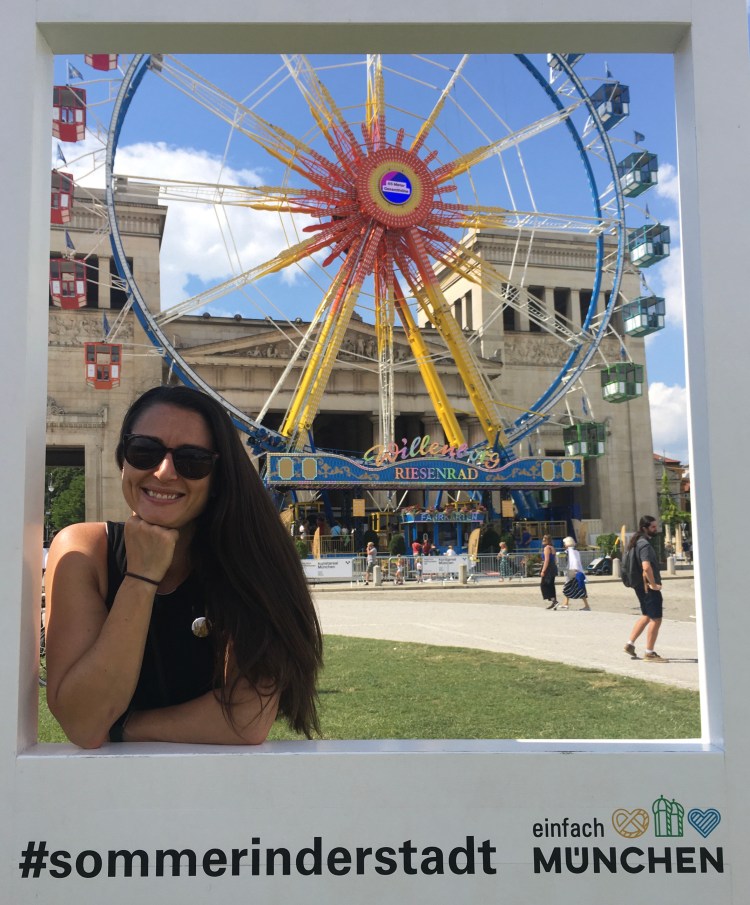
As you might expect, the smaller Oktoberfest vendors were predicted to be the hardest hit from the cancellation. So, in an effort to give the city a little post-lockdown pep-in-it’s-step and a chance for the vendors to make some money, Munich has come up with a solution – Sommer in der Stadt (Summer in the city)!
Summer in the city is essentially a decentralized volksfest, and to be clear, it’s a “non-traditional event” and “not a replacement for Oktoberfest”. From the last week of July through the first week of September, pop-up beer gardens, concerts, craft vendors, food vendors, and carnival rides are scattered around the city. So, on Saturday we decided it was time to go see what it was all about.
There are three main festival locations – the Theresienwiese (the Oktoberfest grounds), the Köningsplatz, and Olympia Park. It seemed fitting to start at the festival grounds (and they were the closest), so that’s what we did.
Have you guys heard of Assumption Day? Yeah – neither had we.
Clearly, we aren’t Catholic, but the state of Bavaria is, and Saturday was a public holiday for the Assumption of Mary – aka the day it was assumed that Mary went to Heaven. Thank you, Munich Reddit, because otherwise, we would have no groceries – all the shops (including the grocery stores) were closed on Saturday (and are always closed on Sunday). I bring this up because I think this contributed to the underwhelming feeling we had when we excitedly made it to the fairground Saturday afternoon. There wasn’t much going on…
I did get a picture with the Bavaria Statue, though.
Post-coronavirus Tip: You can climb up the Bavaria Statue for a nice view of the fairgrounds!
I say post-coronavirus tip, because it’s closed until further notice. Very disappointing.
In case you didn’t notice, there is no shade in the Theresienwiese, and it was HOT on Saturday, so we carried on. It was just… alright. 😂
Pop-up beer garden.
Craft stands.
To be fair, it was a holiday, it was very family-friendly, and we didn’t make it out to Olympia Park, which was the primary location for the cultural events. I think I also had higher expectations based on pre-corona festivals. I will also give the city of Munich a lot of credit for ensuring a safe festival environment. There were never too many attractions in one area and the programs are very spread out over time. For instance, we learned after the fact that the hand-made craft mini-festival was on the Thursday and Friday prior, naturally.
I did manage to get another photo-frame picture, and we ate a chocolate-covered banana. So, it could have been worse.
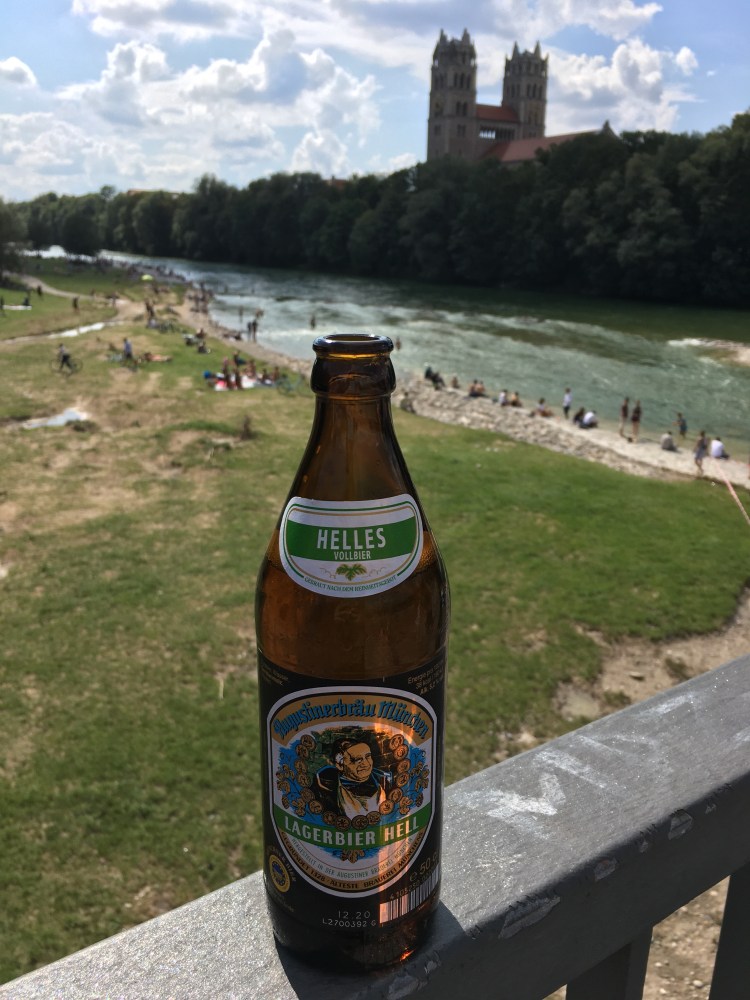
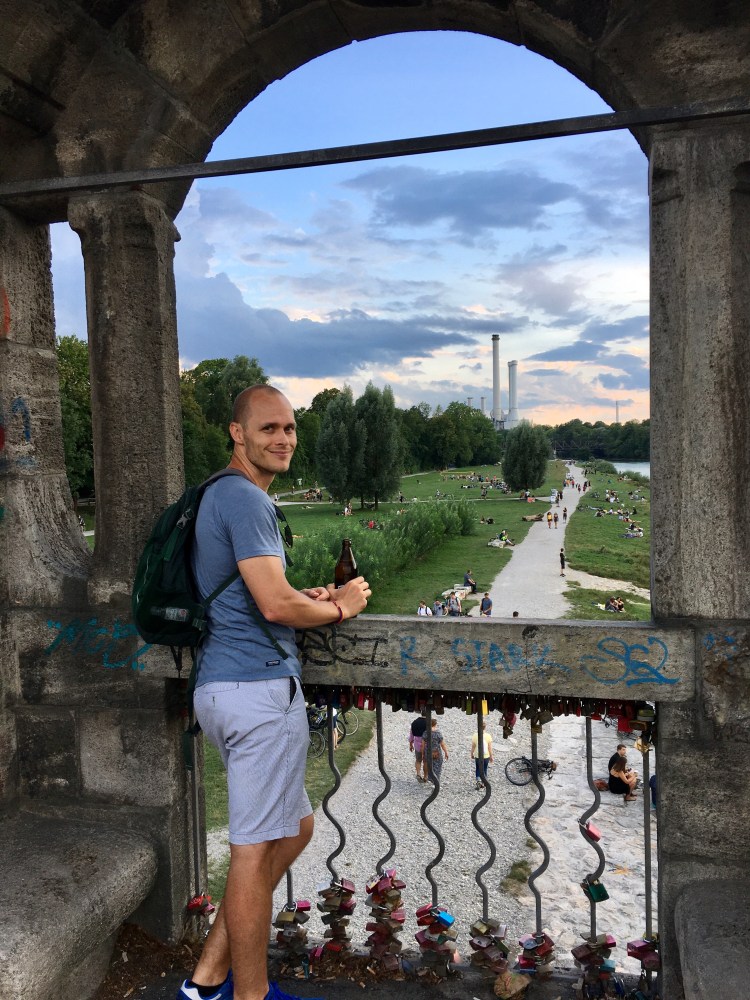
Saturday wasn’t all-for-not, though. We managed to finally see the Isar River! I’ve been wanting to go swimming in the Isar, but it’s about a 40 min bike ride from our house, so we just haven’t done it yet. We didn’t swim on Saturday, but luckily there was an open kiosk with cold beer and plenty of space for people watching.
View from the Reichenbachbrücke (bridge).
The Isar has a walking path that extends the length of the river. FYI, masks are not required outdoors in Germany but social distancing is requested.
View from the Wittelsbacherbrücke.
Oh, another Assumption Day tip? Check your train times. Apparently, when Mary goes to Heaven the S-Bahn doesn’t run like normal. Our typical 15 min trip turned into an hour. Partly, because we had to take the tram, which is slower. Partly, because despite getting on the tram in the direction of home, we ended up going in the opposite direction. Still not quite sure how that happened… oh well.
Still no news on Shane’s job. Fingers crossed for an update soon!
I know we’ve only been in Munich for 2 months, but I’ve been dying to get to the mountains. So, when a soon-to-be-whenever-Germany-lets-Shane-finally-work (ugh) colleague invited us to tag along on a day trip to the Alps, we jumped at the chance. So, last Friday we headed (only) an hour and a half south to Ehrwald, Austria.
The hike starts at the Ehrwalder Almbahn – the village’s cable car – and loops around the mountain, following signs to the Seebensee (Seeben Lake). Head around the lake and take the path straight ahead (and up) to the Coburger Hütte (hut) for some refreshments and a nice view of the next lake, the Drachensee. To return, backtrack past the Seebensee and keep right following the signs for the Almbahn. Finally, a left on to the Immensteig Trail cuts down the mountain and back to the parking lot.
Sounds easy enough, right?
Wrong.
Can you spot me? (Photo thanks to Justin & Alice)
“It’s rated as difficult, but it’s only 800 m of elevation gain, so it can’t be that hard!”
From the 800 m elevation gain (~2600 ft), 12.5 km distance (~7.5 mi), some scrambling, and some “oh shit” moments – this route earns it’s difficult rating, but man, it was worth it!
Ehrwald village in the background.
The hike itself started out easy enough. Were my quads already burning? Sure. Was I embarrassingly out of breath after a whole 5 minutes? Absolutely. Regardless, we trudged on, my lungs figured out this whole ‘altitude’ thing, and we headed for the Seebensee.
The start.
Up we go!
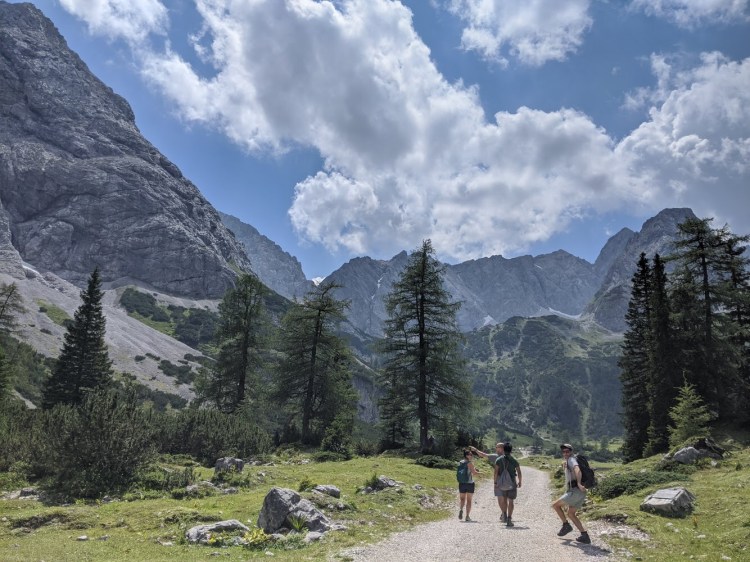
It may have “only” been a total of 800 m in elevation gain, but I swear the first half of the hike was nothing but up. It was one of those experiences where you can SEE the top, but the top never seems to get any closer. Luckily, there were some built in break spots with phenomenal views – which you needed to start the next portion of our “probably not that difficult” adventure. The scrambling. At least there were cables, right?
Started from the bottom now we’re here. -Drake. (Literally, we started at the parking lot in the photo.)
Mountain-mounted handrail cables.
After about 3 hours (from the start) we arrived at the first lake – the Seebensee! The water was incredibly clear and there were lots of people – families with small children included – sunbathing and swimming. Obviously, there was an alternate route to the Seebensee…
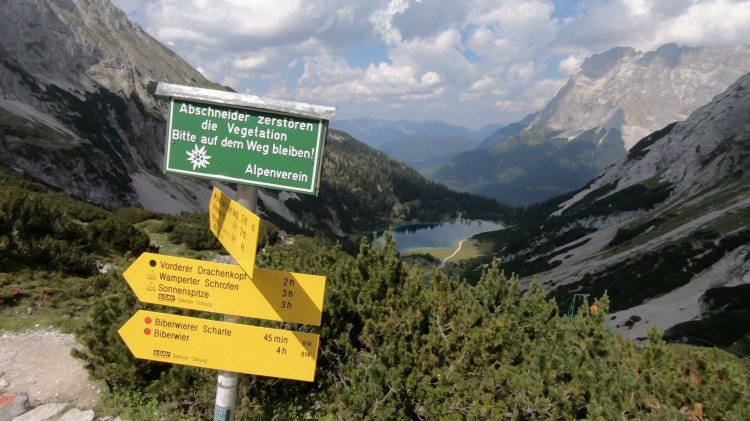
Seebensee – Coburger Hütte straight ahead!
At this point, we were hot & had been promised a hut with beer. We didn’t realize it yet, but we could literally see our destination. We had a little more work to do first…
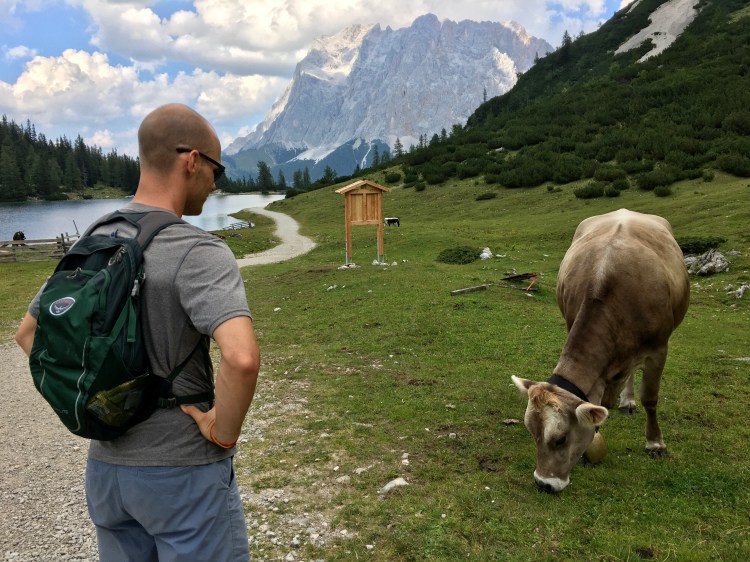
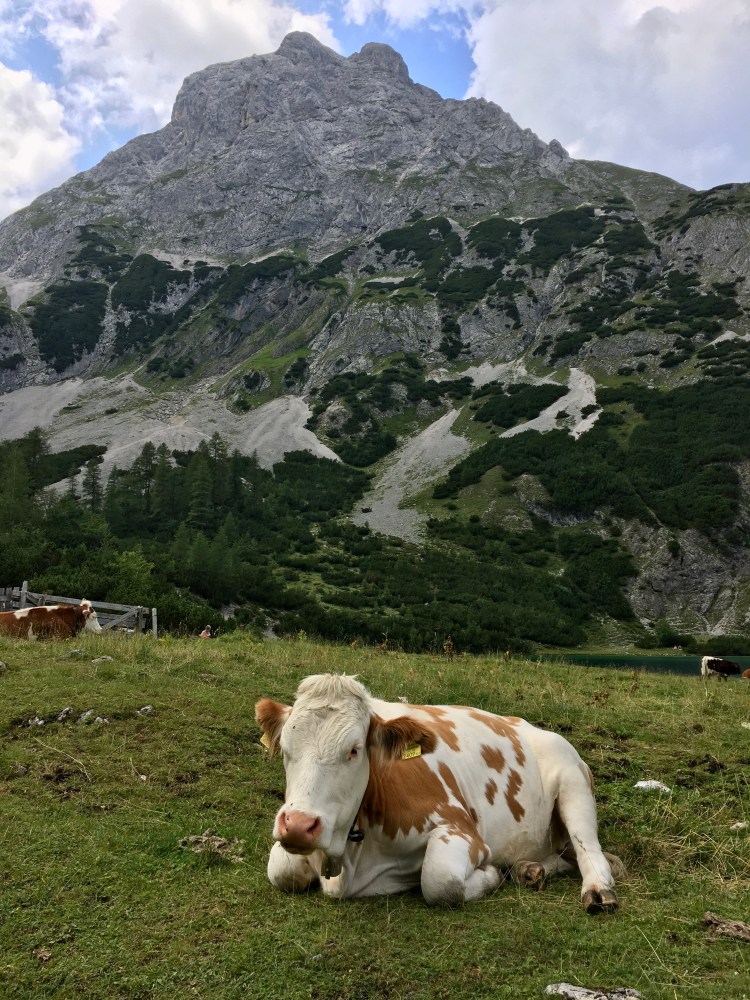
An unexpected bonus? COWS! Free-range cows with giant bells! Apparently this is a ‘thing’ in the Alps. Sheep & cows are put out to graze wearing bells so their owners can find them again later. Too bad for you if you’re a sleepy cow – in this area, the bells were constantly ringing. For a while, you could only hear them, but we did eventually get close enough for a cow-photoshoot. They obviously see humans all the time because they didn’t give two shits about us.
Can I pet dat cowwww?
Caught in action.
My masterpiece. What a beauty.
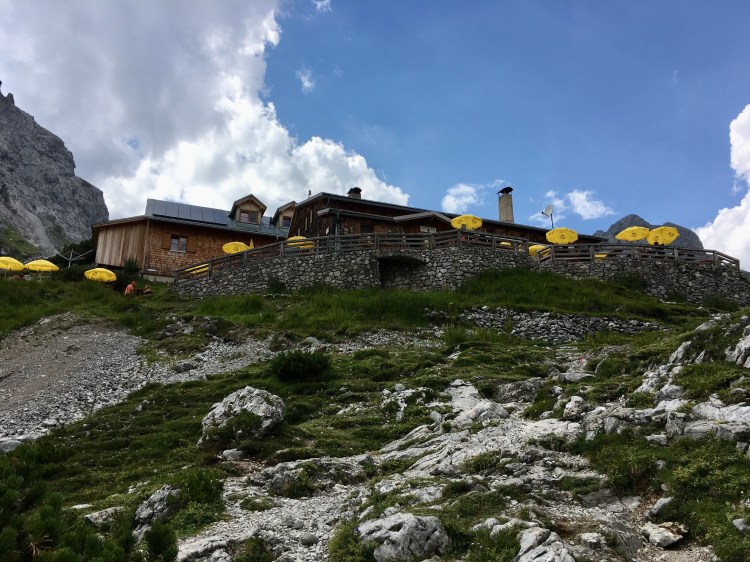
I digress. Onwards and upwards to the hut! Thanks to my one track mind (nooo… not beer. Fanta, actually, with a beer accouterment. Does that make it a two-track mind?), I forgot to take a proper picture of the Coburger Hut. From above you could see the second lake, Drachensee. We intended to go swimming, but honestly it was kind of chilly up there! By the time we were properly refreshed we were also properly cold, so we skipped the swimming.
The hut from below.
The Drachensee from the hut.
View over the Seebensee from the Coburger Hütte (1910m, ~6250 ft).
After that, it was time to turn around! It was another ~2 hours back to the car. I think at this point, everyone was happy to be on flat ground for a while… little did we know we were going to be scrambling straight down the side of the mountain with those cables again.
Photo thanks to Alice.
So, note-to-self: Trust the hike ratings. It was certainly a difficult hike, but if you’re feeling fit and confident in your feet then it’s by no means unmanageable. Honestly, going up and down with the cables felt a little sketchy at first (especially going down), but you get the hang of it and it’s really fun! I would absolutely recommend this hike, and do it again.
Here’s a link to the hike on Komoot. And if you’re considering it, here’s what you can expect on the Immensteig Trail (at the end of the hike). Conversely, you can just be surprised, like we were. 😜
If you’re interested in the Seebeensea and the Coburger Hütte but a difficult hike isn’t for you, then I recommend checking out the official tourism website. They list all the trails and their difficulty.
It occurred to me the other day that I’ve been so focused on experiencing (and sharing) Munich city center, that I haven’t talked much about our little neck of the woods – Munich, Pasing!
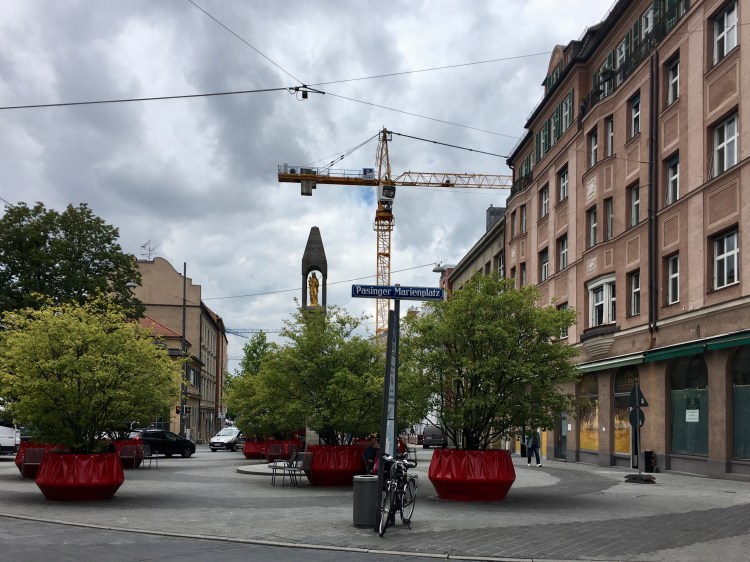
Pasinger Marienplatz.
Pasing is a district in west Munich and feels like a city of its own (because it originally was). It has a lively center, it’s own official city park, and even it’s own version of the Marienplatz. To top it off, it’s easily accessible from (as I’ve dubbed it) big-Munich. You can be Marienplatz to Marienplatz in 30 min by tram or by bicycle, or 15 min on the S-bahn. Pasing is also ~20 min by bike to the LMU campus where Shane will work, so essentially, we chose to live in Pasing for the location.
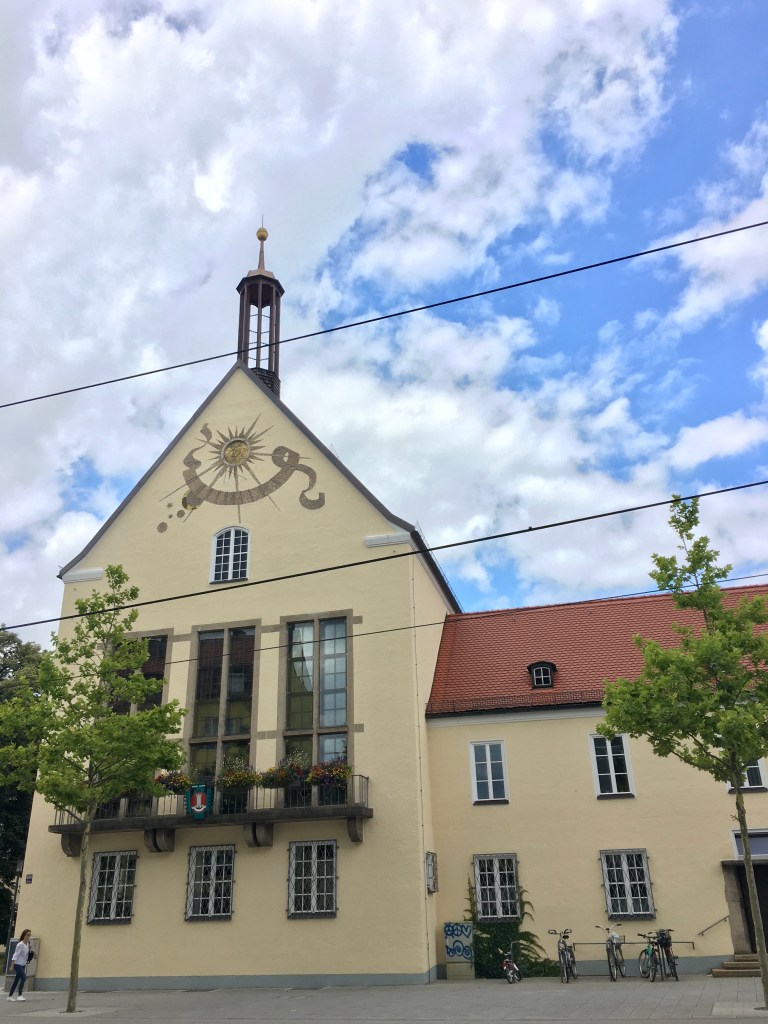
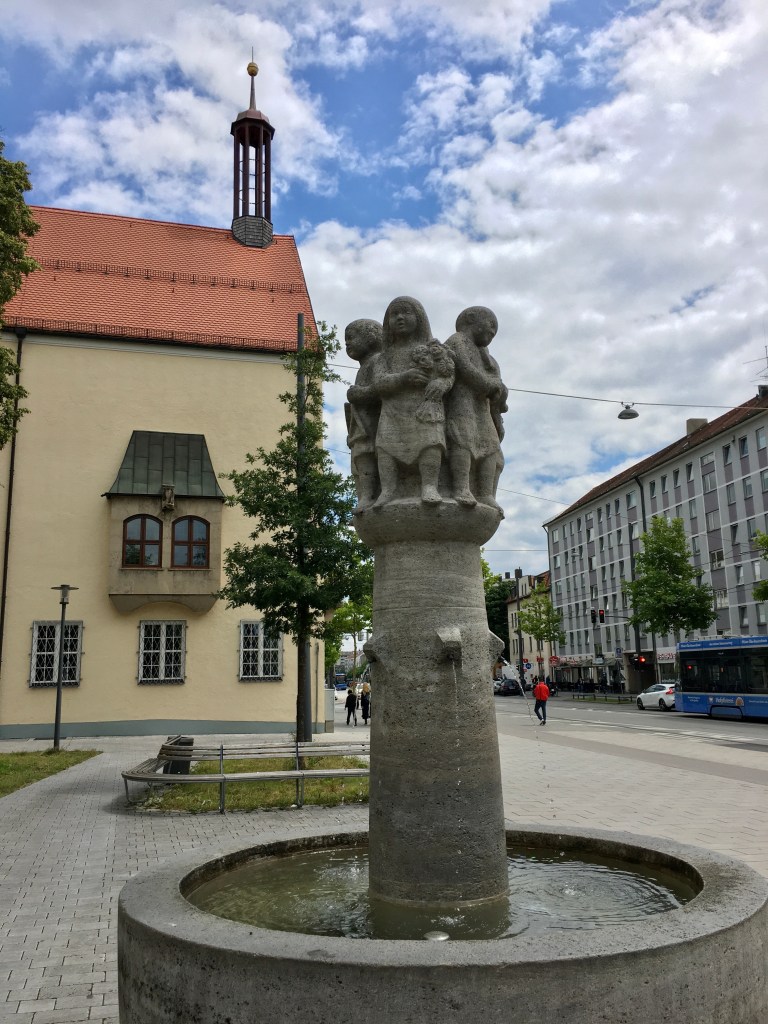
Pasing city hall.Fresh and drinkable fountain water!
Tell you more about Pasing? Gladly!
It has a mini-Marienplatz.
Technically called the Pasinger Marienplatz.
Pasing is growing quickly – construction is king right now.
As I mentioned before, Pasing once was an independent city. The Marienplatz in Pasing, inaugurated in 1880, was originally designed to mimic the Marienplatz in big-Munich. In 1938 Pasing was annexed by the Nazis to become part of Munich, and the central square was renamed to avoid any confusion. The square has been redesigned over the years with the addition of trams and adjusted traffic patterns, so it doesn’t feel so prominently central anymore, but it’s nice to see.
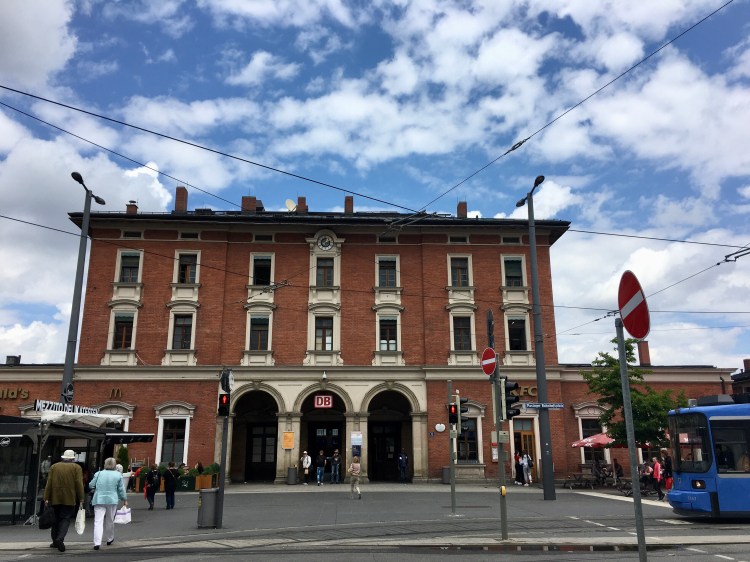
It has the 4th busiest train station in Bavaria,
number one being Munich Hbf.
The current train station.
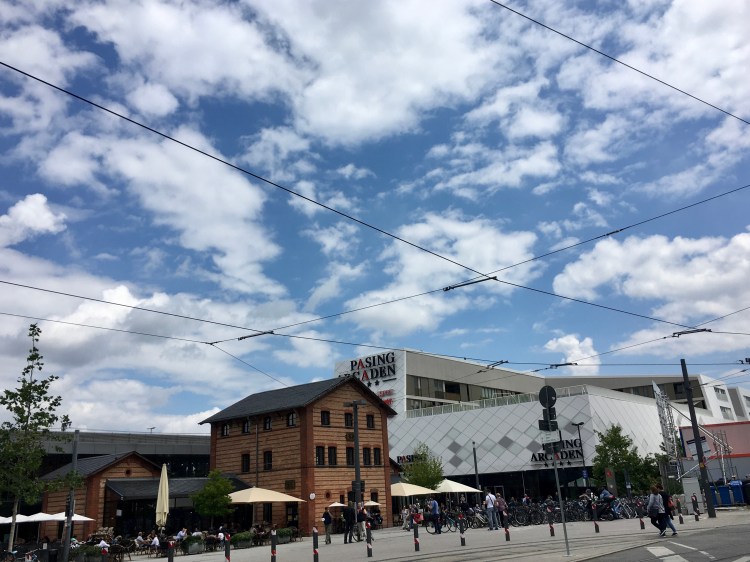
The old train station with the Arcaden (the mall) in the background.
Despite not being a true square, this part of town feels much more ‘city center’ than the Marienplatz. The main station used today was built in the 1950s, but if you exit the station and turn right you’ll find the Alter Pasinger Bahnhof, the old station. Built in 1847-48, it’s the oldest surviving railway station in Upper Bavaria (according to the plaque on the building) and now houses (to my nephew’s delight) a restaurant called Alex. They had a pancake brunch menu so I expect Alex (the restaurant) must be good. I suppose Alex the nephew isn’t so bad either… even more so if he made me pancakes. I digress.
It has it’s own Maypole,
or Maibaum in German.
I love these maypoles! A quick history, in case you’re unfamiliar (as I was). The hoisting of the maypole is a spring-celebration tradition in Germany & Austria, but they aren’t unique to these areas. Variations on the tradition also occur in places like Belgium, Denmark, and Sweden. In Germany, the tradition dates back to the 16th century where villages would strip a tree to create the pole then decorate it with village symbols. Each year on May 1st, the pole was erected (manpower only!), the keg was tapped (Maibock), and a party to celebrate Spring ensued (May Day)! The tradition carries on today, but not every city (or village) will erect a new maypole every year. For instance, the last maypole in Pasing was raised in 2017.
It’s also tradition to steal the maypole of neighboring villages. This seems a little hard to imagine given their size but as May 1st approaches, villages will organize community watches to keep their maypoles safe! As recently as 2017, a group from the town of Neufinsing managed to steal big-Munich’s maypole! Their ransom? A life-long table at Octoberfest. This was denied, so they settled for the traditional meal and free beer on May Day.
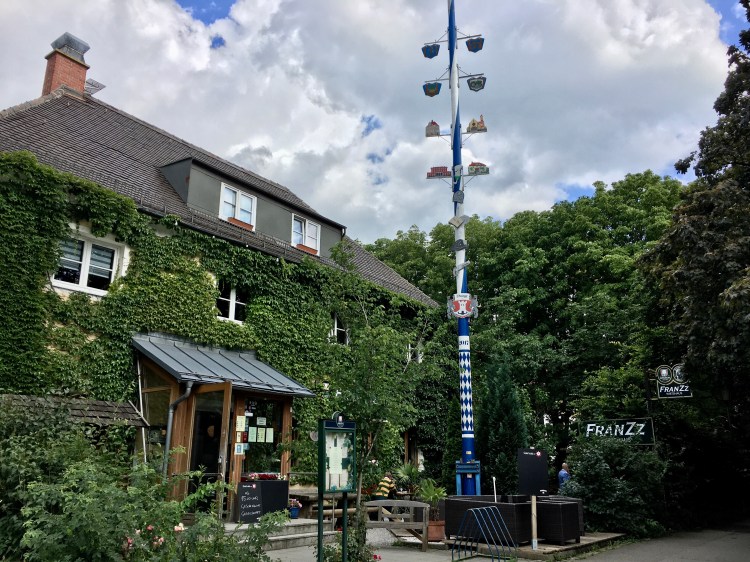
The Pasing maypole is located at Wirtshaus Franzz. How it ended up here, I’m not so sure, but they have a beer garden so you can reward yourself for the effort.
Speaking of beer gardens…
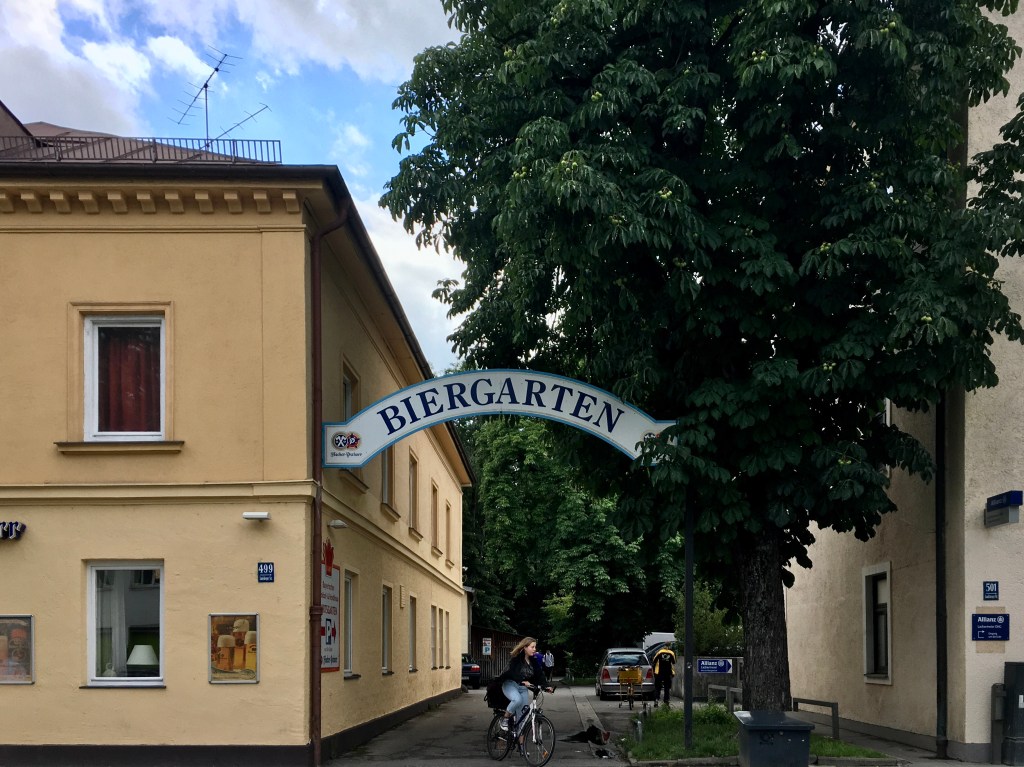
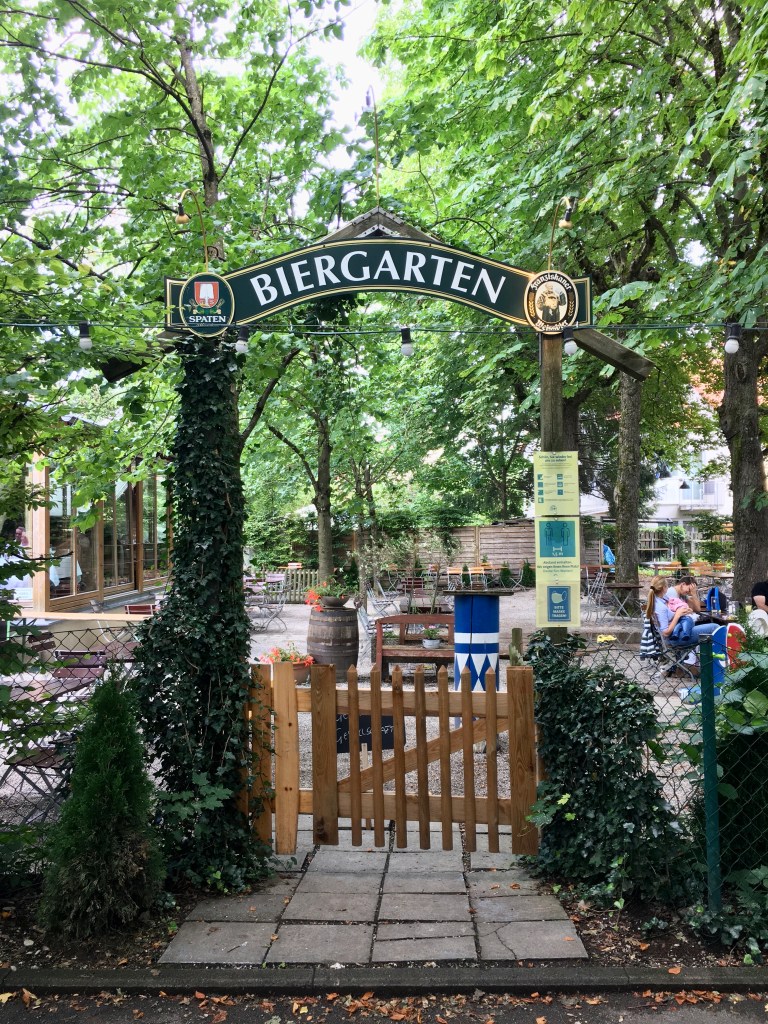
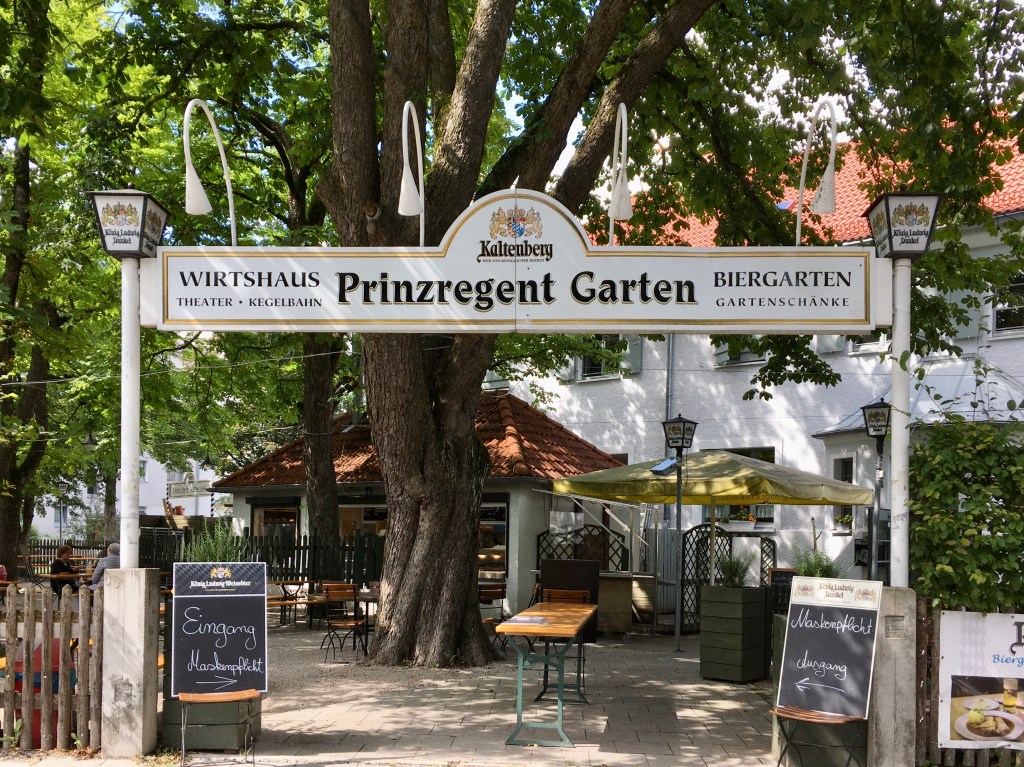
You’ll find no shortage in Pasing!
A plus side to getting a little bit out of big-Munich? Beer prices drop. You can expect to pay €3.60 for a half-liter, €7.90 for a whole. Do expect to pay in cash, though, or have a minimum charge of ~€10 to pay by card.
You can walk off the beer in the Stadt Park,
(aka: the city park)
I really enjoy Munich’s city parks. They are all over the place, and you genuinely feel like you’ve escaped the city. The Pasinger Stadtpark is no exception. The Würm River runs through the park, which makes for an excellent swimming spot for humans, doggies, and beavers!
Pick some flowers along the way,
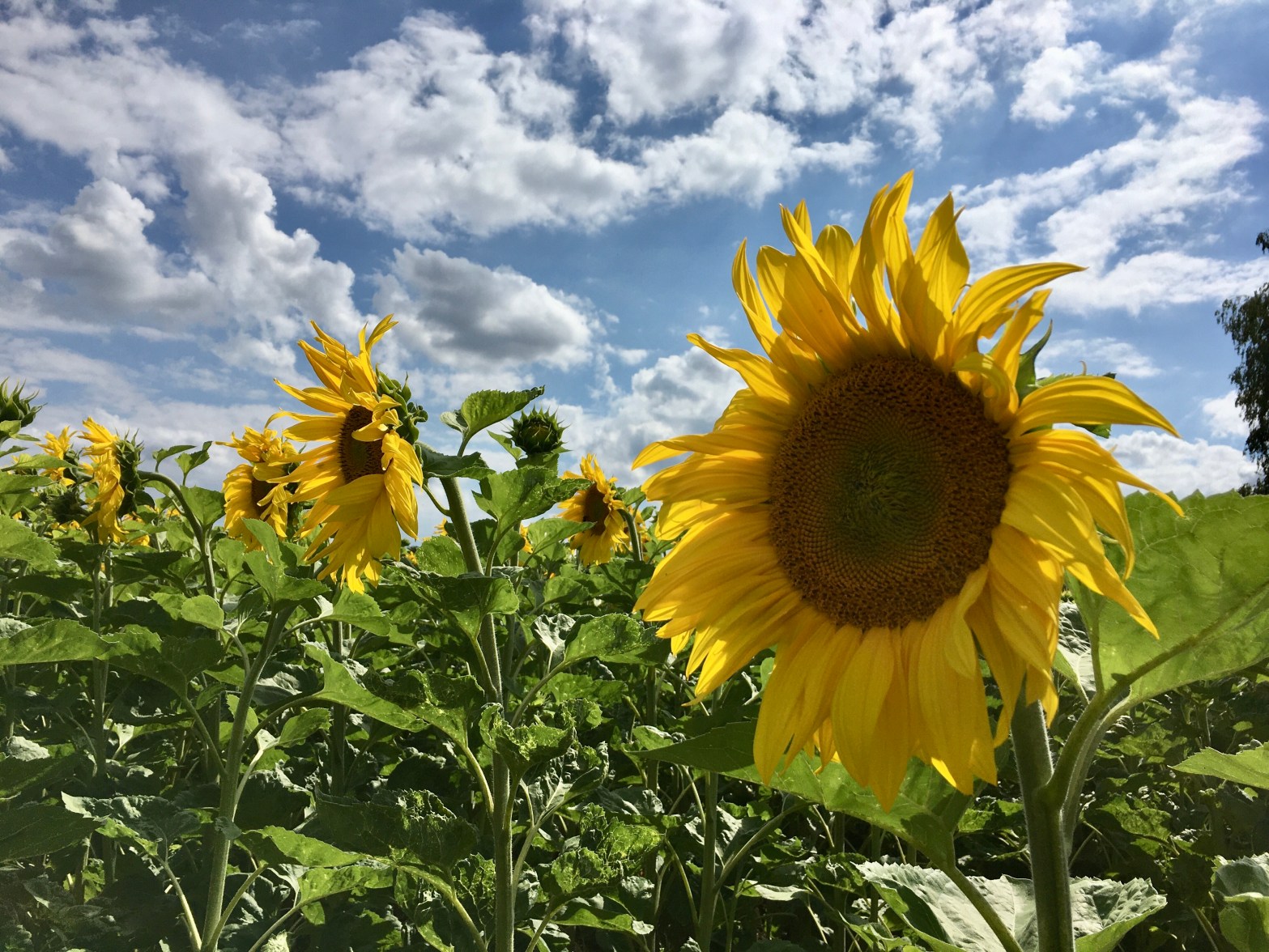
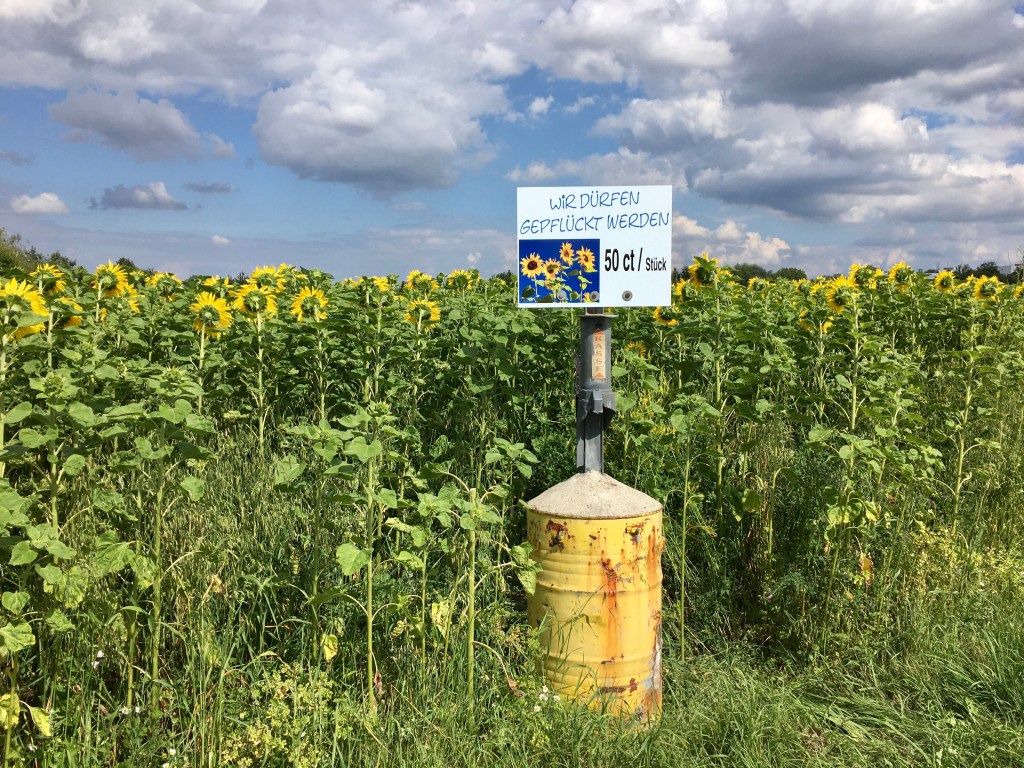
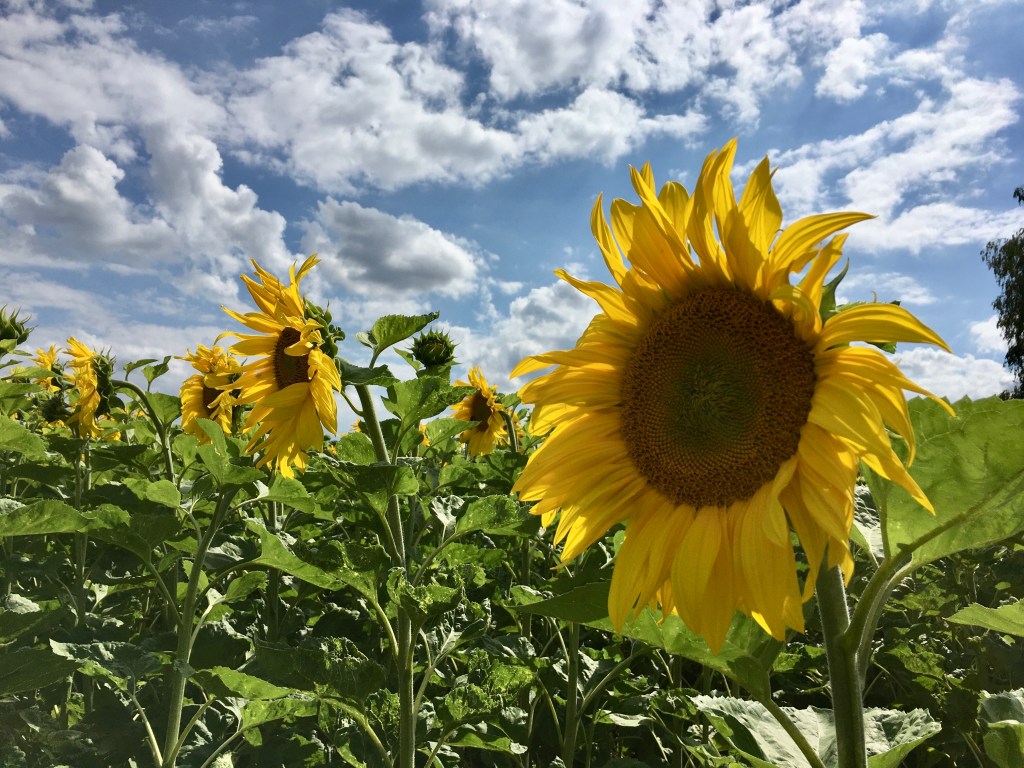
I don’t know if this is unique to Pasing, but there are multiple honor system pick-your-own flower fields! We’ve seen fields with a flower mix, tulips, and now sunflowers. As the sign says, Wir dürfen gepflückt werden (we can be picked!). Just drop some change in the bucket and pluck away!
and visit a castle!
Blutenburg Castle. I’ve blogged about it before. It’s a lovely walk (or bike ride) if you’re in the area. You’ll find signs for Blutenburg in city center or as you leave the North entrance of Stadtpark.
and lastly… when you’re in Pasing you can visit
The MALL!
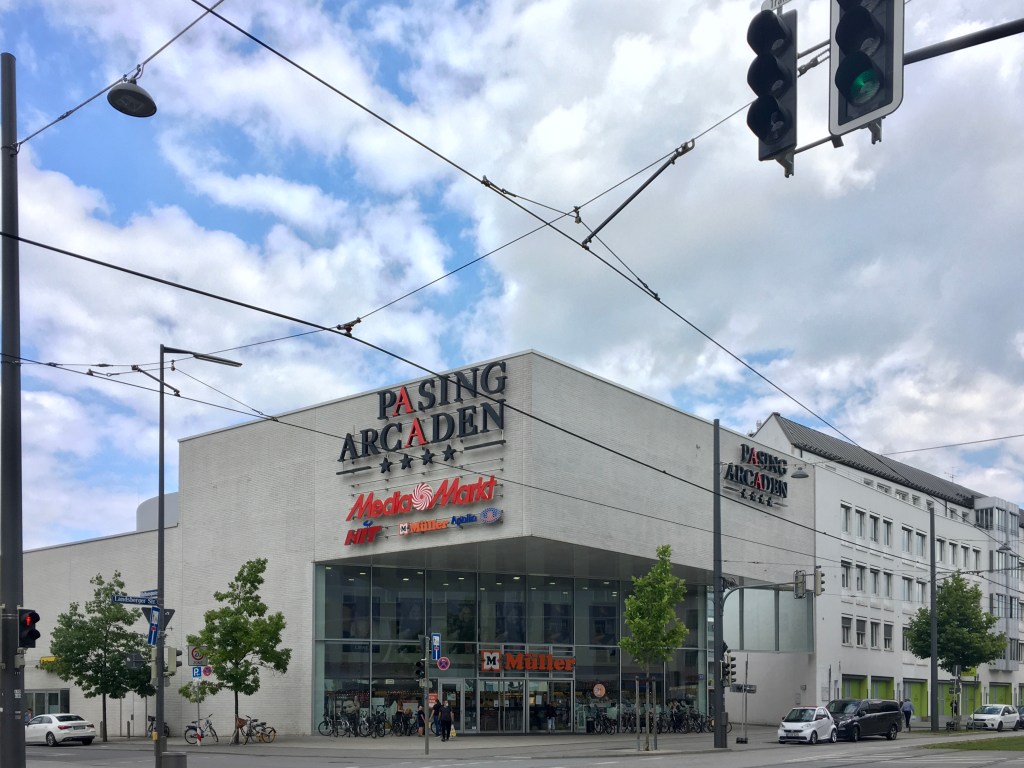
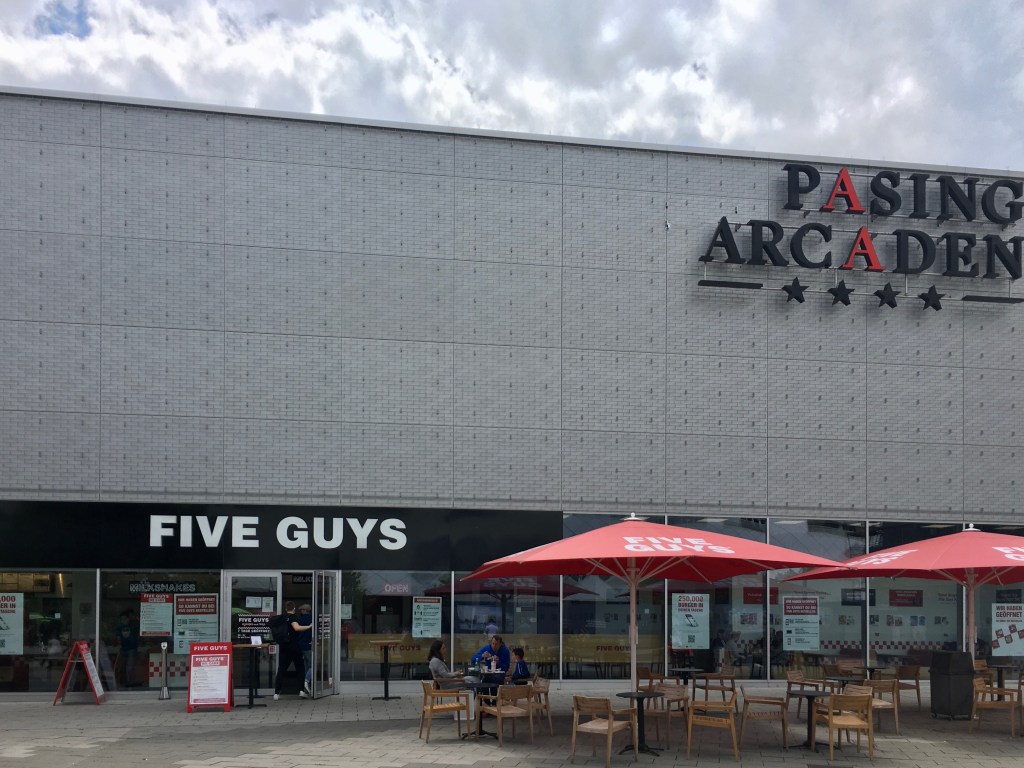
Ha! Now, if you’re really into malls or shopping then get yourself on out to Pasing, because the Arcaden has everything you could ever want! The only reason it’s on my list is that 1) we haven’t lived somewhere with a mall in a very long time and 2) we go there every week because that’s where our closest grocery store is. I will say they have a very impressive food court, which includes Five Guys. Also not something we expected to see here.
Practical Info:
How to get there: From Munich Hbf, take any of the S-bahn trains to the Munich-Pasing station, or hop on tram 19 or 29.
Cost: Obviously, it’s free to explore the area! Beer & food & mall goodies not included.
Opening Times: Most everything is closed on Sunday (as is much of Bavaria), otherwise, the hours for restaurants/beer gardens are pretty standard and close around 23:00. The Arcaden is open from 9:30 – 20:30 daily, except Sundays.
Rating: 🧡 If there’s time.
Obviously, I give it a personal rating of ✅✅ for living, but if you have only a short time in Munich I would prioritize other things. Although, it may be worth considering a hotel or Airbnb in Pasing versus the city center to save on accommodation cost, but still be well connected.
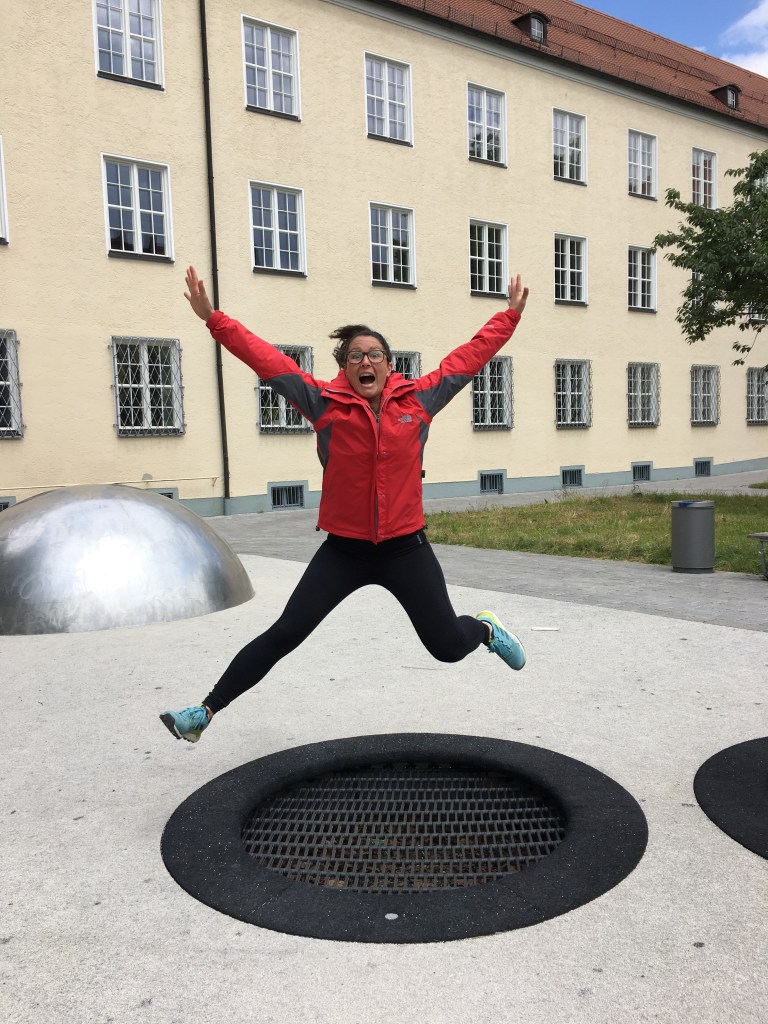
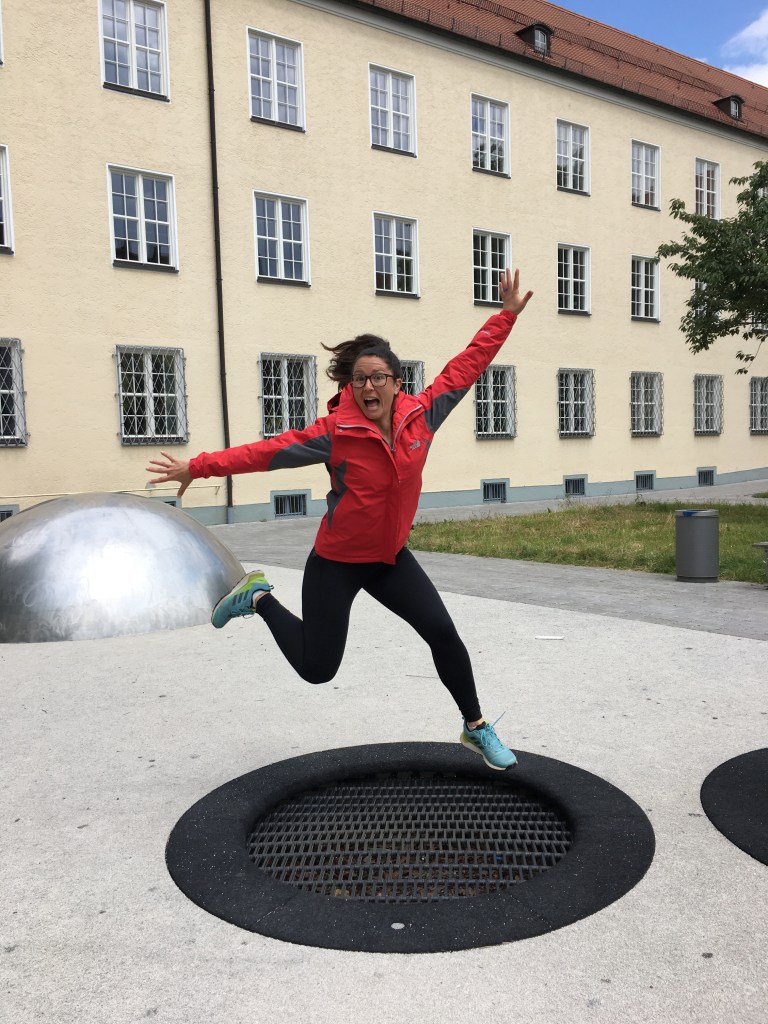
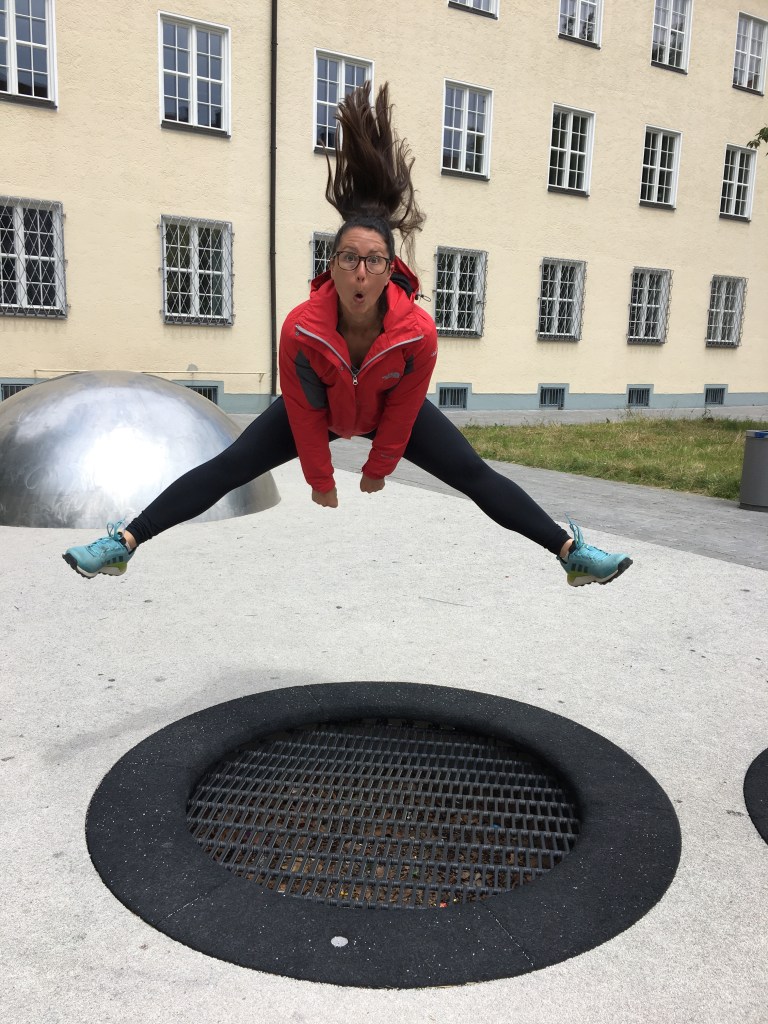
Still need convincing? Pasing has built in trampolines. Game. Changer.
I mean, now Kayne is running for President? I just can’t. And Shane’s job? It was supposed to start in May and now we’re looking at September (more on that in a later post). Thanks, Corona!
My sister and soon-to-be brother-in-law taught us a game: Happies and Crappies. We played it a lot when we were in Asia as a way to reflect on our experiences. It’s simple – everyone says one good thing (a happy) and one bad thing (a crappy) from their day. Between this game and a fellow expat’s recent blog post (June’s Joy Report), I was inspired to switch up my content.
I’m ditchin’ the crappies and offering up five happies from this past week!
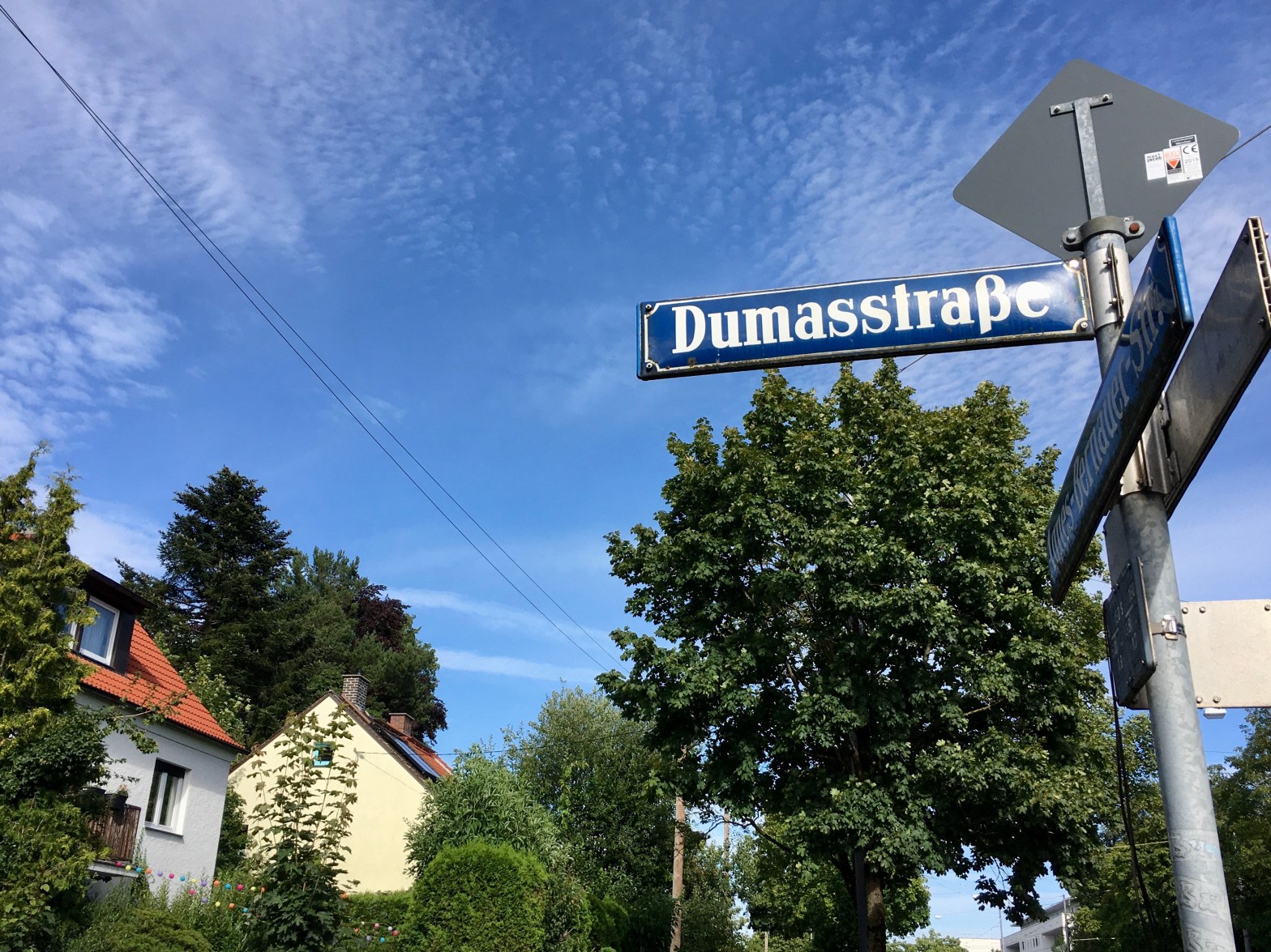
One: This street name.
…as an English speaker.
I read it as ‘dumb ass strasse’. Yes, I realize that it’s actually a name (Dumas-strasse), but it makes me laugh every time.
Two: Meatball turned 15!
Well, roughly. I adopted her a decade ago, this week! Don’t worry, she’s still a spring-kitty-chicken, which brings me to part 2a. Her ramp! I mentioned before that our window leads out to a retaining wall, so she can’t actually get outside, but can see through the grate and enjoy the breeze through her whiskers. Now that she has a ramp, she goes up and down approximately 200 times a day – most of those being in the wee hours of the morning.
Three: The first meeting of the Ecuador crew!
Shane was hired alongside another postdoc, Lucie! Eventually, when we’re allowed to go to Ecuador, the three of us will move together (I have dubbed myself an honorary lab member) and Lucie and Shane will be the project leaders. The number of new coronavirus cases in Munich are staying very low (knock-on-wood), so we were able to check out city center, have some drinks at the Hofbräuhaus, and talk about Ecuador!
Four: Our local swimming spot.
No offense, Groningen, but Munich knows how to have a summer! We’ve had sunshine and warm temperatures, which means I’ve been dying to do some river swimming. Apparently, you’re not a Münchener until you’ve swam in the Isar River, but that’s ~40 min bike ride away from our house. We’ll do it one day, but for now we’ve found a closer option. In about 15 minutes, we can be swimming in the Würm River.
Five: We joined the climbing gym.
It’s been 3.5 months, but we’re finally back in climbing action! Also a testament to how well Germany has handled it’s containment of COVID-19.
Fun Fact: Our gym is called Einstein Boulderhalle after (obviously) Albert Einstein who lived in Munich as a child.
Honorable mention:
I’ve learned 2 new German words recently, which have quickly become my favorite: schmutzig (dirty) & schlussel (key). It’s something about that ‘sch’ sound at the beginning that makes it fun to say! 🤪
It’s’ easy to focus on the bad these days. Hopefully my happies brought you a smile, or at the very least, inspire you to think of your own happies!
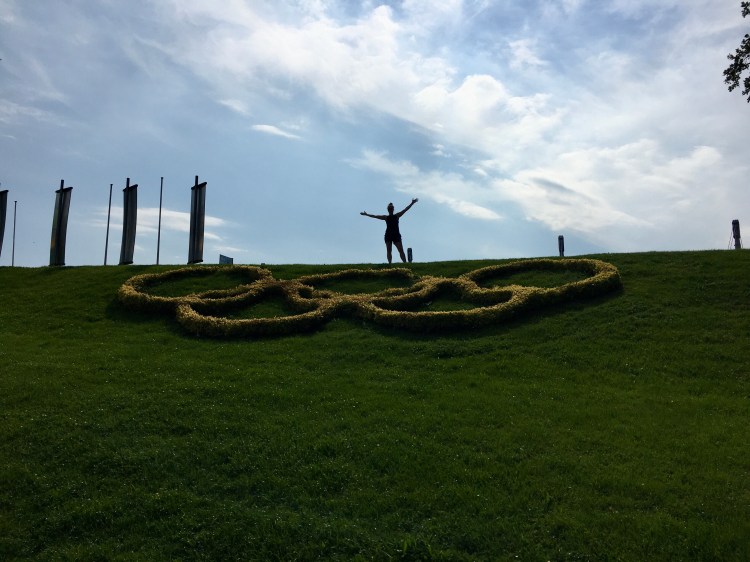
Ok, kind of. I mean it was on ‘the list’ and we did intentionally bike there, but our original plan was to go swimming in the Isar river. That plan was foiled once we looked at the radar. So instead, we decided to check out Olympia Park, which offered some shelter in case a thunderstorm rolled through. To be honest, there’s a lot more to this park than I expected. Despite the name, it never really clicked that this was where the 1972 Olympics were held. Yes, its a big (and beautiful) park, but it’s also home to all of the old stadiums!
As I mentioned, the park complex itself is quite large, 850,000 m2 to be exact, and the general layout and architecture were inspired by the Bavarian alpine hills – lots of blues, greens, and natural landscaping. The leisure activities seem quite endless. Today, you can tour the stadium complex, take a walk (or bike ride) through the park, sunbathe by the lake, see a movie outdoors, or drink a beer in one of the beer gardens, to name a few. Here were our highlights.
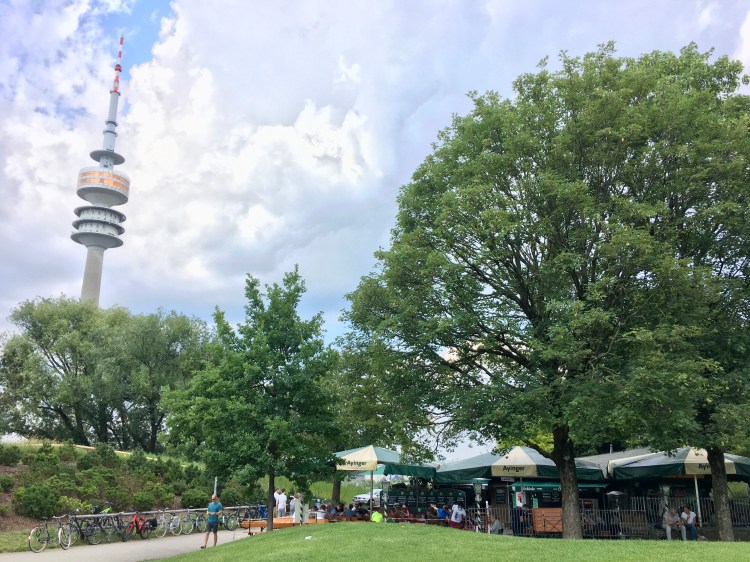
The Olympic Tower
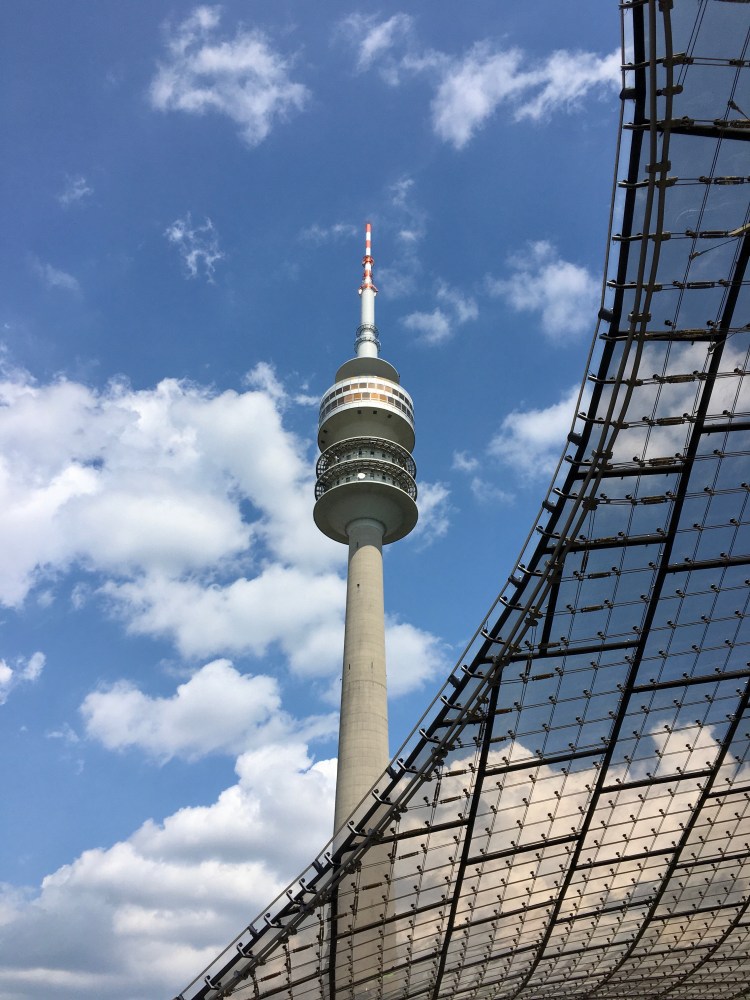
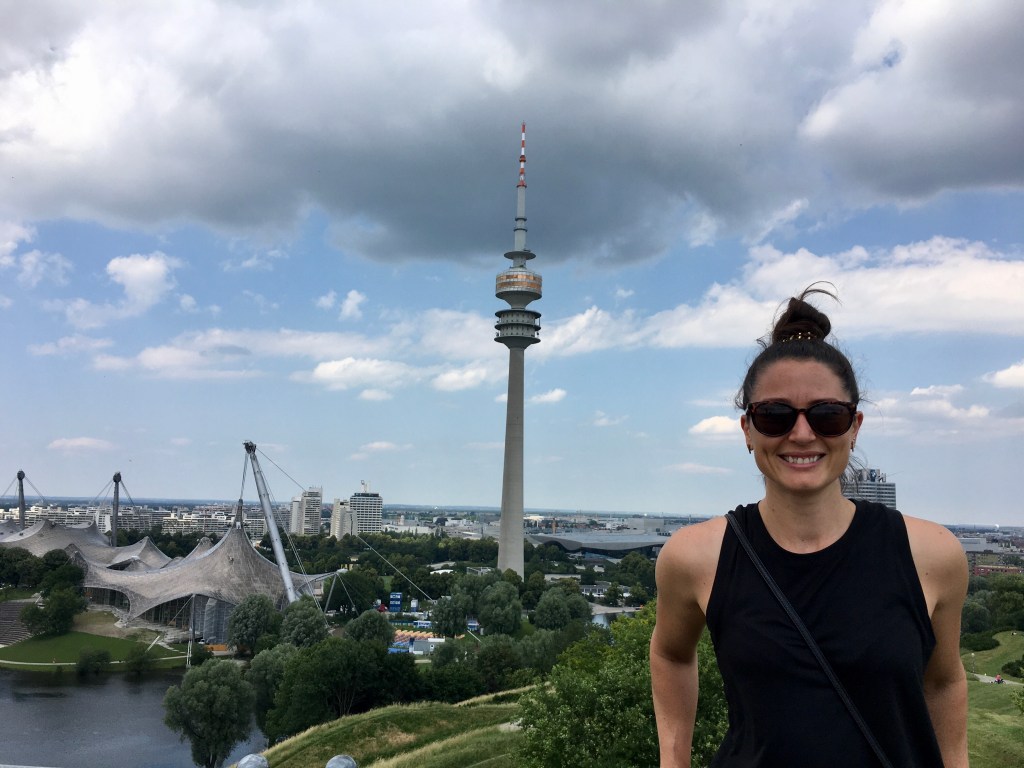
I would venture to guess that the most noticeable feature of this park is the Olympic Tower, which was built in 1968. Yes, you can go up! No, we didn’t – thanks to the coronavirus most tourist attractions with small spaces are still closed. It’s still nice to enjoy, even without going up, and can act as a homing-device while you wander as it’s centrally located.
The Olympic Stadium
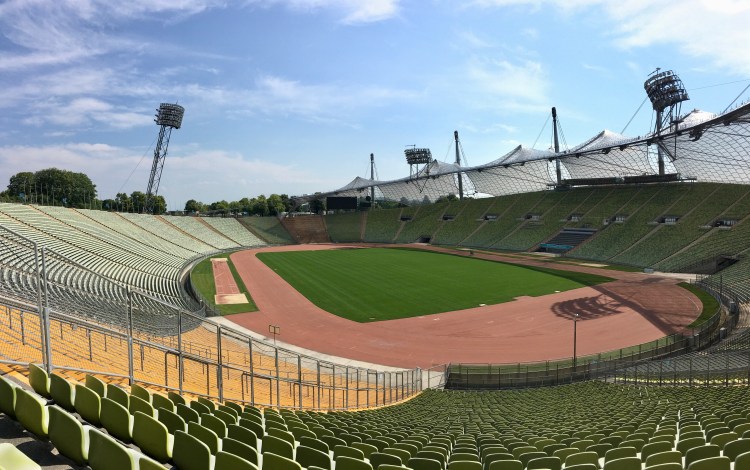
We didn’t realize that you could tour the old Olympic stadium. Actually, we were on our way home – we had biked a full circle around the park when Shane suggested to at least go look through the gate. As we were gawking from the outside, I noticed that a couple was walking INSIDE. If we had taken ~30 sec to look around instead of straight ahead we would have noticed the entrance. Regardless, we got in and it was great! You can do a self-guided tour (with free audio guide) or a guided tour. We opted for the self-guided tour and the whole stadium essentially to ourselves.
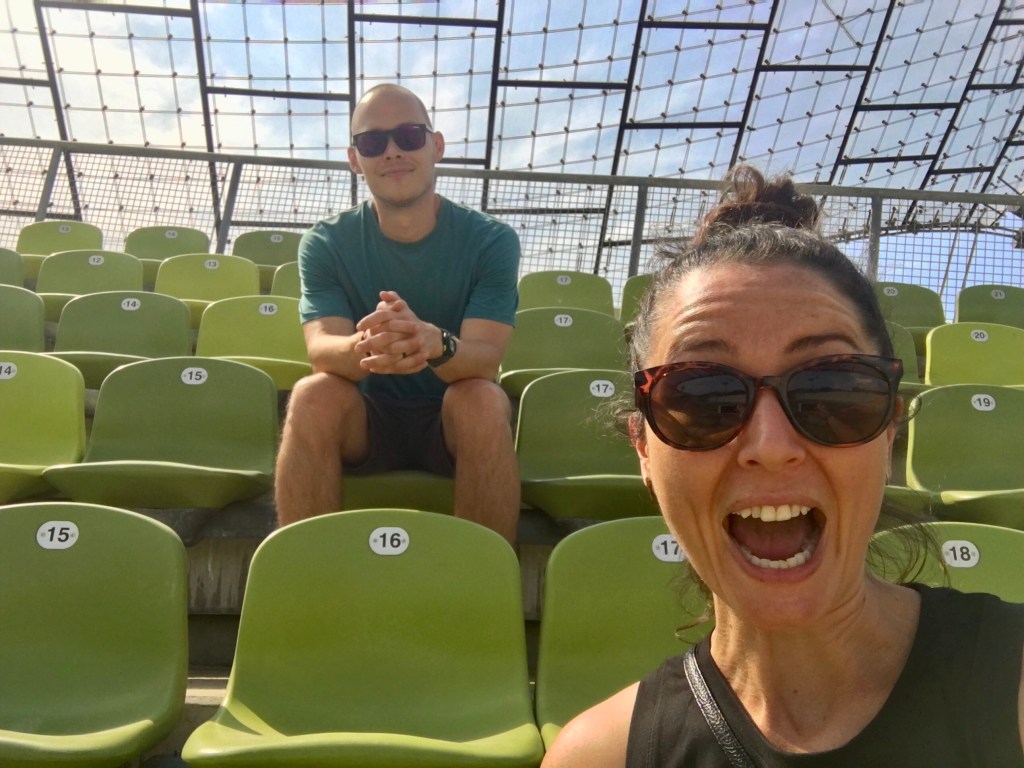
Can you tell it was build in the late 60’s early 70’s?We were both excited, I was just more dramatic about it.
Olympiaberg
A nice view of the Olympiaberg from inside the stadium.
Interesting fact: the Olympiaberg (Olympic mountain) is man-made. It’s actually built from the rubble created from the bombings during World War II. Now, at 56m (183ft) tall, it’s one of the highest points in Munich. 56m doesn’t sound that bad until you bike it, which we did. The view was worth it, though.
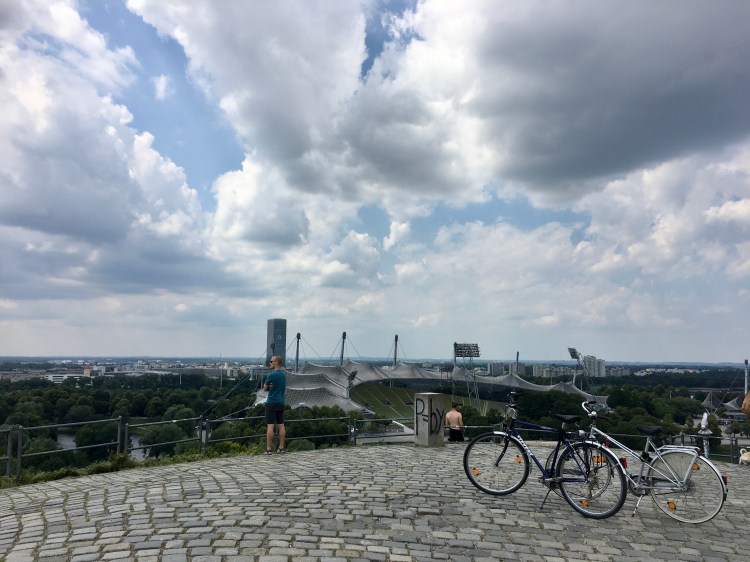
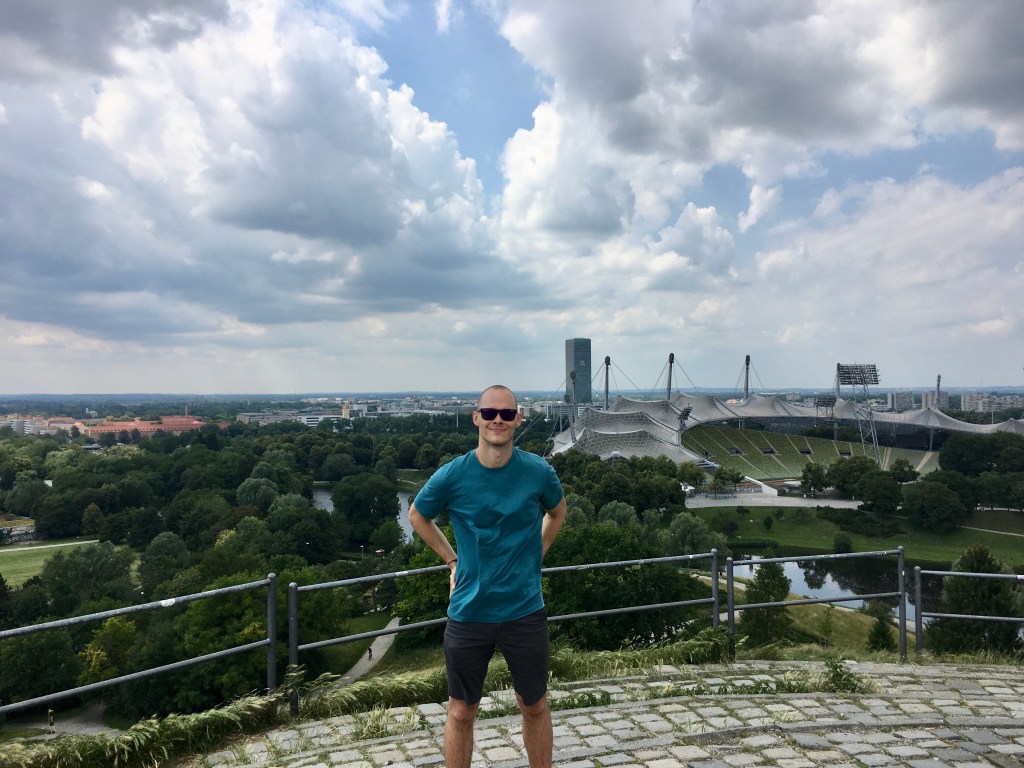
Proof that we biked to the top.
The Park
Obviously, it’s better in person.
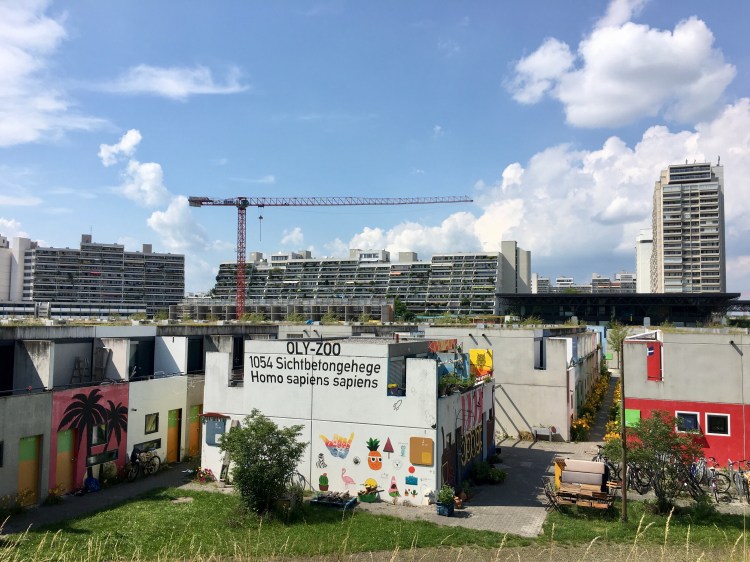
Don’t miss out on the park itself! There are tons of well-maintained paths for pedestrians, bikes, scooters – you name it! After you’ve conquered the “mountain”, take a left as you come down the path. The fields there have a great view of Munich and you’ll run smack-dab into a beer garden! After admiring the view (and refueling on beer & curryworst), you can follow the paths to the other side of the park and look at the old Olympic Village. I suggest looking from a distance though, because the old village is now used as student housing!
Tip: Walk the lake path.
We didn’t, and should have because Munich’s Walk of Fame is there (similar to the Hollywood Walk of Fame). It started in 2003, and now has over 100 hand-prints and signatures from German and worldwide celebrities.
Olympia-Alm Beer Garden
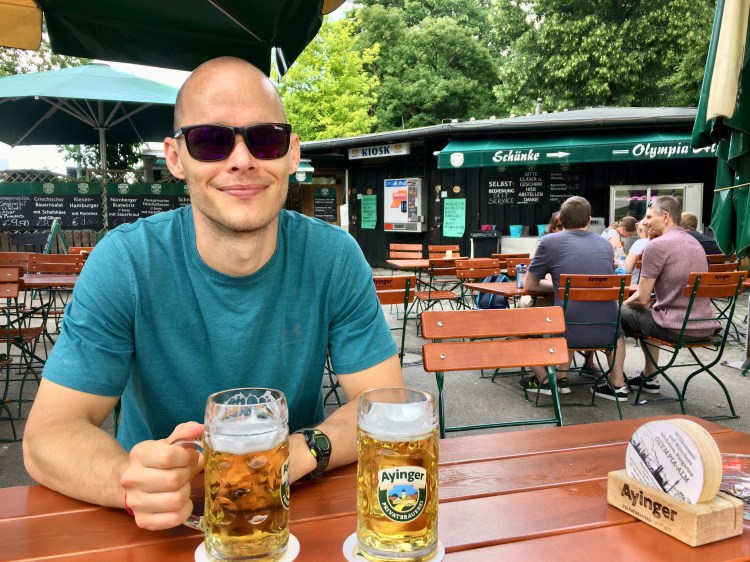
The Olympia-Alm beer garden started off as a beer kiosk during the Olympics in 1972. Now, it’s the highest beer garden in Munich – a whole 564m (1850ft) above sea level! At max-capacity (during normal times), it can hold up to 200 people, putting it in the ‘small’ beer garden category – the largest can hold 8,000. If this doesn’t suit, then there are others, for instance the Beer Garden at the Coubertinplatz.
Tip: Order at the counter and it’s cash only.
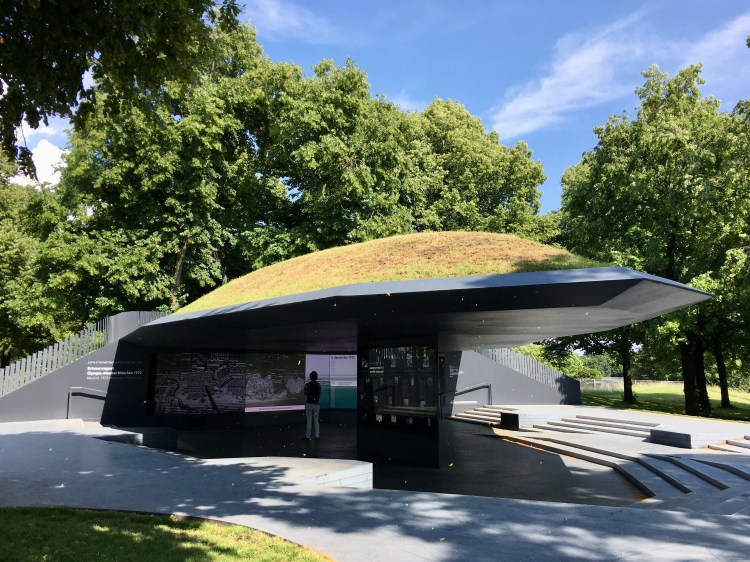
1972 Massacre Memorial
During the Olympics, a Palestinian terrorist group attacked the Israeli team. They took 11 athletes as hostages. All the athletes and one West German police officer were killed. The end goal was to secure the release of 234 Palestine prisoners being kept in Israeli jails. Today, there is a memorial to the massacre, and it’s worth the quick stop to hear the story and learn about the victims.
Practical Info:
How to get there: From Munich Hbf, take the U2 to Hohenzollernplatz. From there it’s a ~15 min walk, or catch Bus 59 to Ackermannbogen then a 5 min walk into the park.
Cost: Visiting the park/Olympiaberg is FREE! Of course, some of the attractions have costs: the tower (€9), the stadium (€3.50), Olympia-alm beer (€3.20 / 0.5L).
Opening Times: The park itself is always available. Attractions closing times vary: the tower (23:00), the stadium (16:00), Olympia-alm (22:00).
Rating: ✅ Highly Recommended!
Olympia Park is huge, and we really only scratched the surface. Nearby, are the BMW Welt (showroom) and BMW Museum. Between those two attractions and the park, it would be easy to spend an entire day in this area of Munich. Did I mention there is a Rock Museum and an aquarium out there too? Something for everyone!
We take a lot of walks these days. Well, honestly, we’ve taken a lot of walks since March when the coronavirus restrictions started. Shane is still unable to work due to coronavirus delays, so we’re still walking! Lucky for us, we have a new neighborhood to explore, and Schloss Blutenburg happens to be within walking distance!
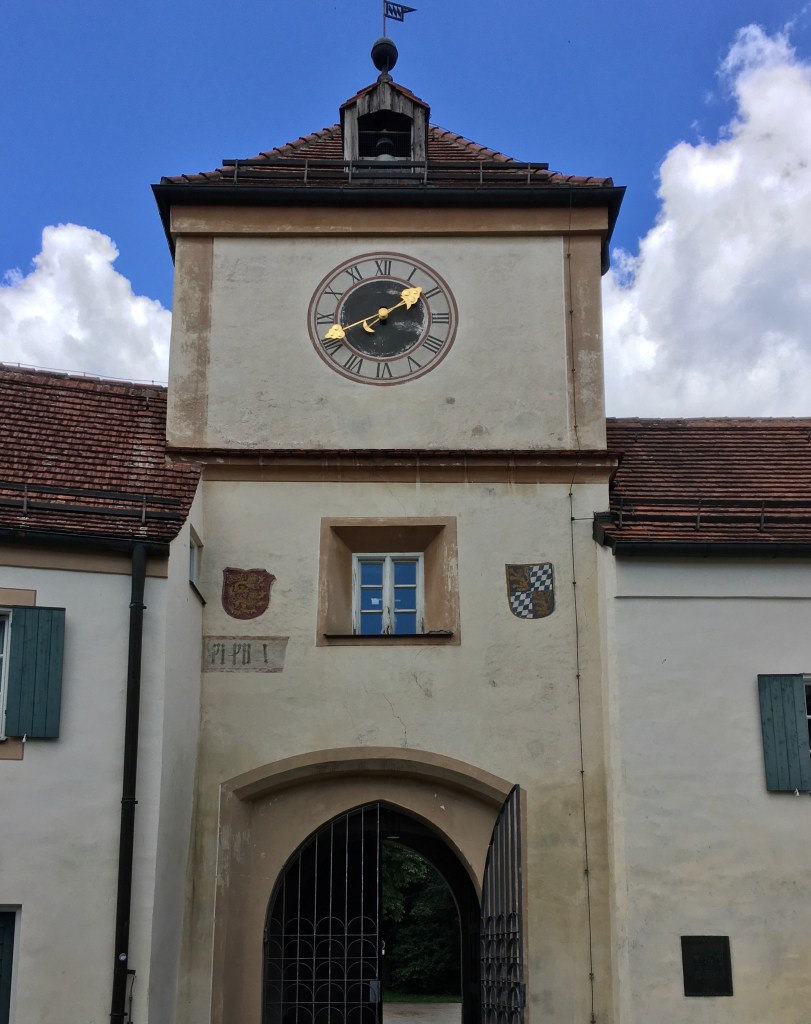
Duke Albrecht III, the Duke of Bavaria-Munich, built Blutenburg as a hunting lodge in the west of Munich. The castle, located between two arms of the River Würm (which runs through Pasing, our town) dates back to 1432. He also built it to house his secret wife, a commoner named Agnes Bernauer. Unfortunately, their marriage was discovered by the Duke’s father, who declared Agnes a witch and had her murdered – thrown off a bridge into the Danube River, to be exact – in 1435.
Over the years the castle has been in the hands of many (the Duke’s second oldest son and some private leases), but eventually fell into dis-repair. In the 1970’s, an association was formed to restore the castle, and it’s now open to view, with a small museum, a cafe, and most famously, the International Youth Library which houses over 500,000 children’s books in 130 languages.
The path to Blutenburg.WWII memorial for those who went to the Dachau concentration camp.Statue to honor the love of Duke Albrecht & Agnes.
Practical Info:
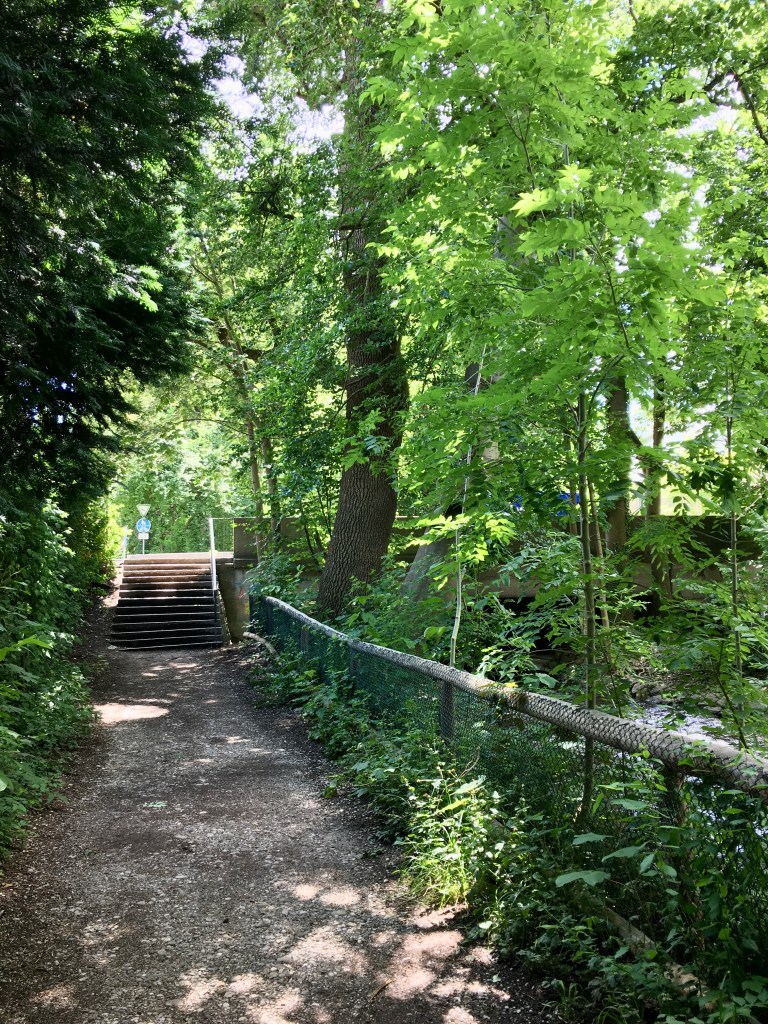
How to get there: from Munich hbf, catch one of the many S-bahn trains to Obermenzing bf. From there, you can take a bus (#143) to the Blutenburg stop, or walk ~20 min. If you’re in the Pasing area, I recommend walking. The walk follows the river and there are signs to guide you.
Cost: Free! €3 to visit the museum.
Opening Times: Daily, until 6pm. The chapel closes at 5pm (summer months) and 4pm (winter months).
Rating: 🧡 If there’s time.
If you’re in the Pasing area, it’s certainly worth the walk. If you’re looking for something a little ‘off the beaten path’ then this is also for you.































 The Shwits