

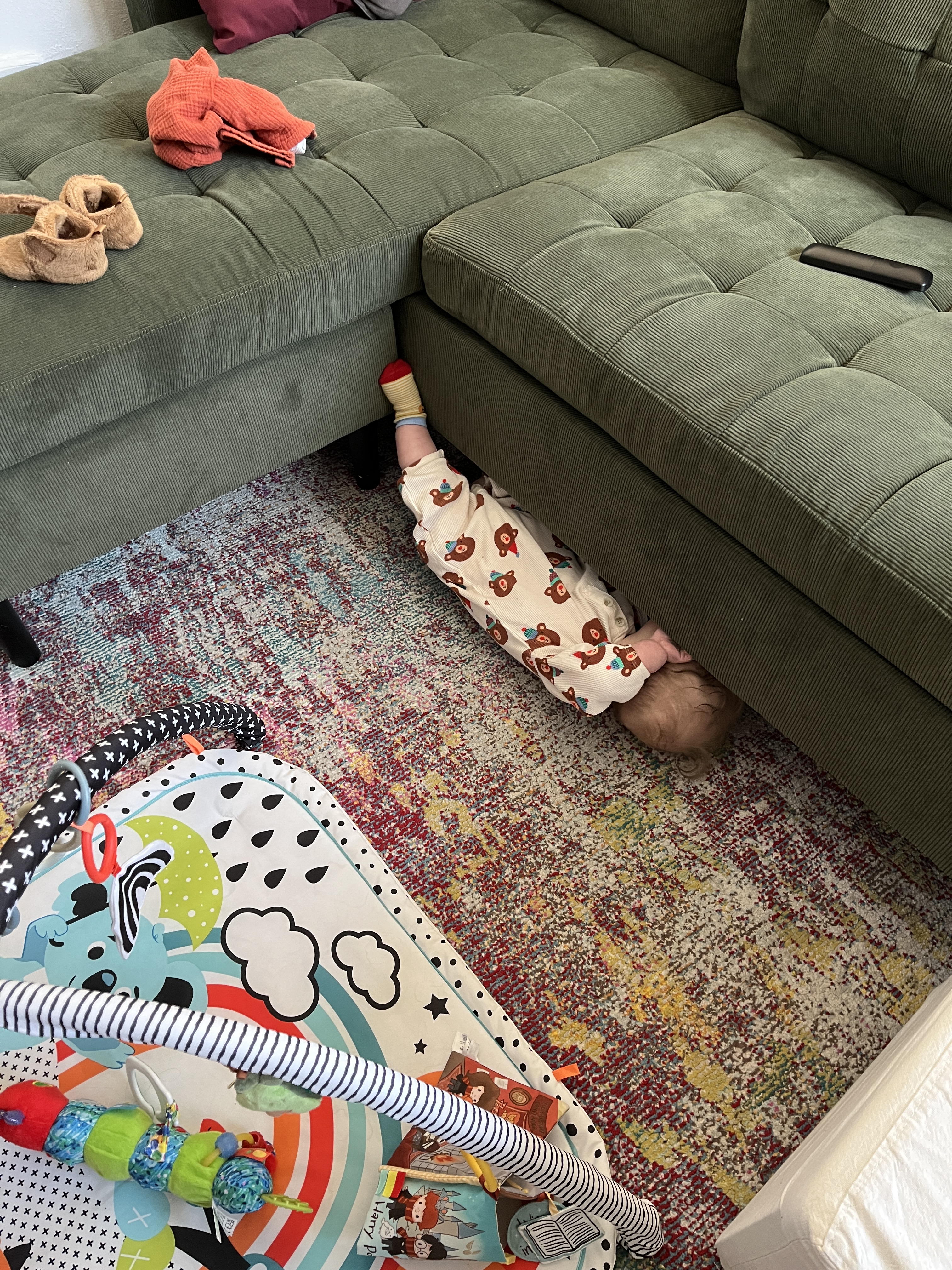
Hard to believe, but we have a six-month old baby!
Really though, where has six months gone? And with it the days of rocking him to sleep, contact naps, and squeaks while nursing. However, we’re currently in our sleeping 10–11 hours per night (*knocks on wood*) and roly poly all over the house era and entering our “gaga” and solid food (!!) era!
(Yes, Nolen would get those references; I started his Taylor training at 3 weeks old!)
Now that we’re a half-year into this whole baby thing, I wanted to address a recurring question we got while I was pregnant.
“Are you coming back to the US to have the baby?”
It goes without saying, but the answer to that was no.
For me, a big hesitation about having kids was the cost of raising them. The US is notoriously expensive in terms of healthcare and daycare costs. For me, the potential financial stress of having a child outweighed my desire. But things are different in Europe, and learning about the social support system for families in Germany considerably eased my worries.
So, what’s it like here?
Pregnancy & Delivery Costs
Hold on to your hats, folks. You can have a baby FOR FREE in Germany. Yep, you read that right.
Health insurance is mandatory in Germany. So, yes; you are indeed paying for health insurance, which is ~7% of your salary and taken out of your paycheck directly, like a tax. (Technically, it’s ~14% of your salary, but your employer pays half.) So, I don’t count insurance costs as a direct pregnancy-related expense, since you’d have to pay it regardless.
All standard pregnancy care is completely covered by insurance, without deductibles or co-pays (if you’re from the US, you know what I’m talking about). That covers your monthly (and eventually bi-weekly) visits to the Frauenartz (OBGYN), three ultrasounds, the basic genetic testing, and the necessary lab work. If any additional tests are needed, they are also covered by insurance provided that they are prescribed by your doctor.
Insurance also covers prenatal courses, like childbirth preparation and breastfeeding classes (both of which I took).
As for the hospital bills, also zero if you opt for the standard room after birth, which is shared with one other person (the delivery and immediate recovery rooms are private). Any procedures or medications are also completely covered by insurance, including my epidural and c-section. I also went to the hospital for monitoring (CTG exam + ultrasound) every other day from the due date until the induction 10 days later, none of which we paid for out of pocket.
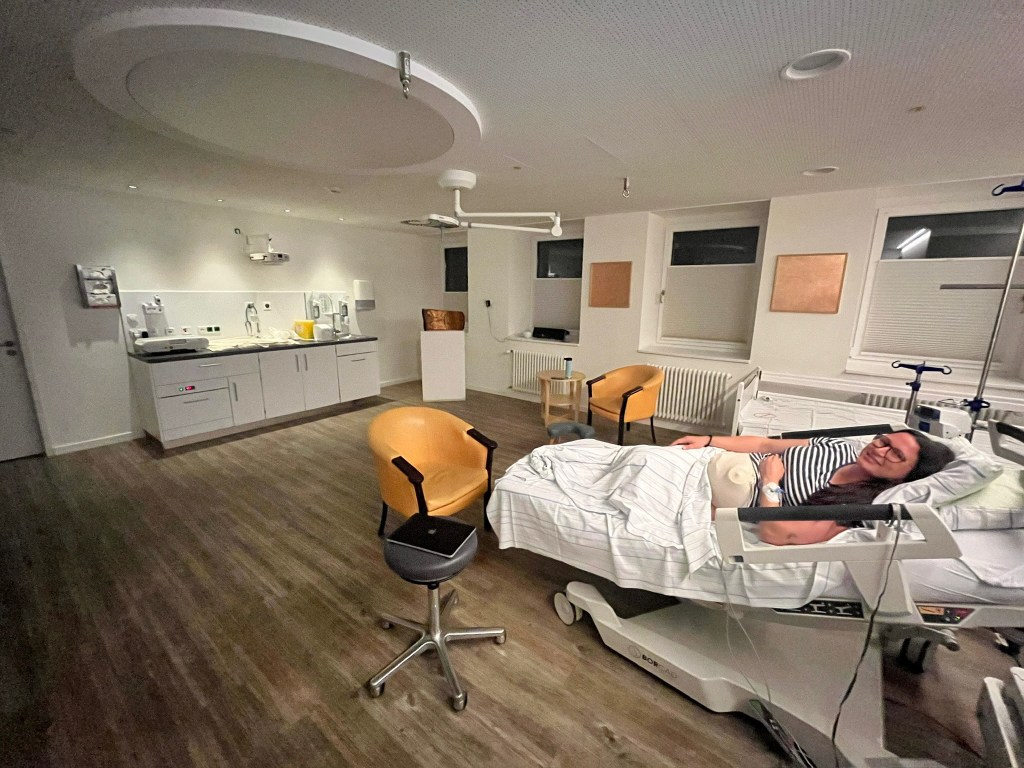
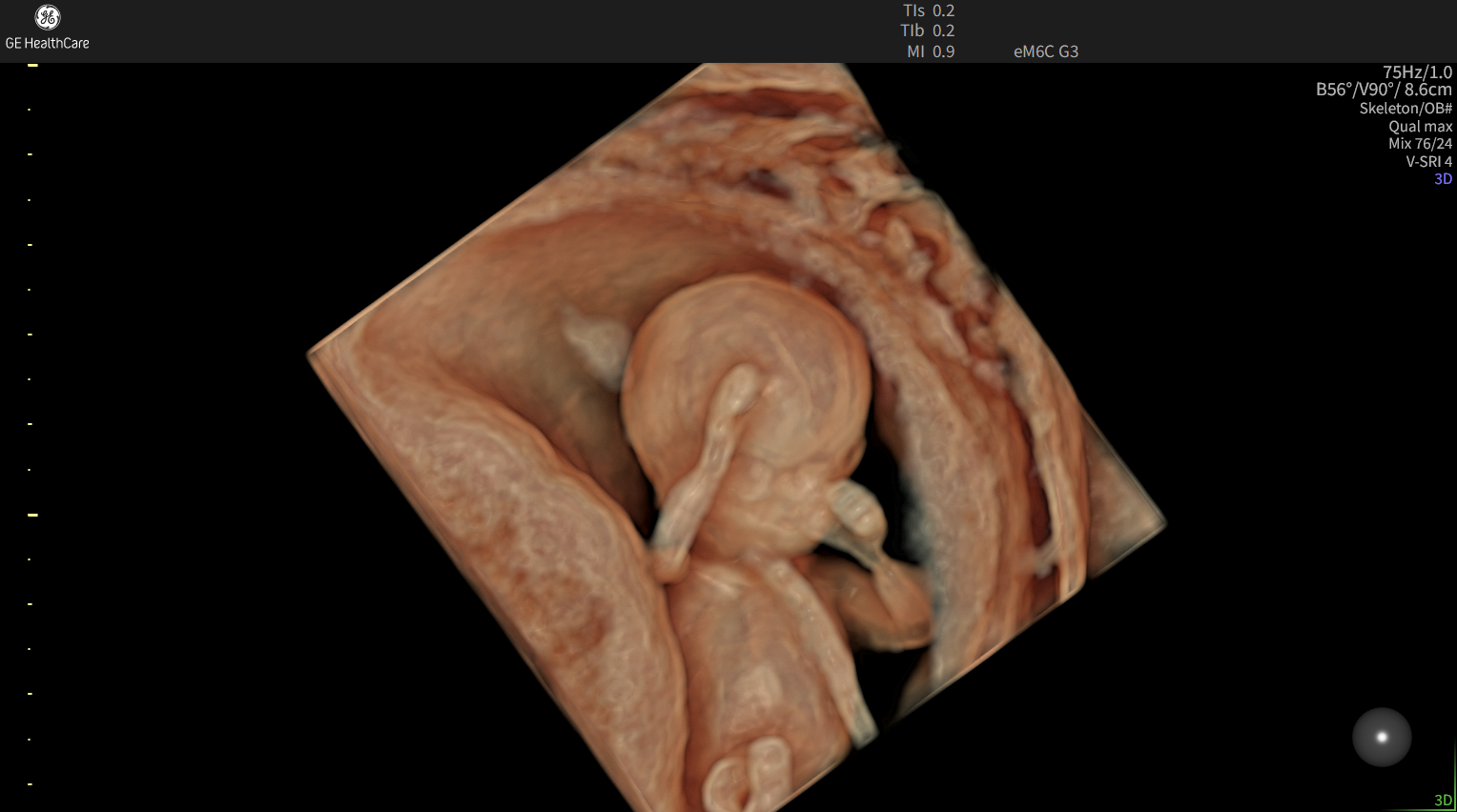
Now, of course, you can opt for “upgrades.” For example, we chose to pay an additional €110 to have an ultrasound at each visit to the Frauenartz and €250 for a first-trimester 3D ultrasound + genetic screening (but our 2nd trimester 3D ultrasound was covered by insurance since our Frauenartz said she had poor visibility in some areas).
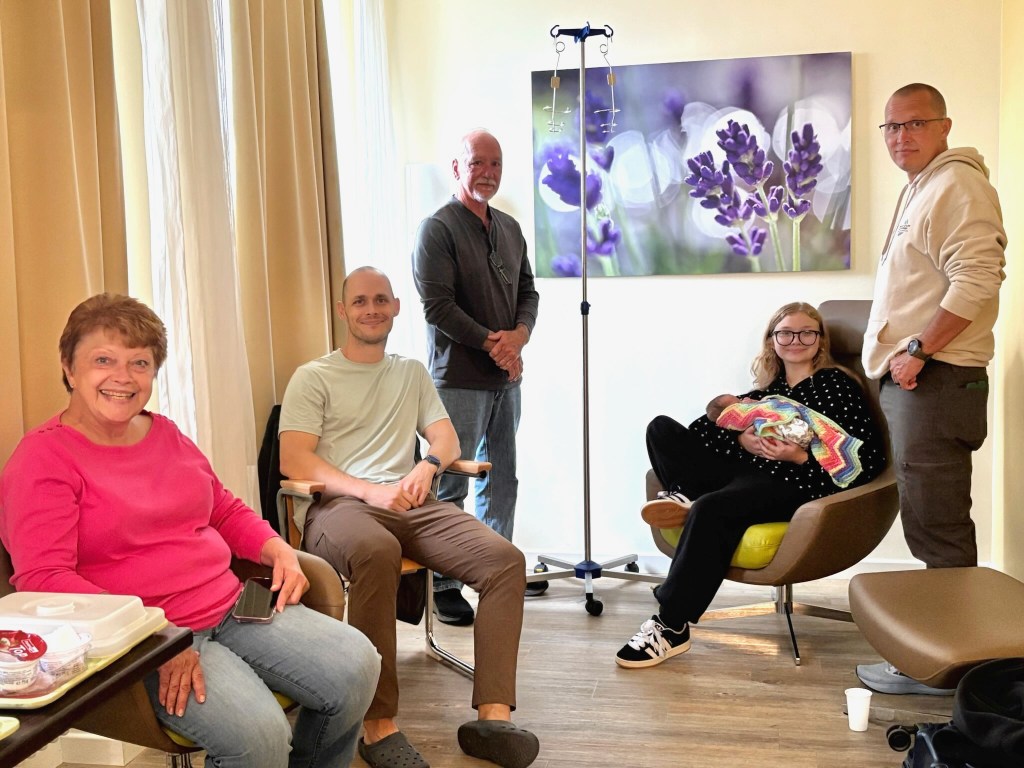
We also opted for the private, family room at our hospital, which was an additional cost but included a bed and three meals per day for Shane.
It’s also important to note that legally, in non-emergency situations, you must be told the cost of anything not covered by insurance before you receive the care. So, never were we blindsided by a bill; we were presented with the information (and subsequently signed an agreement form) before I underwent any of it.
Outside of these upgrades, our only costs were my prenatal vitamins and supplements. So how much did we pay ourselves during pregnancy and delivery? Lucky for you I’m a big ‘ole nerd and tracked our costs! 😜 Any cost listed was an opt-in test or supplement.
| Self-pay cost (€) | |
| Frauenartz visits | |
| Initial, 8-, 12-, 16-, 20-, 24-, 28-, 31-, 33-, 35-, and 38-weeks (11 visits) | 0 |
| 10-week emergency check | 0 |
| Hospital Checks | |
| 40+0, 40+2, 40+4, 40+6, 41+1, and 41+3 weeks (6 visits) | 0 |
| Supplements | |
| Prenatal vitamins (12 months) | 66 |
| Progesterone | 6 |
| Magnesium | 11 |
| Aspirin (for preeclampsia risk) | 20 |
| Glucose powder (expanded diabetes test) | 7 |
| Tests and Procedures | |
| Toxoplasmosis/CMV/thyroid screening | 77 |
| Toxoplasmosis repeat test | 26 |
| NIPT (trisomy 13, 18, 21) testing | 0 |
| Additional ultrasounds (all appointments) | 110 |
| First trimester 3D ultrasound | 250 |
| First trimester preeclampsia risk test | 33 |
| Second trimester 3D ultrasound | 0 |
| Group B Streptococcus test | 33 |
| Courses | |
| Breastfeeding | 0 |
| Birth preparation for couples* | 27 |
| Hospital Delivery** | |
| Induction medications | 0 |
| Epidural | 0 |
| C-section | 0 |
| Private family room (3 nights) | 804 |
| Other | |
| Prenatal accupuncture (4 visits) | 80 |
| Postpartum midwife home visits (5 visits) | 0 |
| Nolen health insurance*** | 0 |
| Total costs | 1551 |
* Insurance completely covers a childbirth preparation class for the mother, but only partially covers it for the partner; our insurance covered €100 for Shane.
** Other tests and medications were administered at the hospital, but I can’t tell you what they were. 😆 These are the obvious ones.
*** You read that right. Nolen is covered on Shane’s health insurance for free since he’s a dependent.
Parental Leave: Mutterschutz & Elternzeit
In Germany, there are two types of parental leave: Mutterschutz (mother protection, or maternity leave) and Elternzeit (parent time, or parental leave).
Mutterschutz is (obviously) for the mother. It begins 6 weeks before the due date and last until 8 weeks after the birth (or 12 weeks, in cases of twins or premature babies). This period is mandatory, so even if you didn’t want to take that much time before and after, you’re legally not allowed to work. I’m not sure why you would want to opt out though, because the employer pays the mother’s full salary during this period.
Elterzeit paired with Elterngeld (parental leave money), compliments the Mutterschutz. Elterngeld, paid by the government, gives you 65% of your salary per month (capped at €1800/month). Elternzeit and Elterngeld can be split between both parents for up to two years. However, the system is set up so that the family financially benefits the most by one caregiver taking a year of leave, while the other takes two months. (I will admit, it’s a bit complicated.)
So, what does that look like for us?
It means that I haven’t worked since mid-July, when I went on my mandatory (fully paid) maternity leave. When this ended at the beginning of November, I switched to Elternzeit + Elterngeld (65% of my salary), which will continue until October 2026. Shane took two months of parental leave (+ parental money). Practically speaking, this means that I’m able to be home with Nolen for over a year with some income and have a job to go back to when it’s over. For Shane, this meant that he could be home for Nolen’s first month and travel to the US for six weeks to visit family without using all his vacation time or going two months without any income.
Although all countries in the EU provide some sort of parental leave, not all have a system that allows caregivers so much time at home. I’m essentially being paid to take care of Nolen during his first year. Now that I really understand how fast babies change, I feel incredibly fortunate that we landed in Germany during this period of our lives.

Kindergeld
Now, this is the one that really surprised me. All parents in Germany receive €259 (as of 2026) per month per child as a child benefit (Kindergeld), paid by the federal government and aimed to offset the cost of raising a child. And, this payment continues until they turn 18. Furthermore, families who meet a certain low income threshold qualify for a supplementary child benefit payment (currently €297).
So, technically, Nolen is bringing in a salary! 🤪
Another question we get a lot is “Are you having another one?” For now, we’re enjoying (and still figuring out) life with one. 🤪
We are, however, hoping to add some countries to Nolen’s list this year. So stay tuned!
Tschüss,

 The Shwits