

Ah, Oktoberfest! Or, die Wiesn, as the locals say.
Oktoberfest was canceled in 2020 when we first moved to Munich. Then, we left for Ecuador literally days before it started in 2021. So, finally, after years of anticipation, we made it to Oktoberfest!
For me, it was one of those events that lived up to the hype, so much so that we went four times. 🤷♀️ (A perk of living in the same city.) I’m not going to go into the history of Oktoberfest, the largest Volksfest (folk festival; that’s right, it’s NOT simply a beer festival) in Germany. I’d suggest this article if you’re curious about the full history. Otherwise, you only need to know three things.
- Oktoberfest starts in September (the weather is better).
- When I refer to a beer tent, what I really mean is a structure. They take weeks to assemble; if you didn’t know better, you would think they were permanent fixtures. The 17 “big” tents hold ~3–7,000 people inside, and the 21 “small” tents hold ~500–1,000 people.
- Trachten, the traditional Bavarian dress (Dirndl for women and Lederhosen for men), is optional, but it’s way more fun with it!

I think there is a big misconception from outsiders, particularly Americans, that Oktoberfest is all about das Bier. And yes, don’t get me wrong, there’s a lot of beer, but that’s not all there is. This might come as a surprise, but it’s a family-friendly event. So, as I see it, there are several ways to experience the Wiesn.
1. Sober
Yes! It’s possible, we did it!
Like I said, Oktoberfest doesn’t have to be all about beer. I’d compare the carnival atmosphere to that at a state fair in the US, but maybe better. (However, it’s been a long time since I went to a state fair, so take my opinion for what it’s worth.)
As you can see, the grounds have two distinct areas. The beer tents are to the right, and the carnival to the left. Food stands and smaller Biergartens are mixed in on both sides. But, you could easily avoid the “heavy drinking” area (so to speak) if you wanted.
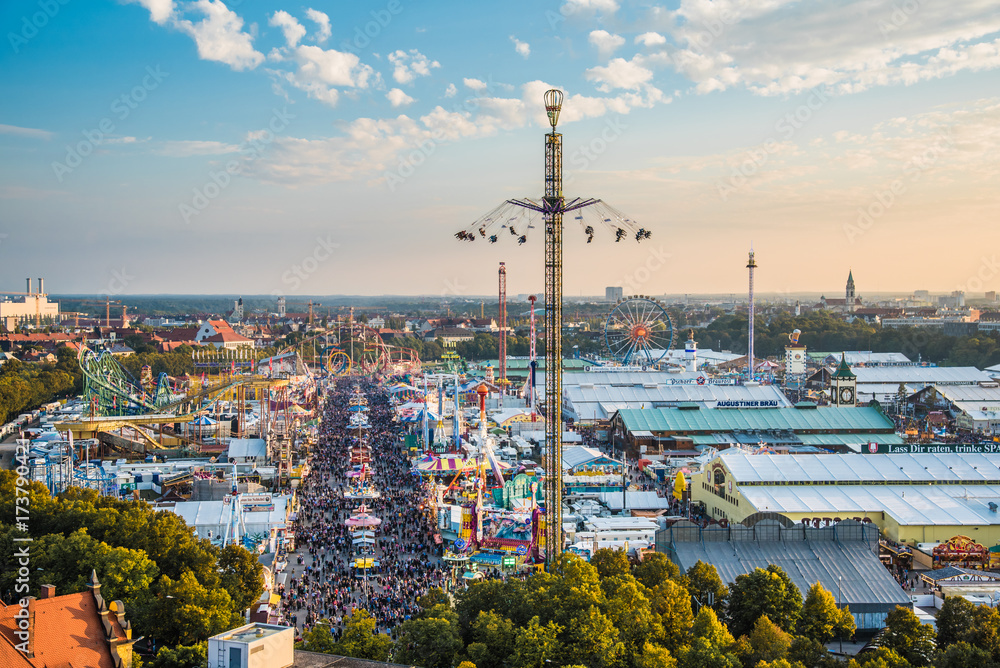
We spent our no-drinking night souvenir shopping, which I would recommend. You won’t want to keep up with souvenirs inside the tents. It’s too crowded and too easy to lose things.
I also highly recommend finding the Toboggan; it’s a wooden slide, but to get to the top, you have to ride a fast-moving conveyor belt part of the way up. It’s famously known for people-watching, as in watching people successively fall as they try to make it up the conveyor belt. 😆
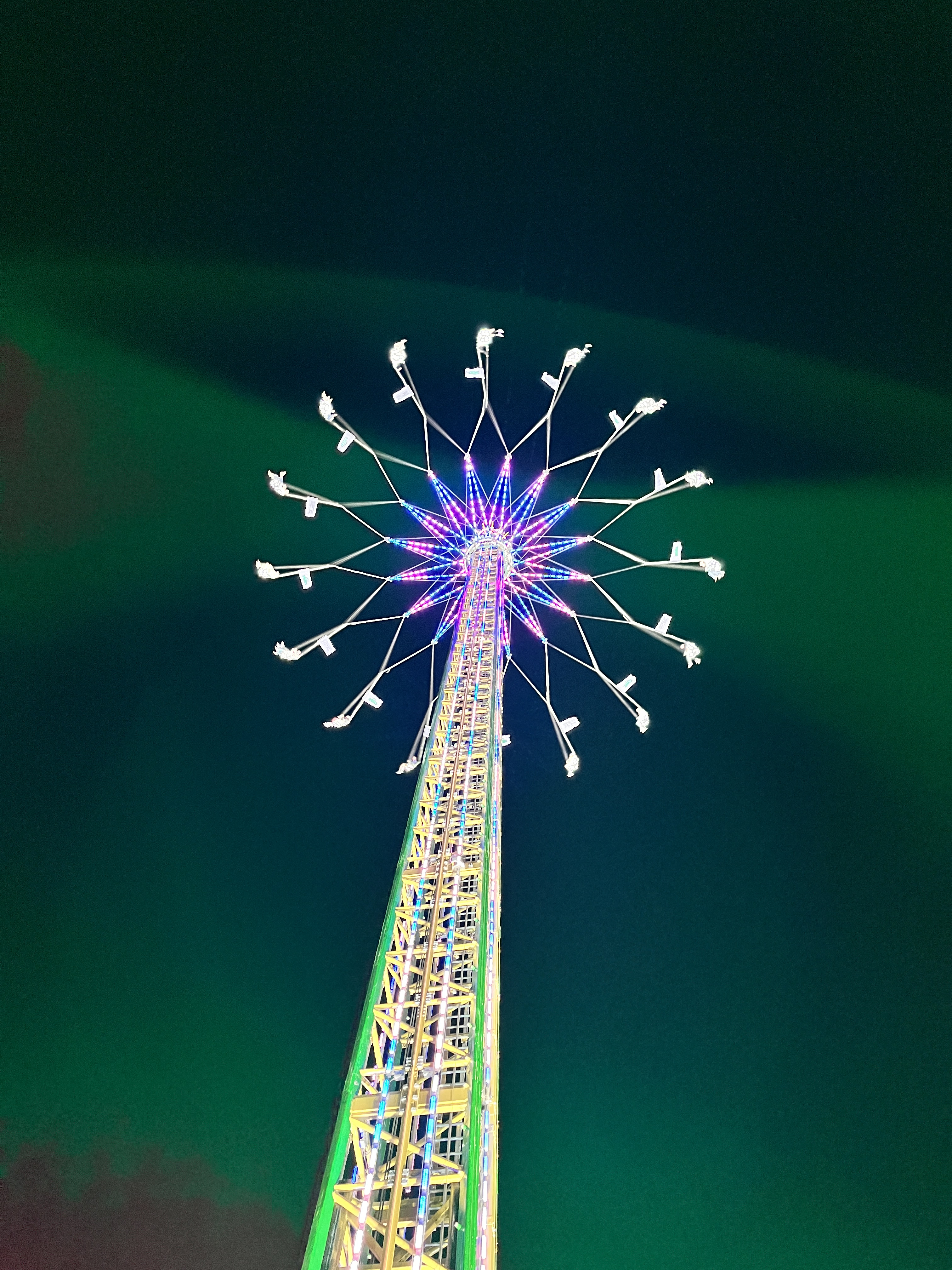
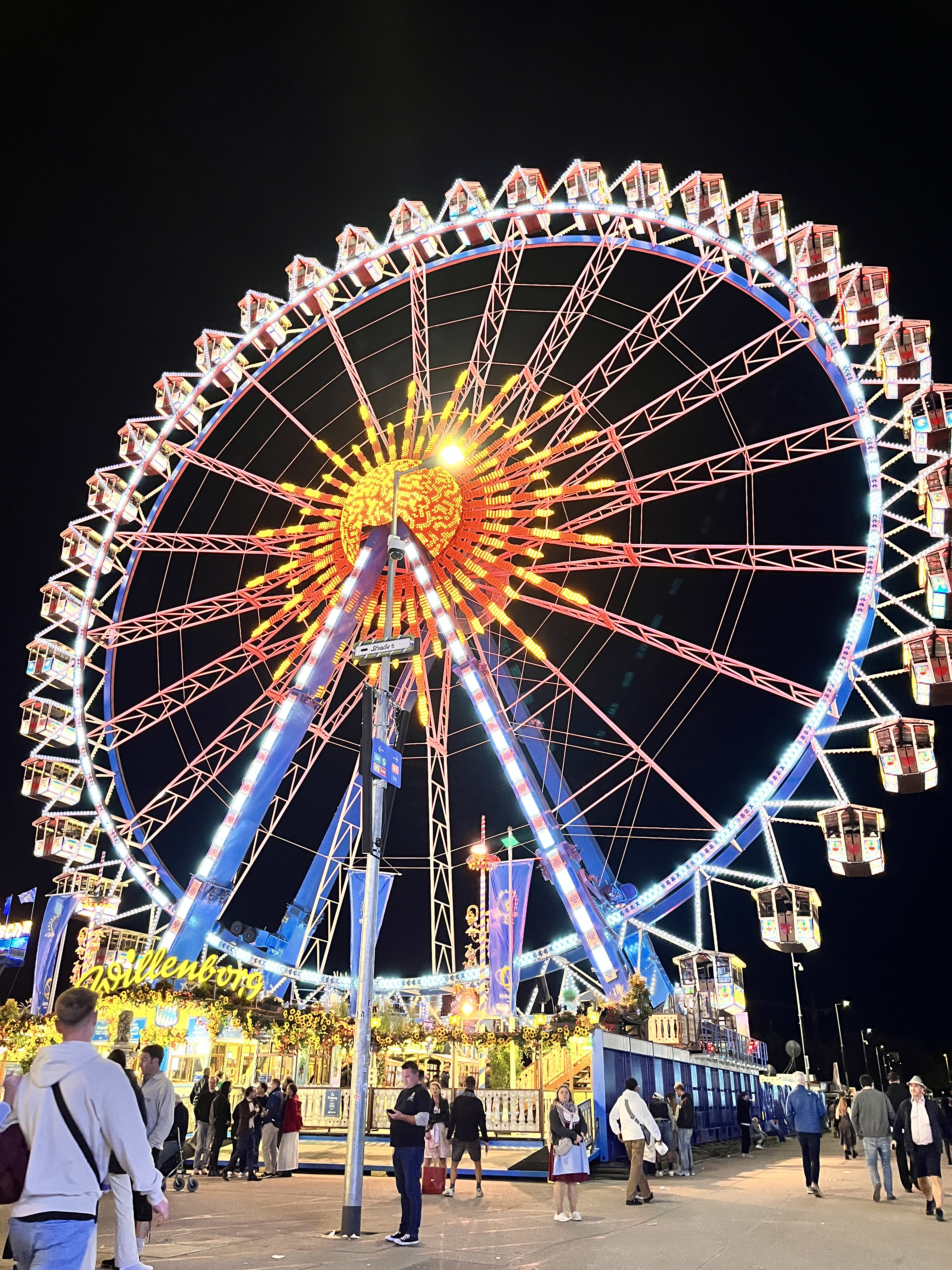
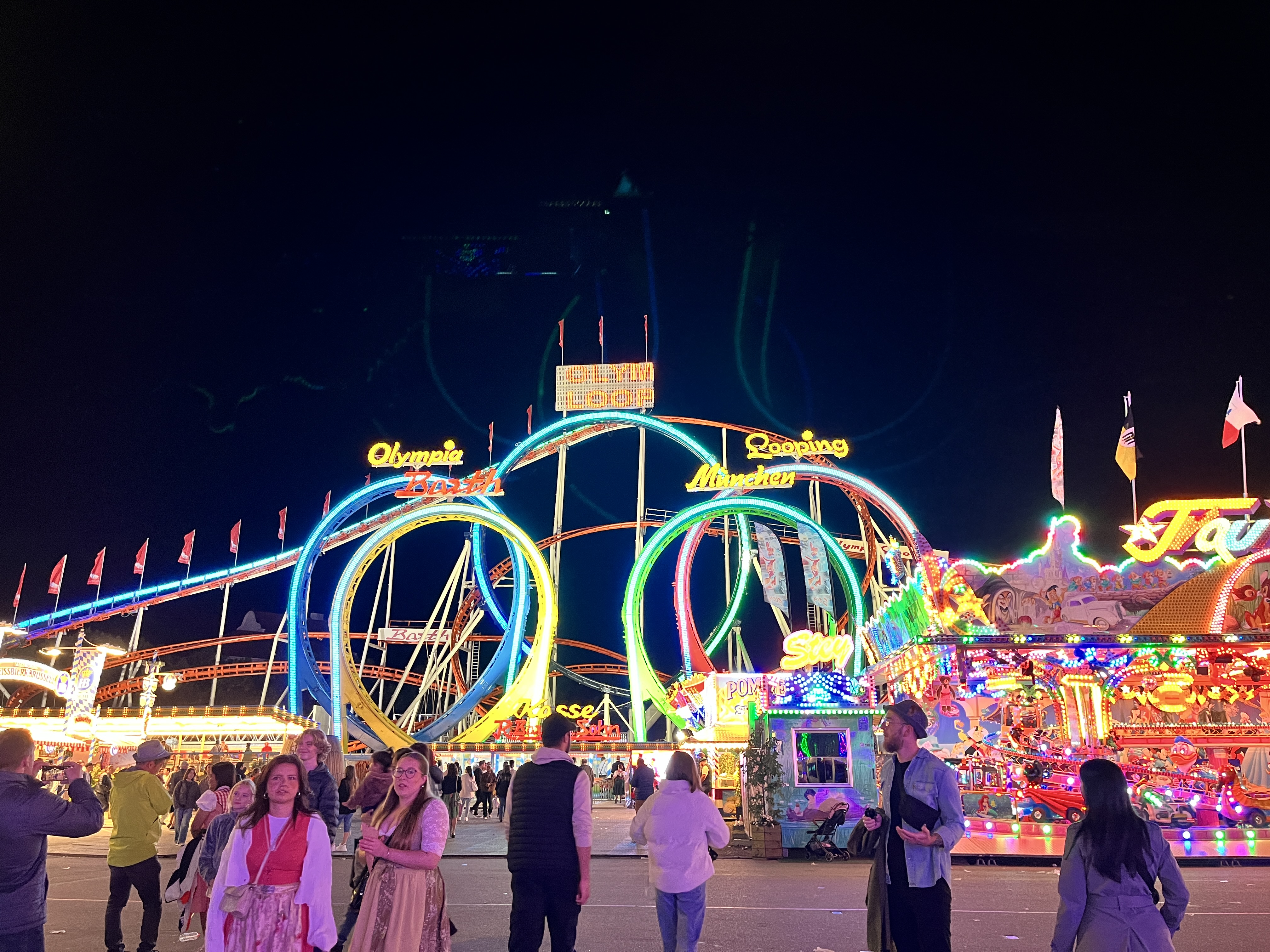
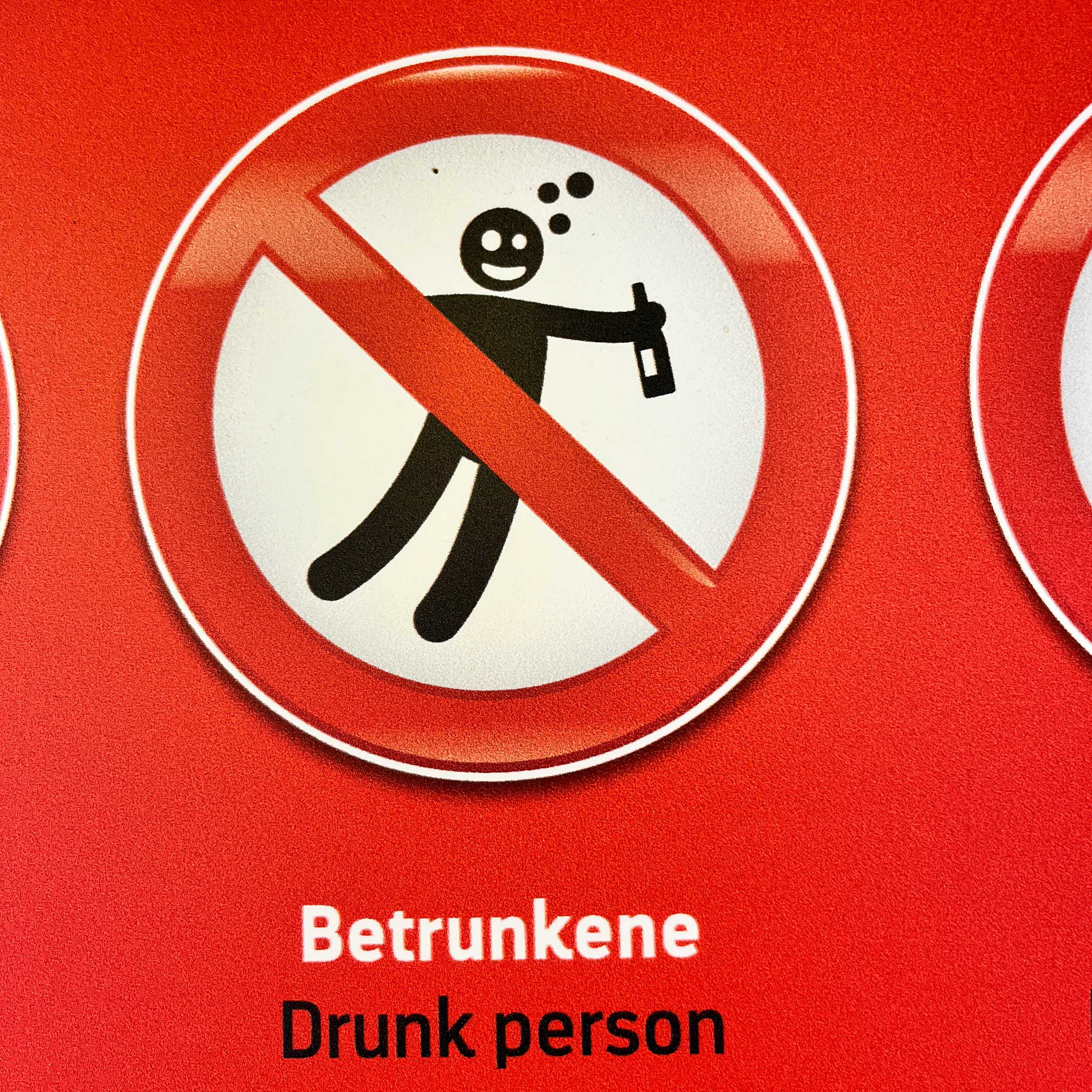
If you need more than souvenir shopping and people-watching, then you should check out the rides, games, and food. There are definitely some rides that I would recommend sans alcohol, like those high-up spinning swings and the 5-loop rollercoaster. In fact, they have a sign at the roller coaster that says no drunk people. So, you’ve been warned! 😆
2. Carnival + Biergarten and tent hopping
If you’re willing to leave your big tent entry to fate, then a combo day is the way to go. As I said before, we went four times this year, but our first real experience was meandering through the carnival and hopping in and out of tents and beer gardens as we pleased. I wouldn’t recommend this on the weekend since the crowds are generally bigger, but this is a fun option if you can get there on a weekday!

We had lunch at the Münchner Stubn, a beer in the Paulaner Biergarten, coffee and cake at Rischart’s Café Kaiserschmarrn, and a Weißbier at Hochreiters Weißbier Karussellbar, a slowing spinning carousel bar! (Some in our group *cough, Brian* did not like the spinning bar, but I enjoyed it!)
Tip: Eat lunch at the Wiesn instead of dinner.
All tents have lunch specials for ~€12-15 euros, which is sometimes less expensive than a Maß (the liter beer, and the only size you can purchase). The Münchner Stubn goes one step further and does 2 for 1 maß with the purchase of food during the lunch hours (11:00 to 17:00).


In between, we bounced between rides and carnival games and discovered Feldl’s Teufelsrad, or the Devil’s Wheel. It’s €5 to get in, but it’s the best €5 you’ll spend at the Wiesn. Essentially, it’s a big spinning wheel where everyone called (for example, all women in green Dirndl) frantically runs to the center of the wheel for a chance to play. The wheel starts spinning slowly but gets progressively faster, and the objective is to stay on the wheel the longest. What do you win? The pride of winning, and people are DESPERATE to win. It’s equally if not more entertaining than the Toboggan.
If the fates are with you, you can get into some of the tents, big or small. They are always free to enter; they only close if they’ve reached max capacity. The fates were with us that Tuesday night because we managed to sneak in the back door of the Pschorr tent for the final ~30 minutes of music and dancing (and Brian’s introduction to Robbie Williams).


3. Big tent without a reservation
If you’re going to attempt this option, you need to be ready to commit since the big tents are the main attraction for many people. If you can go more than once, I recommend not committing to a big tent the first time. Go out and enjoy the atmosphere and the carnival rides! Plus, if they are still open, you can pop in and out and see which looks most fun to you.
Each big tent has its own theme inside, and all are beautifully decorated. Generally, in all tents, a brass band plays more traditional music during the day, but at some point in the afternoon, they are replaced by a cover band that plays international pop songs. At this point, people start standing on the benches, singing, and dancing! It’s also by this point that you should commit to staying in that tent (except for going to the bathroom) until you’re ready to give up your spot for good.


Food is always available inside the tents. You can order full meals or catch someone selling pretzels as they walk by. Take advantage of the food; staying in the big tents until they close at ~10:30 is a marathon, not a sprint. 🤪
Tip: Bring cash for the big tents.
Many places accept cards (even some of the smaller tents), but the big tents can be so chaotic, especially as the night goes on. So, expect cash only.


If you want to go this route, then I recommend going on a weekday and committing to a tent by ~2 pm. Often, the locals will come after work, so the crowds pick up on the weekdays after ~4 pm. To find a table, just walk through the crowds until you see an open, or most likely partially open, table and just take a seat! If you’re a bigger group, be prepared to split up initially and merge later.
4. Big tent with a reservation
I’ll reiterate that you do not need a reservation to enter the big tents. We didn’t have one. However, after experiencing it this year, I see the value in a reservation if you choose.
Reservations can be for lunch (~11:00–16:00) or dinner (~17:00–close), depending on the tent. Some do only lunch, some do only dinner, and some do both. All reservations must be made (online) through each individual tent. So, the hardest part of making a reservation is deciding where to go!
If you’re in any tent during that lunch-to-dinner transition, you’ll notice that they clear out everyone from the reserved sections, and the line outside to get in gets really long. No worries, though, because everyone with a reservation gets an armband and is taken to their table (with their name on it) once the reservation period starts.
Essentially, the reservation lets you avoid this “find a table and never leave” game, since a table will be waiting for you and the armband allows for more freedom to go in and out. You can still get “locked out” if you leave and they are over capacity when you get back, but those with a reservation have a separate, shorter line from the general admission, so your odds of getting back in quickly are decent.
If you want to experience the big tents on any of the weekends, I highly recommend a reservation. Alternatively, be prepared to show up before it opens and run (not joking).
5. The Oide Wiesn
Last but certainly not least, the Oide Wiesn, or the old Oktoberfest.

This is a separate area with a €4 entry fee, but I think it’s worth checking out at least once. The Oide Wiesn is meant to give patrons a glimpse into what Oktoberfest used to feel like. They have classic rides (all for €1.50 versus €6-10 in the main area), classic stalls (like a puppet theater), and, of course, beer tents. Here, the tents use the more traditional Steins (the stone liter cup instead of the glass Maß) and play traditional music all day instead of switching to pop music. If you’re lucky, you’ll catch some traditional dance groups, too!


The Oide Wiesn also has a museum tent with an exhibit on the history of Oktoberfest and all the old Oktoberfest posters (as well as a live band and beer garden). Regretfully, we didn’t go to the museum tent this year, but I guess you should always leave something for next time!
Tip: Check out the Oide Wiesn on busy days.
We went for the final time on the last Saturday of Oktoberfest. Despite the rain, or perhaps because of the rain, all the tents were completely full when we arrived at ~1:30 pm. However, the tents in the Oide Wiesn still had space, and we even managed to snag a table near the front in front of the band!
As the Germans say, die Amerikaner leiben das Oktoberfest! And it’s, true; this American loved Oktoberfest and is excited to pull out the Dirndl again next year!

Tchüss,

 The Shwits
2 Comments