

Or, in other words, the “Shit I’d Wished I’d Known” post.
Don’t get me wrong, our trip to the Galapagos was fantastic! However, there are definitely some things that, had I known beforehand, we might have done differently. Also, “the Galapagos is so expensive!” is a common phrase but slightly misleading.
So, if you’re thinking of DIY-ing a trip to the Galapagos, I hope this helps! If not, feel free to stop reading… or not, whatever you prefer.
The Budget Breakdown
This is a full disclosure post because, when I started planning this trip, I arbitrarily set a $3,500 budget, but I had no idea if that was sufficient. Turns out, it was (with some caveats, more on that later). As you can see, we spent ~$3,100 for two people for 10 days, including flights and other transportation, including our rides to and from Tena.
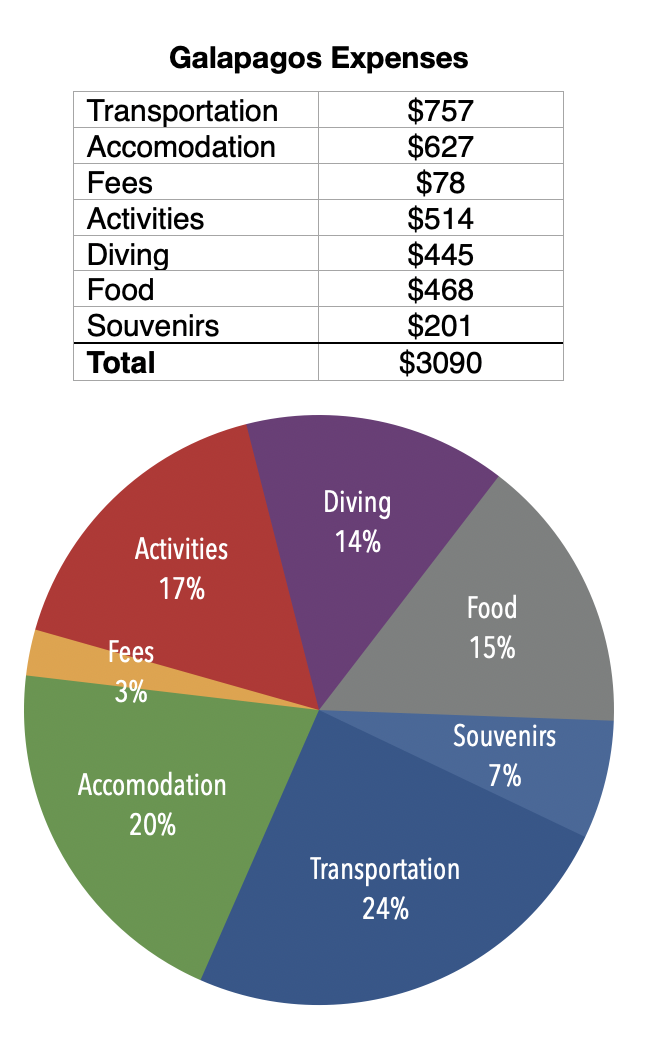
Now, on to the specifics!
Transportation
Flights
Flights are absolutely the most expensive part of the trip, making the transportation category the most variable. We spent ~$450 total on the round-trip domestic flights from Quito to Baltra Island (the main airport; there is also a smaller airport on San Cristobal Island). However, this is also a bit misleading because we were able to book cheaper rates since we are Ecuadorian residents. On the other hand, we opted for the direct flight (versus the indirect flight through Guayaquil), which was a bit more expensive. Regardless, you cannot book flights to the Galapagos without a stop in Quito.

Baltra Island Airport transportation
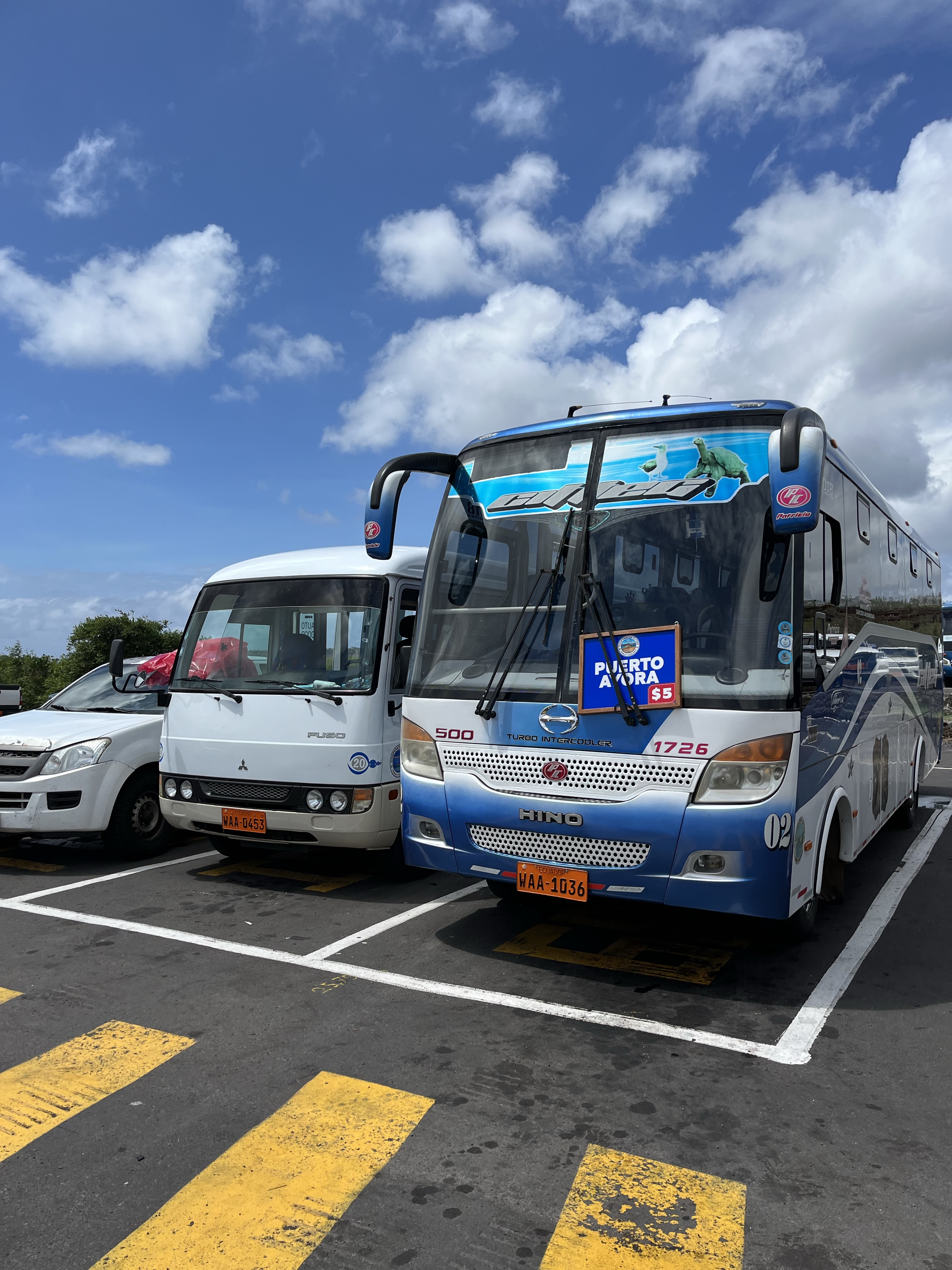
Relatedly, the journey from the airport to Santa Cruz isn’t hard, but it isn’t simple. After you arrive and go through immigration (where you pay the national park fee), you’ll have to pay $5 per person to take the bus to the port, then pay $1 per person to take a water taxi across the channel to get to Santa Cruz Island. And yes, it’s required. There is no other option.

On the other side, you’ll have options: either a $5 per person bus ride or a $25 taxi ride. Both take approximately the same amount of time, the difference being the taxi is a port-to-door service. We opted for the $5 bus (a more economical choice for only two people), but if you’re a larger group, then the taxi is just as cheap.
Ferrys
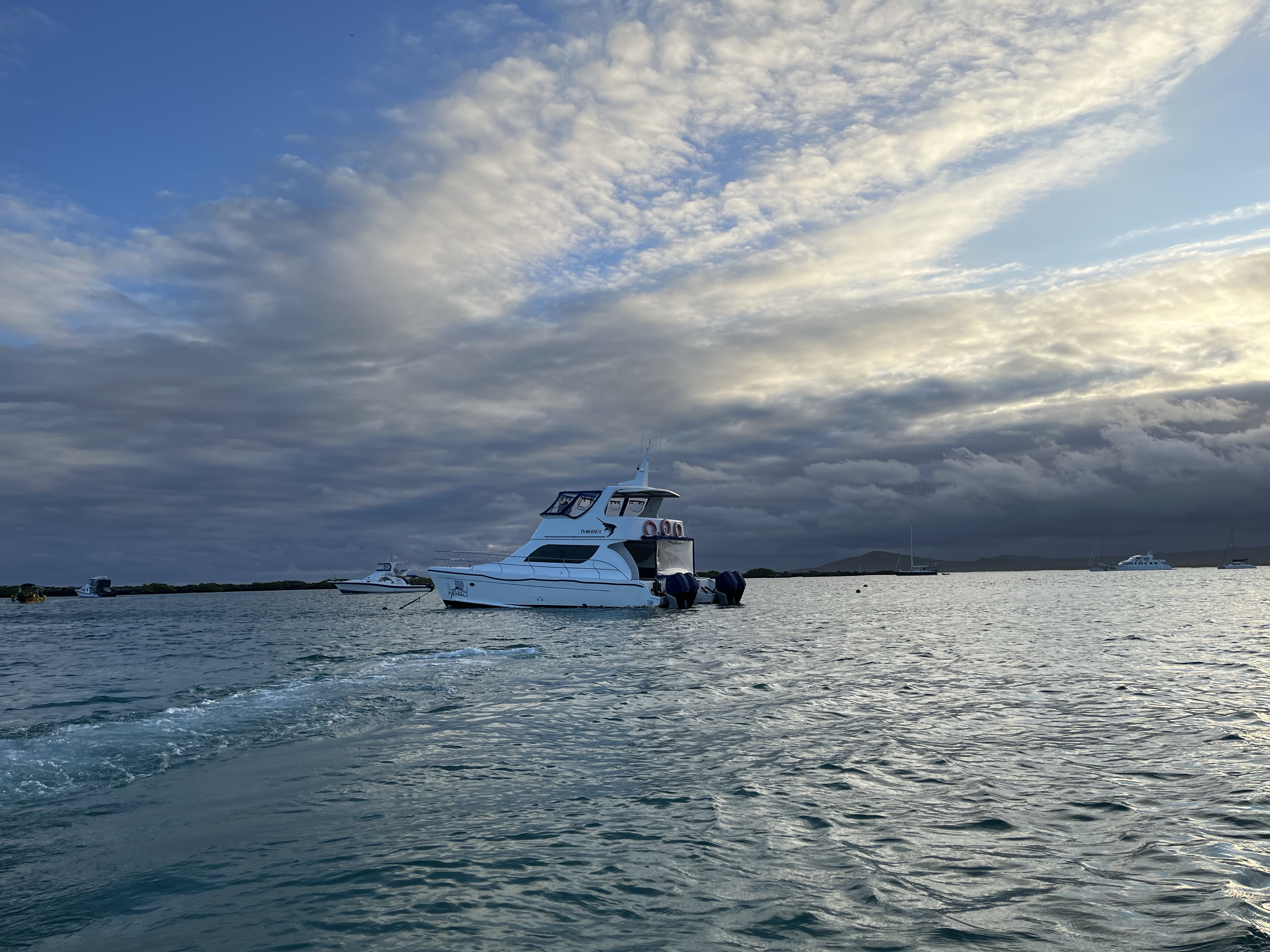
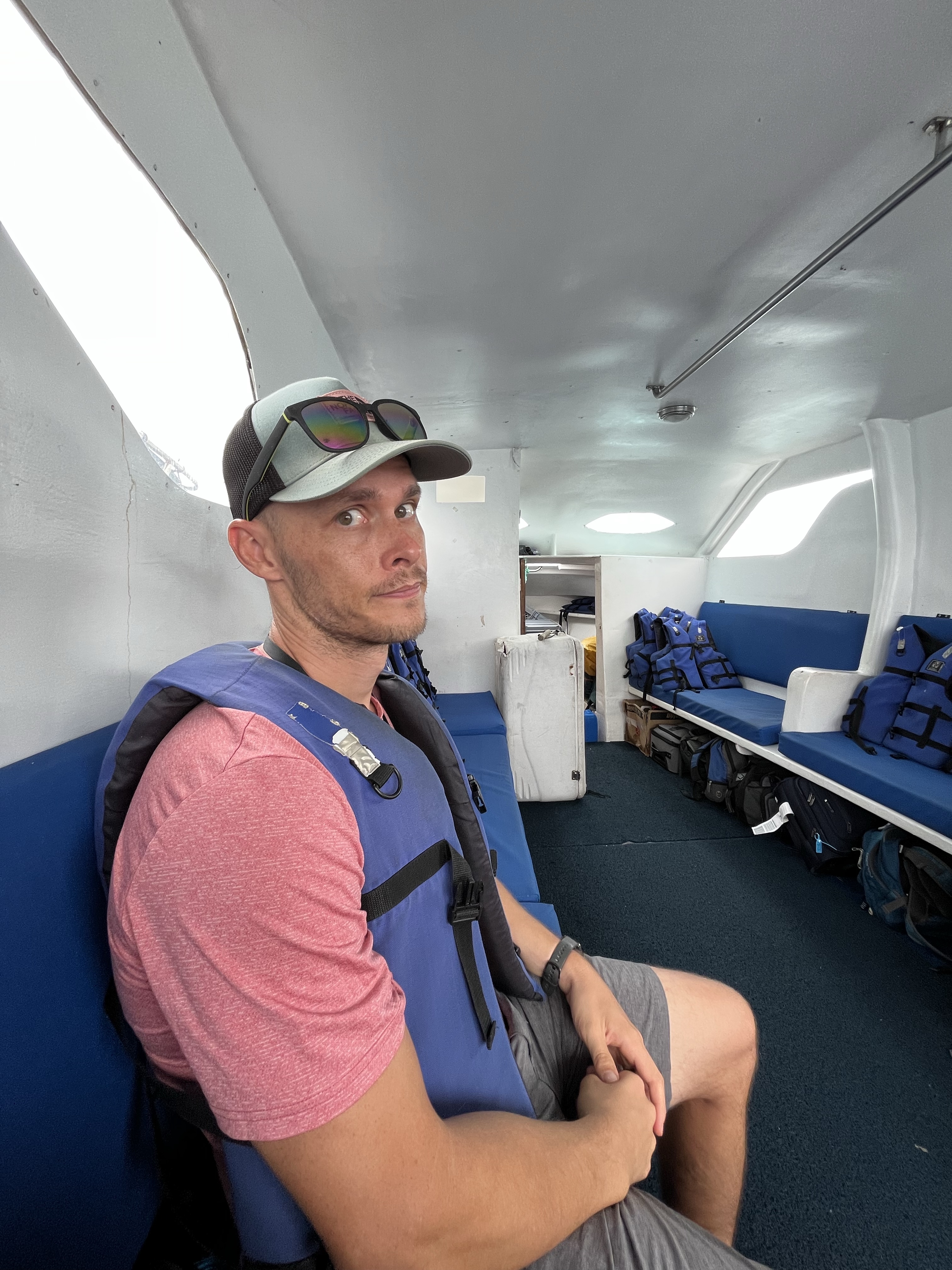
To get between islands, you have to take a ~2-hour “ferry” ride. And yes, I say “ferry” in quotes because these boats were essentially old fishing boats converted into people boats and not at all what we expected. Even the slightest chance of getting seasick? Take Dramamine. You won’t regret it because you’re plowing through the open ocean on a relatively small boat. Let’s just say, the ride isn’t comfortable, and I’m pretty sure people’s spines are littered throughout the water from the unexpected SLAMS! as the boat crashes through the waves. Anyway, I digress.
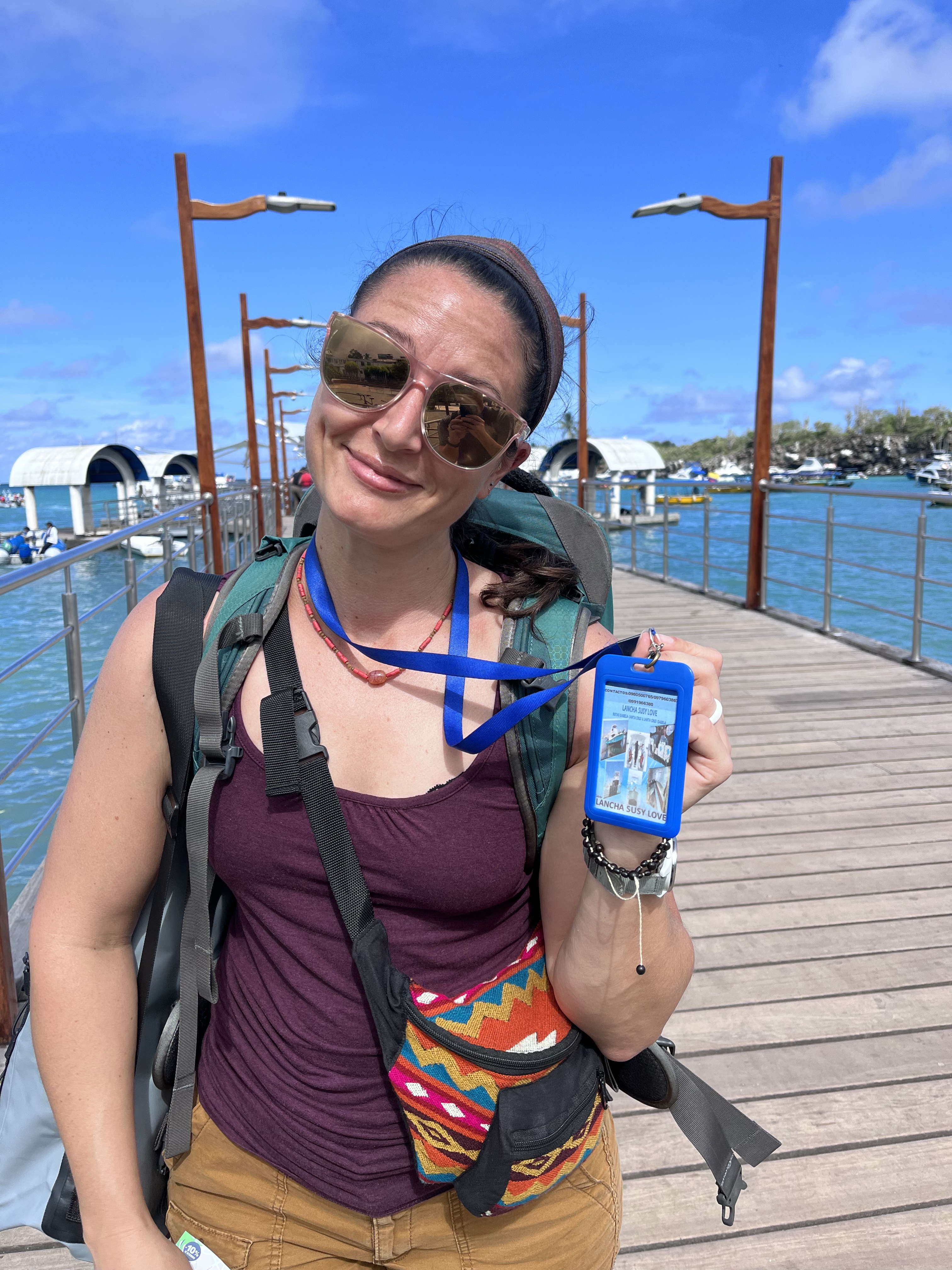
The price is $35 per person one way and seemed to be pretty standard. Of note, there are no “official” sellers. On Santa Cruz, you can buy tickets by the port–just look for the signs for ferry tickets. On Isablela, the agencies are in the main square. The ferries only leave twice a day (~07:00 and ~15:00), so be sure to buy your tickets ~24 hours in advance (much earlier isn’t really necessary). Finally, everything is cheaper in person (versus online) and paid in cash. However, if you’re in a bind, you can reserve tickets via WhatsApp through this company (which we had to do; more on that later).
Water taxis
Ah, the water taxis. They are $1 per person, regardless of where you need to go. Likely, you won’t need them often, but, for example, to get to the ferry, you have to take a $1 water taxi ride from the pier to the boat. So, keep your little change!

Accommodation
The second most expensive part of the trip was accommodation. In reality, it broke down to ~$65 per night, which is a bit pricey compared to the mainland but overall not bad. We also chose to stay in Airbnbs and hotels not directly in the center of town to put more resources towards activities, which was smart for us because the towns are small and walkable. Nothing is far away, and we didn’t spend much time in the rooms. However, where you choose to stay and what amenities you want are all personal preferences. We saw some very nice hotels, depending on what you’re looking for.
We stayed in this Airbnb for most of our time on Santa Cruz Island, and this apartment for our final night before heading to the airport. On Isabela Island, we stayed in these serviced apartments, which happen to be next to an Isabel microbrewery if that interests you. Notably, all had air-conditioning and provided drinking water, which was a nice touch.
Fees
Fees! Yes, you will get hit with mandatory fees, so it’s better to know about them before you arrive. Also, you can only pay them in cash, which is something to prepare for.
Transit control card
Starting at the Quito airport, you’ll need to pay $20 per person for the transit control card. You’ll also have to have your bag screened before checking it at the counter. So, one person can stand in line for the transit control cards while the other gets the bags screened. Both are located immediately inside the doors on the national departures side. Oh, and be sure to keep up with these cards! They will ask for them when you arrive and again when you leave the islands.
Galapagos National Park fee
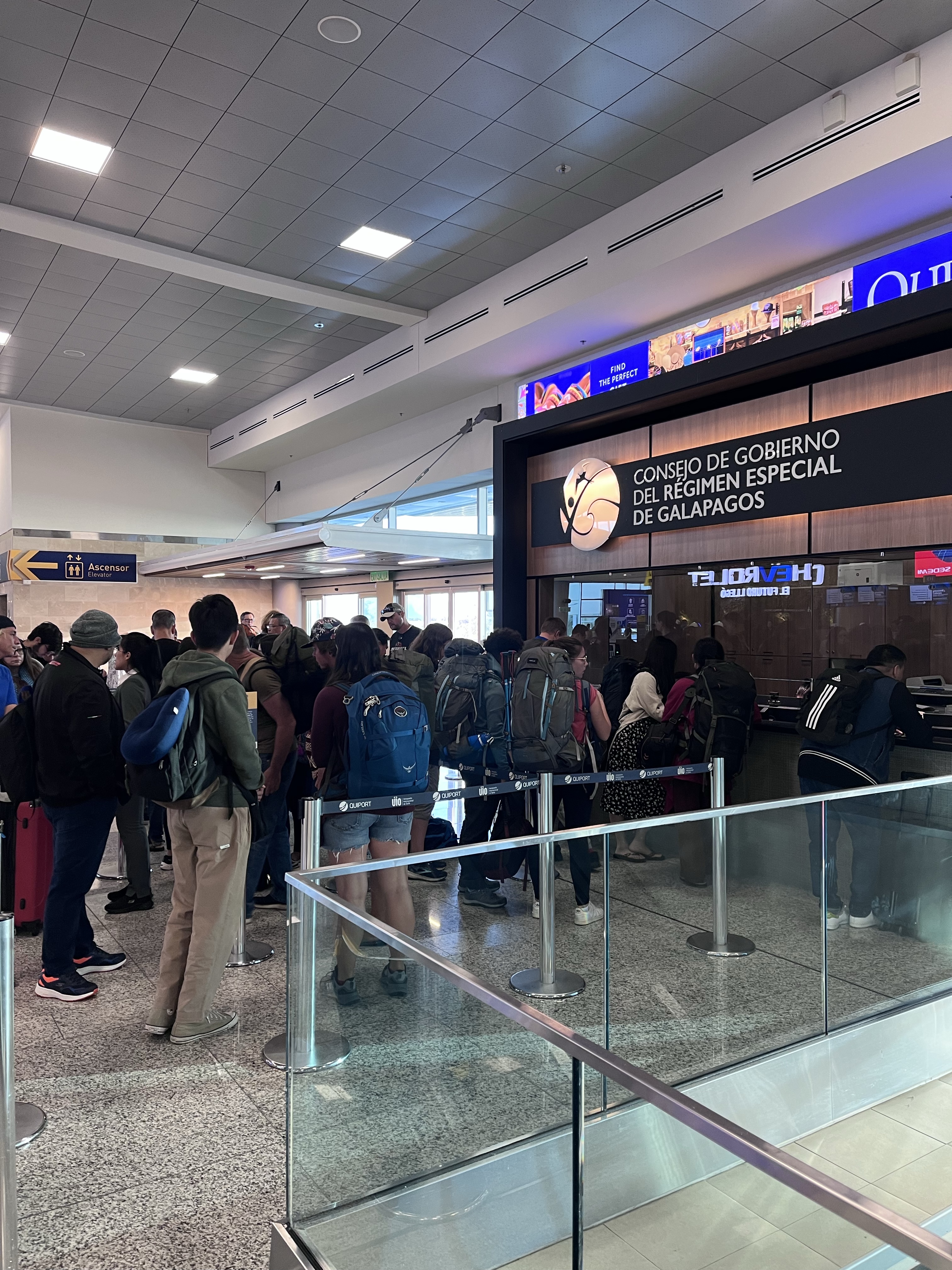
You’ll pay this fee at the airport in the Galapagos, where you will also present your transit card. It’s $100 per person for non-residents of Ecuador. We were able to pay the resident rate of only $6 per person, which definitely helped the budget! So, be prepared to pay this (in cash!) as soon as you arrive!
Individual island entrance fees
Yep, you’ll have to pay another entrance fee if you switch islands. Presumably, for their individual national park fee, but I couldn’t find any specific information about this. For foreigners, it’s $10 per person to enter Isabela and Santa Cruz (if you’re returning by ferry, not for a daily activity).
Santa Cruz pier fee
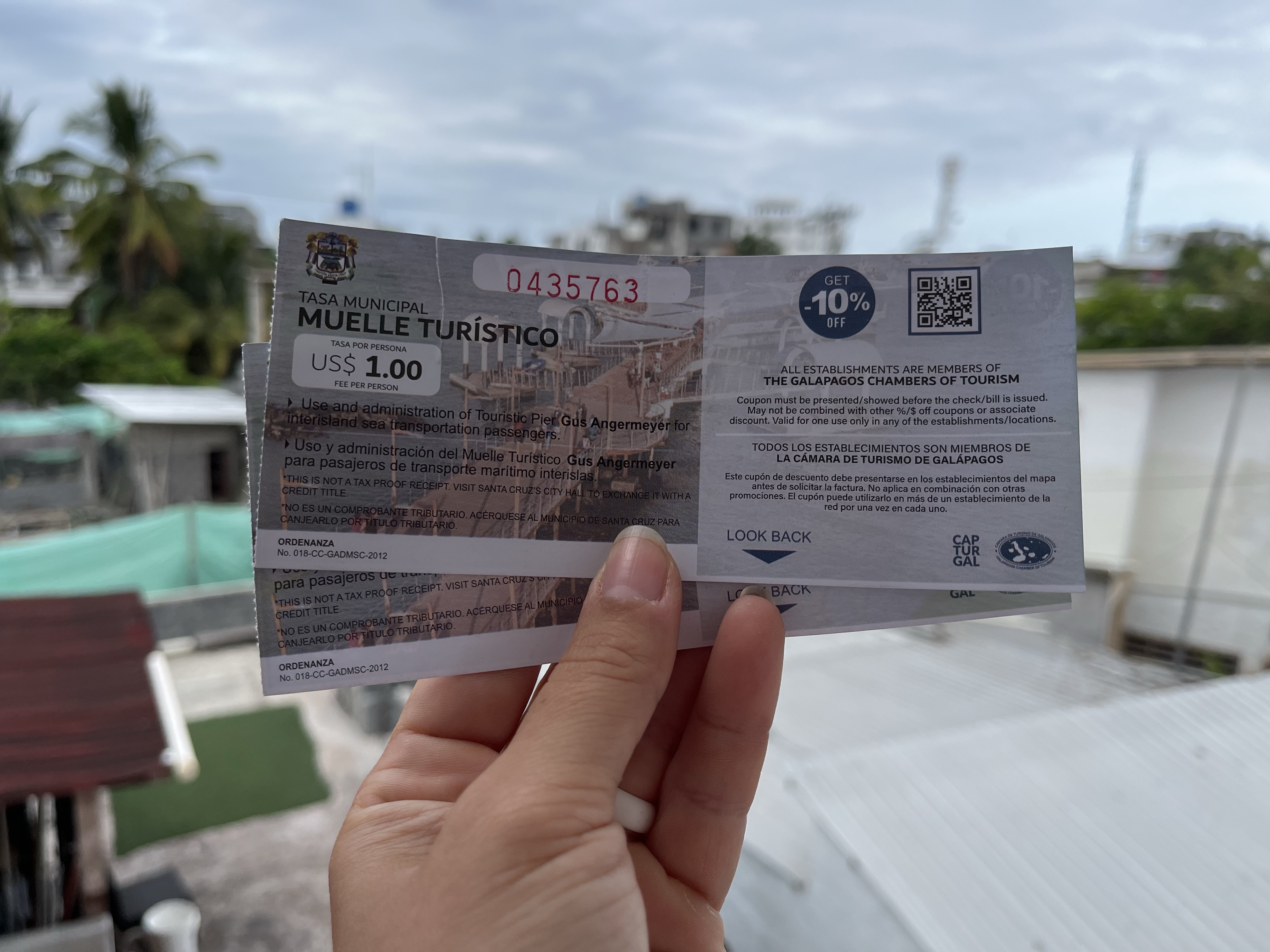
Honestly, you really get nickel-and-dimed (or, more accurately, dollar-ed?) on Santa Cruz. If you’re taking the ferry, in addition to the $1 water taxi per person, be prepared to pay another $1 per person to get on the pier.
Activities
Now for the fun part… activities!
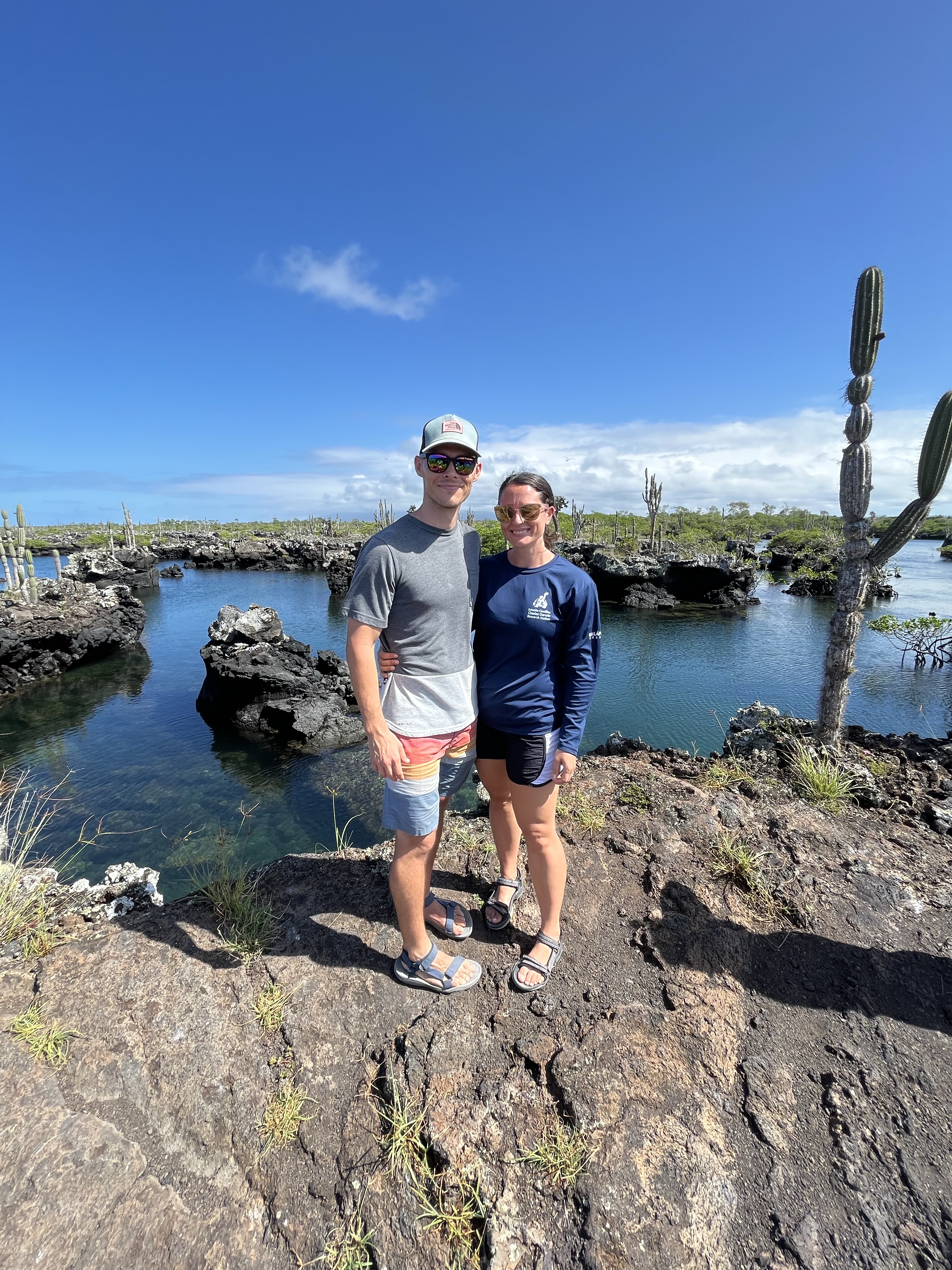
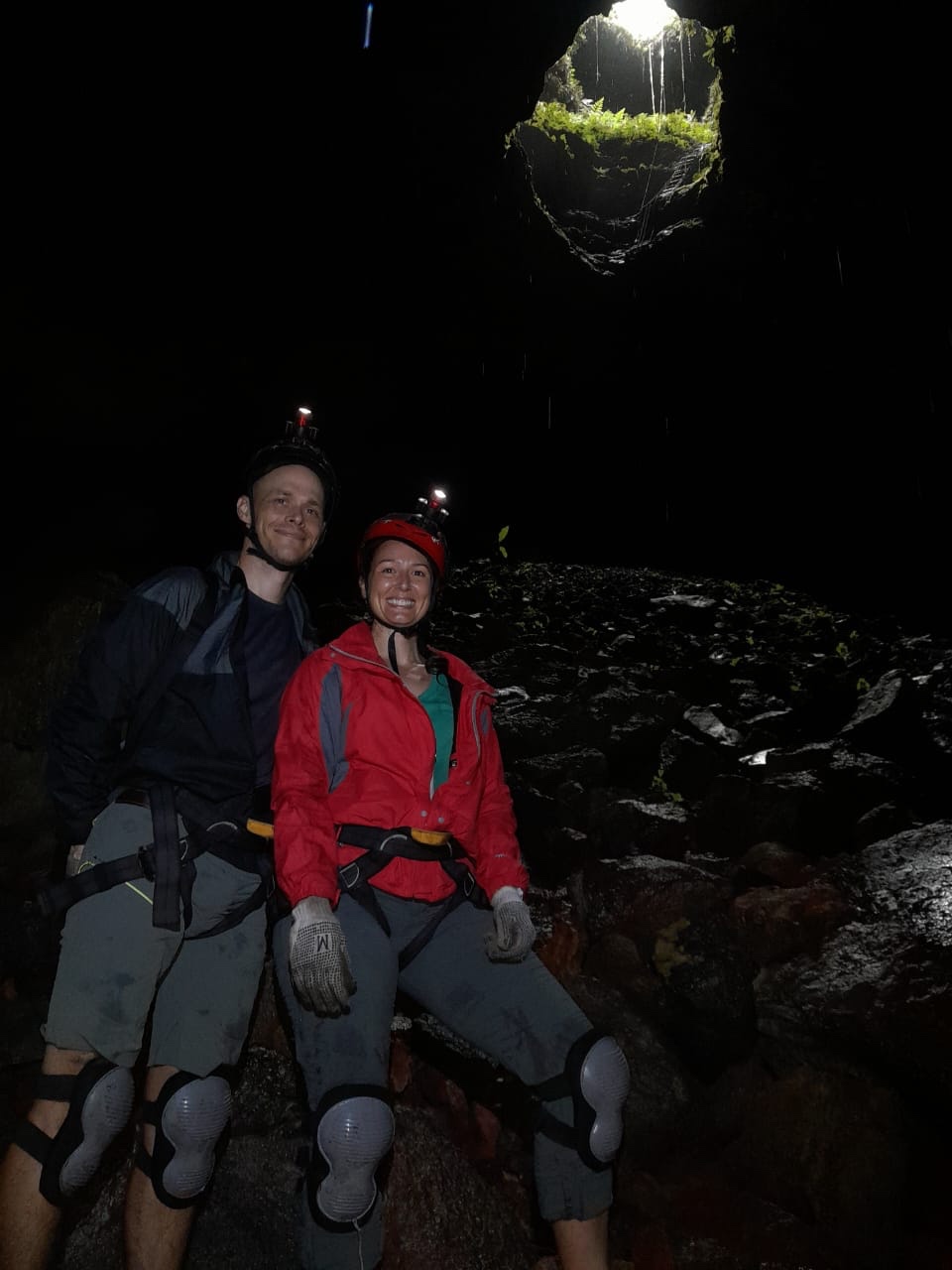

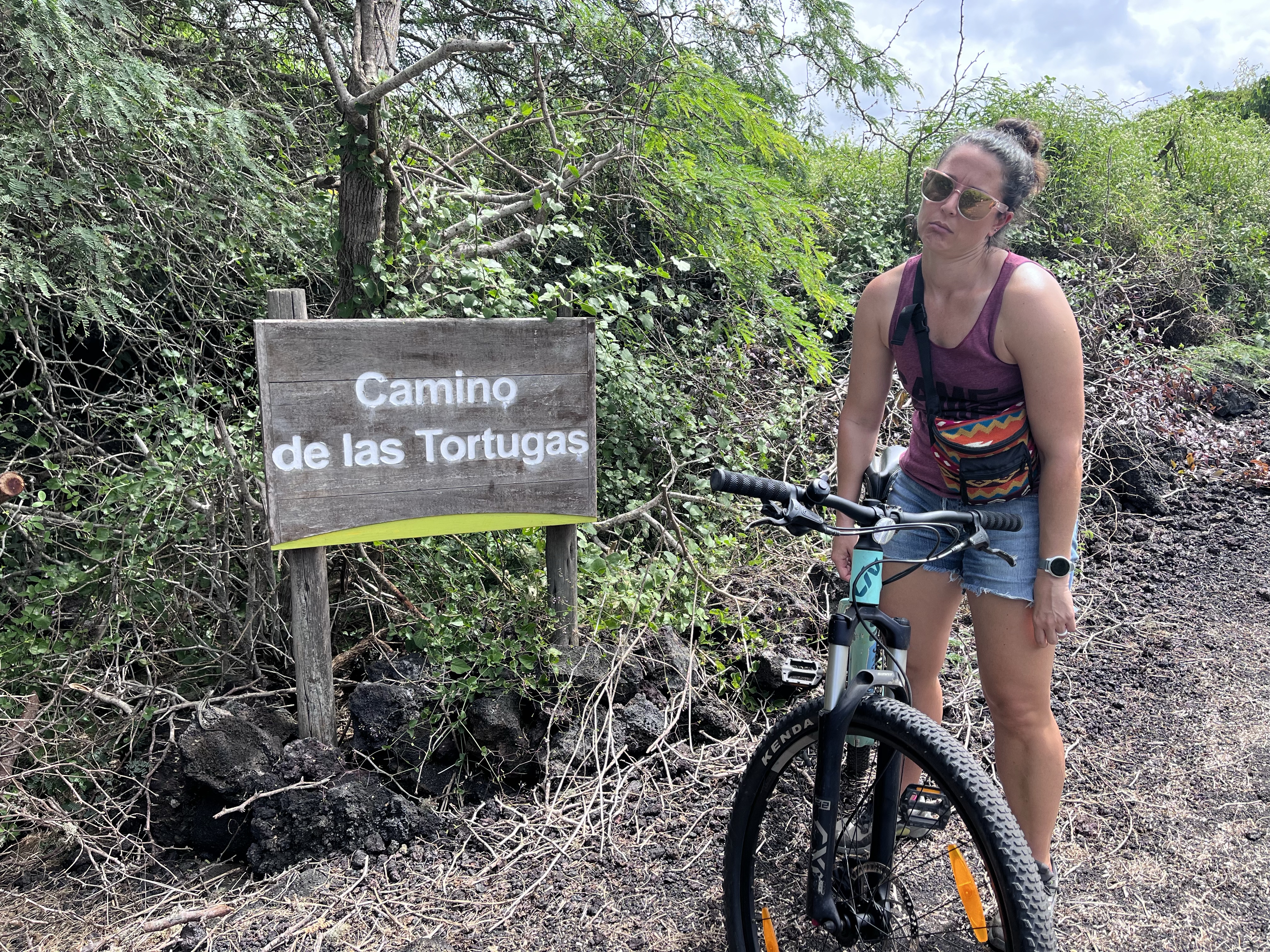
There are plenty of free or inexpensive activities on the islands. For example, on Santa Cruz Island, Tortuga Bay and a visit to the Darwin Research Station are free. If you want to take the breeding center tour at the research station or visit Las Grietas, then you’ll pay $10 per person for the guided tour, paid for at the respective locations. On Isabela Island, the beach is always free, as is snorkeling at Concha de Perla. We also rented bikes for $20 per person for the day to visit The Wall of Tears and the El Radar viewpoint (both free to visit).
Even though you will see tours offered for just about everything, you absolutely do not need to book a tour with a company for everything.
Activities get expensive when tours with equipment and boats are involved. However, everything is less expensive when booked in person and paid with cash! For instance, online, the Los Túneles snorkeling tour was $140 per person. However, we booked the tour in person the day before and paid $110 per person in cash. So, the tours still aren’t cheap, but a $30 difference per person adds up. The tour prices are generally the same between companies for the same tour; they primarily increase or decrease in price depending on how far you need to travel. You can expect half-day tours in the $110-120 range and full-day tours in the $180-200 range.
Also, don’t let the sticker shock stop you! *cough, looks at myself* Yes, it’s a lot off the top. But, it’s a lot of effort to get to the Galapagos, and when are you ever coming back? So, take at least one tour!
Tortoise Tip
Seeing the giant tortoises is an absolute must-do on the Galapagos, and visiting a reserve, like Rancho Primicias on Santa Cruz, is a great way to see them out living their best tortoise lives. However, it was a $50 cab ride (round trip, the driver waits for you), followed by a $10 per person entrance fee–not the cheapest adventure. However, Isabela Island also has a breeding center ($10 per person), only a short detour from the Wall of Tears route. Moreover, there’s a chance to see tortoises in the wild on the route to the wall. So, if you’re planning to rent a bike, this could be a more economical option!
Diving
Yes, I realize that diving is also an activity. However, not everyone is a diver, and at ~$220 per person, this was by far the most expensive activity of our trip. Worth it? Absolutely. I recommend only diving from Santa Cruz, which has PADI certified dive centers. Again, you can walk in and book a day (or two) beforehand for cheaper rates than booking online.

Food
Compared to the mainland, food is more expensive, but when you consider that EVERYTHING must be brought to the island by boat, it makes sense.
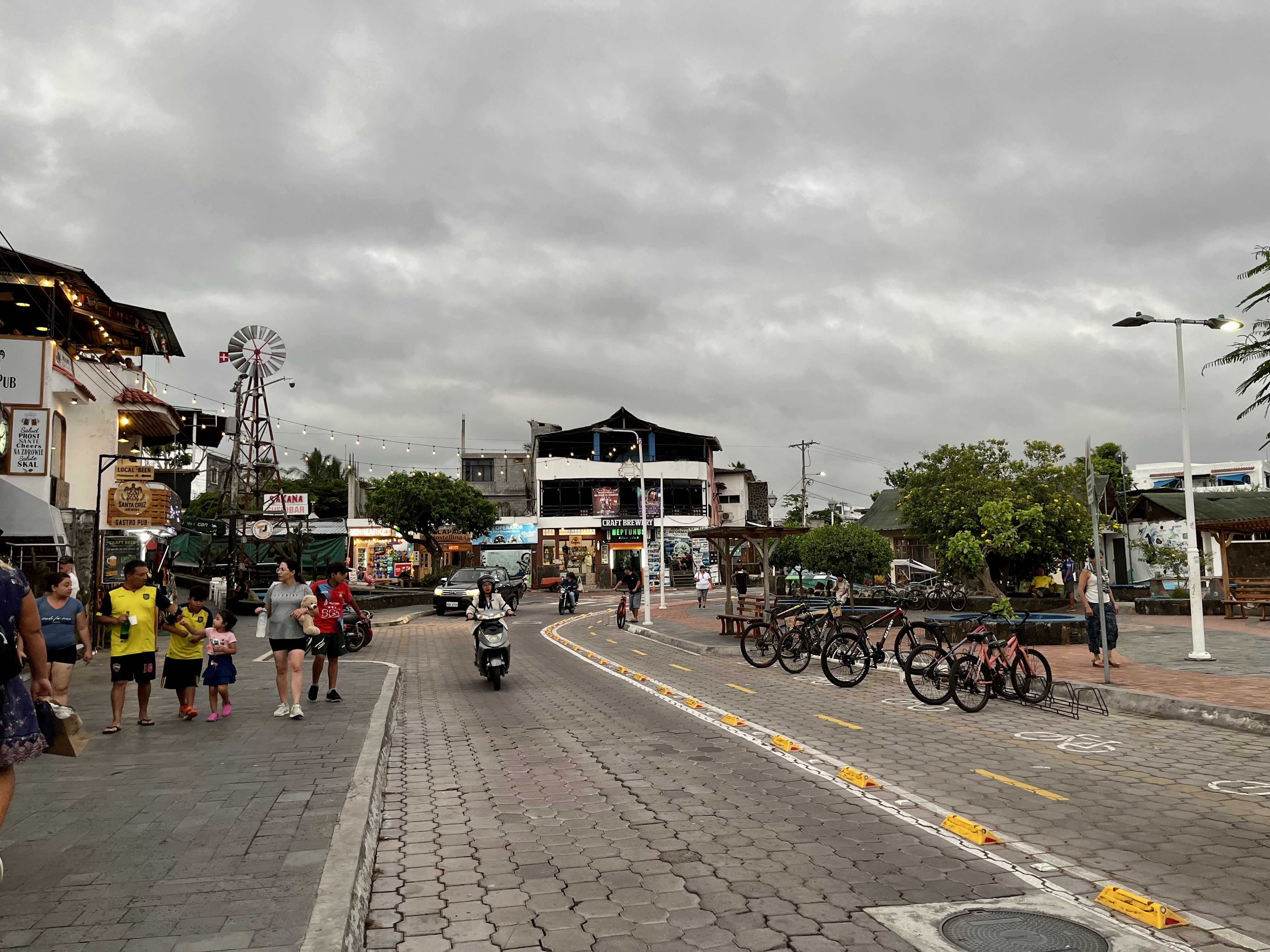
Eating in Puerto Ayora (on Santa Cruz Island) is more expensive than in Puerto Villamil (on Isabela Island), especially on Charles Darwin Avenue, the main road. However, you will find some really nice restaurants. For instance, we frequented The Rock quite a bit for their nice beer and good food. But, I highly recommend venturing off the main avenue to find more local options. And, la Calle de los Kiosks (or the Kiosk street) is full of good, affordable options from breakfast ($5 pp) through dinner (~$10 pp).

On Isabela, look for the menu del día for both lunch (almuerzo) and dinner. For instance, we had a beach-front three-course almuerzo (soup, main dish, dessert) for $10 per person. One street back from the beach, you’ll find typical dinners (soup + main dish of usually meat, beans/lentils, small salad) for $8 per person. For comparison, we pay ~$4 for similar dinners in Tena. So, yes, it’s more expensive relatively speaking, but it’s also not unreasonable.
And, of course, in both places, you’ll find mercados for general grocery shopping. We mostly had coffee and breakfast in our Airbnb.
Overall, we spent just under $25 per person per day on food, and we didn’t worry about always finding the cheapest food options. So, I’d say that’s not so bad.
Of note, I did not include alcohol in our food budget, which is sometimes more expensive than the food itself, especially if you want craft beer. Alcohol consumption is obviously a personal preference, but not drinking is an easy way to save money.
General Tips
Santa Cruz vs. Isabela
Puerto Ayora on Santa Cruz Island is MUCH more touristy than Isabela Island. We didn’t make it to San Cristobal (which I regret), but I would expect the town in San Cristobal to be more like Puerto Villamil on Isabela. So, you should consider what you’re looking for from your trip before deciding how many days on each island. Puerto Ayora has many more food options (and places that accept credit cards), tour companies, microbreweries, and souvenir shops (you get the point) than Isabela.
In hindsight, we would have spent only two full days on Santa Cruz Island and four on Isabela Island, given that we preferred the laid-back beach atmosphere of Puerto Villamil to Puerto Ayora.

Cash! Cash! Cash!
You will always benefit by having cash. However, don’t carry too much at one time. The ATM options are plentiful in Puerto Ayora, but Isabela only has one ATM, and sometimes that ATM doesn’t work, which we found out the hard way. Luckily, it started working again by the afternoon, and we had enough cash for our necessities, but the lack of extra cash really cut into our happy hour time! 😜 Honestly, though, it’s why we ended up buying the ferry tickets online because we didn’t want to spend nearly all our remaining cash without knowing for certain we could get more. It was a bit stressful, I don’t recommend it!
Anyway, long story short, especially if you leave Puerto Ayora, expect to pay everything in cash and take more than you need.
BYOS
Bring your own snorkel (and mask)!
You can snorkel at any of the public beaches for free if you have your own gear!

So, thank you for coming to my Ted talk on the Galapagos, and happy planning! 😀
Nos Vemos,

 The Shwits