
I think it’s safe to say that Ecuador is most famous for the Galapagos Islands. Finally, after nearly two years of living here, we checked off a major bucket-list item!
I’ll be honest. When I started planning this trip, I was overwhelmed. To start, the archipelago comprises 13 main islands, of which only 4 are habituated, and only 2 have airports. Also, the largest island, Isabela, isn’t the most populated and doesn’t have an airport. Then, there is so much advice on what to do, yet oddly, not much on how to do it. And most Google searches send you to travel agency pages for tours, which are expensive.
Based on cost and preference, we knew we would DIY this trip. So, after some debate, we decided on 10 days, with half on Santa Cruz Island and half on Isabela Island. We decided to skip the third island, San Cristobal, which, in hindsight, was a bummer. But, more on that in a different post.
So, here we go. Isla Santa Cruz!

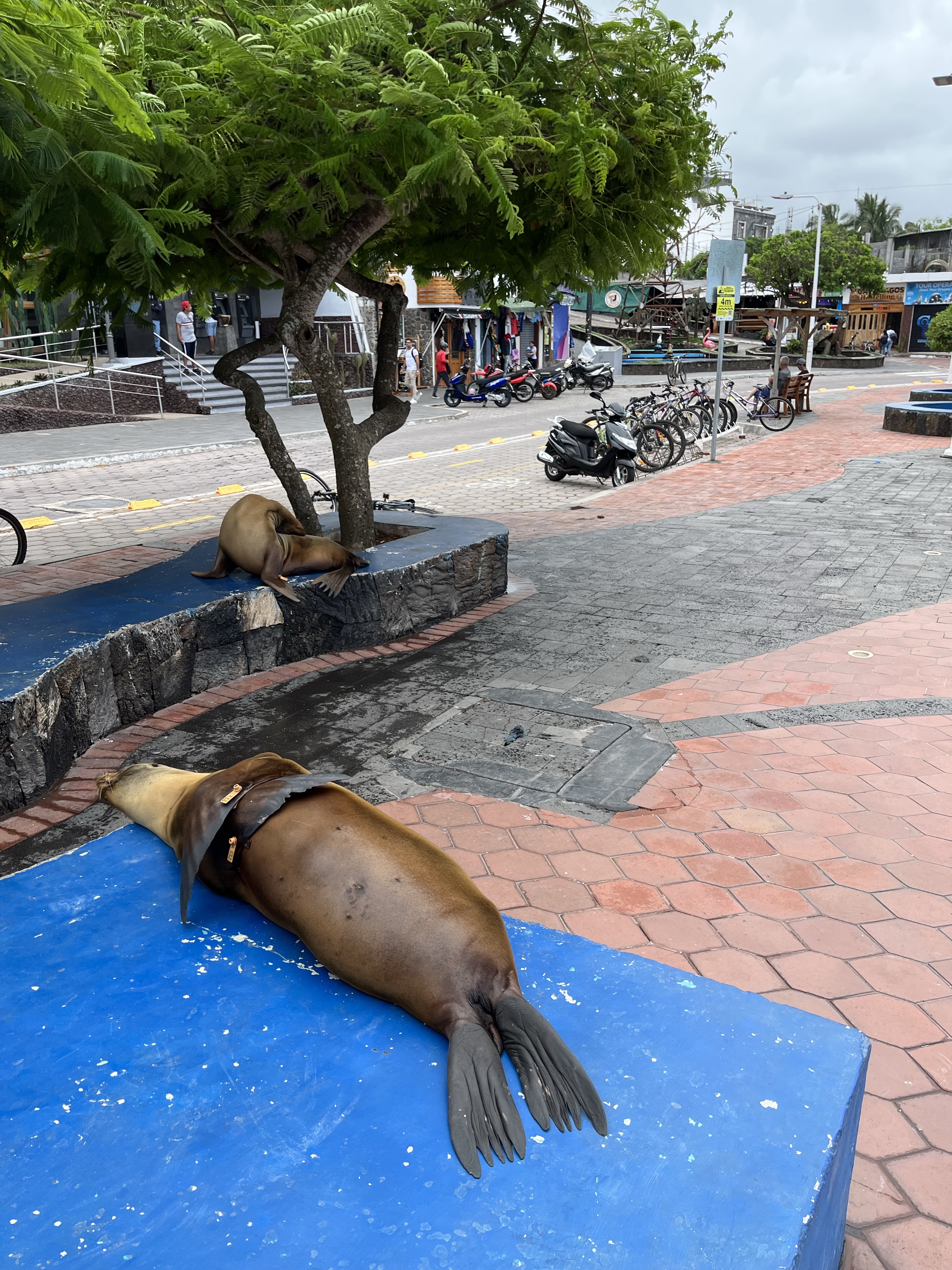
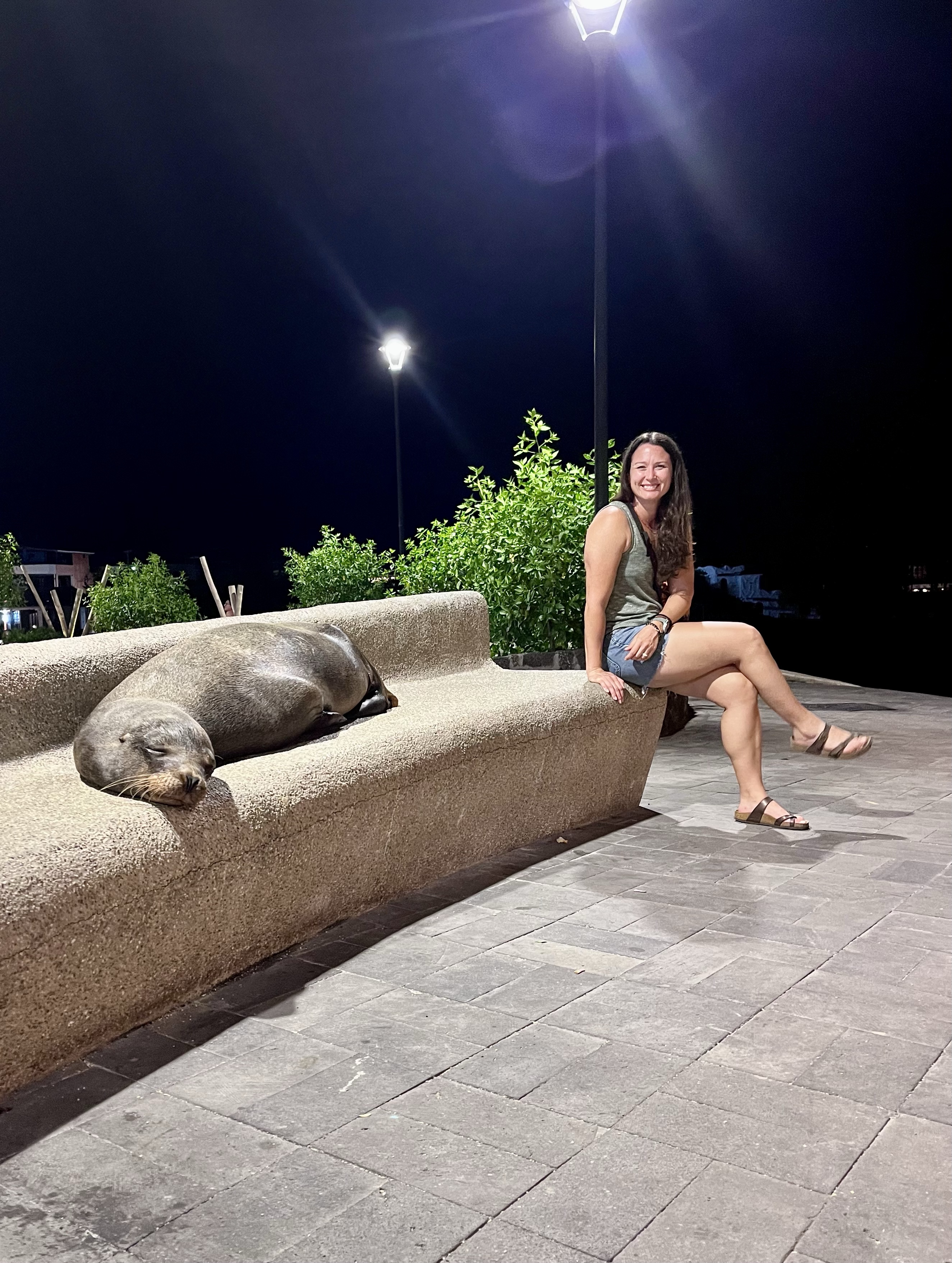
The first thing you’ll notice when you arrive in Puerto Ayora, the main city on Santa Cruz Island, is all the white people tourists. Yes, I realize we also fall squarely into this category, but it was still a shock coming from Tena, where we are some of the few gringos and generally only hear English when we’re speaking it to each other. So, if communication is a concern, don’t worry in Puerto Ayora. The second thing you’ll notice is the sea lions, followed by the marine iguanas (they blend in more)!
These guys do not care about you. Like. At all. It’s wild!
(However, please keep some distance, per the rules!)


We had three full days in Puerto Ayora and two main goals: visiting the Charles Darwin Research Station and diving!
Charles Darwin Research Station
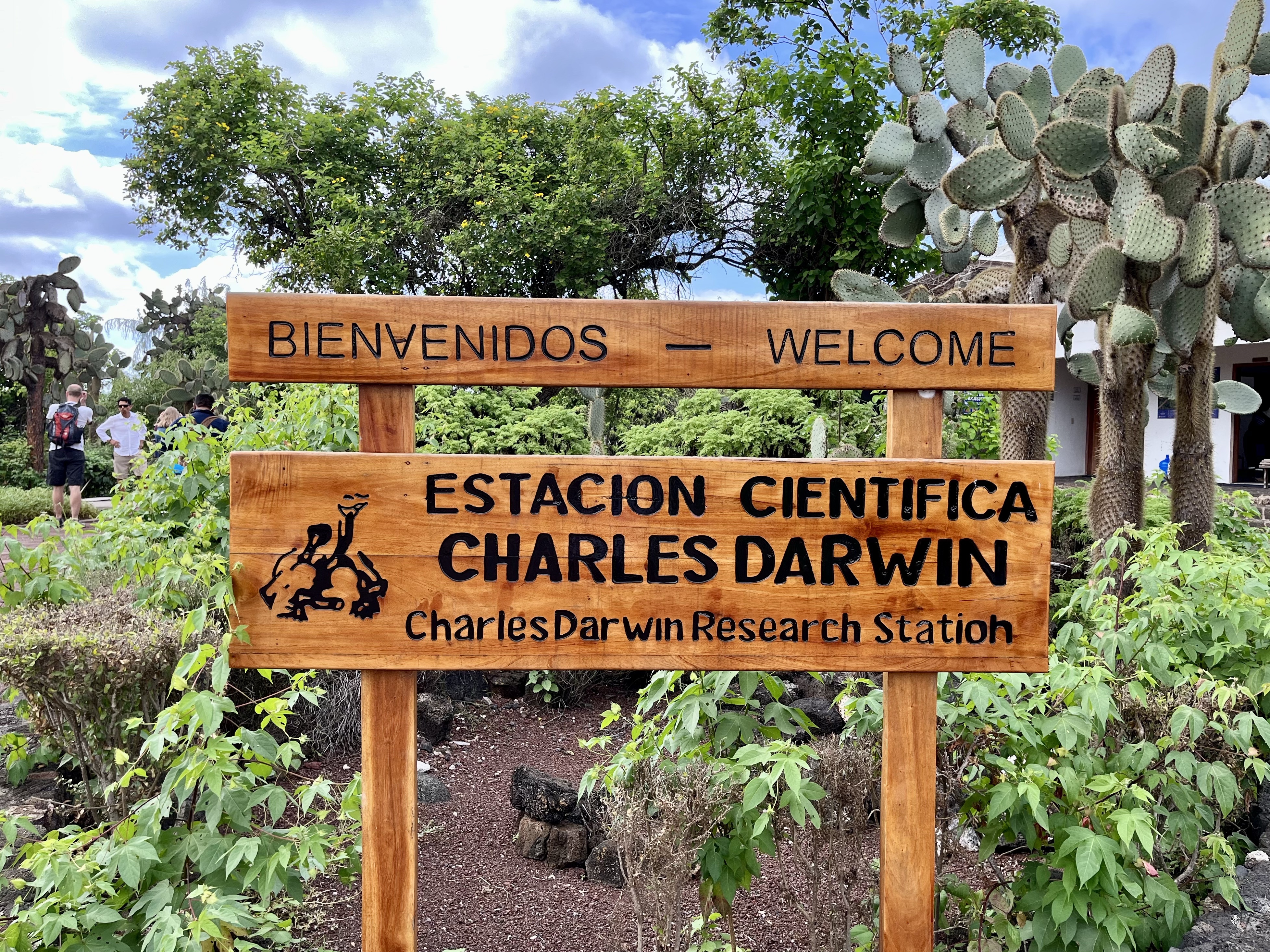
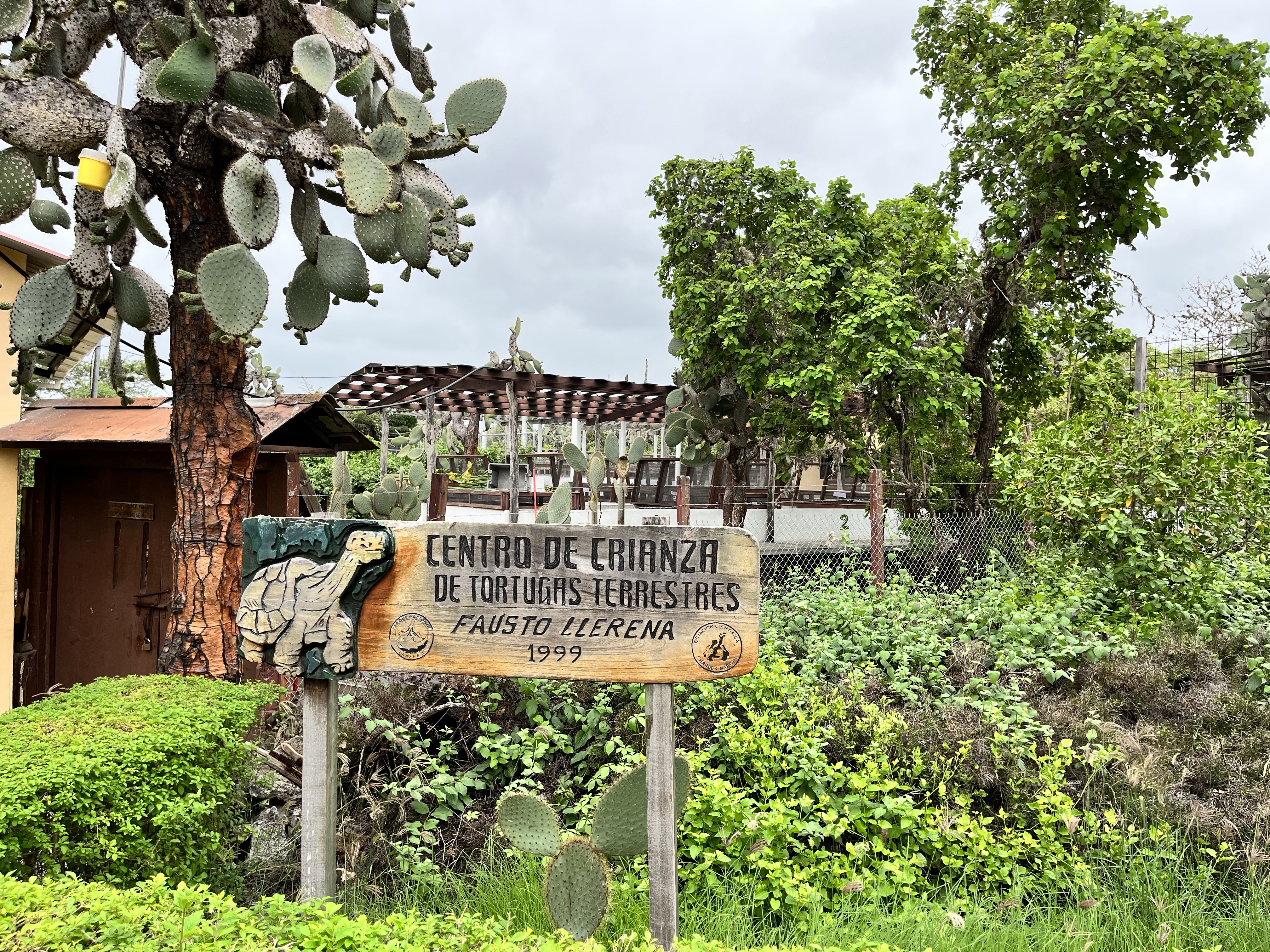
The station is ~15-minute walk from the center of town and free to visit. Given Shane’s chosen profession, this was a must-see for us. For the most part, you can freely wander the campus and access two beaches. There is also a free exhibition hall. However, if you’d like to see the tortoise breeding center, you’ll have to pay $10 per person for a guided walk through the grounds.
Personally, $10 felt a bit steep, but we learned about their conservation efforts and the logistics of the breeding program, which was interesting. And it was funny to see all these baby turtles meandering about.
Fun fact! The program is a catch-and-release program. In addition to breeding in captivity, if eggs are found on any of the islands, they are (carefully) transported to the research station, where the tortoises can safely hatch and grow. Once the tortoises are five years old, they release them back into the island from they originated from. So, at a certain age, they start training them to return the wild by only providing them food every other day and making them search for it.
Turtle training! How cute. Who knew?!

Oh, and the biggest surprise of the tour? Lonesome George. Well, taxidermied Lonesome George, the last known individual of his sub-species from Isla Pinta.
I must admit, I hadn’t heard of Lonesome George before this trip. But, seems that I was in the minority. 🤷♀️

You can also purchase Research Station souvenirs in their gift shop. The prices are a bit high, but if you’re looking for a quality shirt (from sustainably-sourced materials), I’d recommend buying shirts here. Plus, all purchases are donations to the station.
Diving!
Our last diving trip together was in Cambodia in 2019, which is entirely too long ago! So, diving was our absolute must-do.
We booked a one-day tour with Scuba Iguana, and I can’t rave about them enough. We haven’t had that many experiences with dive centers, but this one was the most organized, full-service experience we’ve had to date.

We visited two sites, Bartolome and Cousins Rock, both of which had really cool walls. Even though we haven’t dove in quite some time, I can tell I’ve grown as a diver because walls used to scare me. These dives are unique in that you only have a point of reference on one side; look in the other direction, and it’s nothing but the literal blue sea. This can be incredibly overwhelming, but I found myself purposefully facing the blue this time, just admiring the vastness.
If you can, everyone should try diving just once. It is literally *sings in best Ariel voice to the tune of Aladdin* a whole new world!
Yes, I mixed my Disney references. So what!
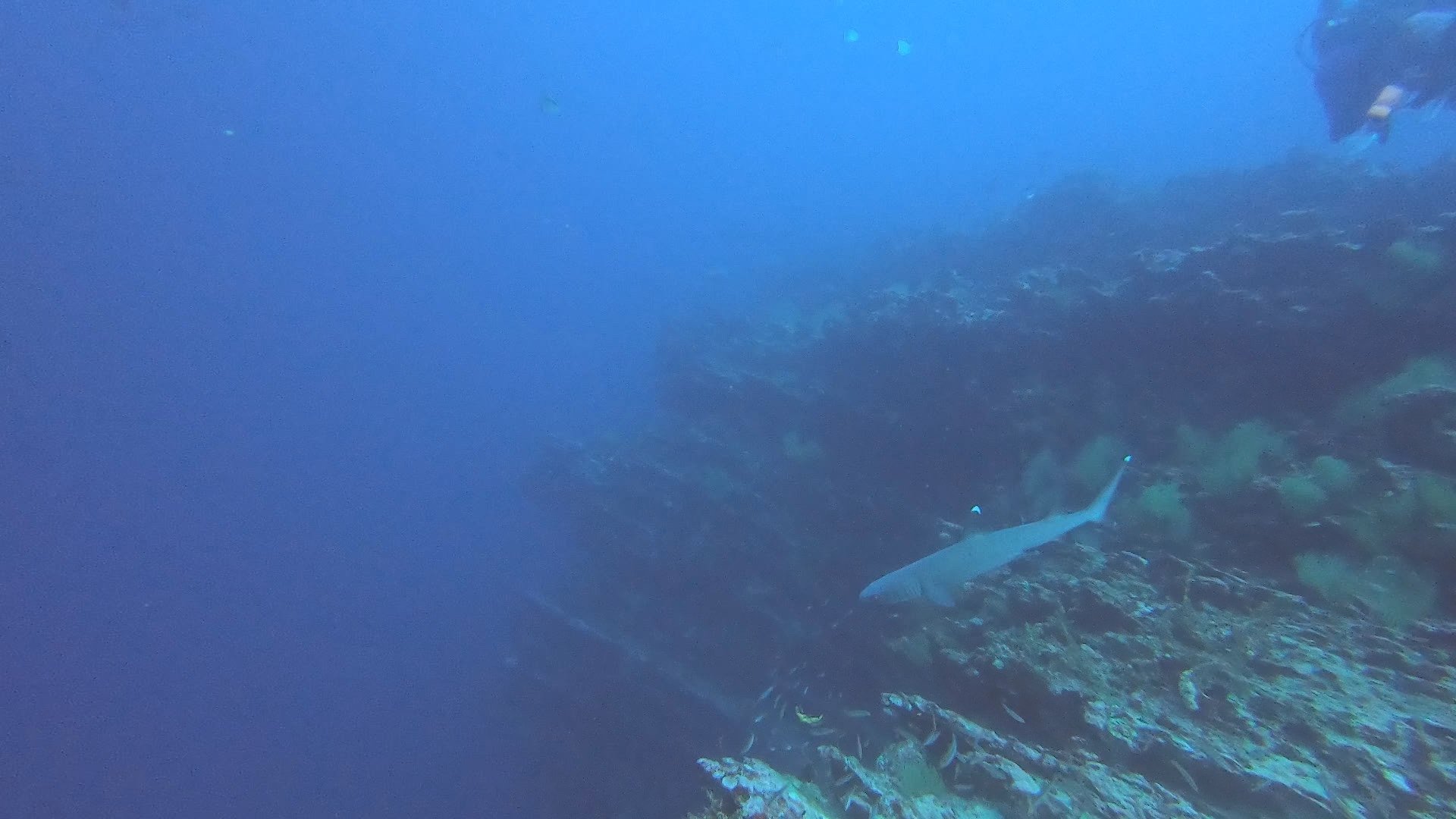
Anyway, Cousins Rock won the dive-of-the-day award because we saw sharks (white-tipped reef sharks) for the first time ever while diving!


Las Grietas
The Cracks, in English.
We ended up at Las Grietas, thanks to TripAdvisor. The reviews were mixed, with some loving it and some being disappointed. For us, it was one of the coolest activities of the entire trip!
You literally snorkel in the crystal-clear pools that cut between lava cliffs!
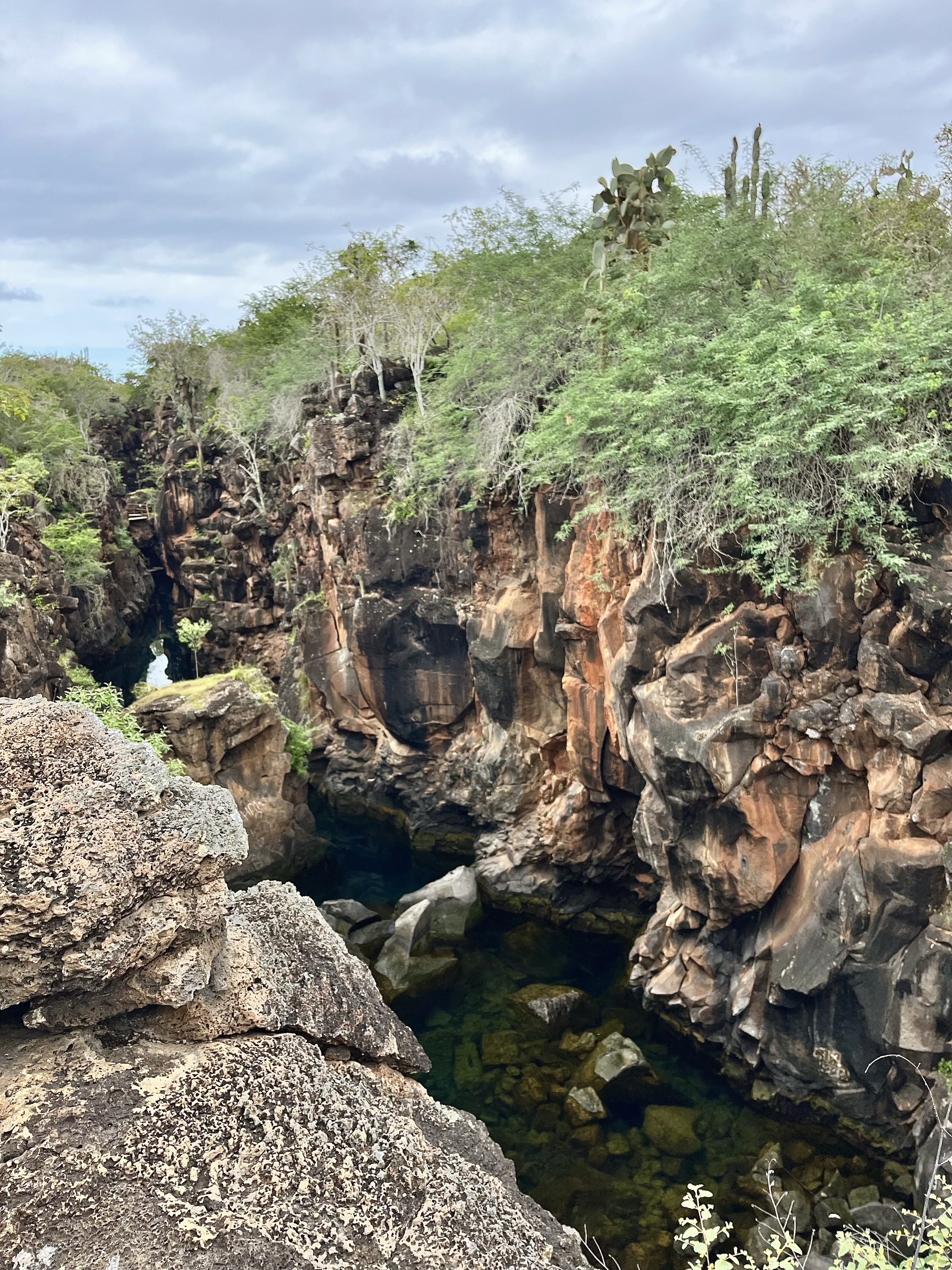
The visit requires a tour guide ($10 per person, English or Spanish), which can be arranged at the entrance to the trail. The walk to the pools is an easy 15 minutes through some salt lagoons and a cactus field. The pools are a fresh and saltwater mix and the most beautiful emerald green/blue, depending on the light. The mix of water means there’s not a lot of fish, but the water is so clear there’s plenty to see.


There are two main reasons why we loved this spot so much. First, we arrived at ~9 am, hitting a sweet spot between the super early morning people and the larger tourist groups. Second, our tour and our guide. We took the tour in Spanish, and our guide hopped in and swam with us. When we first arrived, we were literally the only three. So, we casually swam to the middle section, perched on some rocks, and had a lovely chat (in Spanish!) in this beautiful and peaceful place. I’ve mentioned it before, but we’re both really proud of learning and actually using Spanish since moving to Ecuador. And, as a language learner, it’s moments like this that really give you a boost! Taking a tour and actually comprehending the information AND having casual conversation?! It was a proud moment.
Rancho Primicias
Aka: A giant tortoise reserve!

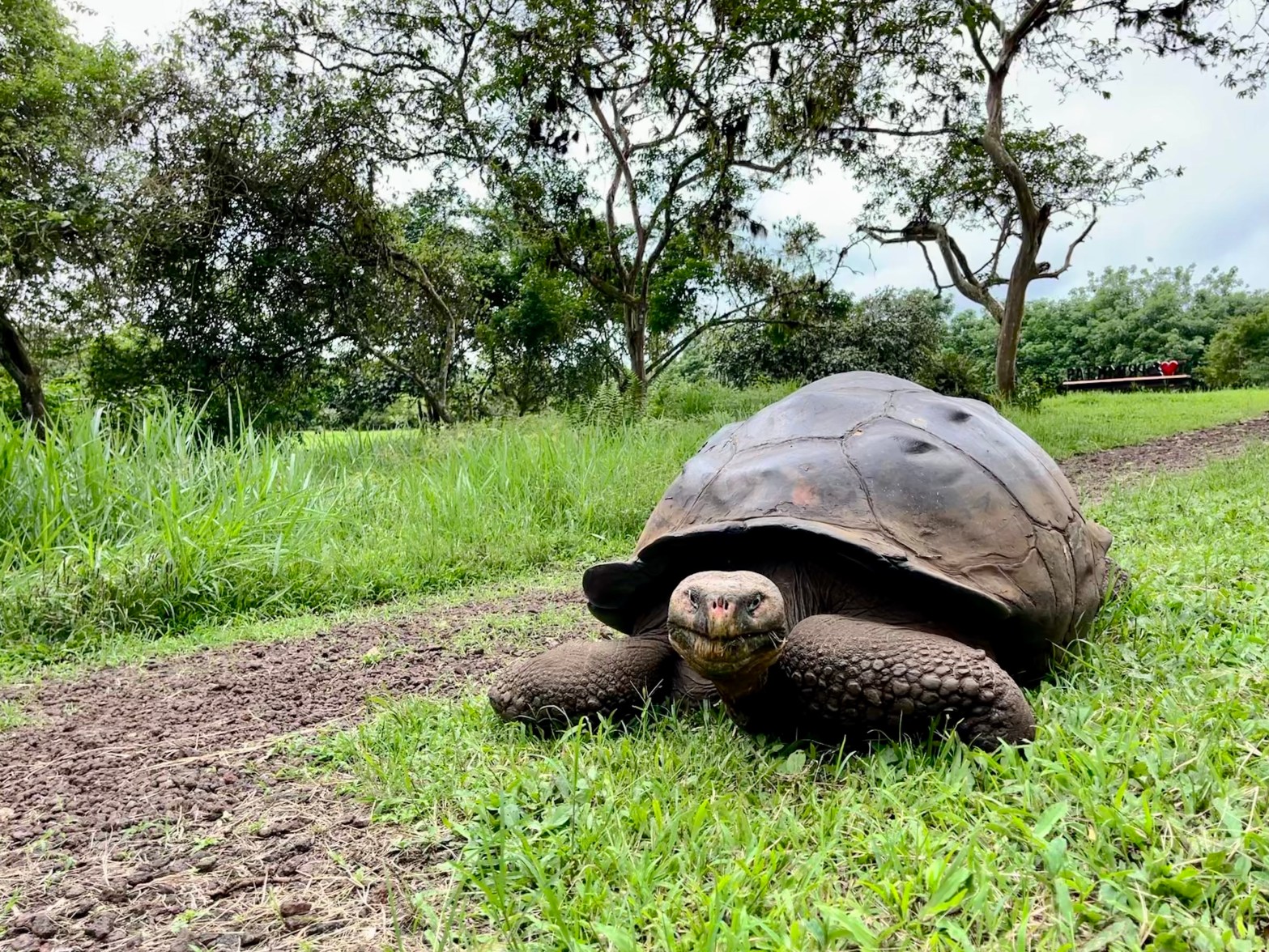
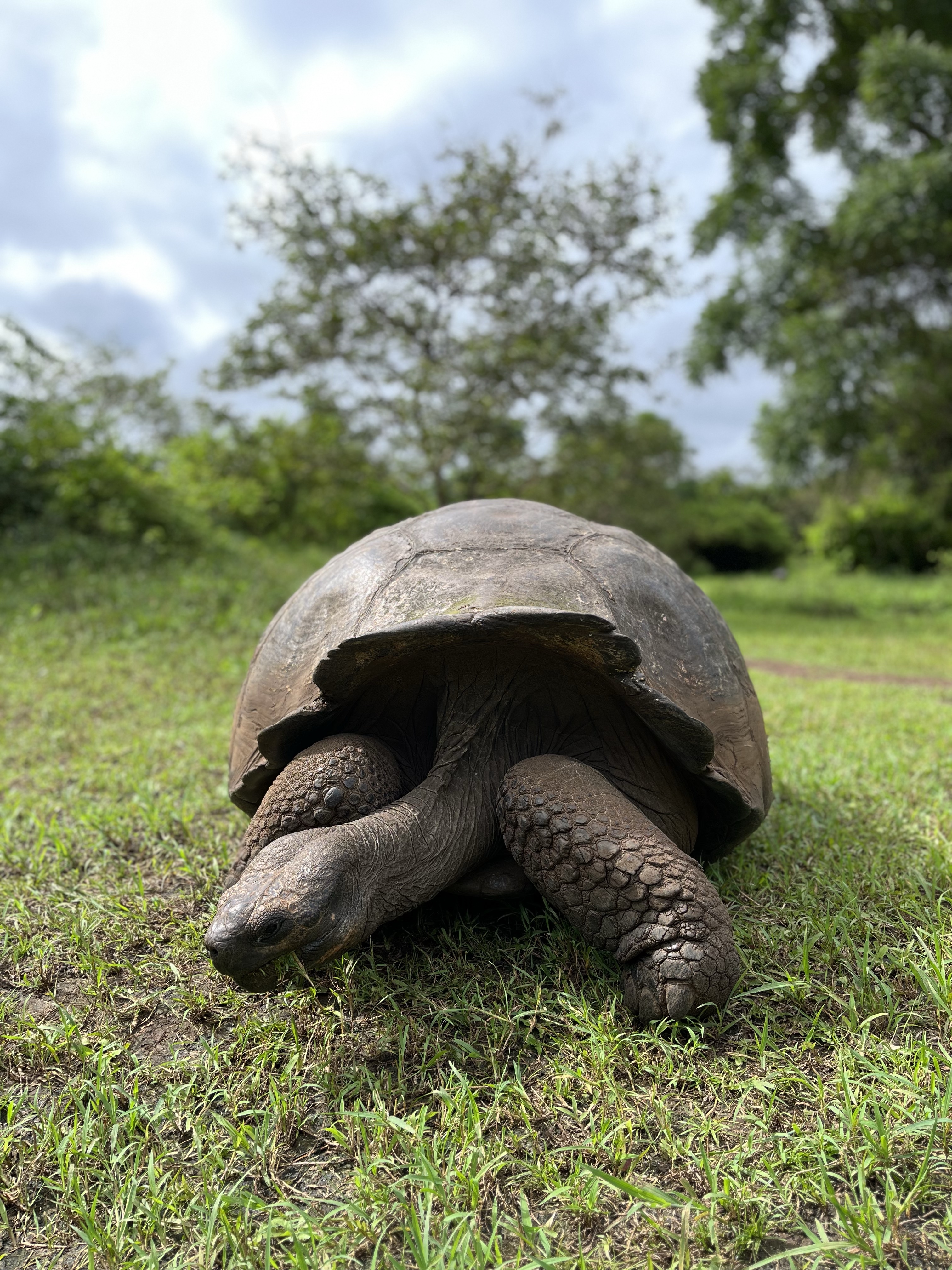
These guys. I could have sat there and watched them eat grass all day long. Literally, because it seems like that’s all they wanted to do. Eat grass. Walk to a new location. Eat more grass.
I particularly liked this guy, who reminded me of a lawn mower, leaving a freshly chompped trail behind him.

There are two reserves in essentially the same area: Rancho Primicias and El Chato. Both seem to offer the same experience; pay $10 per person for your guide (see a theme?), who takes you around the property for tortuga-spotting. We again had a personal tour, which was nice!
The tortoises are free-roaming, so they come and go as they please, and you can’t touch them or feed them. So, this felt like a good-for-the-turtles experience, no Tiger King vibes.
The entrance fee also includes a walk through some surprisingly large lava tunnels! It took maybe 15 minutes to walk through the designated portion of the tunnel, which was a fun bonus!

Tortuga Bay
Last but certainly not least is Tortuga Bay, one of the most famous (and free!) attractions on Santa Cruz Island, and for good reason. This beach is a stunner!

The perfect white sand. The waves. It’s gorgeous. And it’s big enough that once you get past the entrance to the beach, you really feel alone despite its popularity. The only downside is it’s only accessible by foot, so you’re looking at a ~45-minute walk from town. However, it’s a nice brick walkway with lots of nature to look at along the way!


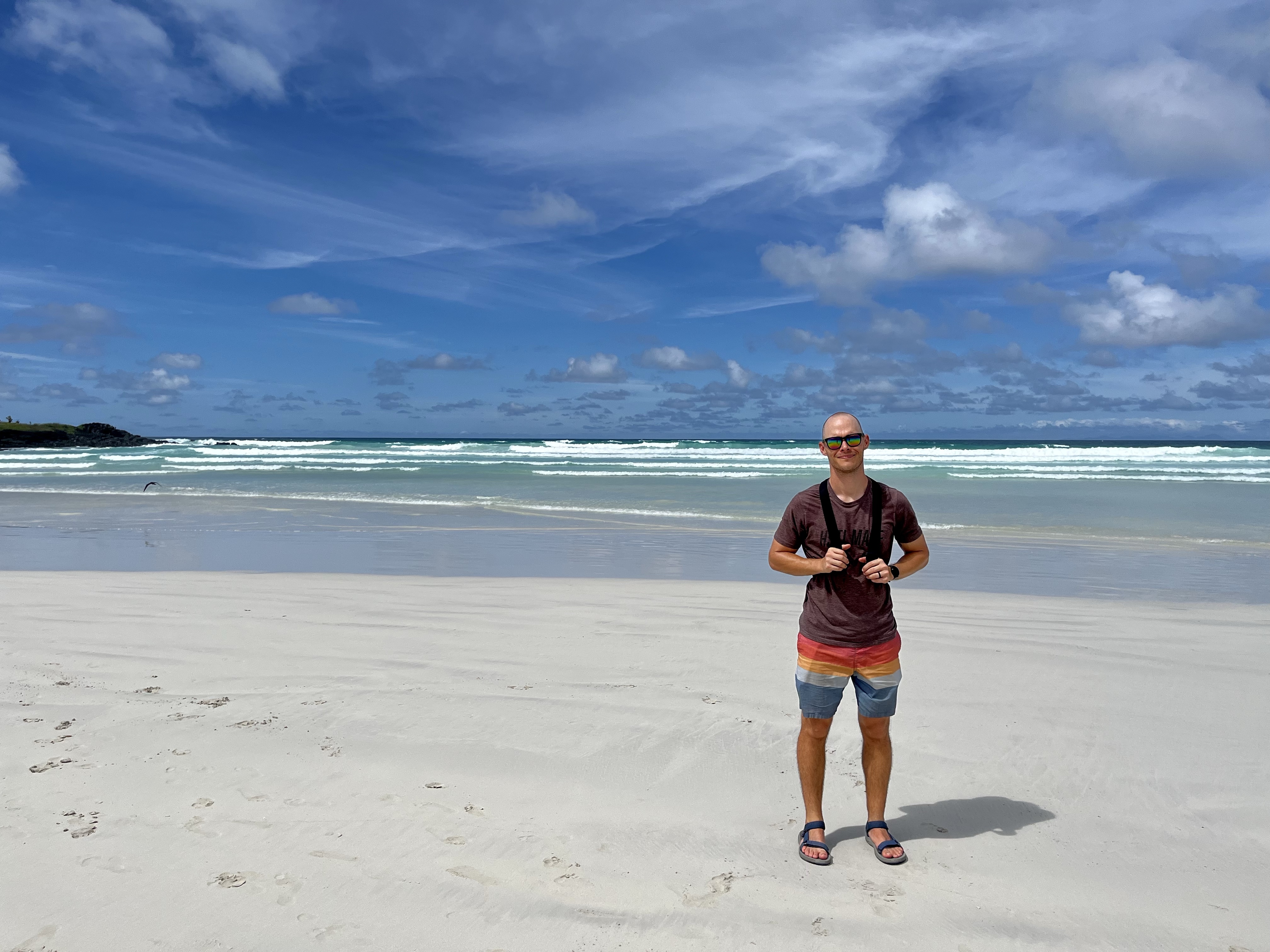
You can also snorkel here, not on the main beach, which is too rough for swimming. However, if you walk the length of Playa Brava (the main beach) (another 20–25 min), on the backside is a cove with a smaller beach. We had terrible luck snorkeling; we saw nothing, literally, because the visibility was terrible. Our dive guides also said Tortuga Bay snorkeling wasn’t good, but others said they swam with baby hammerhead sharks. So, maybe it was just bad timing. 🤷♀️
And that sums up our time on Santa Cruz Island! With more time (and money), there are plenty of other day tours and activities available from Puerto Ayora, especially for snorkeling.
However, we’re off to Isla Isabela!
Nos vemos,

 The Shwits
2 Comments